

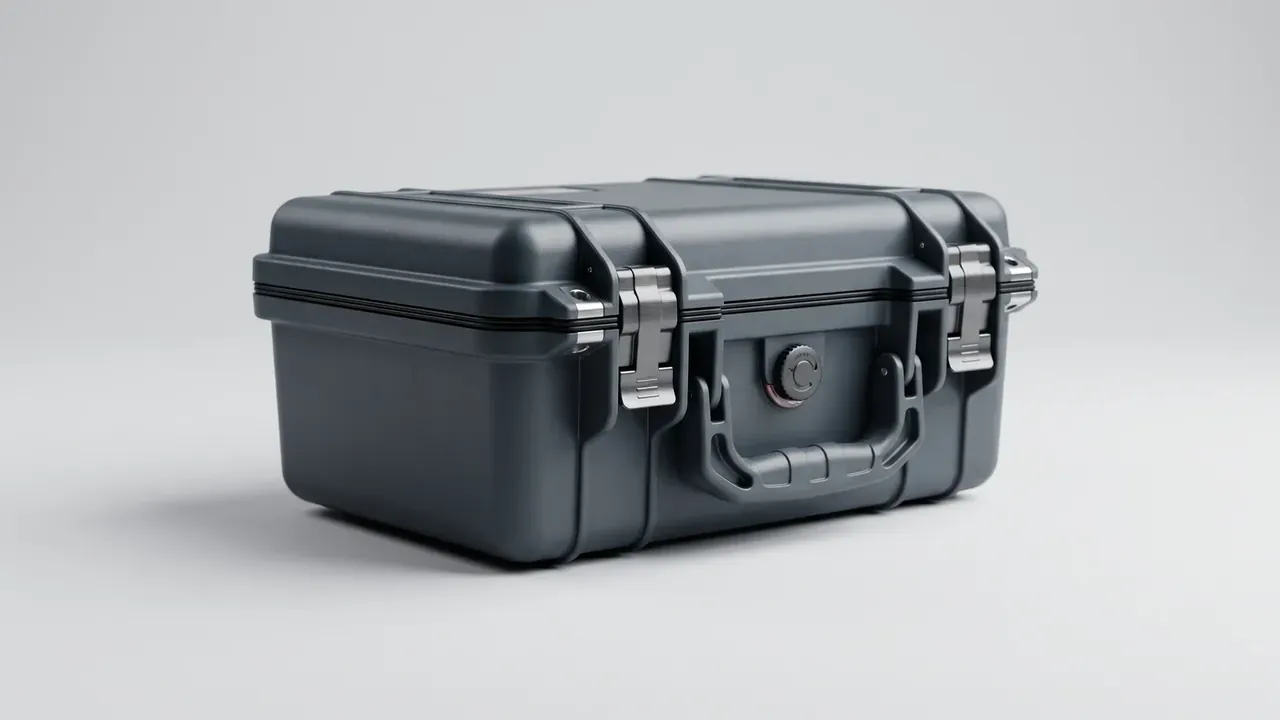
Quick answer: A waterproof hard case seals on a compressible gasket, holds that compression with latches, and dumps the pressure differential through a vent. Lose one and it leaks or will not open. Judge one by a metre of still water.
Table of contents
- The three routes water takes
- Seal geometry: compression beats thickness
- Pressure drop: why the lid sticks
- How to run an immersion test
- Hardware that keeps the seal alive
- FAQ
1. The three routes water takes
Water enters three ways: the flange, the latch and hinge holes, and the vent. The flange dominates.
Two flat faces meet across a gasket. Let either warp by 0.3 mm and a capillary channel opens along the long edge, and water follows without pressure.
Holes seal on O-rings, the vent on a membrane passing air but not water. All three rely on clamping, not on the plastic.
2. Seal geometry: compression beats thickness
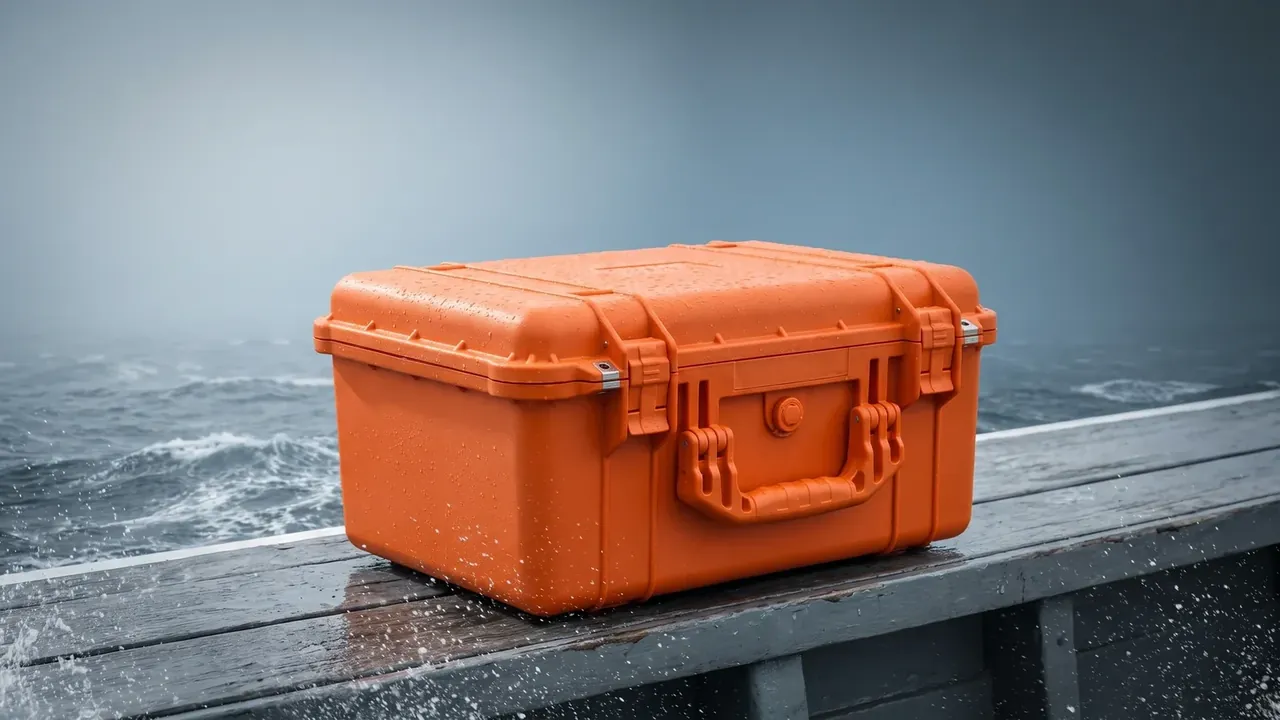
Compression usually sits at 25 to 30 percent. Too little and contact stress drops below water entry pressure; too much and the rubber takes a set.
An O profile is cheap and tolerant, good for small cases. A lip profile seals at low load and recovers well, so cases past 400 mm use it.
Twin lips with a groove work best: the outer sheds splash, the inner holds immersion, the groove gives rubber somewhere to go. EPDM weathers best, silicone spans the widest band, nitrile resists oil.
| Sealing point | Method | Typical failure |
|---|---|---|
| Flange | Twin lip with gasket | Warp leaves an edge gap |
| Latch hole | O-ring face seal | Rubber hardens |
| Vent | Microporous membrane | Leak at the bonded edge |
3. Pressure drop: why the lid sticks
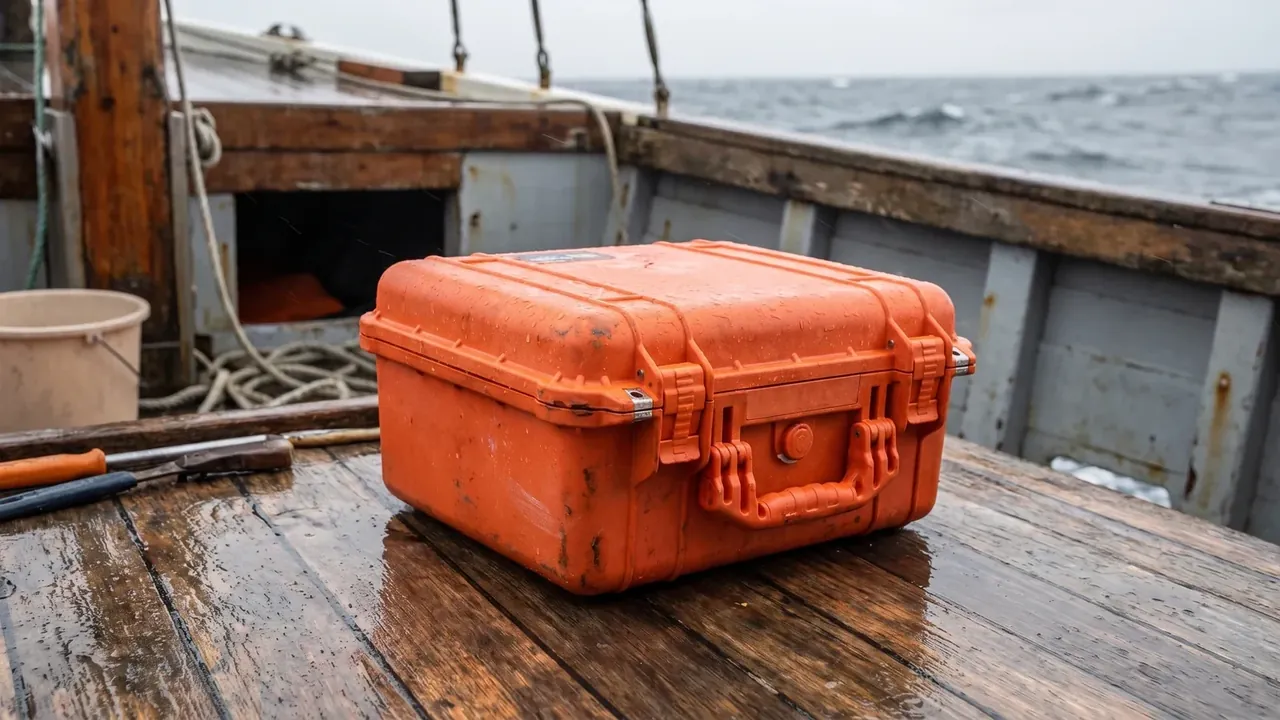
Air loses about 3.4 percent of its volume per 10 degrees Celsius. A 20 litre case cooled from 30 to minus 10 gives up a litre, or 4 to 5 kPa.
The trouble is not water but opening: pressure pulls the lid down, a hand cannot shift it, and a bar damages the flange.
The vent dumps it. The core passes tens of millilitres of air a minute, while water needs tens of kilopascals to break through.
A vent costs something: water creeps along the bonded edge, so seat it in a stepped boss with an O-ring.
| Situation | Differential | What you notice |
|---|---|---|
| 20 degree day-night swing | Around 3 kPa | Lid drags |
| Pressurised air cargo | Above 5 kPa | Vent first |
| Highland transport | Above 10 kPa | Will not open |
4. How to run an immersion test
Weighted immersion is the reliable bench test. Put dry tissue in each corner, ballast until the flange sits 50 mm under, wait 30 minutes, dry the outside, open. A soft patch names the side.
Vacuum is more sensitive: pull 5 kPa, close the valve, watch for recovery. A rising gauge means a leak and names the edge.
They complement each other: immersion asks whether water gets in, vacuum whether air gets out. Air leaks sooner.
Afterwards dry the gasket, rinse off grit and wipe on silicone grease; grit cuts a groove next time.
| Method | Sensitivity | Locates |
|---|---|---|
| Weighted immersion | Medium | Which side leaks |
| Vacuum hold | High | Which edge leaks |
| Dye penetration | Medium | The leak path |
5. Hardware that keeps the seal alive
The gasket does not seal alone. Latch count sets flange loading: two latches leave the middle of a long edge at a third of the end pressure.
Ribs set flange flatness: without them, shrinkage bows the long edge, and 0.5 mm of bow leaks.
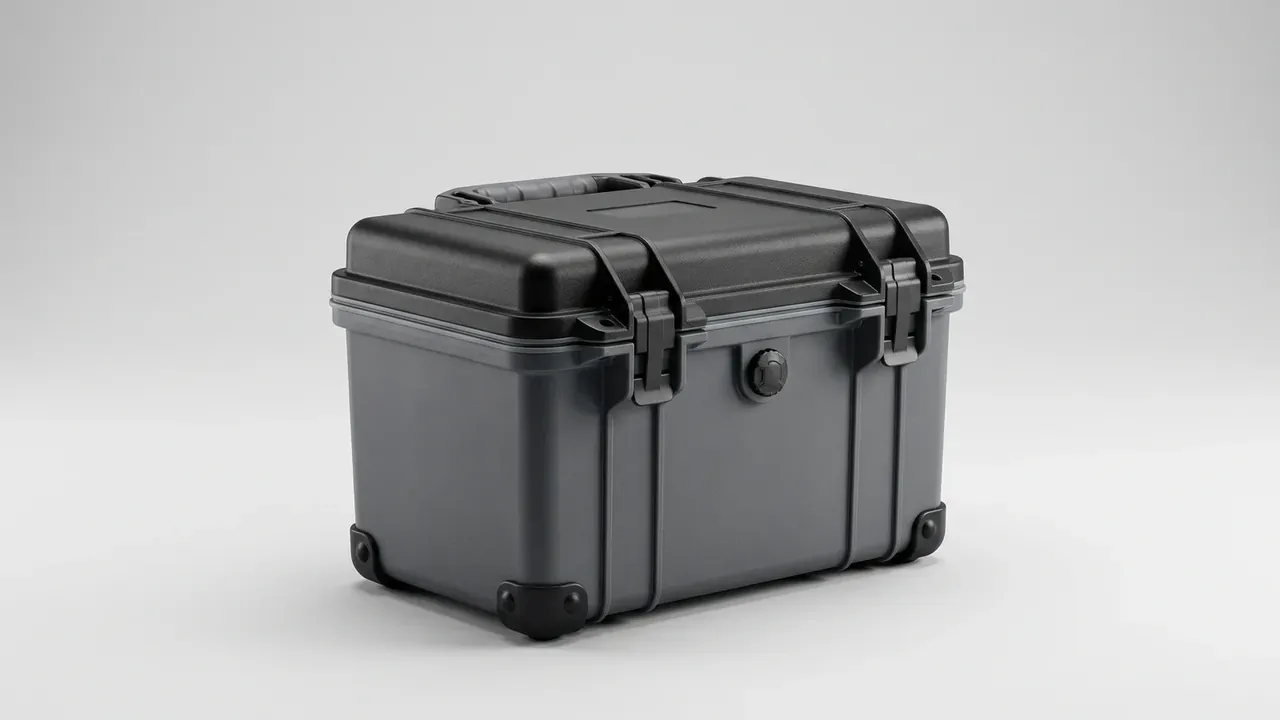
Bumpers protect the seal after a drop, routing impact around the flange. A steel hinge pin doubles the closings a polymer hinge survives.
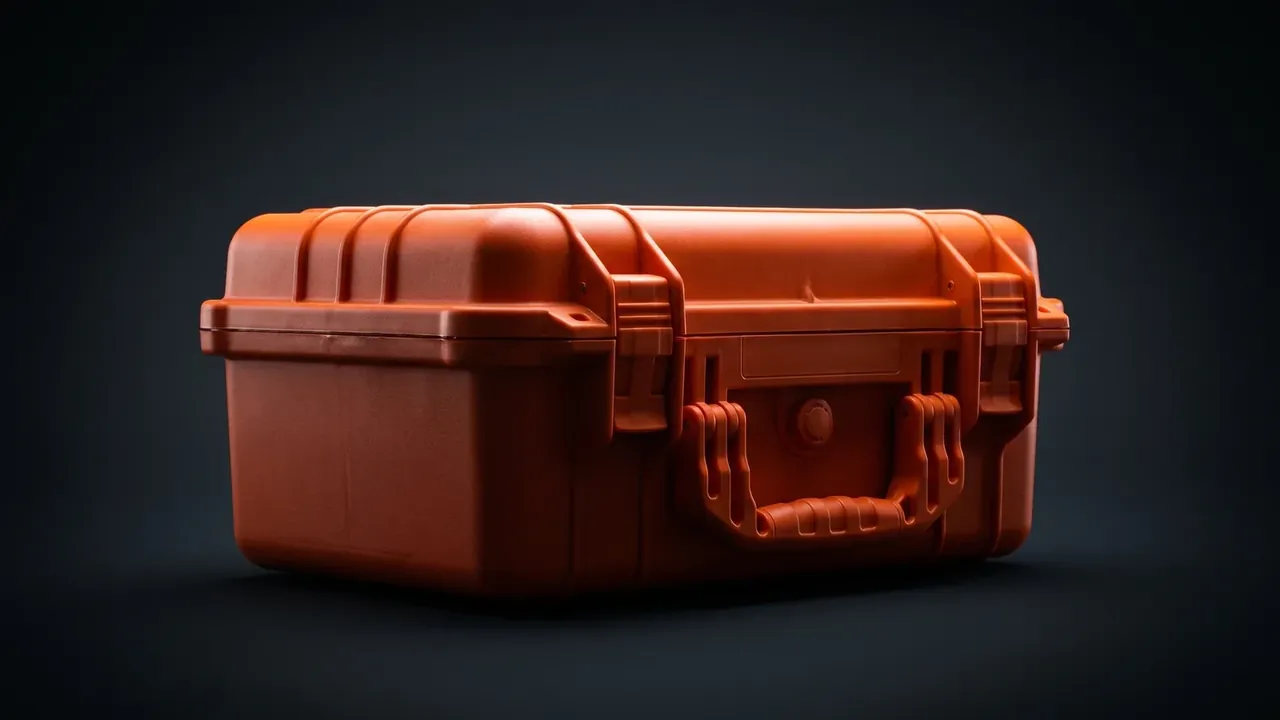
Those four are the margin; discount one and the gasket loses compression first.
Conclusion
Seal, pressure drop and immersion test form one chain: the gasket supplies compression, the latches hold it, the vent dumps differential, the test proves it unbroken. Ask about those four before memorising grades; survival depends on the fit of parts nobody photographs.
This article covers container-side specifications and design implications only, not the handling, loading or use of the contents.
Related Reading
- How a pressure equalisation valve works
- Why case seals age
- Airtightness and leak testing for cases
- Why outdoor cases leak
Related Products
- 8 Series — Gun Cases; Military Equipment Cases; Camera Equipment Cases; Drone Cases; Watch Cases; Knife Cases; First Aid Cases; Electronics Equipment Cases
- WL8-2812 PP Gun Case — model WL8-2812
- All protective cases and toolboxes: 7 series, 158 models