

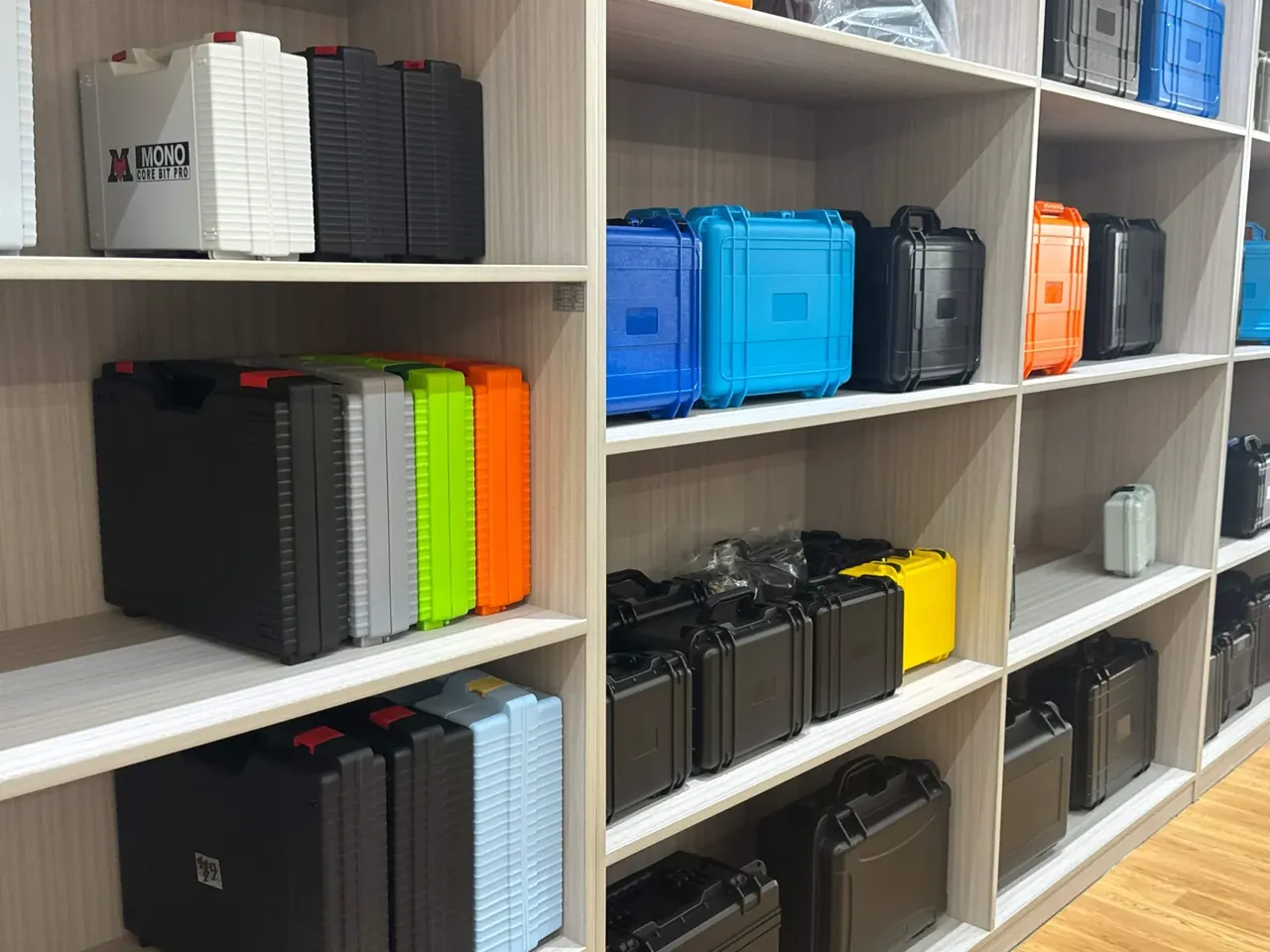
Quick answer: A Grenade Storage Container acceptance standard is judged by repeatability: eight check groups with a method and a reading, sampling by batch, three defect classes with named sign-off rights, and records that outlive the staff.
Table of contents
- What a Grenade Storage Container Standard Must Check
- Methods and Reading Rules
- Sampling by Batch, Not by Pallet
- Verdicts and Defect Classes
- Records, Re-inspection and Release
- FAQ
1. What a Grenade Storage Container Standard Must Check
Acceptance begins by replacing adjectives with readings: acceptable appearance gives two inspectors two verdicts, while no through-crack at 600 mm under D65 light gives one. A Grenade Storage Container standard therefore opens with a check table, not a paragraph of intent.
A Grenade Storage Container check covers eight groups: cavity size, wall thickness, latch retention, sealing, stack load, drop, appearance and marking. Each line names a method, a limit and where to measure.
| Check group | Method | Limit | Record |
|---|---|---|---|
| Cavity size | Tape and caliper, three points per axis | Within plus or minus 1.0 mm | Three readings per axis |
| Wall thickness | Ultrasonic, four points per face | 90 percent of nominal minimum | Position of low point |
| Latch retention | Tensile gauge, 50 mm per minute | At least 450 N | Full force curve |
| Sealing | 15 kPa held 3 minutes | Decay under 0.8 kPa | Start and end pressure |
2. Methods and Reading Rules
A method answers which instrument, how many points, how the value is taken. Wall thickness reads sixteen points and the lowest decides the unit; cavity size reads three points per axis and one out-of-limit point rejects it.
State the environment too: 23 C and 50 percent relative humidity, with 24 hours of rest after demoulding. Pressure decay is read when the clock stops.
Sealing at 15 kPa for 3 minutes with 0.8 kPa decay assumes a hollow silicone gasket; solid cord decays faster, so the limit follows the seal type. Compression stays between 25 and 30 percent, since a harder squeeze loses rebound in cold weather.
Drop testing runs 1.2 m onto six faces and three edges at room temperature, and 1.0 m cold per the specification. Salt spray covers metal parts only, 72 hours with rust under 5 percent.
3. Sampling by Batch, Not by Pallet
Define a Grenade Storage Container batch first: one mould, one resin grade, one continuous shift. Pallets mix shifts, so split them before sampling, or the sample represents nothing.
Appearance follows level II at AQL 2.5, while functional items run on zero acceptance. Destructive checks sit outside the plan: one unit from each of three cavities for cold drop, two for stack load.
| Batch size | Sample | Appearance verdict | Functional verdict |
|---|---|---|---|
| 91 to 150 | 20 | Accept 2, reject 3 | Accept 0, reject 1 |
| 151 to 280 | 32 | Accept 3, reject 4 | Accept 0, reject 1 |
| 281 to 500 | 50 | Accept 5, reject 6 | Accept 0, reject 1 |
Records tie each sample to a pallet and cavity, drawn from top, middle and bottom layers. First-off judgement runs one grade stricter; the retained sample stays sealed 12 months.
4. Verdicts and Defect Classes
Critical defects reject the batch: decay above 0.8 kPa, a broken latch, retention under 450 N, a wall below 90 percent of nominal. Major ones allow rework or concession: size deviation of 1.0 to 1.5 mm, stack set of 1.0 to 2.0 mm.
| Class | Typical defect | Action | Sign-off |
|---|---|---|---|
| Critical | Decay over limit, broken latch, thin wall | Reject batch | Buyer and quality manager |
| Major | Size over 1.5 mm, set over 2 mm | Rework or concession | Quality manager, buyer informed |
| Minor | Colour shift, marking offset 3 mm | Counted acceptable | Inspector on site |
A concession is written, never verbal: capped quantity, expiry, permitted use. Two in a row on one defect move that Grenade Storage Container supplier into review. A rejection carries raw readings, and the supplier has 5 working days to object.
5. Records, Re-inspection and Release
Each Grenade Storage Container batch keeps one report: sample-to-batch link, verdict per item, instrument numbers with calibration dates, two signatures, held 10 years. Third-party reports older than 12 months are repeated before a new batch is accepted.
Re-inspection doubles the sample and covers what the failure touches. Two consecutive failures require cause analysis within 7 working days and a verification batch; three clean batches restore normal sampling.
Release has one more gate: pass, concession and re-inspection rates must reconcile. When they do not, a record is missing.
Conclusion
A standard holds when a third person reaches the same verdict: fixed instrument, sample size, limit, sign-off and retention. Do that and the argument moves from opinion to a reading. Attach the check table to the contract and the Grenade Storage Container acceptance standard starts stopping shipments.
This article discusses only the container (case body) side of specifications and design intent, and does not cover any handling, loading or use of the contents.
Related Reading
- Sizing, wall thickness and load ratings
- Five criteria for choosing a storage box
- Acceptance rules for the transport variant
- How the case body is built and moulded
Related Products
- 8 Series — Gun Cases; Military Equipment Cases; Camera Equipment Cases; Drone Cases; Watch Cases; Knife Cases; First Aid Cases; Electronics Equipment Cases
- WL8-2812 PP Gun Case — model WL8-2812
- All protective cases and toolboxes: 7 series, 158 models