

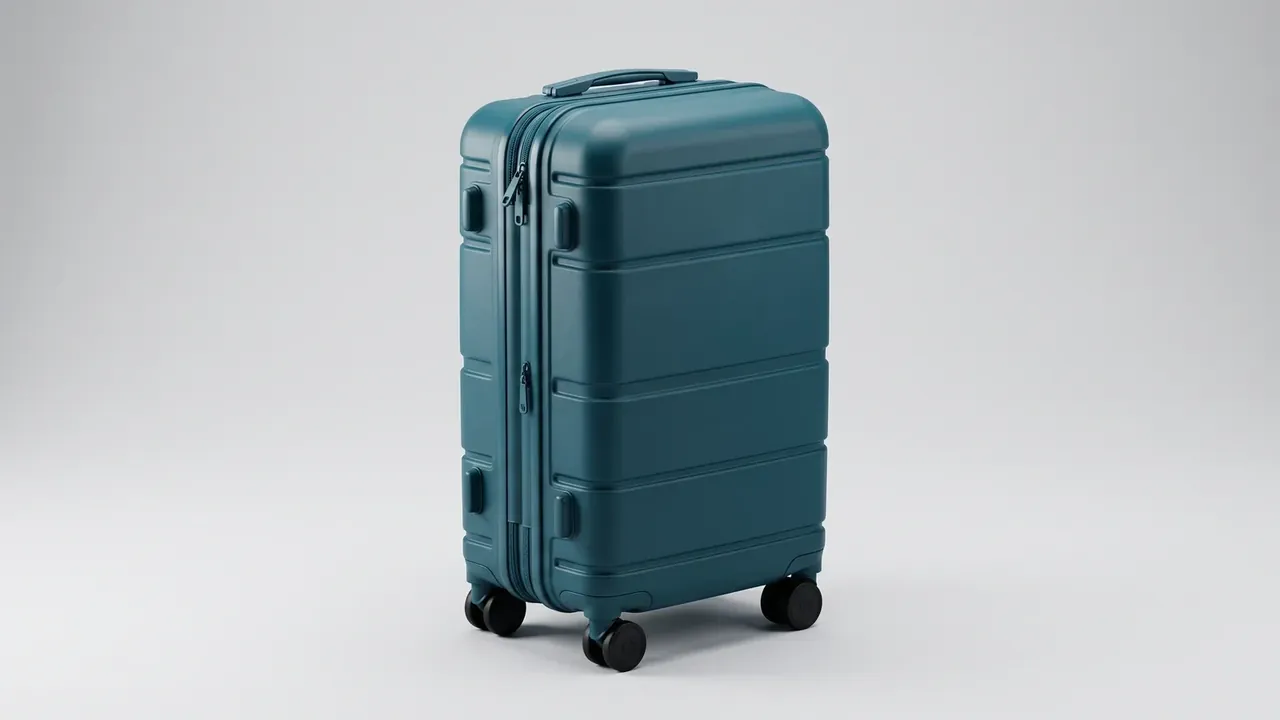
Quick answer: What decides a gun case installation is not the body but anchors, ingress rating and daily handling. A range armoury is judged on whether the anchor reaches the slab, a vehicle on damping pads and strap tension, a wet site on drainage slope, a cold site on seal hardness.
Table of contents
- Gun Case in a Range Armoury: Feet and Ingress
- Vehicle Mounting and Field Camps: Damping and Straps
- Wet and Salt Sites: Seals and Drainage Slope
- Cold Plateau and Sand: Seal Hardness and Opening Force
- FAQ
1. Gun Case in a Range Armoury: Feet and Ingress
Range armoury floors are epoxy screed over a levelling layer 30 to 50 mm deep. An anchor that stops inside that layer lifts the screed the moment the door takes a side load.
Foot count follows width: four at 1.2 m, six past 1.8 m, the middle pair against tipping only. Torque on an M10 anchor stays at 40 to 45 N·m, or the pore walls crush and the fixing goes loose.
| Setting | Fixing | Usual mistake |
|---|---|---|
| Indoor armoury | four M10 into the slab | anchor stops in the screed |
| Post cabin | through-bolt, 8 mm plate | no rubber pad under it |
| Vehicle | four-point 25 mm webbing | top half strapped only |
| Coastal store | indoor, feet raised | feet on bare concrete |
Leave 900 mm of standing room so the door swings to 100 degrees.
Three faults cause most callbacks: anchors that never reached the slab, feet levelled on a slope, and a padlock where a three-point latch belongs. The first two surface as a door gap within six months.
2. Vehicle Mounting and Field Camps: Damping and Straps
A gun case in a vehicle works only when body and chassis move as one piece. Four-point lashing is the floor: 12 mm EPDM pads under the feet, compressed to about 20 percent, or the case walks.
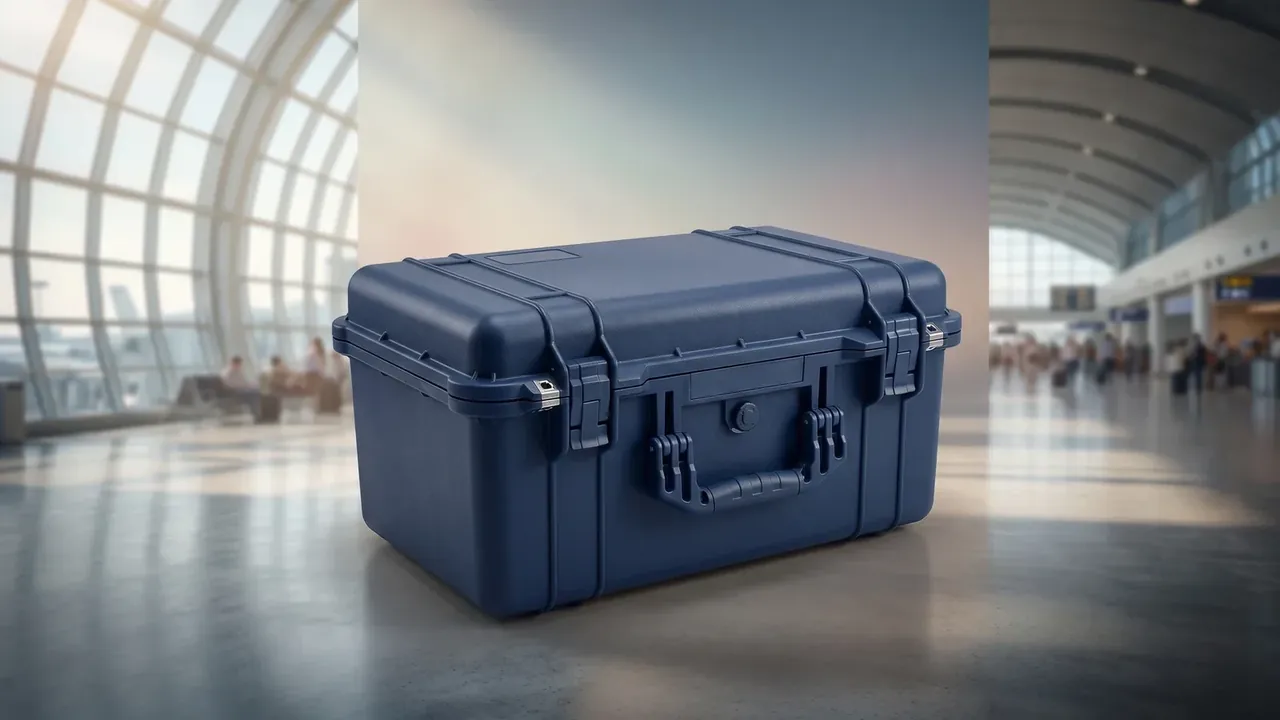
Sequence matters more than strap choice.
- Seat every latch, so vibration cannot leave one half-engaged.
- Fit pads under all four feet, never on the diagonal pair alone.
- Cross webbing over the upper third at roughly 500 N.
- Press each corner; re-strap any that moves past 5 mm.
Field camps are messier. A prefab cabin has a timber floor with nothing to bite; a tent floor is earth that sinks after rain; a mobile shelter has a steel deck needing locking washers. The substitute is an 8 mm base plate spreading load over 0.3 square metres, through-bolted at four corners. It lifts the centre of gravity by 20 mm, so a tie rod runs from the top to the wall, inside 45 degrees from the floor; past that the pull bends the roof. The kit survives three to five reuses.
3. Wet and Salt Sites: Seals and Drainage Slope
Wet-site failures rarely start with the body but at the gasket and the feet. Over a 40 °C, 95 percent relative humidity cycle the gasket hardens from 60 Shore A to about 75, and closing force climbs with it.
| Condition | Reference | Pass value |
|---|---|---|
| Damp heat | method 507.6 | 40 °C, 95 % RH, 10 days |
| Salt fog | method 509.7 | 480 h neutral |
| Hose test | IPX5 | 6.3 mm nozzle, 12.5 L/min |
| Condensation | 15 °C swing | no droplets inside |
Drainage beats sealing. A 2 degree top slope, feet raised 30 mm and a 50 mm gap behind the back cut condensation on the inner walls by half.
Coastal sites are judged at 480 hours of neutral salt fog, feet and hinges first.
4. Cold Plateau and Sand: Seal Hardness and Opening Force
Cold and sand pull in opposite directions. At -30 °C the gasket freezes hard and opening force rises from about 30 N to 60 N. Sand carries grit into the latch and hinge gaps, where abrasion outruns corrosion.
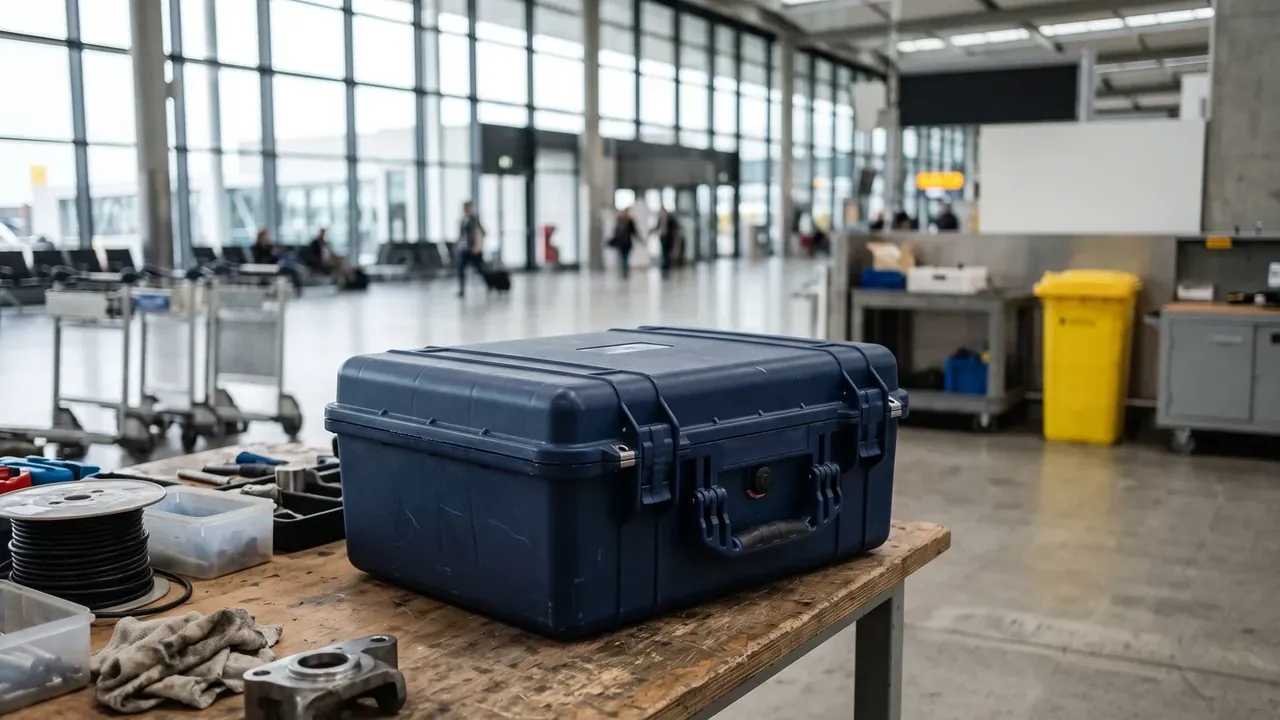
The cold answer is grease chosen on pour point; the sand answer is a dust cap on each hinge pin and a counterbored latch hole.
Sand testing follows method 510.7 at 8.9 m/s and 1.1 g/m³ for six hours, and a gun case that passed shows latch torque drift under 15 percent.
Altitude adds a detail worth planning for: lower pressure presses the gasket tighter.
Conclusion
Every setting reduces the gun case to three measurable checks: whether the anchor reached the slab, whether gasket hardness stayed inside limit, and whether the door has room to swing. Written on an acceptance sheet, they make a gun case predictable in all four settings.
This article discusses only the container (case body) side of specifications and design intent, and does not cover any handling, loading or use of the contents.
Related Reading
- Choosing a gun case: capacity, shelves and locking
- Assembly checks before a gun case leaves the line
- Routine checks for a submachine gun storage box
Related Products
- 8 Series — Gun Cases; Military Equipment Cases; Camera Equipment Cases; Drone Cases; Watch Cases; Knife Cases; First Aid Cases; Electronics Equipment Cases
- WL8-2812 PP Gun Case — model WL8-2812
- All protective cases and toolboxes: 7 series, 158 models