

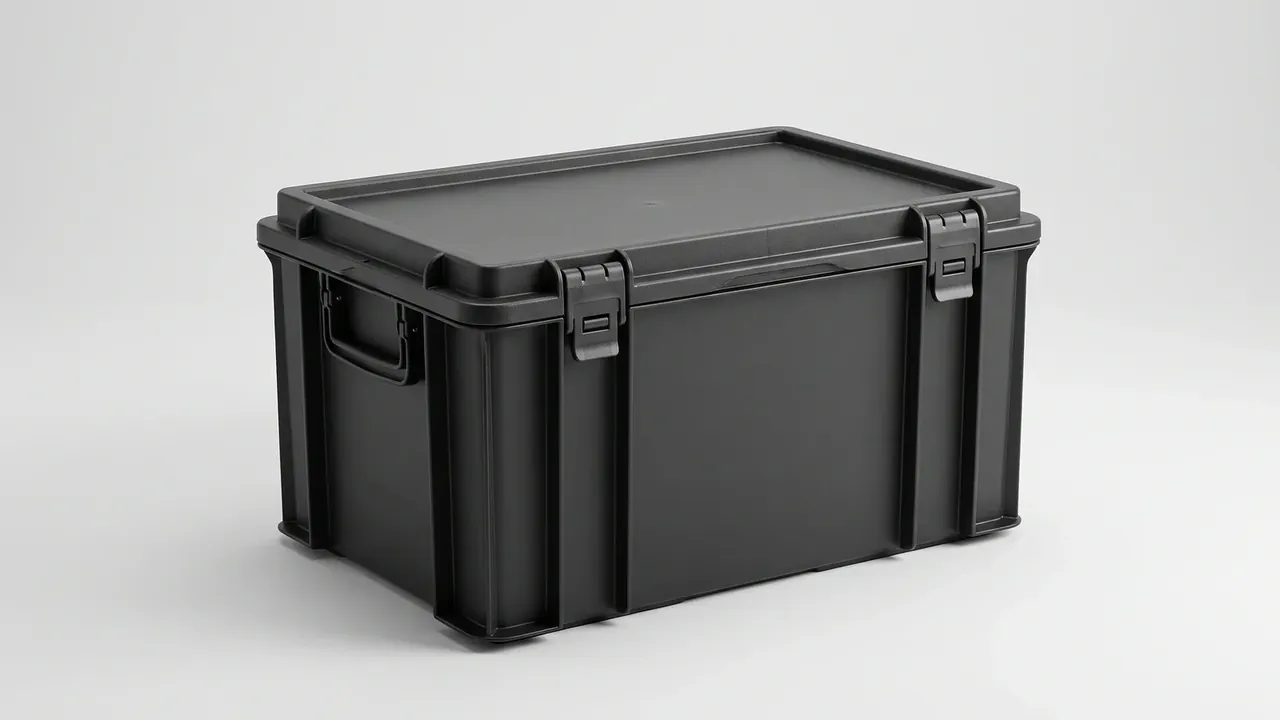
Quick answer: Acceptance for hard plastic waterproof cases runs in four layers — incoming, in-process, finished goods and pre-shipment — with measurable limits: 3.0±0.3 mm wall, 80–120 N latch force, and no more than 1 kPa drop over 60 seconds at 50 kPa. Lots are judged by AQL, with zero acceptance on critical defects.
Table of contents
- Acceptance Inspection Layers
- Incoming Wall Thickness Resin and Color
- Latches Gaskets and Cycle Life
- Water Stack and Drop Judgement
- Sampling and Reject Batch Handling
- FAQ
1. Acceptance Inspection Layers
A single final inspection is the usual gap in acceptance testing for hard plastic waterproof cases. Water resistance is mostly fixed at moulding: uneven walls pull in stress, an offset latch seat drops closing force to its floor, and a groove cut too deep leaks whatever the gasket. Items run backwards in four layers — 11 incoming, 8 in-process, 9 finished, 4 pre-shipment, 32 in all.
| Layer | Items | Basis | Record |
|---|---|---|---|
| Incoming, 11 | Melt flow, density, colour, gasket | COA plus retest | Incoming sheet |
| In-process, 8 | Wall, flash, torque, mould temperature | First-off plus patrol | Patrol log |
| Finished, 9 | Pressure, immersion, stacking, drop | Pressure per unit, rest sampled | Final record |
| Pre-shipment, 4 | Appearance, marking, count | Visual | Shipping report |
Thresholds move with use: air freight tightens the drop to 0.5 kPa, warehouse turnover allows 1.5 kPa. Verdicts read pass, rework or reject.
2. Incoming Wall Thickness Resin and Color
Thickness precedes appearance. Hard plastic waterproof cases run a 3.0 mm nominal wall at ±0.3 mm, read at five points: side midpoints plus base centre. Under 2.7 mm fails outright, because a thin spot loses impact strength.
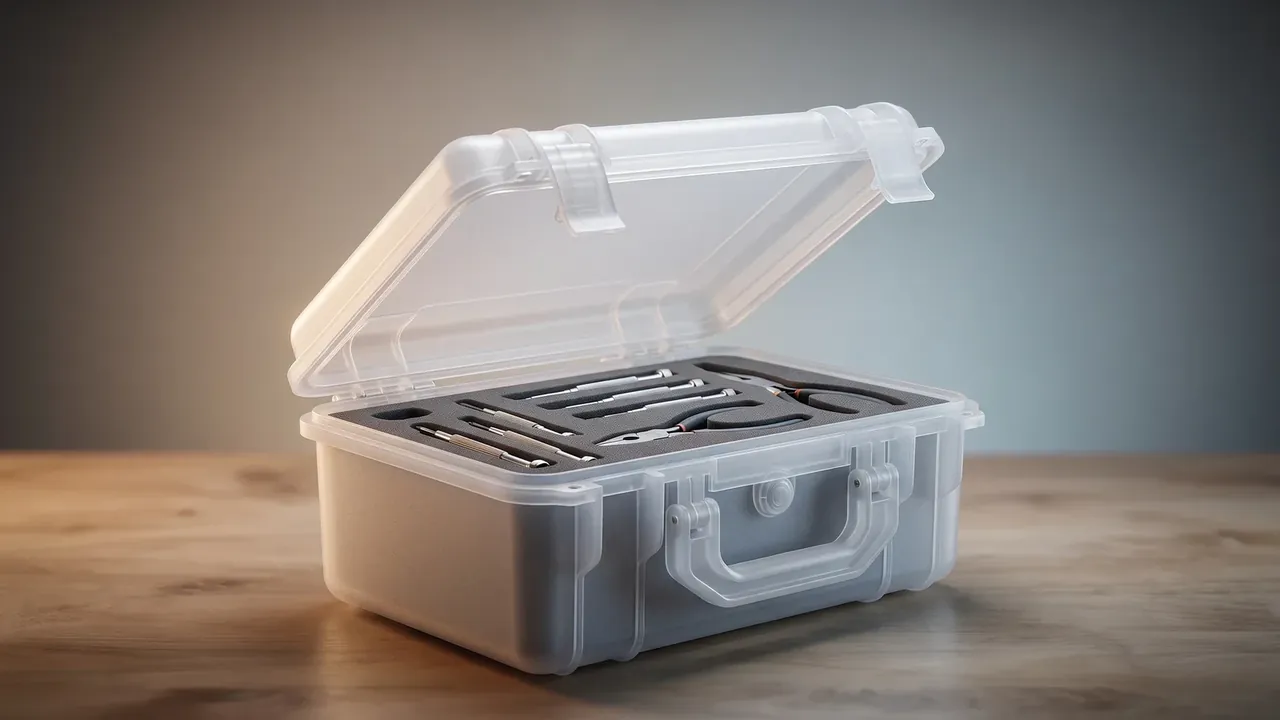
Resin is judged on melt flow and density: the same PP grade sits at 8–12 g/10 min at 230 °C, and a shift over 0.01 g/cm³ sends the masterbatch lot back. Colour passes at ΔE ≤1.5 on D65 and turns major above 2.5.
| Item | Point | Pass | Minor | Major |
|---|---|---|---|---|
| Wall | Five points, sides plus base | 3.0±0.3 mm | 2.7–2.8 mm | under 2.7 mm |
| Colour | D65, batch to batch | ΔE ≤1.5 | ΔE 1.5–2.5 | over 2.5 |
| Gasket | Shore A, median of three | 60±5 | off by 5–8 | off by over 8 |
3. Latches Gaskets and Cycle Life
Latches are the only load-bearing part a person operates, so the reading is closing force, not feel. Hard plastic waterproof cases hold 80–120 N: under 80 N a latch opens on a vibration table, over 120 N it cannot be closed in one gloved motion.
Life is 5,000 cycles with no more than 15% force loss; three whitened latch-seat roots stop the line for a mould check. Gaskets run Shore A 60±5, recovering 90% at 30% compression, seated in a groove with 0.3 mm interference and four readings within 0.2 mm.
4. Water Stack and Drop Judgement
Judgement for hard plastic waterproof cases runs water, load, drop. Inflate to 50 kPa, hold 60 seconds, accept a 1 kPa drop; then one metre of water for 30 minutes with no trace inside or in the groove.
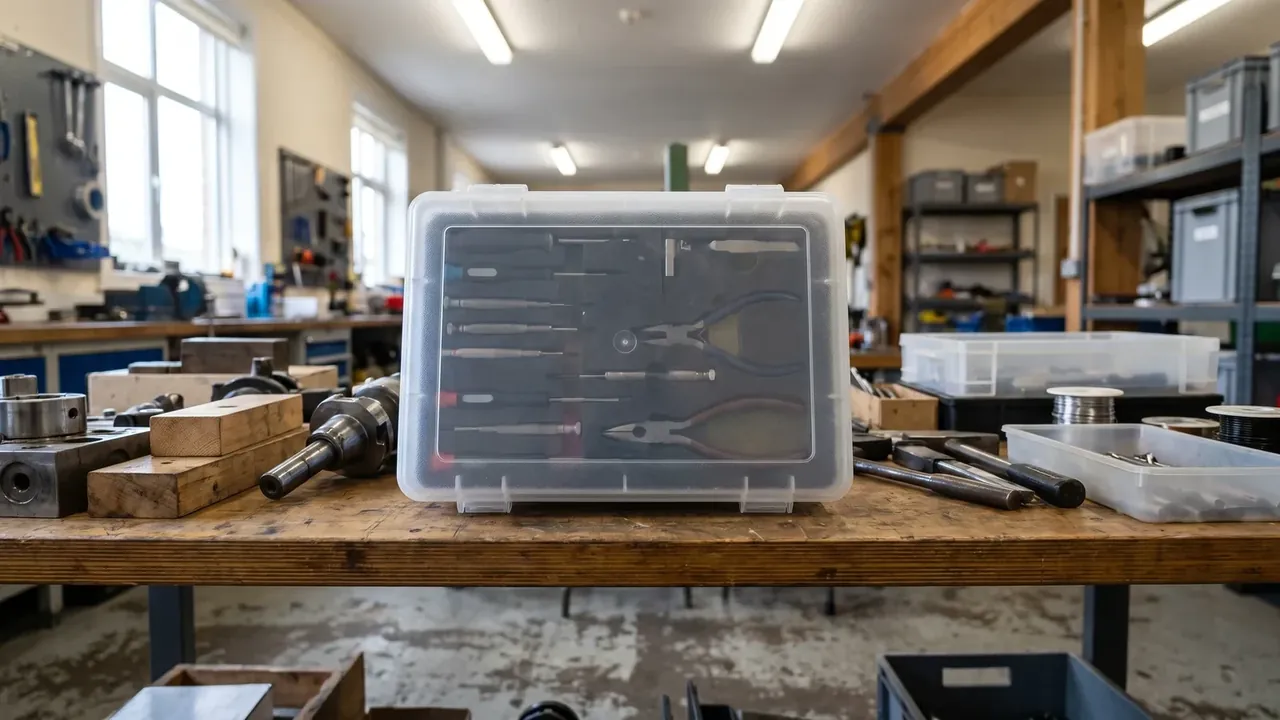
Stacking is 300 kg for 24 hours, with lid deflection over 2 mm failing and base corners checked. Drop is 1.2 m onto concrete, corners and latches watched, then a second pressure test. Climate is three cycles of 4 hours at −20 °C and +60 °C with 2 hours of recovery.
5. Sampling and Reject Batch Handling
Lot judgement for hard plastic waterproof cases follows GB/T 2828.1 at level II. At 501–1200 units the sample is 80: critical zero-accept, major at AQL 1.0 with acceptance 2 and rejection 3, minor at AQL 2.5 with 5 and 6.
| Class | Examples | AQL | Verdict at n=80 |
|---|---|---|---|
| Critical | Latch fracture, missing gasket | 0 | One unit rejects the lot |
| Major | Excess pressure drop, wall under 2.7 mm | 1.0 | Accept 2, reject at 3 |
| Minor | ΔE 1.5–2.5, flash 0.2–0.4 mm | 2.5 | Accept 5, reject at 6 |
Reworked lots are re-inspected at the original sample size. Concessions take three signatures, three retained samples held 12 months.
Conclusion
Acceptance is not a checklist but a system of layered limits and records: incoming holds thickness, in-process holds flash and mould temperature, finished goods hold pressure, pre-shipment holds marking. Give limits real numbers and verdicts real actions, and disputes have somewhere to land. Whether a lot of hard plastic waterproof cases ships comes down to whether those four layers reconcile.
This article discusses only the container (case body) side of specifications and design intent, and does not cover any handling, loading or use of the contents.
Related Reading
- How a waterproof hard case is sealed
- Waterproof hard case ratings and test conditions
- Tracing raw material lots for case moulding
- First-off approval in case trial moulding
Related Products
- 8 Series — Gun Cases; Military Equipment Cases; Camera Equipment Cases; Drone Cases; Watch Cases; Knife Cases; First Aid Cases; Electronics Equipment Cases
- WL8-2812 PP Gun Case — model WL8-2812
- All protective cases and toolboxes: 7 series, 158 models