

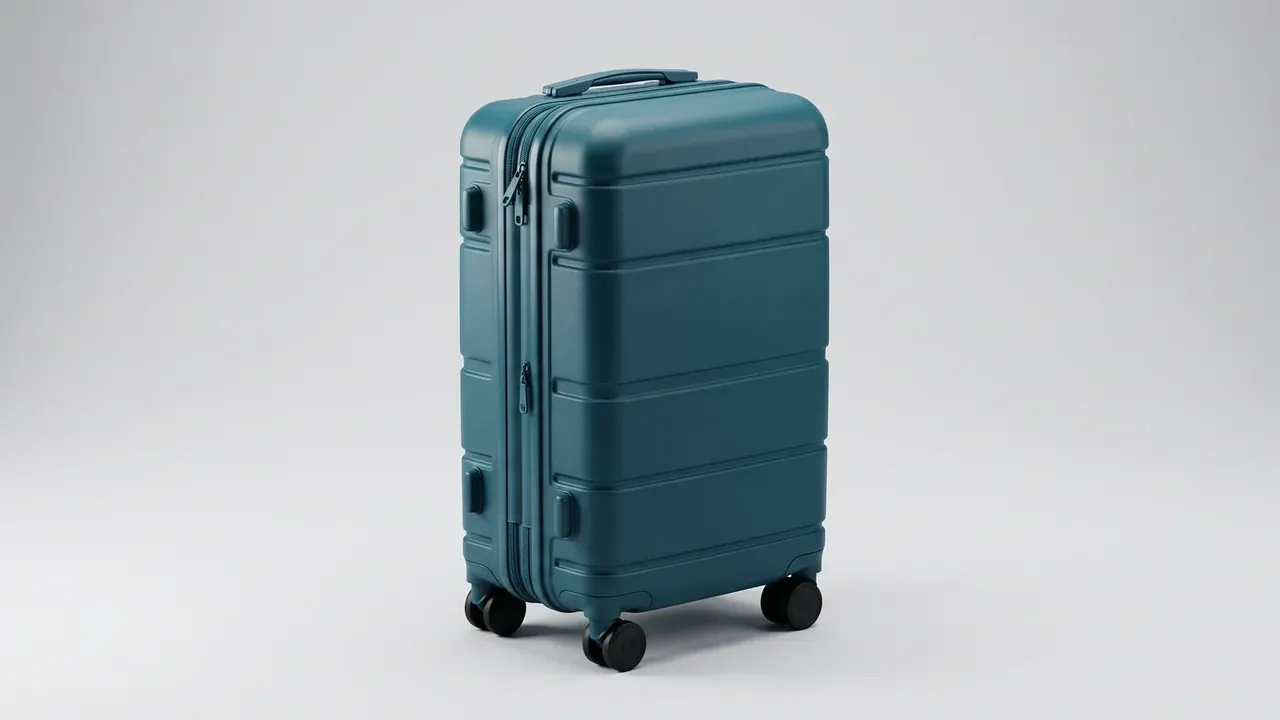
Quick answer: A heavy duty rolling instrument case is classified by how it reaches the site, not by industry. Indoor push, stair drag, long-haul stowage and off-road carry set cavity length from 600 to 780 mm, payload from 25 to 45 kg and wheels from 100 to 160 mm; foam layers and test limits follow.
Table of contents
- How a Heavy Duty Rolling Instrument Case Is Classified
- On-Site Testing and Calibration Setups
- Film and Broadcast Turnarounds
- Air, Rail and Off-Road Transport
- Turning a Site into a Configuration Sheet
- FAQ
1. How a Heavy Duty Rolling Instrument Case Is Classified
A heavy duty rolling instrument case is usually sorted by industry, which says little: the same portable spectrometer rides thirty metres on casters in a metrology lab and two hundred metres behind a forklift at a wind farm.
Dwell time comes second: a same-day trip loads the body only while the lid cycles, three weeks on site turns it into a bench that must hold a laptop.
Environment comes third: dusty shops, salt-air docks and cold stores pull different gaskets and plating.
| Lane | Mode | Distance | Cavity | Payload |
|---|---|---|---|---|
| Indoor metrology | four casters | under 30 m | 600 × 420 × 260 mm | 25 kg |
| Stairs and lifts | drag plus lift | 200 m, 6 floors | 700 × 500 × 300 mm | 35 kg |
| Long-haul truck | flat, stacked | 800 km | 780 × 560 × 340 mm | 45 kg |
| Off-road | two-person carry | 500 m gravel | 780 × 560 × 340 mm | 40 kg |
Payload covers body, foam and instrument together; past it each bracket sees torsion, and the four screw bosses under the base fail first.
2. On-Site Testing and Calibration Setups
On a testing job the heavy duty rolling instrument case is a mobile bench: probes, leads, reference blocks and a log book all reachable in one lid movement.
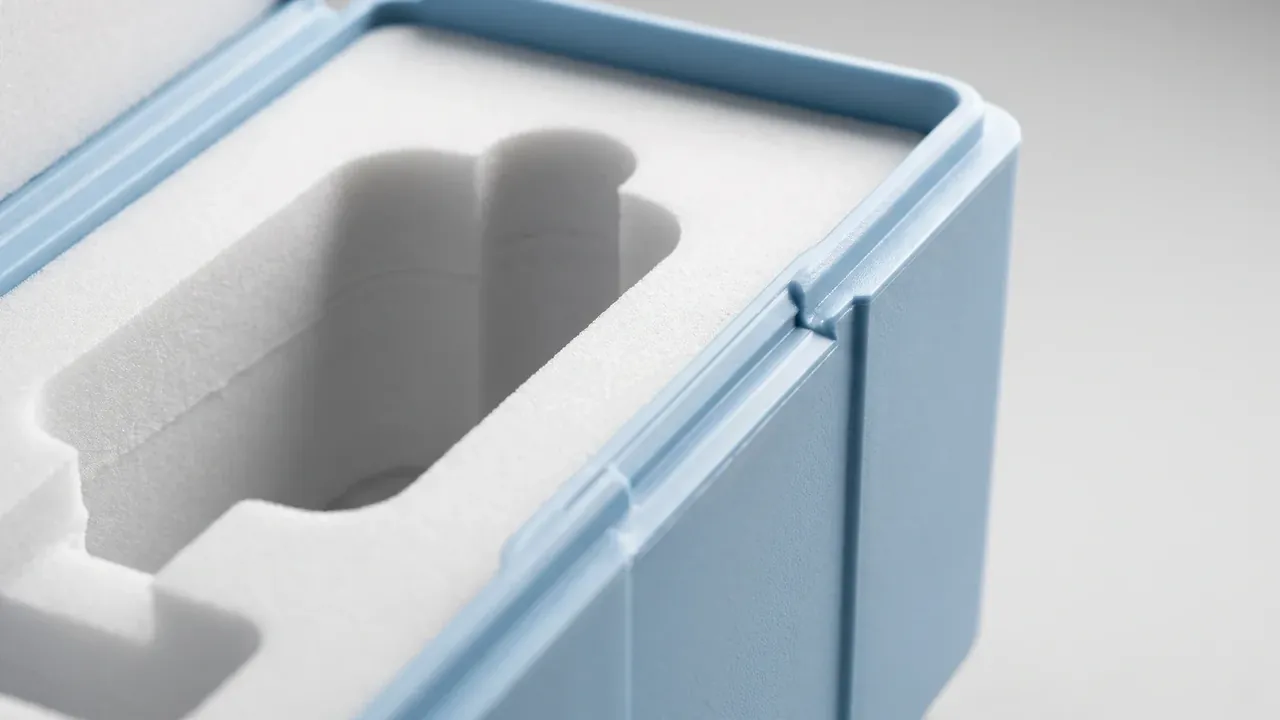
The build is 20 mm of EVA underneath, a cavity cut to the instrument outline, 10 mm of soft foam in the lid, 2 mm oversize so nothing shifts; a 600 × 420 × 260 mm cavity holds a handheld spectrometer under 25 kg.
At 105 degrees the centre of gravity moves back, so a damped hinge stop or two 8 mm rear feet keep it from tipping.
3. Film and Broadcast Turnarounds
Crews open the case a dozen times a day, so access beats rating. Two-point latches release at 25 to 35 N, and hinges stay under 0.3 mm of play after 5000 cycles; past that the lid sits crooked and the gasket opens on one side.
A drawer tray on a 2 mm aluminium base separates bodies from lenses, and the lid takes a 120 kg static rating on cross ribs 12 mm tall, because crews sit on it.
4. Air, Rail and Off-Road Transport
Air and rail add pressure, vibration and stacking. A cruising hold equals 2400 m of altitude, so a sealed case greets you with an inward hiss; a valve cracking at 8 kPa vents it.
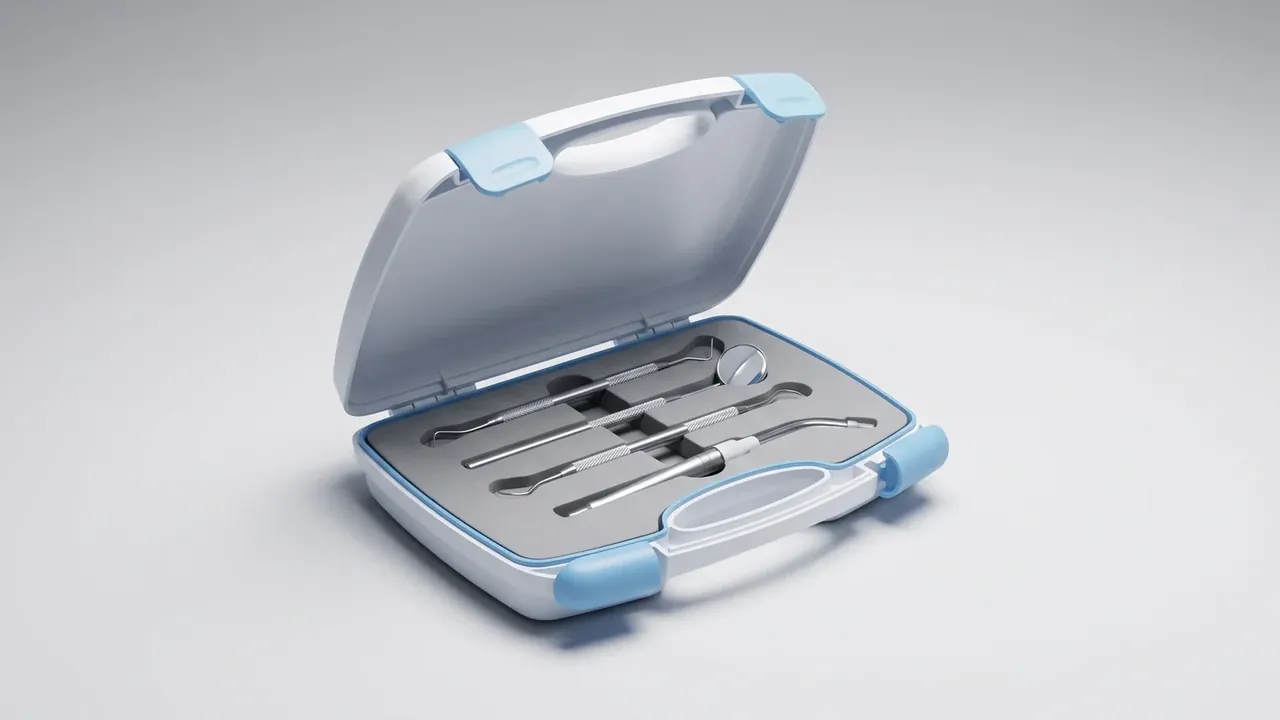
Four high, the bottom case carries 135 kg on the lid at 45 kg each. Rib layout decides that, not wall thickness: a 5.5 mm flat lid dents under a point load, while the same wall with a grid carries three times more.
Off-road, a 125 mm caster jams in gravel and bracket screws back off from 8 N·m to under 5 N·m within two kilometres.
5. Turning a Site into a Configuration Sheet
Once the lane is fixed, the sheet has four lines: cavity size, payload, wheel set, and seal plus hardware. Quotes compare only after those four agree.
| Item | Limit | Method |
|---|---|---|
| Bracket pull-out | 800 N | tensile rig |
| Handle play | 2 mm | 2000 cycles, tip deflection |
| Cold drop | no crack | −25 °C for 4 h, 1.0 m, six faces |
| Salt spray | grade 9 | 48 h neutral |
Foam is the forgotten cost: an EVA cavity insert and a PE divider insert differ by thirty percent of case price, so name compound, density and layer count.
Conclusion
The heavy duty rolling instrument case is chosen by route, not by datasheet: transport mode sets the lane, dwell time sets the foam, environment sets the gasket and hardware. Get those three right and the rest of the heavy duty rolling instrument case follows.
This article discusses only the container (case body) side of specifications and design intent, and does not cover any handling, loading or use of the contents.
Related Reading
- How an instrument case is built
- Reading instrument case specifications
- Choosing a wheeled protective case
- Trolley tool case site practice
Related Products
- 8 Series — Gun Cases; Military Equipment Cases; Camera Equipment Cases; Drone Cases; Watch Cases; Knife Cases; First Aid Cases; Electronics Equipment Cases
- WL8-2812 PP Gun Case — model WL8-2812
- All protective cases and toolboxes: 7 series, 158 models