

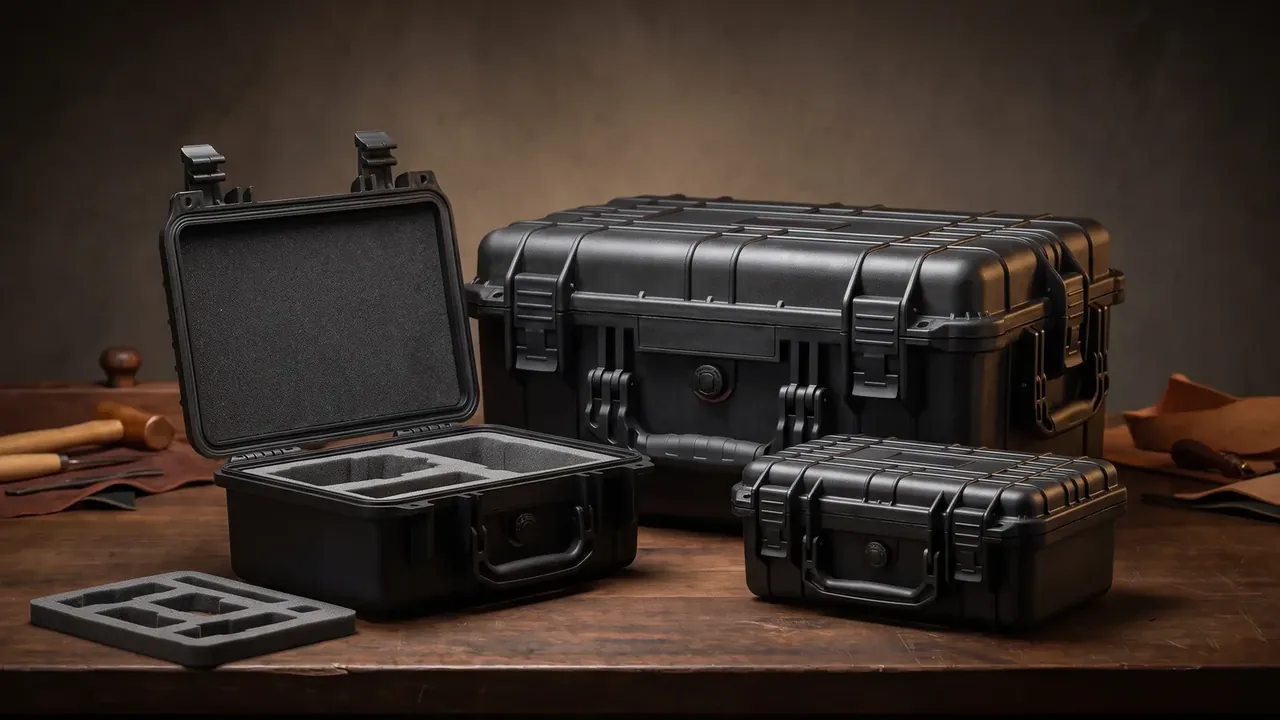
Quick answer:Industrial Protective Case Solutions splits travel risk into 5 scenes: a 1.2 m drop, 5-high stacking, 30% humidity, 3 instrument types and 2 repair cases.
This article covers the case side only: shells, inserts and kits, not what the equipment does in the field.
Table of contents
- Drop and Stack Combinations
- Moisture and Condensation Combinations
- Precision Instrument Combinations
- Field Repair Combinations
- What a Solution Delivery Includes
- FAQ
1. Drop and Stack Combinations
A solution is not the most expensive shell offered to a customer; it is the risk taken apart and paired off. A consignment of equipment leaving one yard meets 5 scenes on the way: a drop, a stack, damp air, instruments that must not shift, and a repair stop. Industrial Protective Case Solutions pair shell, insert and kit per scene, and a pairing missing one of the three is not a solution.
The drop figure is 1.2 m. A case falling from trolley height lands on a corner, then the floor, and the insert absorbs what is left. On the shell side the corners thicken and the floor carries buffer ribs, with latch holding force between 200 N and 400 N so a catch does not spring open on impact.
The stacking figure is 5 high. The bottom case carries the weight of four above it, and that load arrives on the lid panel, not the walls. Without a longitudinal rib across the lid, the panel sinks within days, the gasket loses its compression, and the stack starts to lean.
| Scene | Risk | Shell work | Insert work | Kit |
|---|---|---|---|---|
| Short transfer | drop 1.2 m | thickened corners, 4 latches | cut cavity lifting the unit off the floor | pickup notch and strap |
| Warehouse stack | 5 high | longitudinal lid rib | egg-crate lid pad against the panel | dividers |
| Sea freight | 30% humidity | sealed IP67 face | 50 g desiccant | spare gasket |
The three rows are the usual pairings in Industrial Protective Case Solutions; a real one adds or removes kit along a single row.
2. Moisture and Condensation Combinations
Damp air splits into two problems in Industrial Protective Case Solutions, water entering and water condensing. Entering water is stopped by the seal, and IP67 means immersion at 1 m for 30 min with a sample-to-water temperature gap under 5 K; hose spray and repeated soaking sit outside that definition, so a deck-wash routine cannot lean on the rating.
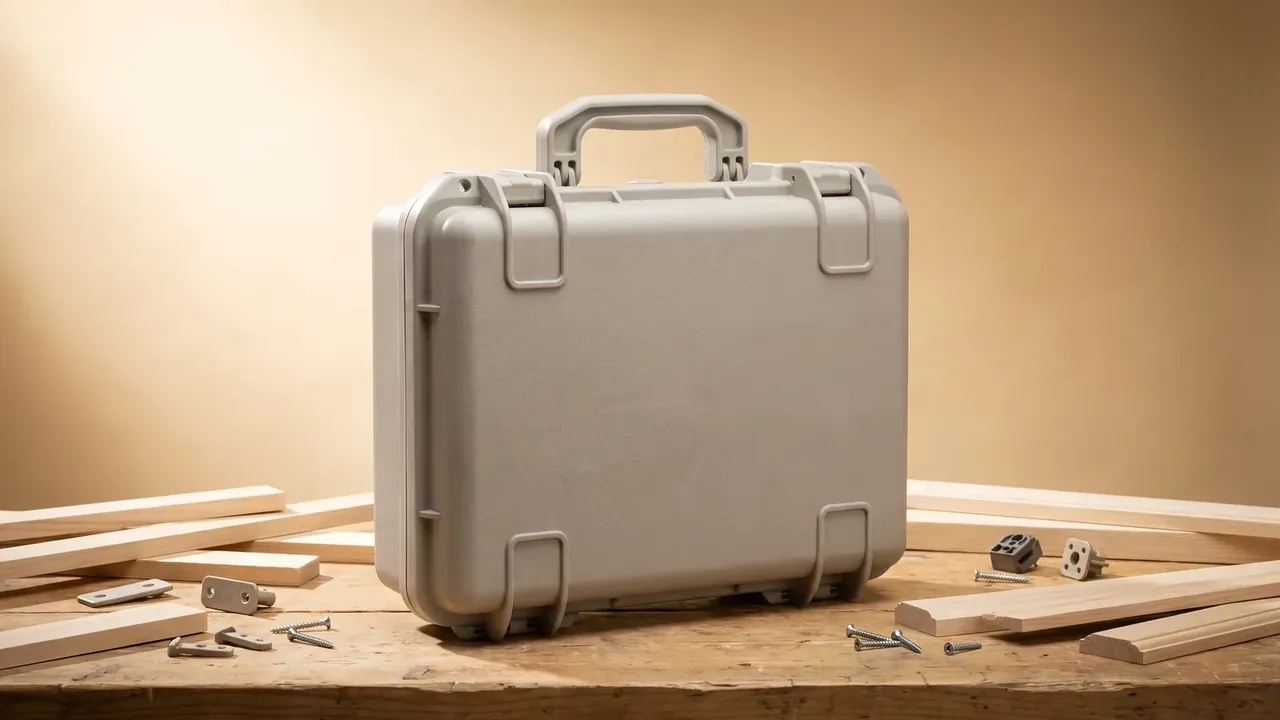
Condensation is a different account. As the case cools, vapour condenses on the coldest surface, which is usually the equipment, and a tighter seal makes it harder to escape. So a desiccant travels alongside the gasket, never instead of it.
The gasket runs TPE at Shore A 50–60. At that softness the bead fills the corners of the groove as the lid comes down; harder than 60 and the corners stay open, softer than 50 and the bead flattens and stops springing back. Wipe the groove before every close, because one grain of grit pressed into the bead leaves a channel for good.
Industrial Protective Case Solutions dose desiccant at 50 g per mid-size case, aimed at internal humidity near 30%. The sachet goes in the lid pocket, never against the equipment, and a humidity card on the lid face shows the state at a glance.
| Measure | Dose | Position | Recheck |
|---|---|---|---|
| Desiccant | 50 g | lid pocket | card colour at each opening |
| Gasket | Shore A 50–60 | full groove | wipe and inspect quarterly |
| Immersion retest | 1 m for 30 min | closed case as sample | once a year |
3. Precision Instrument Combinations
Industrial Protective Case Solutions divide instruments into 3 types: optical, electrical measuring and mechanical gauge. Each fears something different, so the pairing changes. An optical unit fears movement, so the cavity hugs the housing and the pickup notch is cut on the barrel side where fingers never reach the glass. An electrical meter fears static and damp, so the foam is antistatic EVA and a desiccant travels with it. A gauge fears a knocked edge, so the cavity leaves the measuring face hanging clear.
The foam in Industrial Protective Case Solutions is EVA throughout, at 25–45 kg/m³. The low end conforms well but cannot carry a heavy unit, while the high end carries weight and prints a mark into thin-walled parts. Compression set stays between 10% and 20% at 25% compression, 23 ℃, 22 h, so a cavity loaded weekly for a year keeps its shape instead of flaring at the mouth.
Two layers do the work: a base cavity and a top layer of shallow pockets that press the unit down, aligned on dowels. Lid depth decides how thick the top layer can be, and a shallow lid limits it to a thin egg-crate sheet that cannot hold anything down.
4. Field Repair Combinations
A repair stop in Industrial Protective Case Solutions takes 2 cases: the main one for tools and spares, the second for consumables. They are split because the opening rates differ: the main case opens daily, the second weekly, and one case would bury the daily tools.
Industrial Protective Case Solutions cut the main insert to the tool outlines, with a chamfer at each pocket mouth so a gloved finger can pinch the handle. The second case uses colour-coded dividers, one colour per consumable group. Handles and casters are both fitted here, since a repair point is often two floors away from the lift.
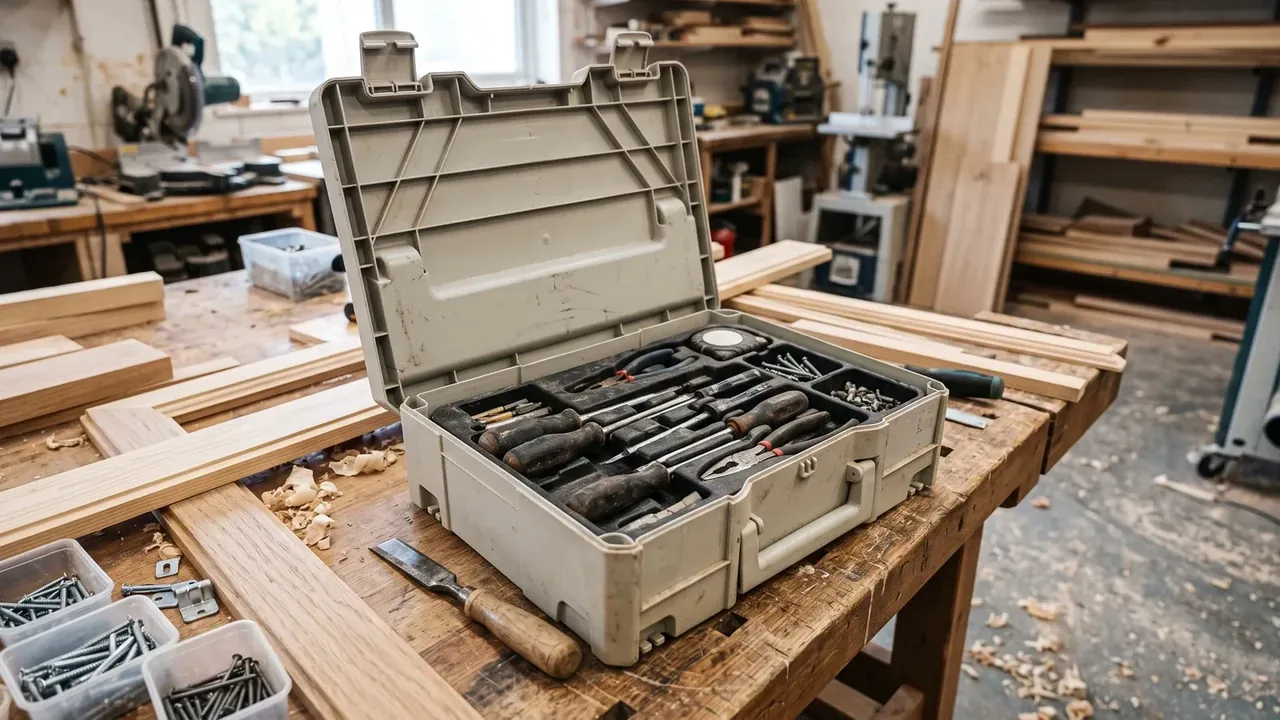
The kit is what makes this pairing work: a spare gasket, desiccant, labels and fasteners in one bag that travels with the case. A gasket cut on site is swapped in minutes, where waiting for a spare costs a day, and a kit that runs out leaves half the solution at the door.
5. What a Solution Delivery Includes
Industrial Protective Case Solutions ship a delivery list, not a case. The 4-piece set on that list is shell, insert, kit and documents, and the documents carry the insert drawing, the shell spec page, the kit contents and the replacement intervals. A customer signs off against the list and reorders against it later.
Two entries sit outside the four. The first is a spare gasket, since the groove seal is a wear item and one spare should travel with every case. The second is handling instruction: 5 high is the stacking limit, and the forklift pockets are marked on the floor. Ruling: if the shell and insert pairing offered for one scene cannot cover 3 main risks, or the delivery list omits the spare gasket, the solution does not stand.
Export work adds a packaging line. A Euro pallet is 1200×800 mm, a 40HQ measures about 12.03×2.35×2.39 m, and cases per pallet and pallets per load are settled before booking. Timber blocking travels under ISPM 15, heat-treated to 56 ℃ for 30 min at the core.
Related Reading
- Plastic case or wooden crate: the cost line
- Foam insert solutions for industrial cases
- Injection molding solutions for industrial cases
- How to judge whether a case structure is sound
JUNZHIJIA
Related Products
- 8 Series — Gun Cases; Military Equipment Cases; Camera Equipment Cases; Drone Cases; Watch Cases; Knife Cases; First Aid Cases; Electronics Equipment Cases
- WL8-2812 PP Gun Case — model WL8-2812
- All protective cases and toolboxes: 7 series, 158 models