

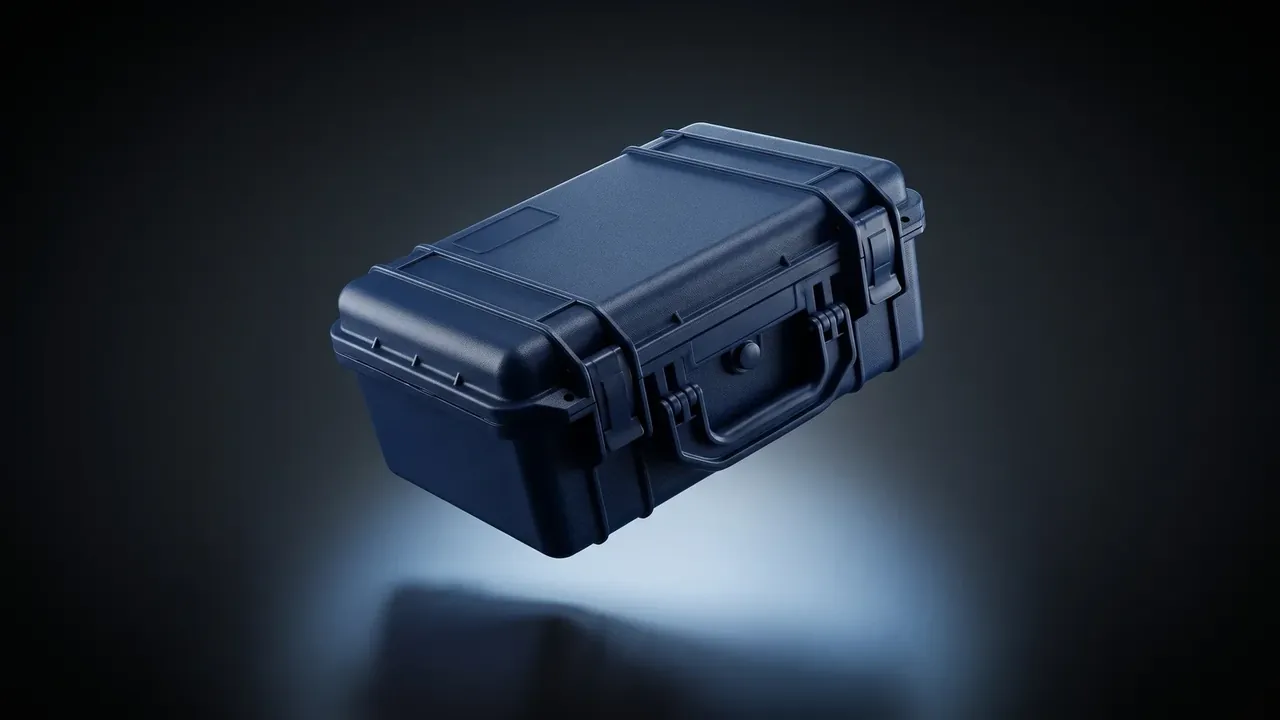
Quick answer: An industrial rolling utility case covers four jobs: line patrol, machine maintenance, warehouse picking and off-site work. Three inputs decide the build — distance per shift, tool weight, sills and ramps. Under 1.8 km and 45 kg, four 75 mm castors are enough; across shops, go to 100 mm.
Table of contents
- How Industrial Rolling Utility Case Uses Divide
- Line Patrol and Machine Maintenance
- Picking, Storage and Shop-Floor Movement
- Off-Site Work and Outdoor Stations
- Specification Choices and Failure Prevention
- FAQ
1. How Industrial Rolling Utility Case Uses Divide
Measure three things first: distance per shift, kilograms inside, sills and ramps on the route. The same tools at 300 m and at 2 km need different wheel sizes. Get the class wrong on an industrial rolling utility case and no tooling makes it tow.
1.8 km per shift is the usual break. A patrol walks two rounds of 900 m, where four 75 mm castors on epoxy push easiest; a 20 mm sill or a shop crossing needs 100 mm.
| Use | Per shift | Setup |
|---|---|---|
| Line patrol | Under 1.8 km | Four 75 mm castors, eight pockets |
| Maintenance | Under 500 m | Flat 50 kg lid |
| Picking | 2 to 4 km | 100 mm castors, label out |
2. Line Patrol and Machine Maintenance
A patrol route is a loop, and the case has to finish it with the technician. Aisles run about 1200 mm clear, so a 480 mm body leaves 240 mm for two people to pass; past 520 mm the case stops for every oncoming cart.
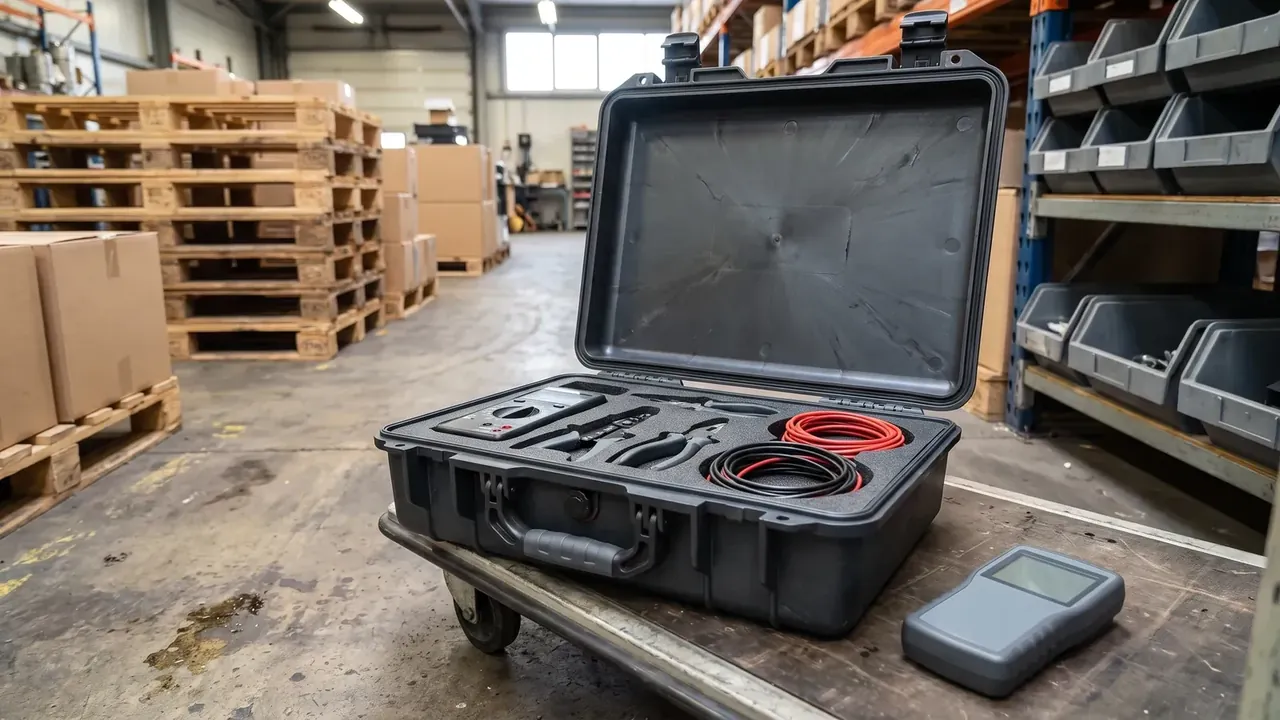
Maintenance is another motion. The case parks with an 800 mm working radius, and the lid must not press a knee when the technician crouches. A flat lid rated at 50 kg distributed lets removed guards sit on top, yet buyers often receive a crowned one instead.
Pocket depth follows the tools: eight pockets, each 5 mm deeper than the tool it holds.
3. Picking, Storage and Shop-Floor Movement
Picking is the longest distance, so an industrial rolling utility case there accumulates fatigue rather than peak load. Four kilometres a shift over 250 shifts turns the wheels about 17 million times, and the axle-to-housing fit loosens first.
Strength comes from structure, not wall thickness. A 3.0 mm wall, five base ribs and radiused corners carry 45 kg; 3.5 mm without ribs adds weight and cracks where rib meets wall.
| Load | Wall | Castors |
|---|---|---|
| 15 to 30 kg | 3.0 mm | Four at 75 mm |
| 30 to 45 kg | 3.0 mm ribbed | Four at 100 mm |
Three cases high put 135 kg on the bottom one, so lid corners must land on the ribs below; a fourth layer sags the bottom lid past 3 mm and the gasket stops sealing.
4. Off-Site Work and Outdoor Stations
Off site, the case leaves smooth floor for gravel, so sealing and wheels are tested together. The body is built to IP65 and takes 12.5 litres per minute of spray for 3 minutes; water thrown onto the base and lid seam is the real test.
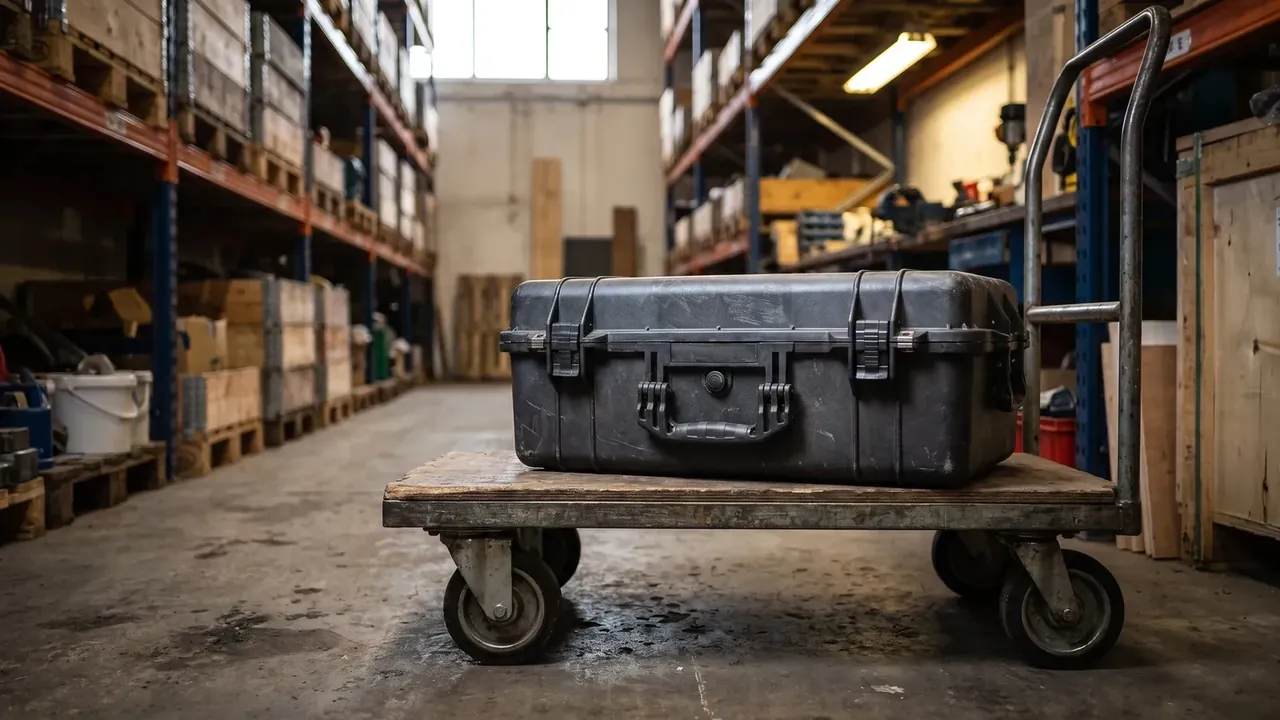
Temperature is the hidden variable. A winter station reaches −20 °C and a closed van in summer 60 °C, so latches must not go brittle. Ask for low-temperature impact and heat deflection figures, not one operating range.
Access also changes outdoors. Latches cycle over 40 times a day, 10,000 a year, against a pin rated for 50,000; life ends at pin corrosion, so outdoor hardware is specified at 96 hours of salt spray.
5. Specification Choices and Failure Prevention
A purchase list needs six lines: cavity, wall and ribs, castor size and count, pockets, sealing class, label position. The cavity starts at 560 by 420 by 220 mm, enough for an A4 folder and a 300 mm wrench upright; a 100 by 60 mm recess keeps the label readable.
| Fault | Usual cause | Fix |
|---|---|---|
| Loose housing | Plastic post, no insert | Insert boss at 8 N·m |
| Seam leakage | Over-stacked, gasket flat | Cap at three layers |
| Base sagging | Load past design | Ribs or one layer less |
One of those three, base sagging, comes from a habit: using the case as shelving. The rating is set by stacking, not body weight.
Conclusion
Dividing uses for an industrial rolling utility case means measuring distance, load and aisle first, then matching castors, wall and pockets to them. Patrol wants easy pushing, storage wants stacking strength, off-site work wants sealing and cold toughness, and one build cannot cover all three. Specified this way, an industrial rolling utility case lasts a shift without wearing out the person pushing it.
This article discusses only the container (case body) side of specifications and design intent, and does not cover any handling, loading or use of the contents.
Related Reading
- Where rolling tool cases are used
- How tool box compartments are laid out
- Instrument case structure and protection
- Transit cases in logistics
Related Products
- 8 Series — Gun Cases; Military Equipment Cases; Camera Equipment Cases; Drone Cases; Watch Cases; Knife Cases; First Aid Cases; Electronics Equipment Cases
- WL8-2812 PP Gun Case — model WL8-2812
- All protective cases and toolboxes: 7 series, 158 models