


Quick answer: Industrial tester & tools hard briefcase splits 425 × 305 × 130 mm into two zones: a 130 mm instrument bay, 6 tool slots and a φ110 mm reel seat.
Table of contents
- Splitting the industrial tester & tools hard briefcase into two zones
- A 130 mm clear height over the instrument bay
- Six tool slots and what the 12 mm divider does
- A φ110 mm cable reel seat and the pre-close check
- Drop at 1.0 m, IP65 and 4000 open-close cycles
- FAQ
1. Splitting the industrial tester & tools hard briefcase into two zones
An instrument and a wrench want opposite things from one cavity: the instrument needs 10 mm of clearance on four sides so foam never touches its panel, the tool needs contact to stay put. The industrial tester & tools hard briefcase splits 425 × 305 × 130 mm along that line.
Outside first: 480 × 360 × 170 mm, a 3.8 kg shell and 8.2 kg of load give 12 kg all-up, still a one-hand carry. Add 40 mm outside and the case needs wheels, so the handle stops carrying and starts towing.
The 12 mm divider is where the two demands meet: it blocks a raised knob on one side, stops the longest tool on the other, and both loads arrive on the same face.
| Zone inside the case | What it holds, by form | Clearance value |
|---|---|---|
| Instrument bay | Bench unit with knobs on the face | 130 mm clear, 10 mm all round |
| Tool bay | Long and blocky hand tools | 6 slots, 62 mm wide each |
| Cable seat | Coiled cable and adaptors | φ110 mm round, 55 mm deep |
The order matters: the 130 mm bay is fixed first, the tool bay is cut from what remains, and the cable seat takes the strip by the wall.
2. A 130 mm clear height over the instrument bay
130 mm is the tallest instrument plus 10 mm. That allowance is not tolerance but lid foam: closed, the foam presses 3 mm onto the panel, while 8 mm makes a knob the load path.
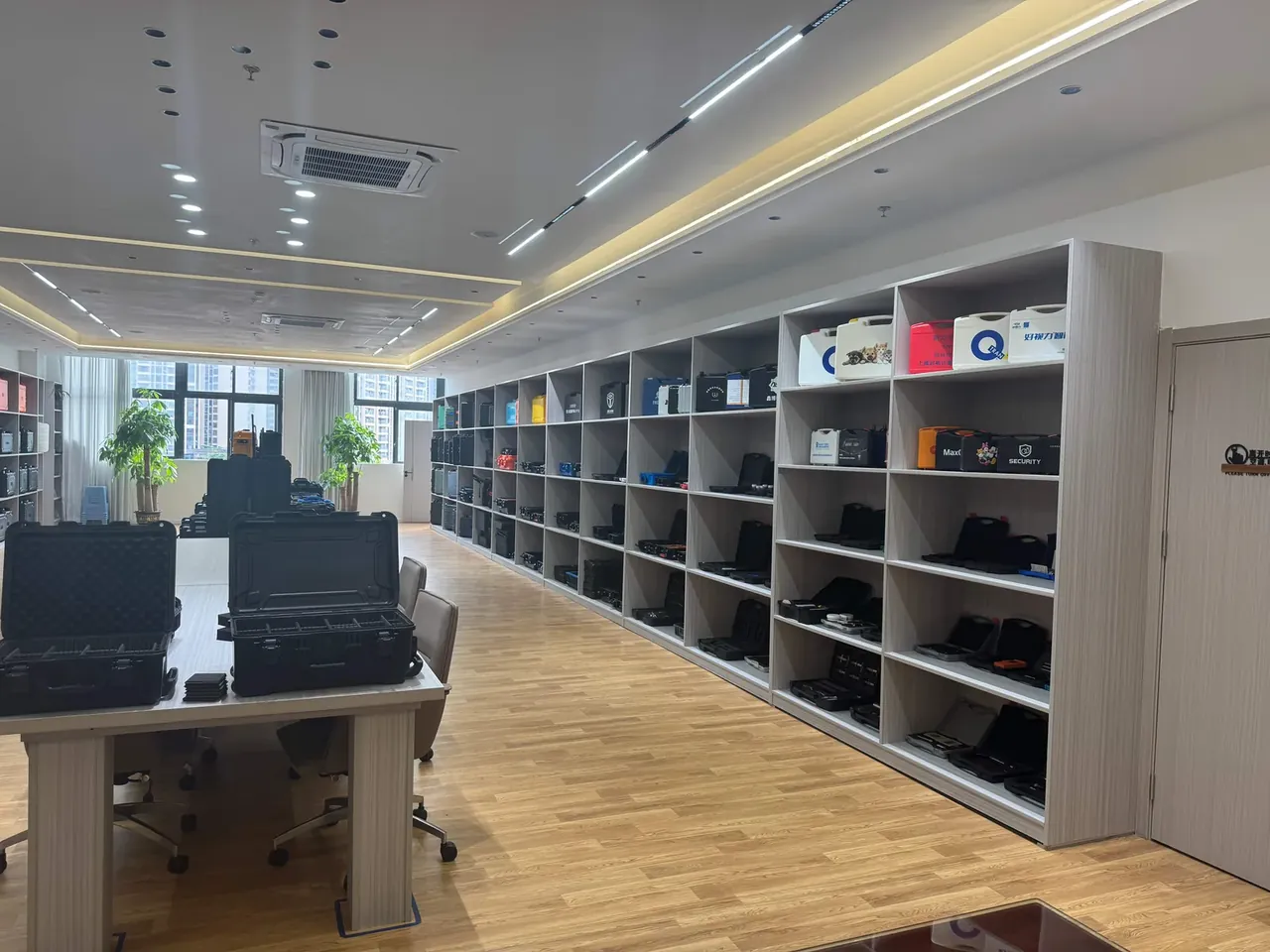
A gland hole is the fastest way to lose IP65, so the industrial tester & tools hard briefcase keeps cable inside, coiled in the round seat.
The φ110 mm seat buffers both bays: coiled cable lands at 95 mm to 105 mm outside diameter, leaving 5 mm for a fingertip, and at 55 mm deep two coils sit level with the bay floor.
| What it holds, by form | Retention | Movement allowed |
|---|---|---|
| Bench unit | Foam pocket plus two ribs | 1.5 mm or less |
| Long-shaft tool | Clip jaw | 2 mm or less |
| Cable coil | Round seat plus cap | 1 mm or less |
On the industrial tester & tools hard briefcase those figures follow drop height: at 1.0 m a unit moving 3 mm strikes the pocket wall, while 1.5 mm leaves foam travel to absorb it.
3. Six tool slots and what the 12 mm divider does
Six slots come from clear width. A 12 mm divider runs the 425 mm length and splits the cavity into a 190 mm instrument bay and a 103 mm tool bay; with foam at both ends about 400 mm is left, and 62 mm per band fills it with six. Eight bands drop clear width under 50 mm.
On the industrial tester & tools hard briefcase the 12 mm divider props the instrument floor at mid-span, shields the panel from hard tool edges, and splits lid foam pressure into two lines so the foam cannot shift as a block.
A 3.2 mm wall beside a 12 mm divider is not unbalanced: the wall bends and needs section depth, the divider is crushed sideways and needs thickness.
Depths differ too: raising the tool bay floor 15 mm puts the highest point of a diagonal shaft at 115 mm.
4. A φ110 mm cable reel seat and the pre-close check
The pre-close check cannot be skipped. A coil that has not dropped into its φ110 mm seat sits 6 mm proud, so the lid presses the coil instead of the gasket.
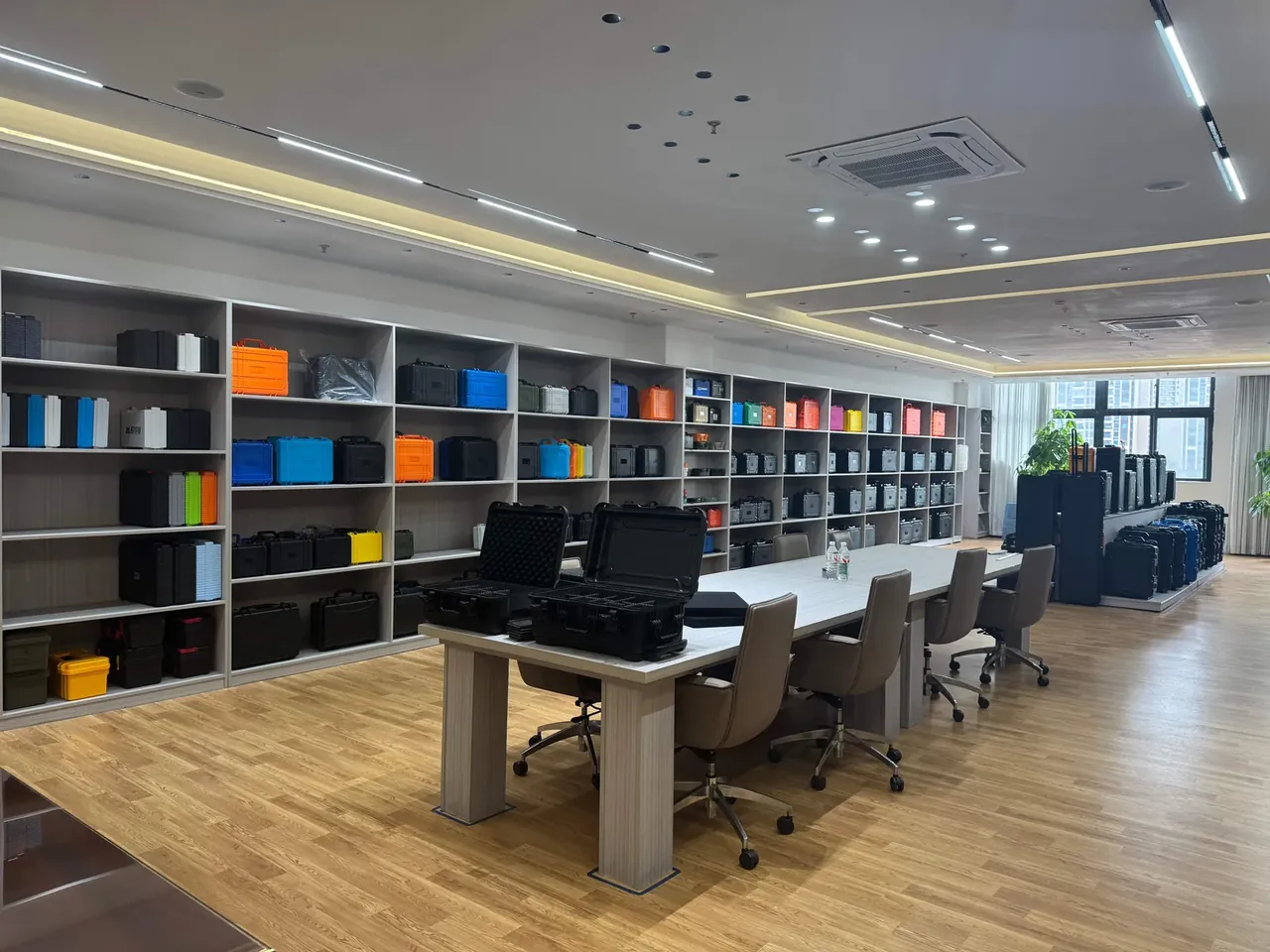
The industrial tester & tools hard briefcase carries two 320 N latches and a 320 N handle, the same range because both load in the worst case: one-hand carry, case striking a door frame.
| Clearance value | Number | Basis |
|---|---|---|
| Instrument bay height | 130 mm | Tallest unit plus 10 mm compression |
| Divider thickness | 12 mm | Bending support plus side isolation |
| Tool slots | 6 | Clear width not below 60 mm |
| Cable seat | φ110 mm | Coil diameter plus 5 mm finger space |
5. Drop at 1.0 m, IP65 and 4000 open-close cycles
1.0 m is the industrial tester & tools hard briefcase baseline, 200 mm under a transit case, because the handle rides lower. A bottom corner is worst: impact reaches the divider joint, and without a fillet at the 12 mm root the crack starts there.
IP65 and IP67 differ once: both are level 6 for dust, while water goes from 1 m for 30 min to a jet. An 8 mm gasket at 25% compression covers the jet case.
4000 cycles at ten a day is about 400 days. Hinge clearance past 0.5 mm makes the lid rock, shears the gasket, and ends life before the latch does.
At −15 °C the shell keeps about 70% of its impact strength; at 60 °C foam compression set eats 1 mm to 2 mm of the bay allowance.
Conclusion
The industrial tester & tools hard briefcase is laid out bay first: 130 mm fixes the instrument bay, the rest cuts into 6 tool slots, the 12 mm divider carries both loads, and the φ110 mm reel seat closes the last gap. Compare divider thickness, bay height and one slot's clear width; once those three agree, the two kinds of contents stop interfering.
Related Reading
- Case structure for industrial detection instruments
- Load design for industrial CT source and detector cases
- Transit allowance in instrument protective cases
- Zoning and retention in industrial X-ray component cases
Related Products
- 8 Series — Gun Cases; Military Equipment Cases; Camera Equipment Cases; Drone Cases; Watch Cases; Knife Cases; First Aid Cases; Electronics Equipment Cases
- WL8-2812 PP Gun Case — model WL8-2812
- All protective cases and toolboxes: 7 series, 158 models