

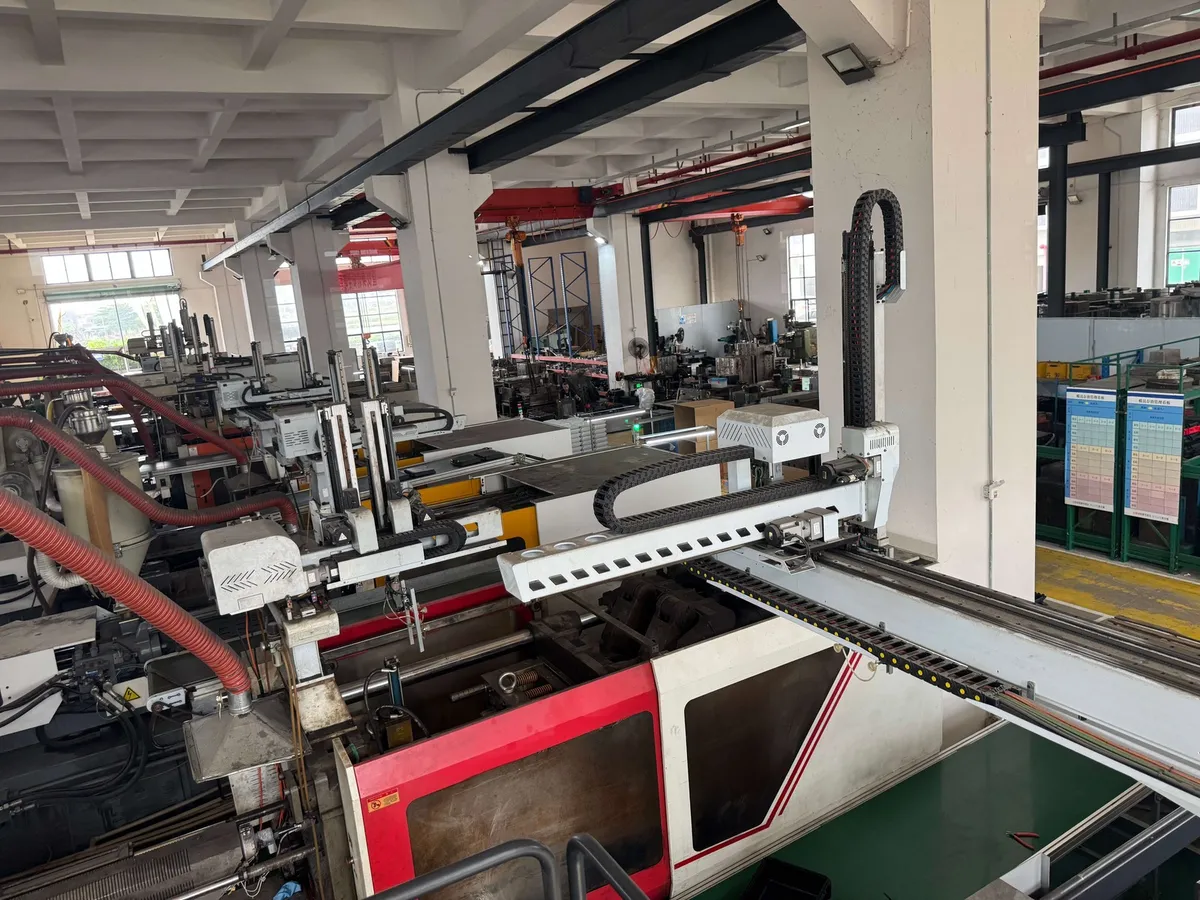
Injection molding forces molten polymer into a steel tool at 500–2,000 bar, delivering tight tolerances and cycle times measured in seconds, at the price of expensive tooling and a practical size ceiling. Rotational molding tumbles polymer powder inside a heated, biaxially rotating mould at atmospheric pressure: no clamping force, cheap tooling, seamless uniform walls, and cycle times of roughly 15–90 minutes. Size and volume decide which one wins.
How Each Process Works
The two processes differ in almost every physical respect, and those differences cascade into cost, size limits and performance.
| Factor | Injection molding | Rotational molding |
|---|---|---|
| Pressure | 500–2,000 bar, needs large clamping force | Atmospheric; no clamping force required |
| Tooling | Hardened steel or aluminium, high cost, long life | Cast aluminium or fabricated sheet metal, lower cost |
| Cycle time | Seconds to a few minutes | Roughly 15–90 minutes per part |
| Wall thickness | Controlled by tool design; thick sections risk sink marks | Uniform by nature of the process; thick walls are easy |
| Tolerances | Tight, commonly around ±0.02 mm | Looser; fine features usually need secondary operations |
| Surface finish | High gloss, crisp detail | Matte or textured; detail is softer |
Why Injection Cases Stop at a Certain Size
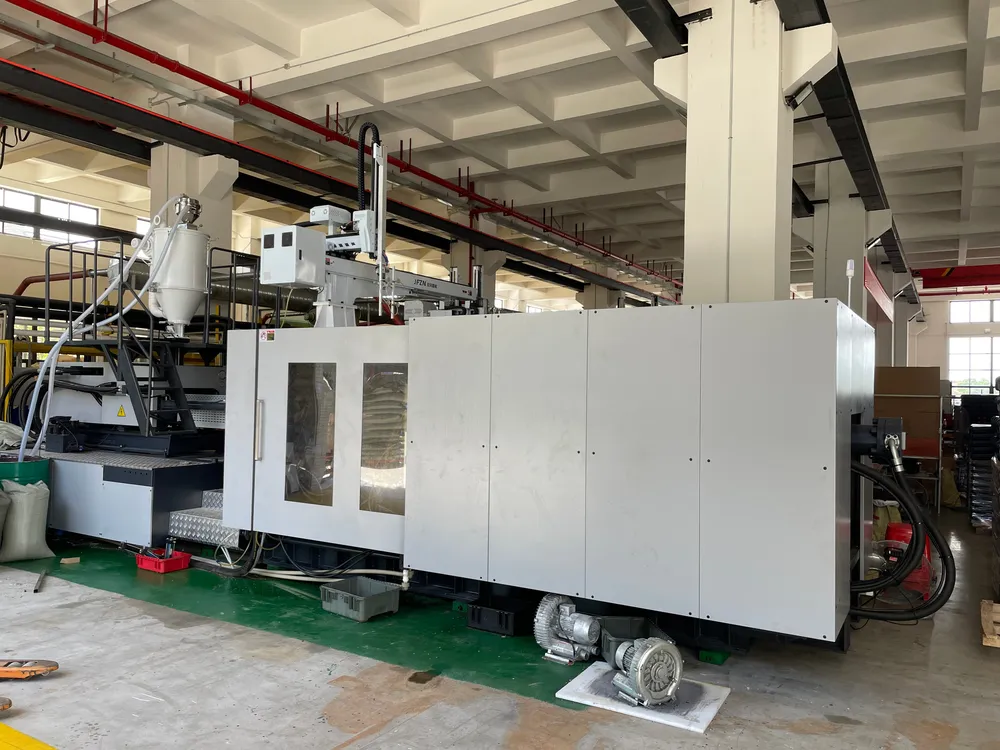
Clamping force scales with the projected area of the part. A case with a footprint around 1 m² can require more than 1,000 tons of clamping force, plus a hardened-steel tool machined to survive it — tooling for very large injection tools can reach hundreds of thousands of dollars or more. There is also a flow-length problem: molten plastic cools as it travels from the gate, so long flow paths risk short shots and visible weld lines. Together these constraints are why injection-molded cases cluster in small and medium sizes.
Why Rotomolding Scales Up
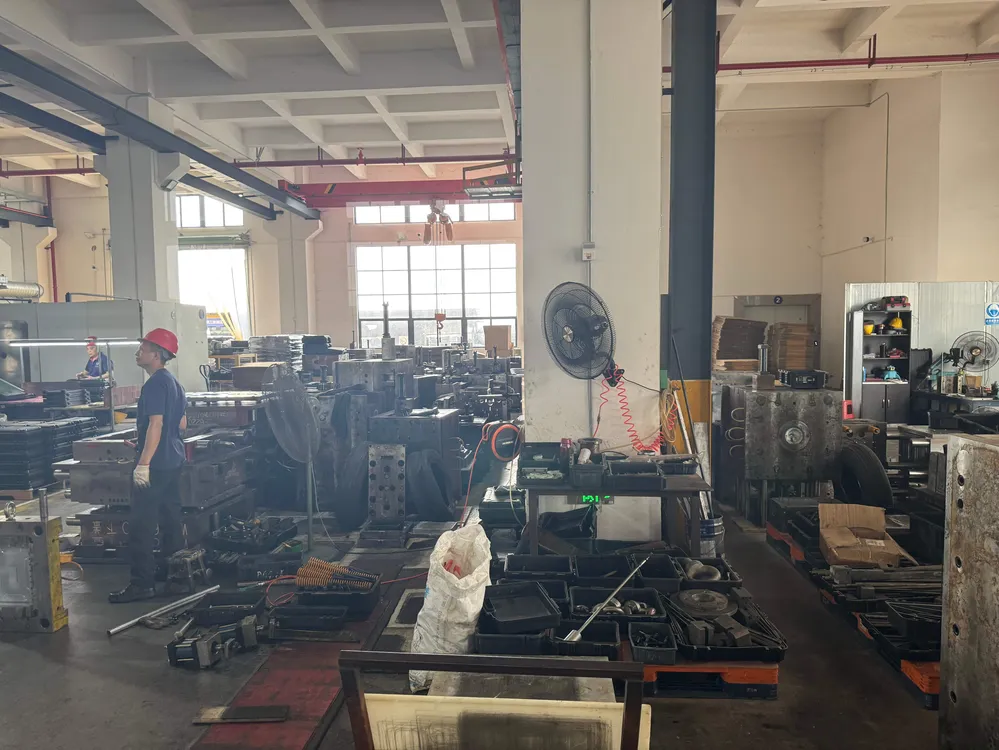
Because the process runs at atmospheric pressure, part size is bounded mainly by oven and mould dimensions rather than by machine tonnage. Moulds are cast aluminium or fabricated sheet metal, so extending a case to 2–3 m does not multiply tooling cost the way it does in injection molding. The trade-off is time: each part occupies a machine for a large part of an hour.
- Seamless construction — no glued or welded seams to leak
- Uniform wall thickness, which reduces warping under temperature cycling
- Metal inserts, threaded bosses and stiffening ribs can be captured during molding
- Material choice is narrower: mostly polyethylene, with some nylons and PVC
Choosing by Volume and Application
| Situation | Better process | Reason |
|---|---|---|
| High volume, 500+ units | Injection molding | Tooling amortises quickly; short cycles cut unit cost |
| Low-to-medium volume, large part | Rotational molding | Tooling stays affordable; no tonnage limit |
| Tight tolerances or rack mounting | Injection molding | Repeatable dimensions and moulded-in features |
| Extra-long or extra-large case | Rotational molding | Oven size, not clamping force, sets the limit |
| Complex colour or multi-material part | Injection molding | Broader resin range and multi-shot options |
What This Means for a Buyer
Neither process is better in the abstract, and the honest answer usually comes from three numbers: how many units you need, how big the case is, and how tightly the interior has to fit your equipment. Injection molding rewards volume and precision; rotational molding rewards size and low volume. Most case catalogues quietly mix both, which is why a small precision instrument case and a 1.5 m equipment trunk from the same brand can be made in completely different ways.
JUNZHIJIA builds its standard case range by injection molding, which is what allows the tight lid-to-gasket tolerances behind an IP67 seal and consistent foam fit across a production run. See the product lineup for sizes, the factory page for the moulding and assembly capability behind it, and the ABS vs PP comparison for how resin choice interacts with the process.
Related Products
- 8 Series — Gun Cases; Military Equipment Cases; Camera Equipment Cases; Drone Cases; Watch Cases; Knife Cases; First Aid Cases; Electronics Equipment Cases
- WL8-2812 PP Gun Case — model WL8-2812
- All protective cases and toolboxes: 7 series, 158 models