

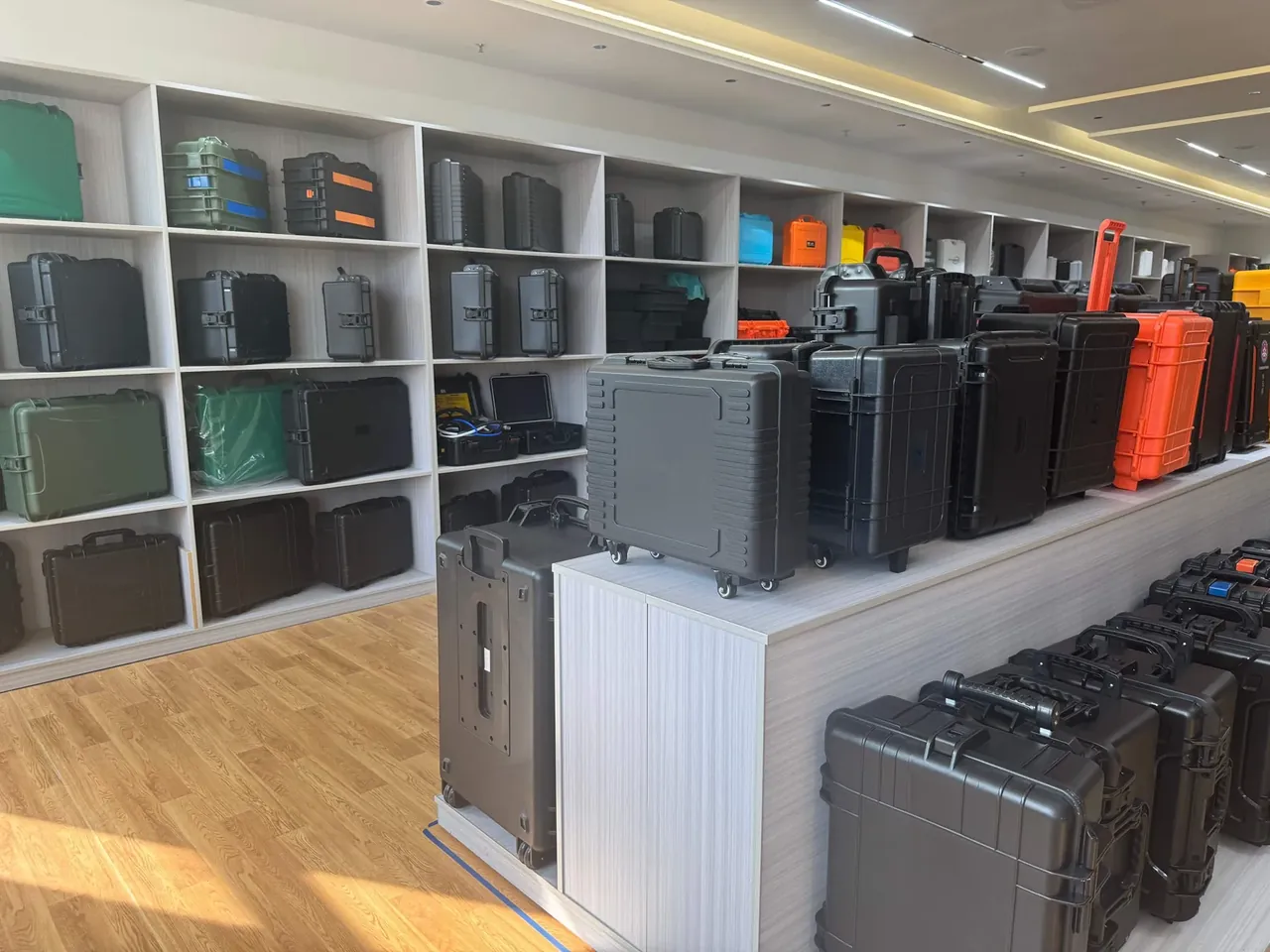
Quick answer: An instrument transport case holds 45–55%RH with 30 g of desiccant per 20 L, while a three-point neck rest keeps bow drift at 0.3 mm.
Table of contents
- Three-point neck support
- Humidity band inside the case
- Temperature from 5 to 35 ℃
- Handle load and re-humidifying
- FAQ
1. Three-point neck support
A neck inside a case is a 500 mm cantilever, and every missing contact adds 0.1 mm of bow. An instrument transport case puts three supports under it: 60 mm behind the fingerboard end, fret 9, and the body shoulder. Anything touching outside those points becomes a fourth support and pushes the neck the other way.
| Contact | Distance from board end (mm) | Foam (mm) | Compression (mm) |
|---|---|---|---|
| First | 60 | 8 | 1.5 |
| Second | 240 | 8 | 1.2 |
| Third | 420 | 12 | 2.0 |
At 1.5 mm compression the 8 mm foam returns 12 N, so three points give 36 N, enough for a 1.2 kg neck without lifting the body. Going to 12 mm foam raises force to 28 N, which floats the shoulder and adds 0.06 mm of bow.
Move a contact 20 mm and the reading shifts 0.08 mm, so each of the three gaps should just pass a 0.05 mm feeler blade, shaving 0.5 mm off any pad that jams.
On the dial, dropping from 70%RH to 30%RH bends the neck 0.42 mm on two supports, 0.3 mm on three and 0.35 mm on four, so the liner is cut as a three-point mould with the rest relieved.
2. Humidity band inside the case
45–55%RH matches 7%–9% wood moisture content, where neck dimensions move least. Below 40%RH the fingerboard and neck shrink at different rates; above 60%RH foam returns 15% less force and three-point support behaves like two.
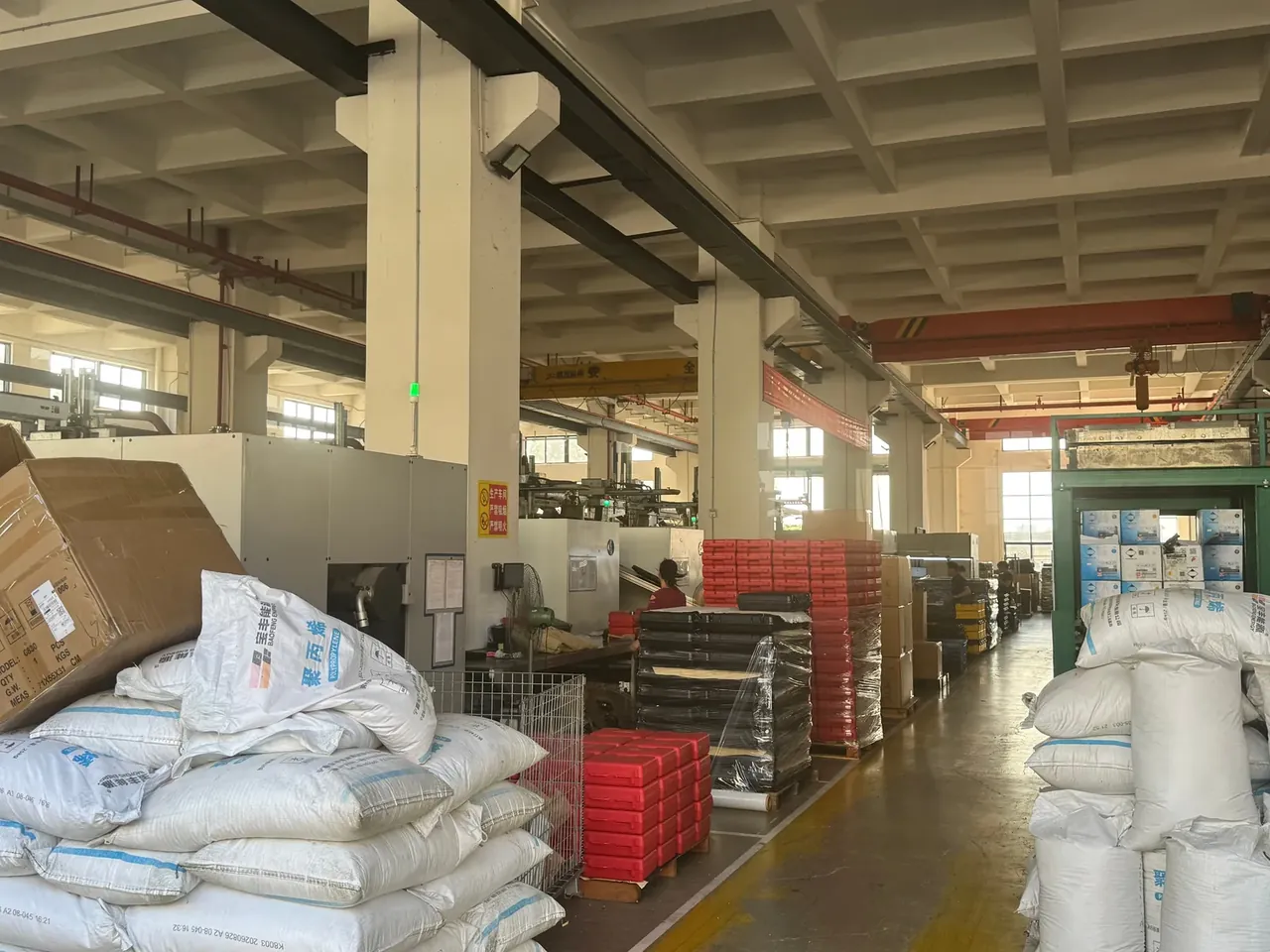
Desiccant is sized at 30 g per 20 L. A 60 L instrument transport case carries 90 g of silica gel, holding 18 g of water at 20% of its own weight, while the gasket passes 0.6 g a day at 25 ℃.
| Case volume (L) | Silica gel (g) | Days at 25 ℃ | Replacement |
|---|---|---|---|
| 40 | 60 | 24 | 20 days |
| 60 | 90 | 30 | 25 days |
| 90 | 135 | 33 | 28 days |
| 120 | 180 | 36 | 30 days |
Dry is not better: each 5%RH below 45 adds 0.02 mm of back bow, each 5%RH above 55 adds 0.03 mm of forward bow, so the set point is 50%RH with 5%RH of margin either side.
Readings need a routine: 10 min inside, three readings, the median; swap the pack above 58%RH or pull a third below 42%RH; weigh any case unopened for two months and replace the pack once it gains 12%.
Mount the meter on the lid, not the foam: a probe 20 mm clear settles in 3 min, one pressed into foam lags 15 min and reads an open lid as 52%RH. A gasket imprint under 3 mm wide lets humidity climb 2%RH a day.
3. Temperature from 5 to 35 ℃
5 to 35 ℃ is the range where the shell keeps its dimensions. Across that 30 ℃ span the neck grows 0.12 mm lengthwise and the body 0.09 mm across, and a case held 4 h at −10 ℃ returns within 0.04 mm.
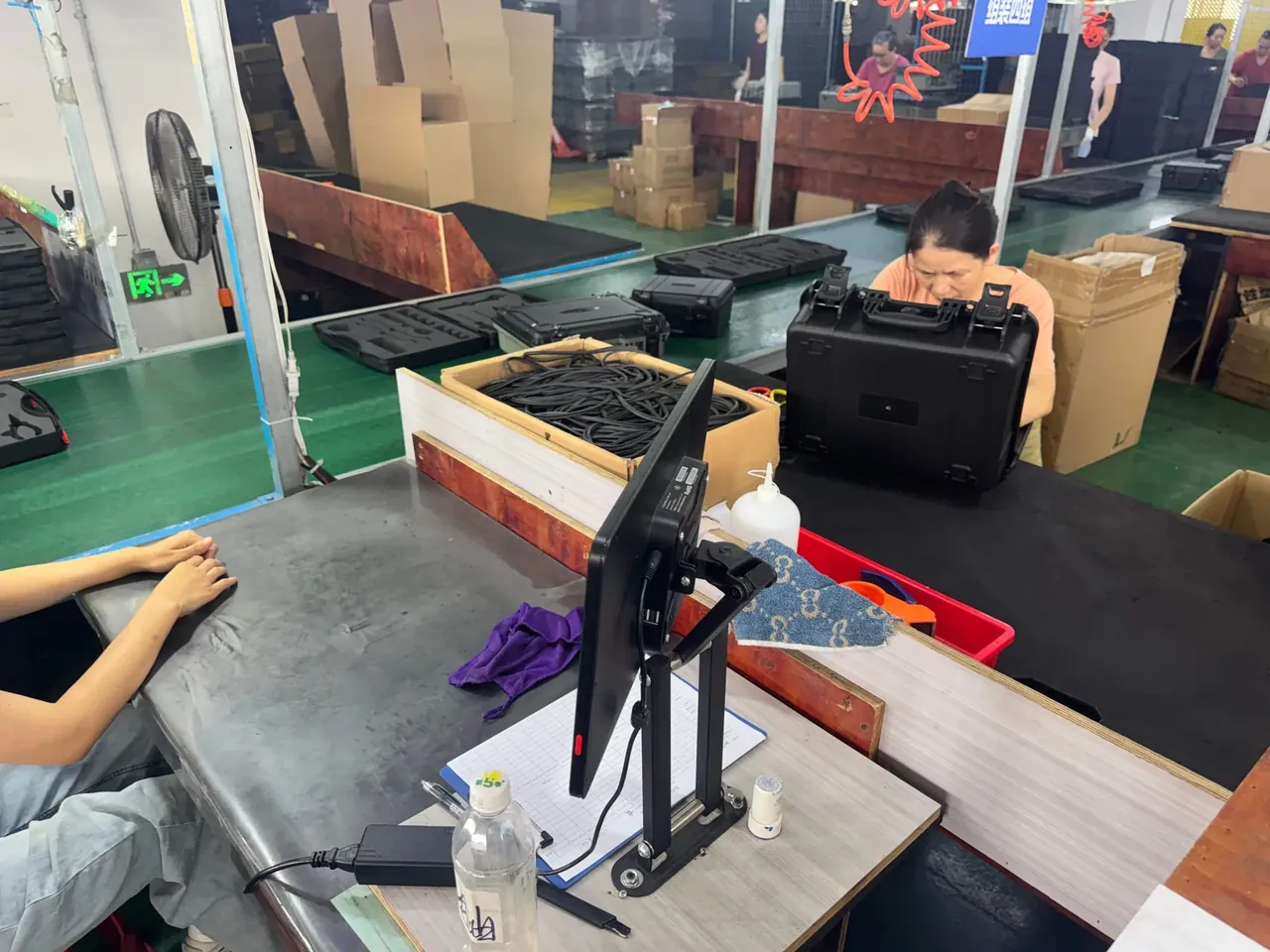
The 3 mm gap is the allowance for that growth. Squeeze it to 1 mm and both body ends press the liner at 35 ℃, adding 0.15 mm of bow; open it to 6 mm and vibration shifts the body 2 mm, doubling contact load.
Thermal shock hurts more than heat. Six hours at 50 ℃ in a parked trailer takes the wall to 52 ℃, expands trapped air 3.5% and lifts a 0.2 mm gap at the gasket; back at 25 ℃ the case sits at −1.8 kPa and needs 40 N.
Wall thickness decides how much lands on the gap: a 3.5 mm wall deflects 0.4 mm at a 20 ℃ difference, a 4.5 mm wall 0.22 mm, so the cold-end gap needs 0.3 mm extra. Give the liner 3 mm under the body, 3 mm at the sides and 5 mm above, and the contacts stay where they were set.
At 25 kg/m³ polyethylene foam expands an order of magnitude less than the wall, adding 0.05 mm over 30 ℃, while a stiffer EVA pad lifts contact force from 12 N to 19 N — which is where an instrument transport case starts pressing at 35 ℃.
4. Handle load and re-humidifying
12 kg is the practical ceiling for one hand. A loaded instrument transport case puts 60 N on each side of the handle and peaks at 110 N while walking, and a root wall under 4 mm shows a 0.3 mm stress mark after 2000 lifts.
A shoulder strap moves load to the shoulder, where 12 kg gives 8 kPa. For a two-person lift, hang the strap on one handle and cradle the base, keeping the difference under 20 N.
20 min after opening is the useful window. With the case at 45%RH and the room at 65%RH, foam reaches 58%RH and the neck 52%RH; closing after 40 min traps 62%RH and costs 6 g of gel. Open-cell foam sets that rate, since closed-cell foam reaches only 49%RH in 20 min.
Handle geometry keeps 12 kg comfortable: a handle in a 4.5 mm thickened zone with an R6 root deforms 0.2 mm after 2000 lifts, while a 3.5 mm straight socket loosens 0.5 mm in 500. Strap anchors are checked at 1.5 times handle load, so 180 N per point.
Case weight sits inside the 12 kg: 3.4 kg of shell, 7.2 kg of instrument, 1.4 kg of liner, and every 0.5 kg off the shell drops peak handle force by 5 N.
Conclusion
Two clauses close out an instrument transport case: support and humidity. The support clause fixes three contacts at 60 mm behind the board end, fret 9 and the shoulder, on 8 mm foam compressed 1.5 mm for 12 N each and 36 N total, with 3 mm of clearance elsewhere. The humidity clause fixes 45–55%RH at a 50%RH set point, desiccant at 30 g per 20 L, 90 g for a 60 L shell, changed every 30 days. Put both on the drawing and the incoming sheet: a feeler gauge at three points, three meter readings, one weighing of the gel. Fail one and move the contacts before touching foam thickness, because the reverse order only pushes the bow further out.
This article discusses container-side specifications and design implications only, and does not cover any handling, loading or use of the contents.
Related Reading
- Neck support and retention inside guitar cases
- Choosing foam liners for instrument cases
- Structural differences across the instrument case series
Related Products
- 8 Series — Gun Cases; Military Equipment Cases; Camera Equipment Cases; Drone Cases; Watch Cases; Knife Cases; First Aid Cases; Electronics Equipment Cases
- WL8-2812 PP Gun Case — model WL8-2812
- All protective cases and toolboxes: 7 series, 158 models