

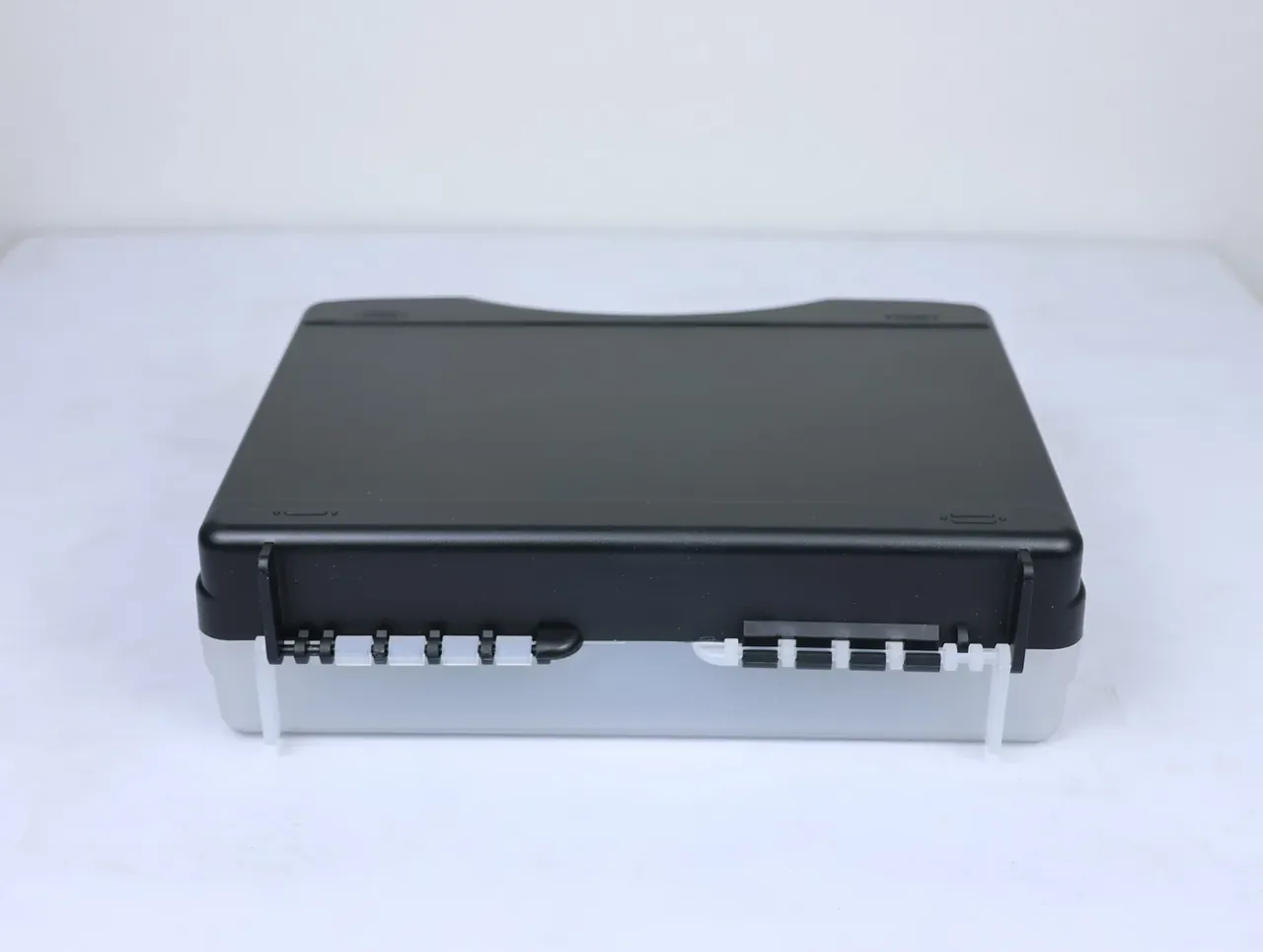
Quick answer: On one drawing, quotes for the same knife case can spread 17 yuan a unit, and the gap sits in tooling, hardware grade, liner density and packing. Fix cavity, wall and quantity as numbers, and 300 units can come back 9000 yuan cheaper.
Table of contents
- Six knife case numbers to fix before the RFQ
- Tooling cost and ownership: who pays for the mould
- Reading a knife case quote in five blocks
- Sampling, sealing and first-article approval
- Lead time: tonnage, cycle and scheduling
- Payment terms, factory audit and penalties
- FAQ
1. Six knife case numbers to fix before the RFQ
One drawing went to four moulders and came back at 46 to 63 yuan a unit. Material grade, hardware count and liner thickness read almost the same on all four sheets; the difference sat in the rows nobody filled in.
Leave those six as words instead of numbers, and each plant quotes the cheapest version that passes. The 300 units land before anyone learns the tray will not drop in.
| RFQ item | What to write | What happens when blank |
|---|---|---|
| Internal size | 420 × 300 × 90 mm, ±0.5 mm | Moulded from outside, a 415 mm tray jams |
| Wall | 3 mm sides, 3.5 mm base | 2.2 mm bows 1.5 mm at 18 kg |
| Resin | Homo-polymer PP, regrind ≤15% | All-regrind saves 1.8 yuan, holes crack |
| Hardware | Two stainless latches, 2.5 N·m | Nylon catches snap at -20℃ |
| Liner | EVA 30 kg/m³, 20 mm | Contents shift 5 mm in a 1.2 m drop |
Tolerance gets waved through most often. A 420 mm cavity marked ±0.5 mm is cut to nominal, shrink set at 1.6%, and the trial shot measures 419.2 mm. The tray fits but rocks 0.8 mm, so every case takes one extra impact.
Regrind is the second soft spot. All-regrind resin trims 1.8 yuan a unit; the latch boss hairline-cracks in 90 days and yields at 2.5 N·m. Holding regrind under 15% costs 0.6 yuan back and keeps it intact for 2000 cycles.
2. Tooling cost and ownership: who pays for the mould
Tooling is the murkiest line in knife case purchasing. A 420 mm cavity in a two-cavity mould quotes at 32,000 to 45,000 yuan, a spread that tracks mould steel and cooling layout more than case geometry.
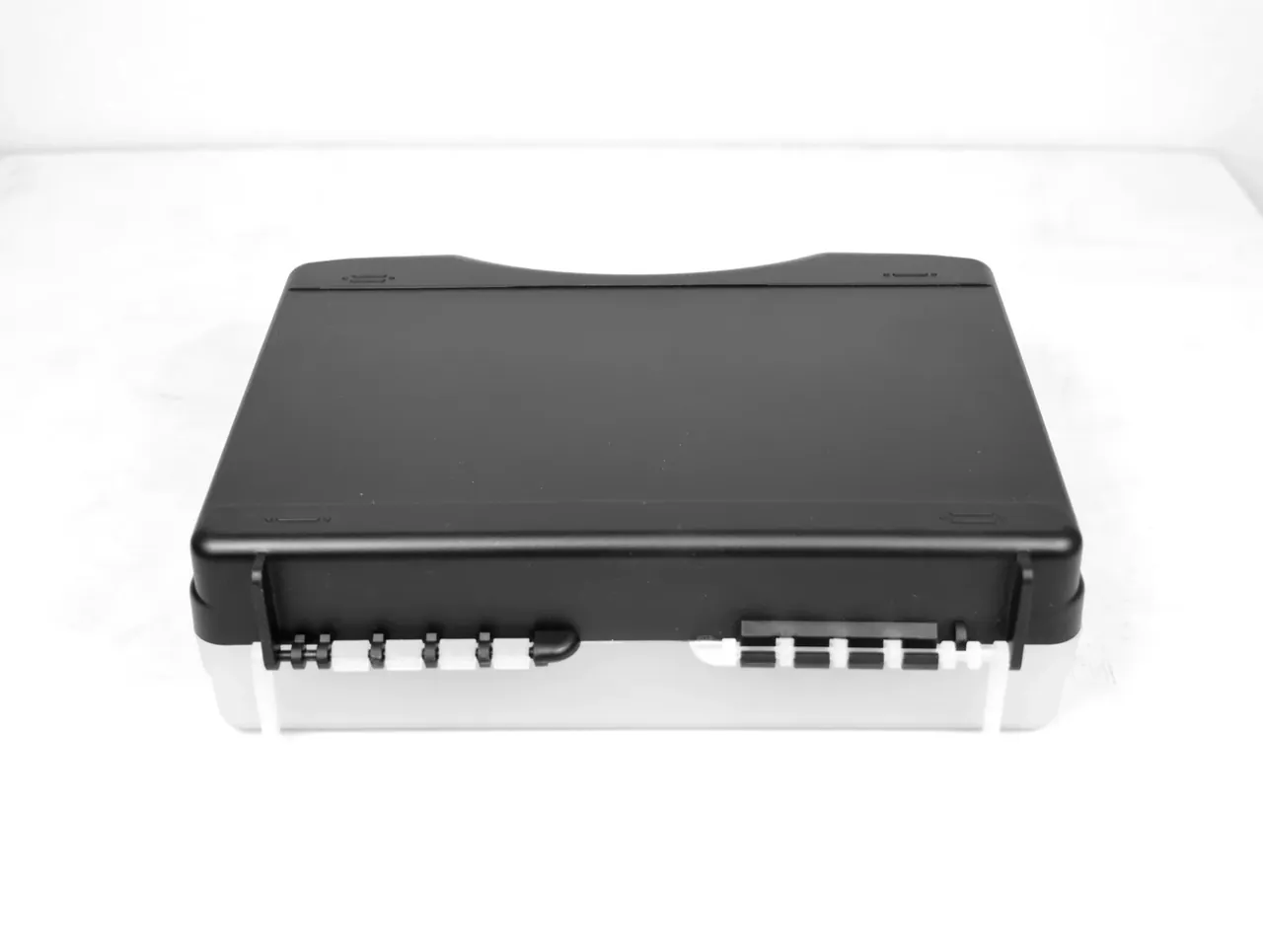
Amortised on 300 units, 38,000 yuan works out to 127 yuan a unit, more than the case itself. Below 500 units, settle tooling first: buying outright suits 3000 units a year, 12.7 yuan on the first 3000 keeps a trial small, and a supplier who funds the mould wants 5000 in one release.
Ownership matters more than the tag. Three clauses belong in the contract: the mould number stamped on the base, the storage address, and a transfer clause. Give 30 days notice, freight paid by whoever asks, with no refusal to run inside 30,000 cycles. Without it, switching supplier means paying for the mould twice.
3. Reading a knife case quote in five blocks
A 48.5 yuan quote breaks down as 1.05 kg of resin at 9.6 yuan a kilo, or 10.1, hardware 6.8, liner 14, labour 8.6, packing 2.9, subtotal 42.4; add 8% overhead and 6% margin to reach 48.5.
Any block written as "actual cost" becomes an opening later. Check the ratio inside each block, not the total: resin should hold 22%–26%, liner 26%–33%, labour 17%–21%, packing 5%–7%. Weigh a bare case before you trust the resin line.
Four phrasings deserve a challenge: a 2.2 mm wall swapped into a 1.05 kg case looks 1.4 yuan cheaper; a free liner returns at 18 yuan a unit, 4 yuan above the sheet; tooling buried in the first 500 units hides until batch one ships; a quote excluding tax conceals 13%.
4. Sampling, sealing and first-article approval
Sampling is charged per run: a simple tool and 2 samples cost 1800 yuan with a 12-day T1 shot. Most plants credit it against a production order once the contract names the threshold.
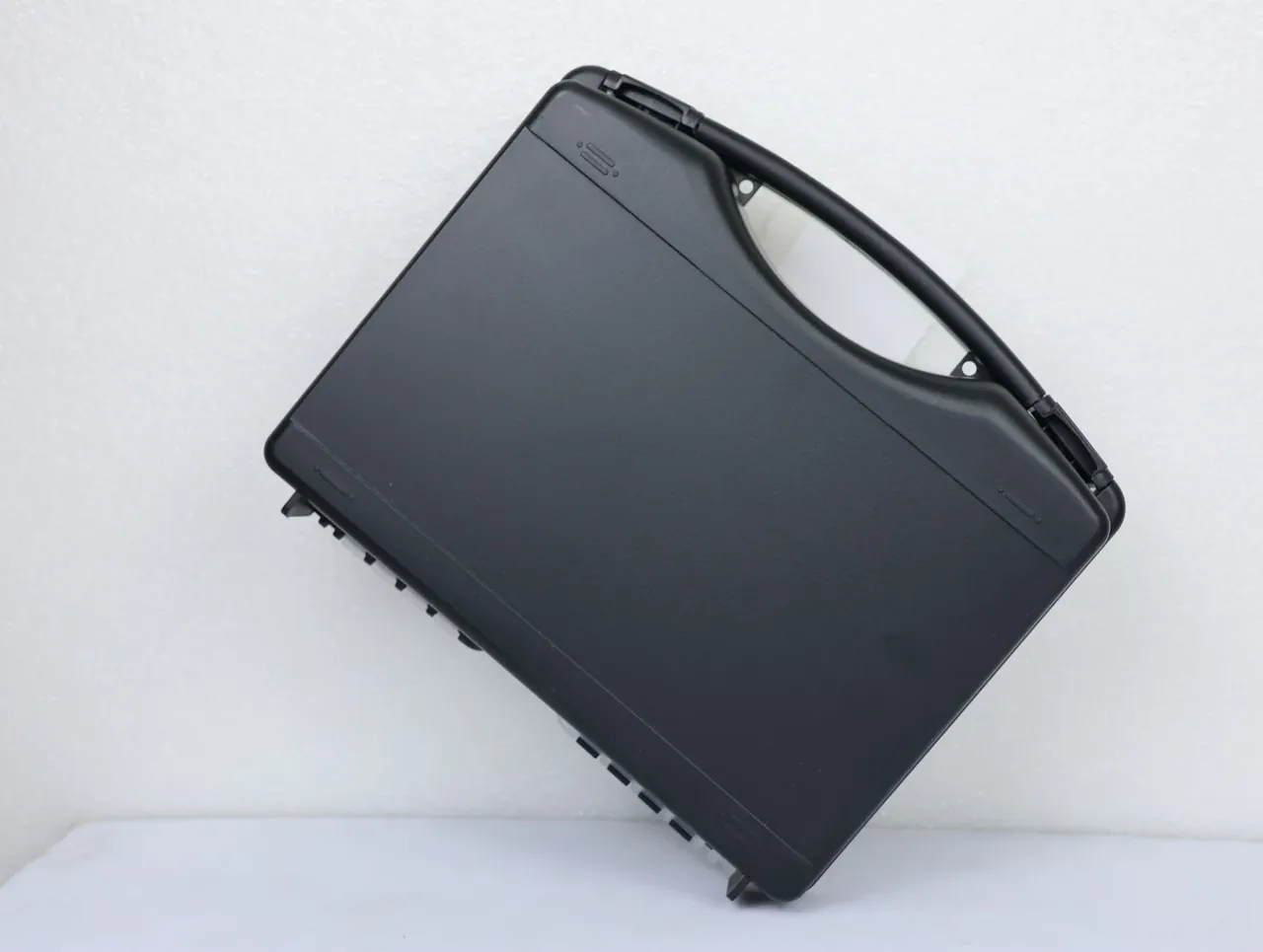
Seal what arrives: 2 units, numbered, kept 12 months. When production drifts, a sealed sample settles the argument faster than any drawing.
Approval covers six checks: cavity 420 mm ±0.5 mm, wall 3 mm ±0.15 mm, latch force 25–35 N, handle loaded at 3× the 18 kg working load, colour ΔE ≤2, flash ≤0.2 mm. Latch force is usually skipped, and below 25 N the lid pops open on rough ground.
5. Lead time: tonnage, cycle and scheduling
A 250-tonne press, two cavities, 68-second cycle gives 53 shots an hour, or 105 cases. Injection for 300 units takes under 3 hours, so lead time belongs to tooling and queue position.
| Stage | Days | Real constraint | Penalty |
|---|---|---|---|
| Tool cutting | 12 | Mould steel delivery | 0.3% a day, cap 5% |
| Trial and rework | 5 | Sink marks, flash | Two rounds included |
| Moulding | 3 | Press tied up | Book the 250-tonne slot |
| Assembly, packing | 5 | Liner arrives late | Liner on site 7 days early |
September to November is peak, when the same order stretches to 40 days. Splitting 300 knife case units into 120 and 180 gets batch one out in 20 days.
6. Payment terms, factory audit and penalties
Payment runs 30% on signature, 60% before dispatch, 10% within 30 days of acceptance. That is tight for 300 units, and most plants push for 50% up front; the room to negotiate sits in the tooling clause.
An audit needs four checks: 12 or more presses, a tool room with grinder and EDM, 96-hour salt spray records, and a defect log under 1.5%. Miss two and both delivery and consistency slip.
Penalties belong in detail: 0.3% a day capped at 5%, a batch above 2% defective replaced whole with freight on the supplier, and mould ownership in an annex. On a knife case reordered for years, those clauses outweigh the first-order price.
Conclusion
Four lines explain most of the spread in a knife case quote: how tooling is amortised, which hardware grade is quoted, the true liner density, and how many packing layers are included. Put them into the RFQ and the contract as numbers, and a 300-unit first order saves 9000 yuan. When the price will not move, check whether the specification was ever written down.
This article discusses only the container (case body) side of specifications and design intent, and does not cover any handling, loading or use of the contents.
Related Reading
- How a knife case travels from drawing to first shot
- Comparing quotes from trolley tool case suppliers
- Contract points for bulk ammunition case buying
Related Products
- 8 Series — Gun Cases; Military Equipment Cases; Camera Equipment Cases; Drone Cases; Watch Cases; Knife Cases; First Aid Cases; Electronics Equipment Cases
- WL8-2812 PP Gun Case — model WL8-2812
- All protective cases and toolboxes: 7 series, 158 models