

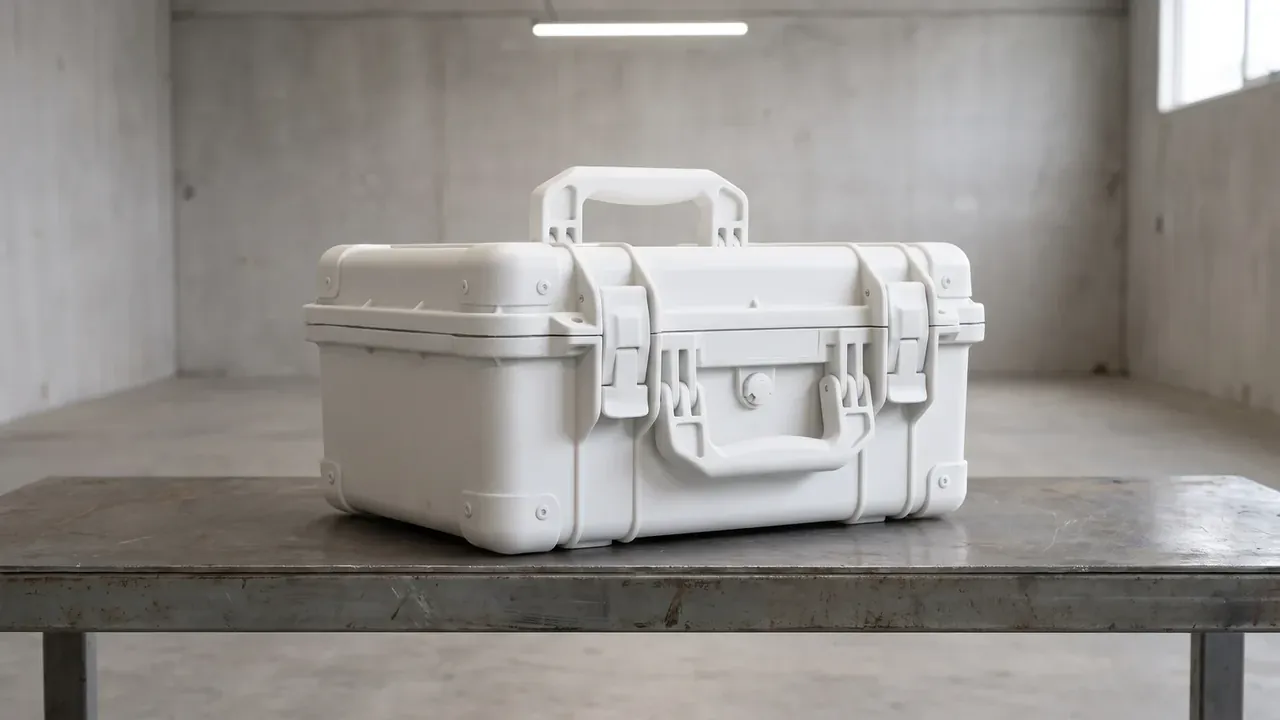
Quick answer: A single total price on an ammunition container quote tells you nothing. Split it into MOQ, tooling ownership, lead time and payment terms, then demand one verifiable number for each line.
Table of contents
- What sits behind one ammunition container price
- MOQ and tooling ownership: three ways to write it
- Lead time: laying out 45 days
- Payment terms, audits and five hidden adders
- FAQ
1. What sits behind one ammunition container price
One case, three quotes at 118, 132 and 96 yuan. The spread is quoting convention, not cost. Break the total into four blocks: material, tooling amortisation, secondary operations, packing and freight. Only material compares across suppliers; the other three follow order structure and ownership terms.
| Cost block | How it is charged | The number to demand |
|---|---|---|
| Material | Weight times unit price | 1.85 kg net per case, resin grade, regrind ratio |
| Tooling amortisation | One-off or per unit | 38,000 yuan tool, amortised over 3,000 units |
| Secondary operations | Per station | Two-colour print, insert fitting, ultrasonic welding |
| Packing and freight | By carton and pallet | Four cases per carton, 1.1 m pallet, tax included |
| Sampling | One-off fee | Five samples in 7 days, deductible from the first order |
The amortisation basis is the softest number on the page.
Spread 38,000 yuan over 3,000 units and each case carries 12.7 yuan. Order 1,200 instead and the same tool adds 31.7 yuan, lifting the unit price by 19 yuan. Write a clause that recalculates amortisation at the actual order quantity, or the first batch looks cheap and every repeat order pays for it.
2. MOQ and tooling ownership: three ways to write it
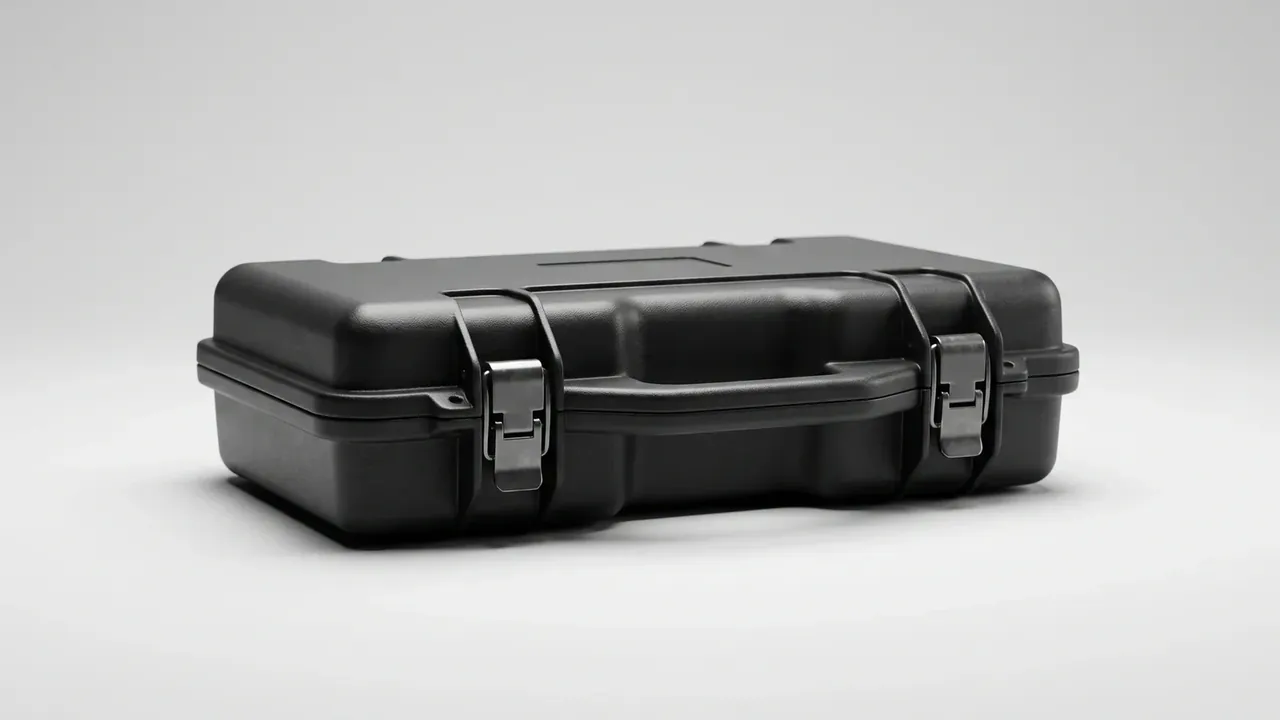
MOQ is not a courtesy figure; it follows from how the tool is built. A shared frame starts at 500 units, a dedicated mould at 1,000, and a two-shot or metal-insert design at 3,000.
| Ownership model | Who pays | Title | Impact when changing supplier |
|---|---|---|---|
| Buyer-owned | Buyer pays in full | Buyer | Tool can be moved, freight and drawings extra |
| Shared | Split evenly | Written in contract | Transfer needs written consent |
| Supplier-owned | Baked into unit price | Supplier | New tool needed, 25 extra days |
None of the three is better in the abstract. Above 5,000 units a year with a stable design, buyer-owned wins; for a trial order, supplier-owned hides the tool cost in the unit price and keeps the exit cheap.
Buying a tool with no title clause means that two years later the mould stays where it is.
3. Lead time: laying out 45 days
Forty-five days is the normal rhythm: drawing sign-off 3 days, tool build 18, first trial 2, sample approval 5, tool correction 7, production 10. Squeeze any block and the next one pays it back as rework.
Lead time is a set of milestones, not a total.
Every milestone needs a deliverable, or the delay argument has no floor. Drawing sign-off returns the 2D and 3D files with a version number. Tool completion brings the frame number and photos of the steel. The first trial ships five samples plus a first-article report. Sample approval keeps a signed and sealed reference part. Tool correction comes with a change list and a new drawing revision. Before production, confirm the packing plan and pallet stack height. With all six in hand, responsibility is clear and whoever slips owns it.
The most effective way to pull a date forward is to book press time early. Moulding is scheduled by tonnage, machines above 300 tonnes stay busy, and reserving a slot two weeks ahead beats ten phone calls.
4. Payment terms, audits and five hidden adders
This section runs as a checklist, since every adder is one line long.
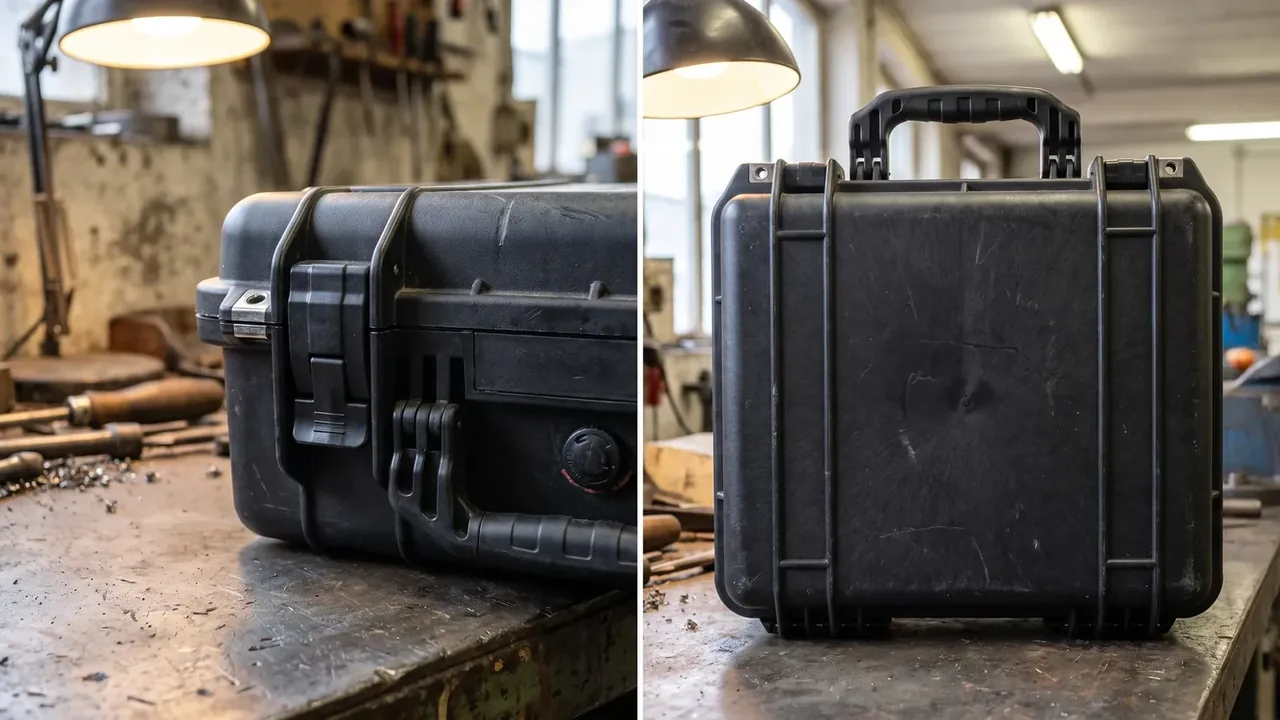
- Tooling charged twice: included in the first quote, invoiced again at correction. Cap corrections at two in the contract.
- Regrind ratio: quoted virgin resin, produced at 20% regrind. Set the regrind ceiling at zero in writing.
- Short weight: 1.85 kg nominal against 1.72 kg actual, where lighter means cheaper to make. Fix net weight at plus or minus 3%.
- Freight and tax: quoted FOB, with sea freight and pallet charges added later. Ask whether tax is inside.
- Payment period: 30 and 60 day terms usually differ by 1.5% to 2% on unit price, which is 30,000 to 40,000 yuan on a two million yuan annual spend.
A factory audit needs three looks: press tonnage and count, whether the tool room has its own milling and spark machines, and whether the lab holds a salt spray cabinet and a drop rig.
Payment terms are traded against visibility: give quarterly floors and a supplier will usually give a point.
Conclusion
Buying an ammunition container is a trade of four lines for four numbers: MOQ sets the amortisation, tooling ownership sets the exit, milestones set responsibility, and terms set the real unit price. Put all four in writing and quotes become comparable. Ask one more question at the enquiry stage, and the ammunition container order runs without a rework loop.
This article discusses only the container (case body) side of specifications and design intent, and does not cover any handling, loading or use of the contents.
Related Reading
- How to read ammunition container specifications
- Ammunition container materials compared
- Choosing a storage container by cycle and handling
Related Products
- 8 Series — Gun Cases; Military Equipment Cases; Camera Equipment Cases; Drone Cases; Watch Cases; Knife Cases; First Aid Cases; Electronics Equipment Cases
- WL8-2812 PP Gun Case — model WL8-2812
- All protective cases and toolboxes: 7 series, 158 models