

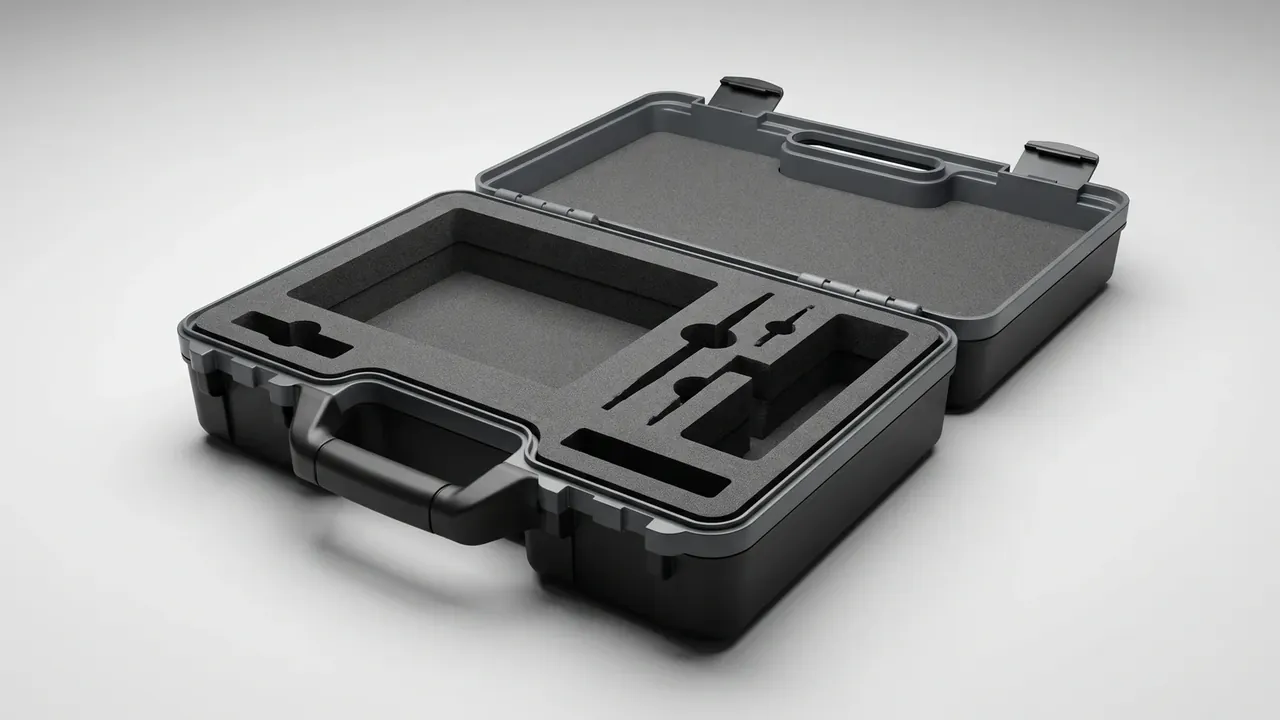
Quick answer: An Outdoor Portable Case is chosen in three moves: match the carry to the approach, match the interior to the load and the boot, then set the ingress rating to the wet it will meet. Reverse that order and the case is either too heavy to lift or too tall to fit.
Table of contents
- Outdoor portable case selection starts with the carry
- Interior volume must fit the load and the boot
- Ingress ratings for dew dust and spray
- Gasket latches and wheels fail in that order
- Five build tiers and what they cost
- FAQ
1. Outdoor portable case selection starts with the carry
An Outdoor Portable Case is shaped by how it travels, not by its litre figure. One-handed carrying wants a body under 200 mm tall with the mass near the handle; past 18 kg you swap hands every 200 m.
Camping splits the leg in two. The 20 to 200 m from car to pitch rewards a plain handle; a 400 m overland approach rewards a telescopic handle and 50 mm wheels, which sink a third of their diameter into soft ground. A 30 m wading leg needs 195 mm from handle to base to keep the shell 100 mm above water.
| Carry | Body | Ceiling | Suits |
|---|---|---|---|
| One hand | under 200 mm tall | 18 kg | short shuttles |
| Twin handles | long box, two people | 32 kg | family camping |
| Telescope | tall, narrow, plus 1.6 kg | 25 kg | overland approaches |
2. Interior volume must fit the load and the boot
Measure the cavity, not the label. A 32-litre case with a 420 by 300 by 180 mm interior holds 22.7 litres; walls, ribs and lid depth take the rest, and shell, handle and wheels add 50 mm to the outside.
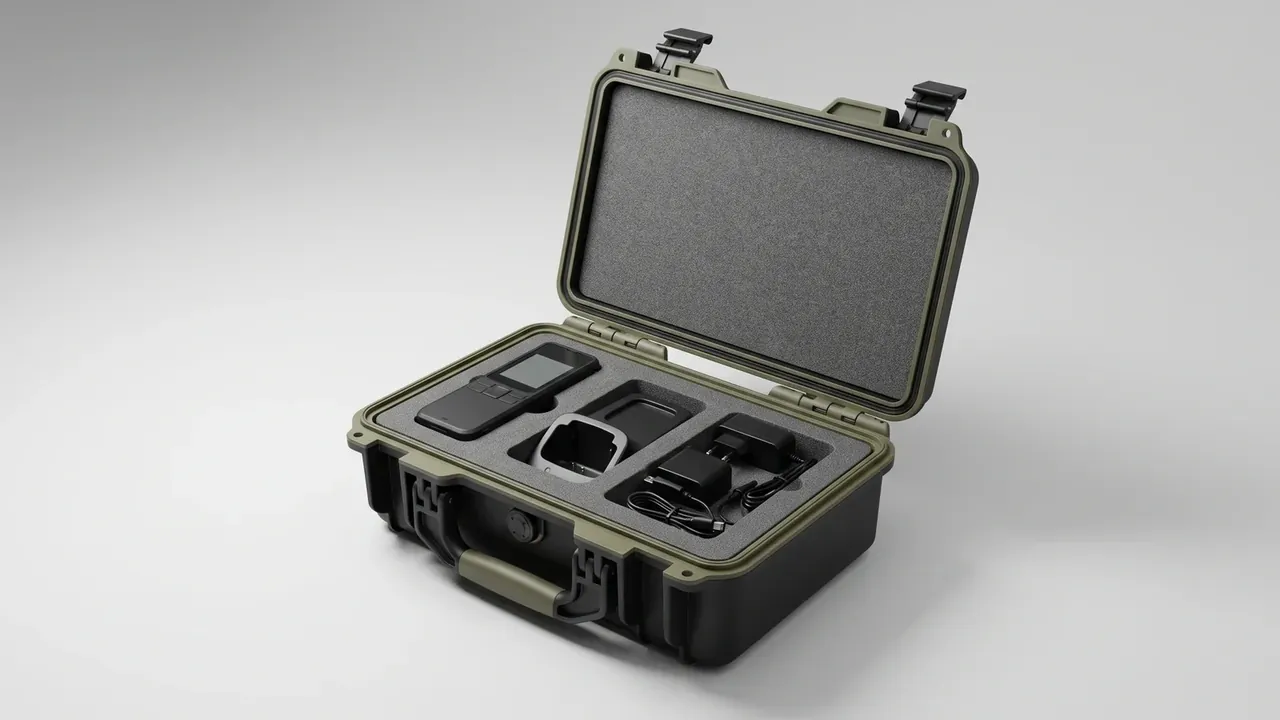
Height decides the boot. A 480 mm parcel shelf takes a 200 mm case two high and a 260 mm one alone. A solo two-day load runs 8 kg, leaving a tenth spare in 32 litres.
Lid depth is the quiet variable: 45 mm presses clothing, 80 mm swallows a standing stove and costs 35 mm of cavity.
3. Ingress ratings for dew dust and spray
Camping fights dew, overlanding fights dust, water sports fight spray and wet hands; for an Outdoor Portable Case one leak costs a day of drying a sleeping bag.
IP54 covers grass dew. IP65 takes a nozzle jet for the wet season or a roof rack. IP67 means 1 m for 30 minutes and earns its stiffer closing force only on a board that may capsize. Gaskets cycle from minus 20 to plus 60 °C, and 48 hours of salt spray without red rust is the coastal baseline.
| Rating | Dust | Water | Real use |
|---|---|---|---|
| IP54 | 5 | splash 4 | ordinary camping |
| IP65 | 6 | nozzle jet | wet season, roof rack |
| IP67 | 6 | 1 m, 30 min | boards, wading |
4. Gasket latches and wheels fail in that order
EPDM holds its hardness for three to five years under UV, silicone stays flexible below zero. A single ring handles dew; a double ring keeps out standing water at the cost of pressing the lid twice.
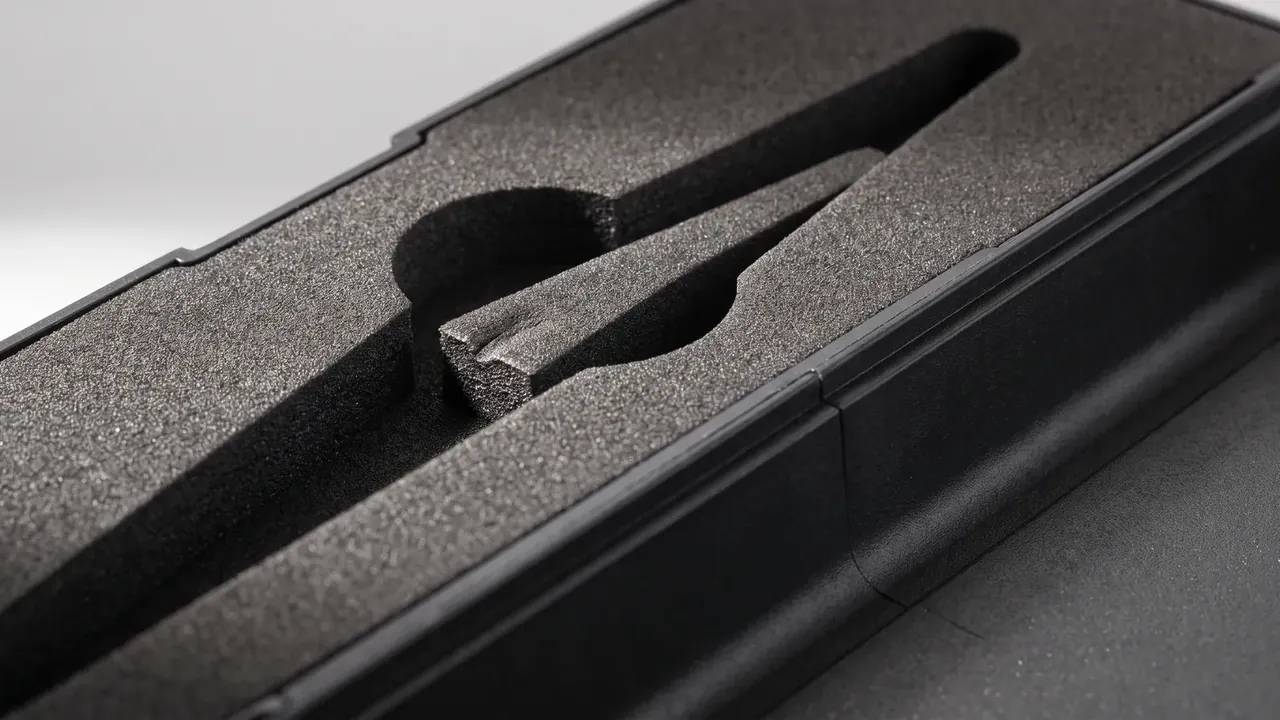
Four catches at 15 N each hold the seam under 0.5 mm; a 600 mm case with two catches lifts a gap at the midpoint and dust walks in. Hinge pins in 304 stainless outlast carbon steel on the coast.
On an Outdoor Portable Case look at the axle, not the diameter: a 50 mm wheel on an 8 mm axle doubles drag after 200 m of gravel, and a three-stage handle should wobble under 2 mm.
5. Five build tiers and what they cost
Tiers divide on material, not badges. Moulded and modified PP differ by 30 percent in drop impact; 3.2 mm against 2.8 mm walls differ by 40 kg of stack load. Spend on gasket, catches and wheels before colour.
Weight climbs as the tier does: 2.4 kg empty at entry, 3.6 kg professional, the 1.2 kg gap being ribs, trim and wheel housing.
Conclusion
The tests run in sequence: carry sets the shape, interior sets the volume, the trip sets the rating, then gasket, catches and wheels get inspected, and the budget goes on fittings. The first two decide whether it works. Run them in order and the Outdoor Portable Case stops being a guess.
This article discusses only the container (case body) side of specifications and design intent, and does not cover any handling, loading or use of the contents.
Related Reading
- How to size a camping storage box
- Where a multi-purpose outdoor case stops
- Sealing grades for waterproof hard cases
- Carry structures on hand-carry hard cases
Related Products
- 8 Series — Gun Cases; Military Equipment Cases; Camera Equipment Cases; Drone Cases; Watch Cases; Knife Cases; First Aid Cases; Electronics Equipment Cases
- WL8-2812 PP Gun Case — model WL8-2812
- All protective cases and toolboxes: 7 series, 158 models