

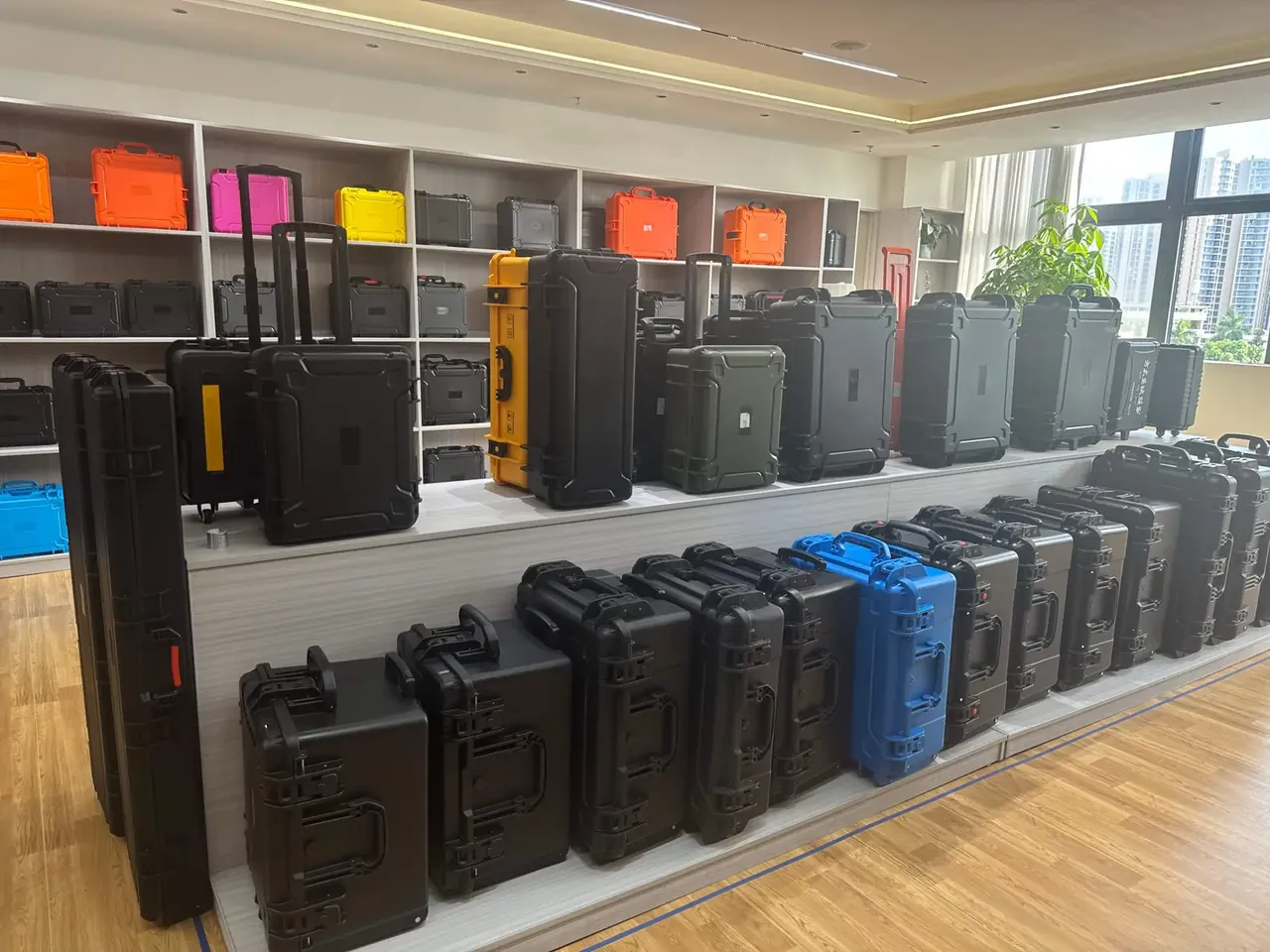
Quick answer: A Hand Carry Hard Case suits trips under 300 m, under 45 minutes door to door, 12 kg inside, one mode of transport. Break two of those four and a strap or two smaller cases serve better.
Table of contents
- Where the Hand Carry Hard Case Stops Working
- Trip Duration and Opening Count
- Weight Bands from 6 to 24 kg
- Transport Sets the Carrying Attitude
- Four Signals You Are Past the Line
- FAQ
1. Where the Hand Carry Hard Case Stops Working
The first boundary is how far it goes, not what goes in. An adult carrying 12 kg in one hand covers 300 m in four minutes; past that the grip fades.
Beyond 300 m the hand has to change, which wants a 130 mm span. Steps are the hidden term: eighteen risers at 160 mm lift 12 kg by 2.9 m, so 300 m with a flight behaves like 800 m on the flat.
| Distance | Walking time | Load | Length limit | Fitting |
|---|---|---|---|---|
| under 300 m | 4 min | 12 kg | 460 mm | plain handle |
| 300 to 800 m | 4 to 11 min | 10 kg | 500 mm | wider handle |
| 800 to 1500 m | 11 to 20 min | 8 kg | 540 mm | shoulder strap |
| over 1500 m | over 20 min | not advised | — | wheels or pack |
2. Trip Duration and Opening Count
Duration sets fatigue, not capacity. Forty-five minutes is the usual line for a field call; past it grip falls 15 to 20 percent and the case hits the calf.
Openings wear faster than minutes. Above 30 a day the latch hook rounds over and pull drops from 140 N to 95 N in three months. A case set down often must stand alone, so a base under 150 mm tips over.
3. Weight Bands from 6 to 24 kg
Four bands, four methods. Under 6 kg one hand holds it on a long walk; 12 kg allows four minutes between hand changes; 18 kg needs both arms for 120 m; 24 kg takes two people to a tailgate.
Grip sets the bands. An adult closes about 400 N and sustains roughly 120 N, while a 12 kg case bobbing at 24 kg asks for 240 N. Both arms double that but push the centre of gravity 250 mm forward, so at 18 kg the back decides.
| Load | Method | Distance per carry | Verdict |
|---|---|---|---|
| 6 kg | one hand | 800 m | comfortable |
| 12 kg | one hand, swapping | 300 m | workable |
| 18 kg | both arms | 120 m | marginal |
| 24 kg | two people | 30 m | out of range |
4. Transport Sets the Carrying Attitude
Transport changes posture, not weight. A metro gate clears 600 mm, so a 540 mm case passes at an angle but not square on.
A boot opens 480 mm high, so a case thicker than 230 mm rides on its side, loading the hinge pin in shear instead of bending. A lift car spans about 1.1 m, where two 540 mm cases jam the doors.
| Mode | Attitude | Fixing | Main risk |
|---|---|---|---|
| walking | upright in hand | none | calf knocks |
| metro | in hand or on its side | hand | gate jams |
| taxi | on its side in the boot | none | sliding on turns |
| rail | flat on the rack | strap | rack too narrow |
| air, checked | flat | none | corner crush |
5. Four Signals You Are Past the Line
Two signals are enough: setting the case down twice, a door-to-door time past 45 minutes, a load above 18 kg, or two changes of transport.
Four ways out, cheapest first: add a strap, move to wheels, split into two cases, or switch to a pack frame. Splitting is overlooked, since two 10 kg cases each allow a hand change.
Forcing it is worst. Past the line the first part to suffer is the rim, not the handle: a one-sided carry loads one edge, the gasket flattens, and water follows.
Conclusion
The fit is four numbers: under 300 m, 45 minutes, 12 kg, one mode of transport. Break any one and the first answer is a strap or a split load. Checked first, a Hand Carry Hard Case stays right for short field work.
This article discusses only the container (case body) side of specifications and design intent, and does not cover any handling, loading or use of the contents.
Related Reading
- How a Case Is Carried and Loaded
- Weight Saving in Light Protective Cases
- Handle Balance on Portable Tool Boxes
- Outdoor Limits of ABS Cases
Related Products
- 8 Series — Gun Cases; Military Equipment Cases; Camera Equipment Cases; Drone Cases; Watch Cases; Knife Cases; First Aid Cases; Electronics Equipment Cases
- WL8-2812 PP Gun Case — model WL8-2812
- All protective cases and toolboxes: 7 series, 158 models