

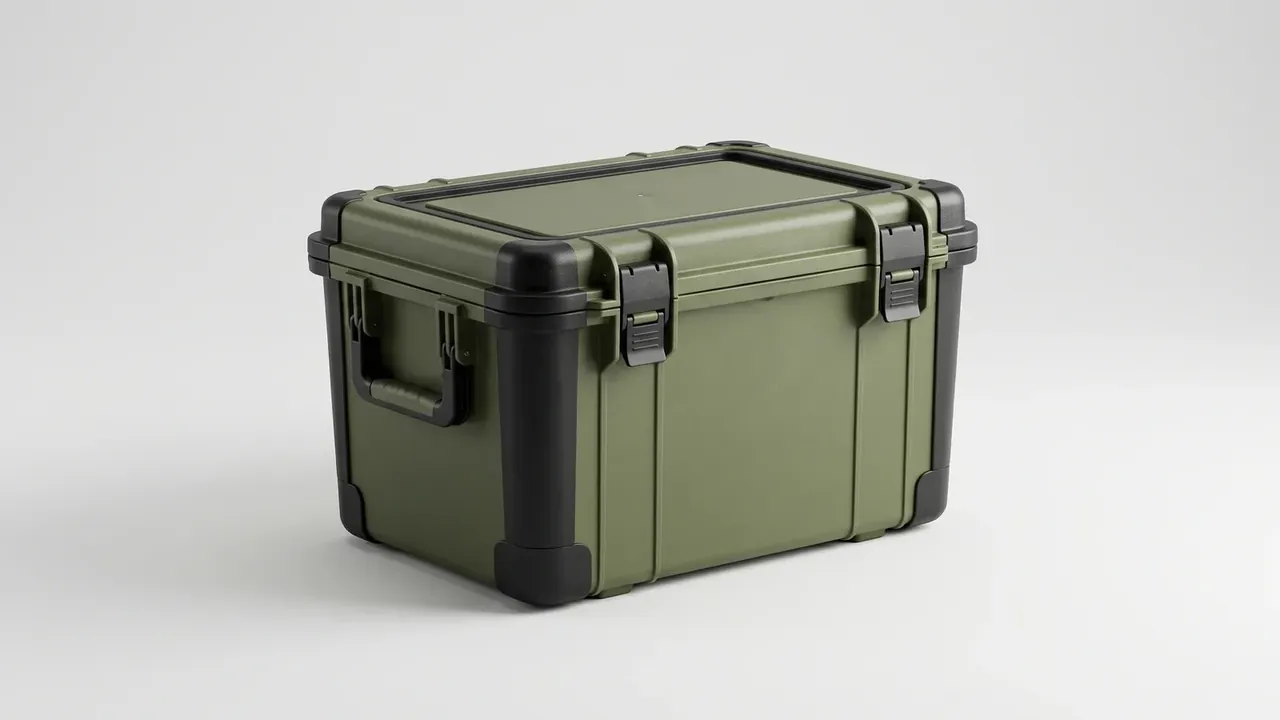
Quick answer: Choose a portable box in a fixed order: interior size, then wall thickness and empty weight, then hinge and latch life, then compartments, then stacking and carrying. At one or two litres, a 10 percent error in any one is felt daily.
Table of contents
- Size Tiers First for a Portable Box
- Criterion One: Interior Size and Wall Thickness
- Criterion Two: Hinge and Latch Life
- Criterion Three: Compartments and Liner
- Criteria Four and Five: Stacking and Carrying
- FAQ
1. Size Tiers First for a Portable Box
Stationery, vials, hardware, connectors: one size will not take them all. What matters is the room left over, since too much rattles and too little will not lift out.
| Tier | Outside | Interior | Empty weight | Typical load |
|---|---|---|---|---|
| A | 120×90×35 mm | 108×78×28 mm | 95 g | Pens, tweezers |
| B | 165×120×45 mm | 150×105×38 mm | 180 g | Vials, calipers |
| C | 210×160×60 mm | 195×145×52 mm | 310 g | Drill bits |
| D | 260×200×75 mm | 242×182×66 mm | 460 g | Cable, gauges |
Tier A sits under 1 L, B runs 1 to 1.5 L, C runs 1.5 to 2.5 L, and D already tires one hand. Empty weight varies fourfold while the outside barely doubles, so weigh the load: past half the empty weight, move up a tier.
2. Criterion One: Interior Size and Wall Thickness
Interior size is not the outside minus one wall. Subtract two walls and add the rib: a 165 mm body with 1.8 mm walls and 1.5 mm ribs leaves 158.4 mm; the drawing quotes 150 mm.
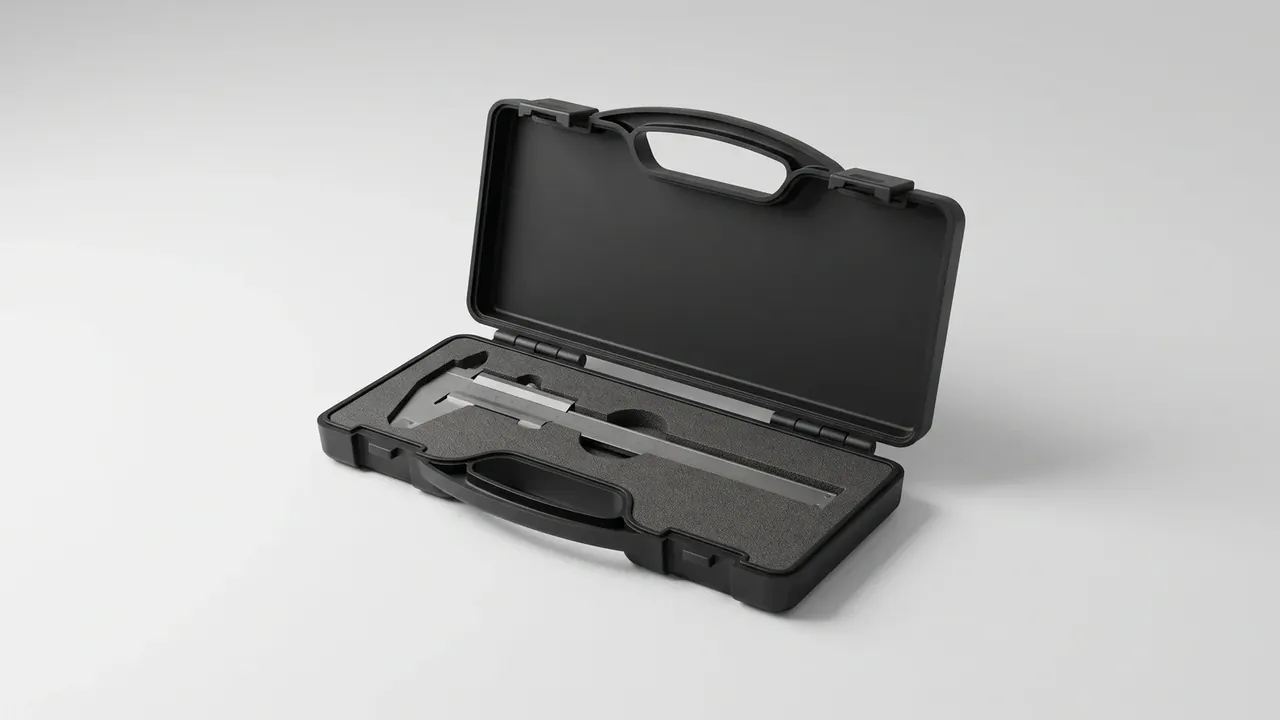
Wall thickness sets weight, top load and shrinkage. PP moves 1.5 to 2.0 percent and ABS 0.4 to 0.7 percent, so one tool in another grade shifts interior length by over a millimetre.
Thin is not weak. A 1.6 mm body sags under 6 kg over the lid, which stationery never reaches; a 2.2 mm body weighs 260 g empty.
| Wall | Empty weight | Top load |
|---|---|---|
| 1.6 mm | 150 g | 6 kg |
| 1.8 mm | 180 g | 10 kg |
| 2.2 mm | 260 g | 15 kg |
3. Criterion Two: Hinge and Latch Life
Failures in a portable box happen at two points: the hinge root splits, or the latch tongue wears thin. A living hinge whitens after 3000 cycles; a steel pin turns flexing into rotation and shows play after 8000.
Latch retention decides whether the box opens itself. Moulded catches hold 25 N and split at 3000 cycles, flip latches hold 30 N and lose the bore at 5000, metal clasps hold 35 N but loosen a rivet at 8000. Below 25 N one drop pops them open.
Pin alignment matters too: two pins off one axis make the lid fight the user, who then opens it two-handed and wears the bore.
4. Criterion Three: Compartments and Liner
Compartments in a portable box decide whether small parts migrate. A 2 mm PP divider moves in a slot, at the cost of 2 mm of width and a gap screws escape through; a moulded grid seals better but will not take odd shapes.
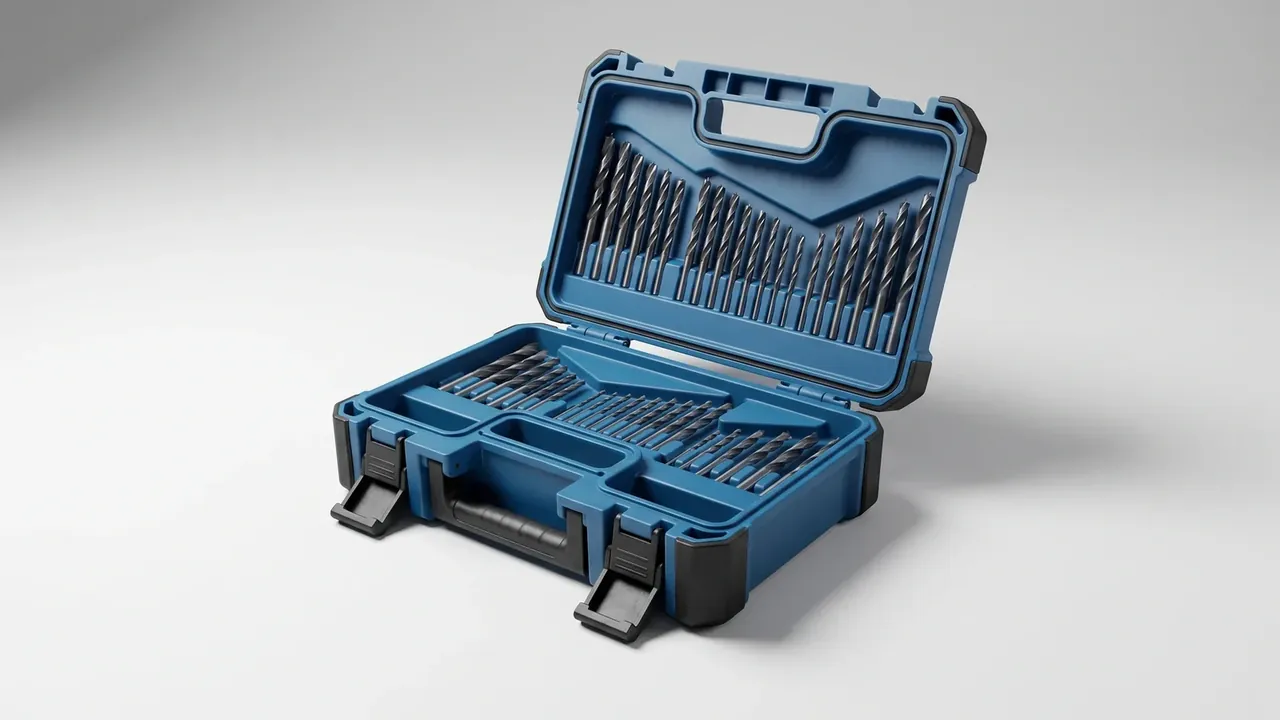
Liners follow the load: 3 mm EVA slots grip a steel rule, 1.5 mm flock protects vial surfaces, conductive foam handles small electronics. All three in one box is unrealistic, so fix the grid and keep one corner removable.
Full compartments trap air and the lid rebounds on closing. Two 3 mm vents at the divider base solve it and cost one class of dust rating.
5. Criteria Four and Five: Stacking and Carrying
Stacking is the most overestimated number. A 15 kg top load means evenly spread, room temperature, short term. Real storage is three high at 45 °C, where PP loses modulus and 18 kg over a season bulges the lower wall past 1 mm until the lid stops seating. Two high at 8 kg stays under 0.5 mm.
Carrying sets the ceiling for a portable box. One hand is comfortable to about 3 kg; beyond that people brace it against the body and pop latches. Wrist straps suit A-tier loads, and belt clips need a reinforced boss.
Conclusion
Tiers set the frame, walls set weight and load, hinge and latch set life, compartments set daily use, stacking and carrying set how long it lasts. Ask in that sequence and a portable box picks itself.
This article discusses only the container (case body) side of specifications and design intent, and does not cover any handling, loading or use of the contents.
Related Reading
- Selection rules for small plastic cases
- How protective case size bands work
- PP cases against ABS cases
- How to lay out a tool box organizer
Related Products
- 8 Series — Gun Cases; Military Equipment Cases; Camera Equipment Cases; Drone Cases; Watch Cases; Knife Cases; First Aid Cases; Electronics Equipment Cases
- WL8-2812 PP Gun Case — model WL8-2812
- All protective cases and toolboxes: 7 series, 158 models