

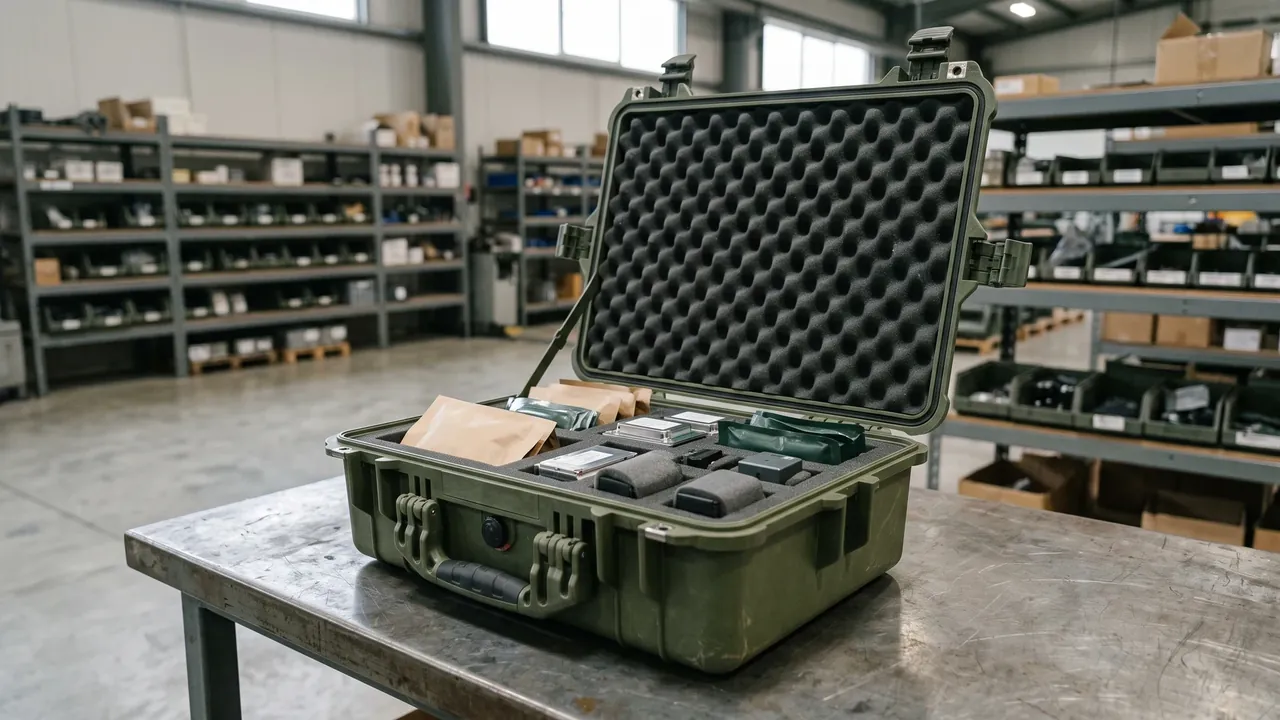
Quick answer: Judge a portable protective box by five measurable things: drop height, corner wall, gasket compression, latch count and hinge pin, plus pressure and immersion results. When all five line up, the case survives 1.2 m and still holds -20 kPa.
Table of contents
- Portable protective box ratings start at the wall
- Drop height and corner travel
- Gasket groove and pressure testing
- Latches, hinge pin and handle load
- Small batch acceptance and consistency
- FAQ
1. Portable protective box ratings start at the wall
An IP number is what happens when three dimensions agree. Raise the wall from 2.0 mm to 2.8 mm and thicken the corner from 3.0 mm to 4.2 mm, and the same portable protective box passes a drop test the thin version fails.
Measure the long side, the short side and the base centre; a spread above 0.2 mm means uneven venting.
| Rating | Seal | Wall | Corner | Use |
|---|---|---|---|---|
| IP54 | EPDM single | 2.0 | 3.0 | indoor transfer |
| IP65 | silicone with lip | 2.5 | 3.8 | light rain |
| IP67 | twin gasket + vent | 3.0 | 4.5 | washdown |
An R8 corner carries about 40 percent more stress concentration than R15 on concrete.
2. Drop height and corner travel
Drop height follows total weight, not a catalogue figure. Below 5 kg the portable protective box drops from 1.5 m, between 5 and 12 kg from 1.2 m, between 12 and 25 kg from 0.9 m, ten times over six faces, three edges and three corners. Peak acceleration inside must stay under 45 g.
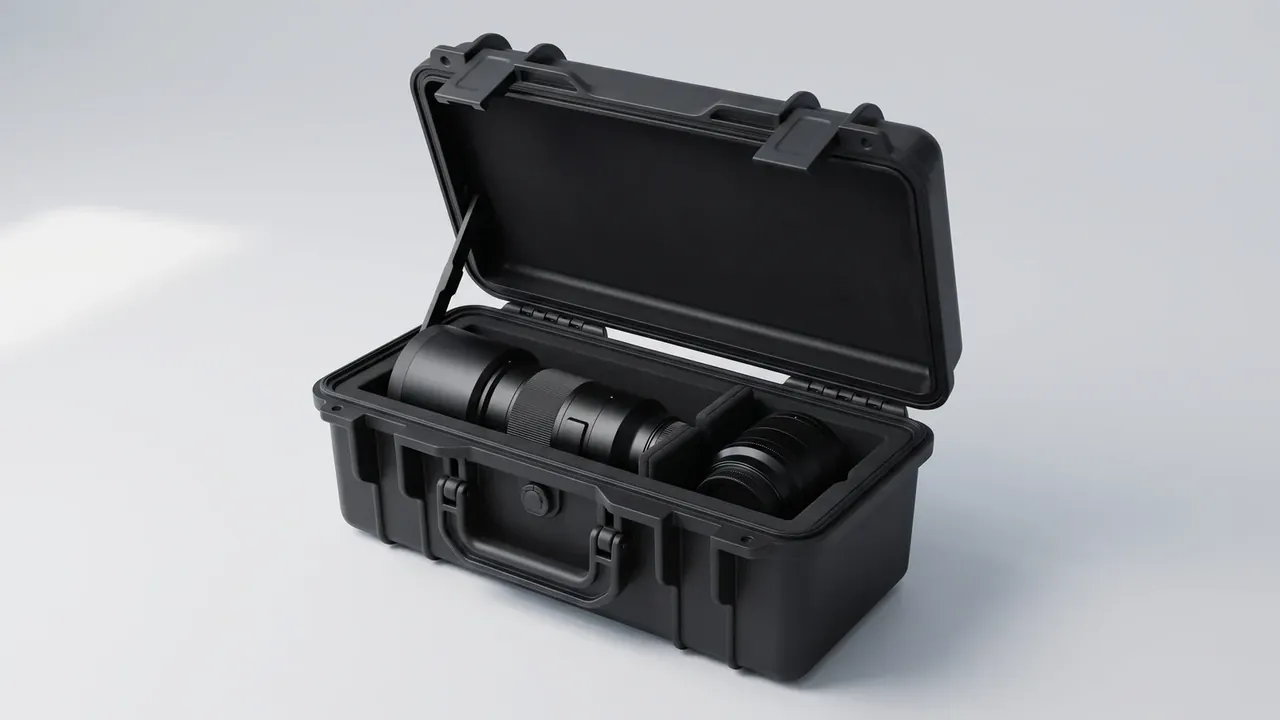
Foam travel sets that peak. An 8 mm gap lets the foam compress to 60 percent and absorb the most energy; squeeze it to 5 mm and the same drop lifts the peak from 45 g to 68 g.
| Total weight kg | Drop m | Foam travel mm | Peak g |
|---|---|---|---|
| up to 5 | 1.5 | 10 | 40 |
| 5 to 12 | 1.2 | 8 | 45 |
| 12 to 25 | 0.9 | 6 | 55 |
Cold matters as well: after four hours at -20 degrees Celsius, PP impact strength falls about 40 percent, so the drop height is multiplied by 0.8.
3. Gasket groove and pressure testing
Sealing depends on compression. A 3.2 mm groove with a 4.0 mm cord lands at 25 to 30 percent compression once the lid closes, the groove 0.3 mm wider so the rubber can bulge. Under 20 percent rain finds a capillary path in twenty minutes; over 35 percent the cord takes a permanent set within a year.
Two tests are needed. Charge the closed case to -20 kPa through the vent, hold 60 seconds and lose no more than 1 kPa; then sink it to 0.5 m for 30 minutes with paper inside. A true IP67 unit also carries a vent passing about 200 mL per minute, or one air freighter leg flattens the gasket.
4. Latches, hinge pin and handle load
Latch count follows width: two below 400 mm, three between 400 and 600 mm, four above. Remove one and the lid middle lifts past a millimetre, exactly where the gasket stops working. Each latch should hold at least 220 N.
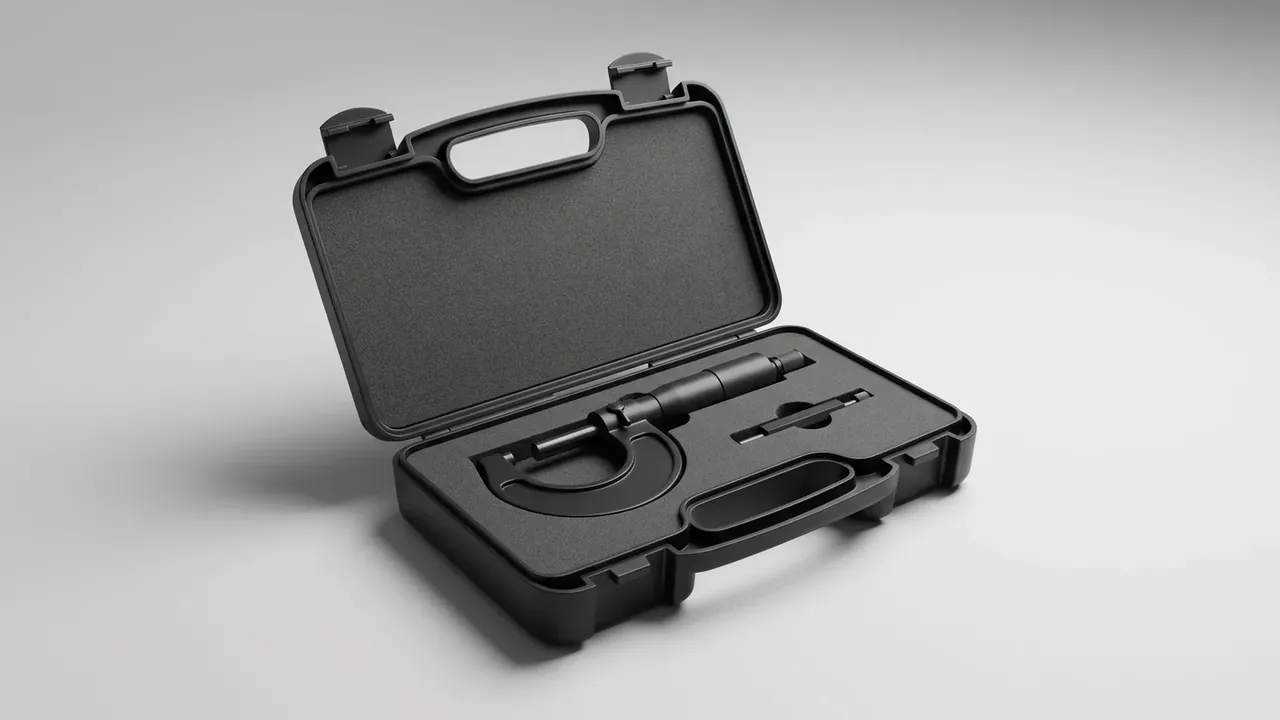
A 5 mm stainless 304 hinge pin should stay within 0.3 mm of clearance after 20000 cycles; more slop shifts the lid and pushes the gasket aside. Handles take twice rated load for 30 minutes, and a PC latch that chips at -20 degrees belongs in PA66 with 30 percent glass fibre, at 0.8 CNY more.
5. Small batch acceptance and consistency
Sample to AQL 2.5, so 13 pieces from a 300 piece lot, and run all five checks; one failure sends the lot back.
| Check | Condition | Pass if |
|---|---|---|
| Six face drop | 1.2 m, ten drops | no crack |
| Pressure | -20 kPa, 60 s | within 1 kPa |
| Immersion | 0.5 m, 30 min | no watermark |
| Latch retention | pull to release | at least 220 N |
| Salt spray | 72 h | no red rust |
Three production numbers matter. A single cavity tool on a 380 t press runs a 42 second cycle for roughly 2000 pieces a day; two cavities reach 55 seconds for 3100, but corner tolerance widens to 0.22 mm.
Conclusion
Choosing a portable protective box comes down to numbers anyone can check: a 2.8 mm wall or 2.0 mm, a 4.2 mm corner or 3.0 mm, a latch rated 220 N or 150 N. Those figures decide whether the interior holds -20 kPa after a 1.2 m drop, and they are where price gap and return rate hide. Written into the contract, they are why the portable protective box you receive still matches its drawing.
This article discusses only the container (case body) side of specifications and design intent, and does not cover any handling, loading or use of the contents.
Related Reading
- How to read heavy duty protective case specifications
- Choosing a protective case size
- Latches, hinges and handles explained
- Comparing foam insert methods
Related Products
- 8 Series — Gun Cases; Military Equipment Cases; Camera Equipment Cases; Drone Cases; Watch Cases; Knife Cases; First Aid Cases; Electronics Equipment Cases
- WL8-2812 PP Gun Case — model WL8-2812
- All protective cases and toolboxes: 7 series, 158 models