

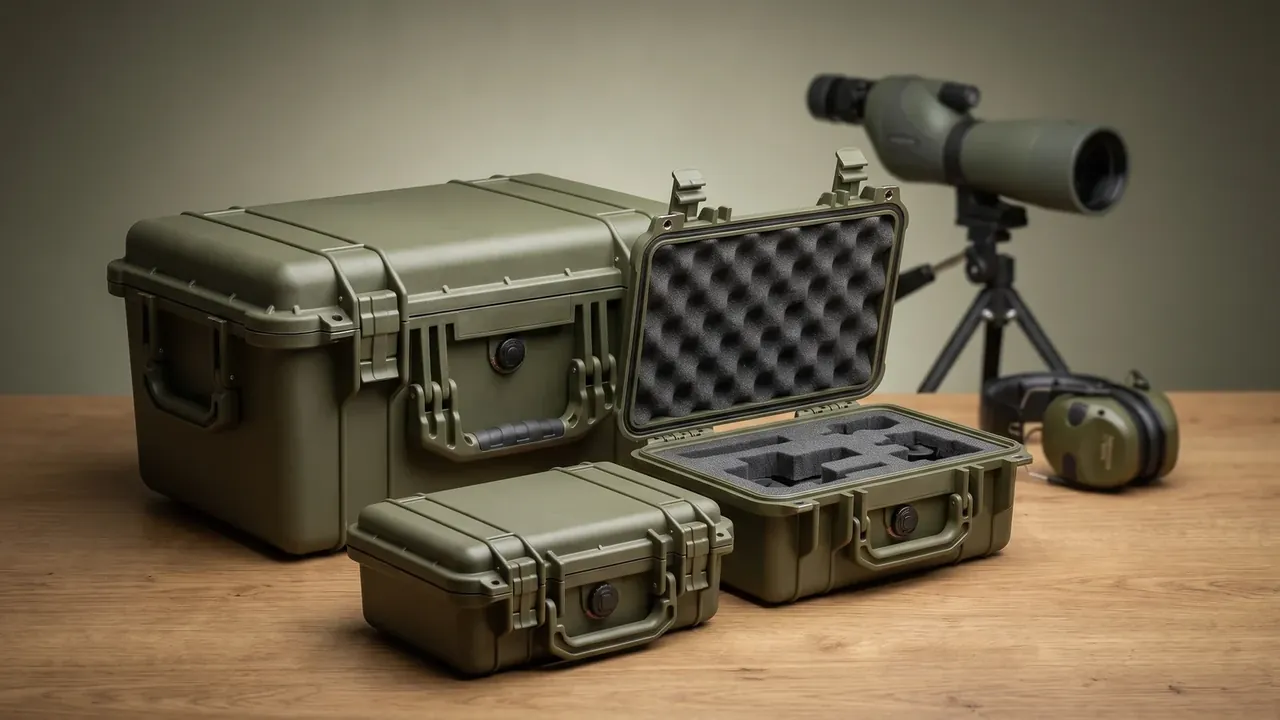
Quick answer: Judge a robot equipment case on compartments, carrying weight, latches, stacking, then a written checklist. Compartments decide whether the tooling fits and stays accounted for; carrying decides whether anyone lifts it at all.
Table of contents
- Compartments Come From the Tool List
- Carrying Weight and Handle Position
- Latch Count and Cycle Life
- Stacking, Twist Locks and Transport
- Putting the Five Criteria on One Sheet
- FAQ
1. Compartments Come From the Tool List
A robot cell ships with a list, not a pile: pendant, cable, end effector, pin, hex keys, servo cable. A robot equipment case is laid out backwards from that list. A pendant is typically 300 by 220 by 80 mm and 1.2 kg, so a 520 by 380 by 220 mm cavity holds twelve compartments, one for the pendant alone.
| Item | Size (mm) | Weight (kg) | Compartment | Divider |
|---|---|---|---|---|
| Teach pendant | 300×220×80 | 1.2 | Single, 320×240 | 8 mm EVA facing |
| End effector | 180×120×140 | 3.4 | Double, 400×140 | 15 mm rigid divider |
| Pins and hex keys | 260×90×30 | 0.9 | Six slots, 20 mm wide | 3 mm foam on walls |
| Spare servo cable | 200 coil | 1.8 | Vertical well, 210 mm | Drain hole in the base |
Allow 10 mm around the largest item, not 30: too much and tools rattle, too little and a gloved hand cannot reach in. Dividers should be removable inserts, so a new end effector costs an insert, not a mould.
2. Carrying Weight and Handle Position
One hand tops out near 15 kg, two hands near 22 kg. Above that the case stays in the van. Loaded at 18 kg, it sits where one person still carries it the 80 m from tool room to cell.
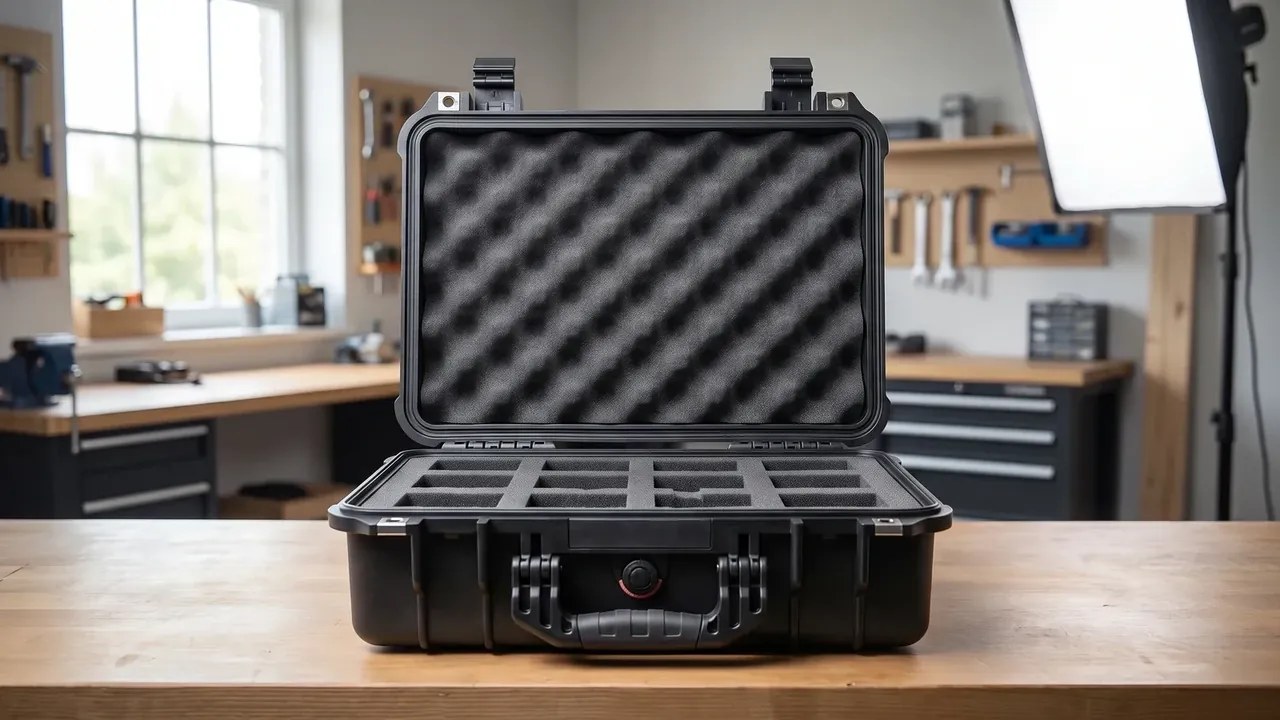
Handle position matters more than handle shape. Keep the handle centre within 20 mm of the loaded centre of gravity, or the case hangs nose-down on every trip, and give it 28 mm of clear width for a gloved hand. Fix it into a through-bolted block; four self-tapping screws in a 3.5 mm wall tear out by the third lift.
3. Latch Count and Cycle Life
The case opens ten times a week, 2,600 cycles in five years. Rate the latches at 3,000 and expect the spring behind the tongue to soften first.
Two latches and four differ in lid deflection, not sealing pressure. A 520 mm lid clamped only at its ends bows about 1 mm in the middle, and dust enters at the bow; four latches cut the unsupported span to 170 mm. Check them at 24 hours of neutral salt spray: the body survives, the rivets and springs do not, so specify 304 rivets and zinc-flake springs.
4. Stacking, Twist Locks and Transport
Three high at 18 kg means the bottom robot equipment case carries 54 kg, so the lid needs 150 kg of static rating. Recessed lid pockets take the feet of the case above and stop the stack walking.
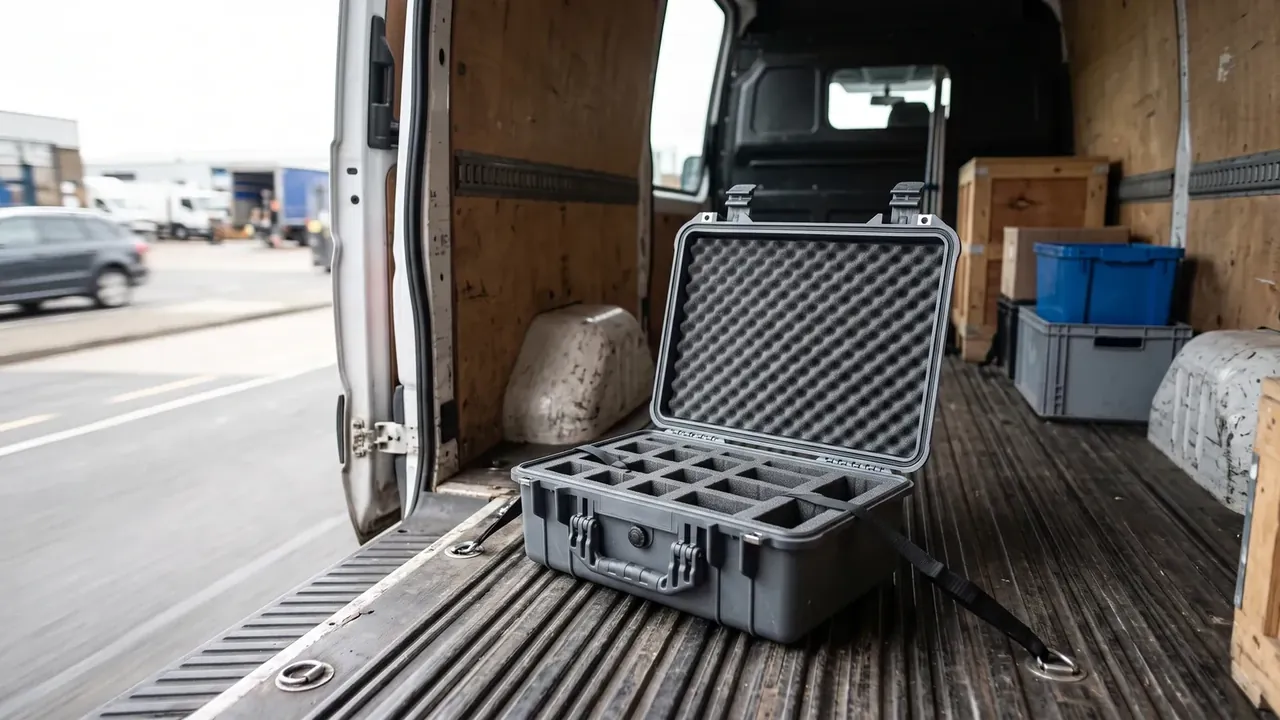
Twist locks at 400 mm centres engage with a 90 degree turn. Straps alone let upper cases slide forward under braking. Drop testing runs at 1.5 m on a corner and 1.0 m flat: an empty case must not crack, a loaded one must not spring a latch.
5. Putting the Five Criteria on One Sheet
| Criterion | Weight | Pass line | Usual failure |
|---|---|---|---|
| Compartments | 30 | 10 mm clearance, removable dividers | One oversized bay |
| Carrying | 25 | 18 kg loaded, handle within 20 mm | Screws into a 3.5 mm wall |
| Latches | 20 | Four, 3,000 cycles | Two, bowed lid |
| Stacking | 15 | Three high, 150 kg | No pockets, stack walks |
| Checklist | 10 | One tool list per case | Counting from memory |
Below 70 out of 100 it should not follow a moving cell; below 55, stay on a shelf. Compartments carry 30 because a new tool means a new layout.
When criteria collide, keep compartments and weight: a poor layout turns every count into a search, and an overweight case stays in the vehicle. Tape the sheet inside the lid and the robot equipment case has a fixed inspection routine.
Conclusion
Compartments put every tool in place, carrying weight decides whether the case leaves the store, latches and stacking whether it stays tight after three relocations, and the checklist whether the next person runs it the same way. Score the five first, and a robot equipment case becomes a measured choice.
This article discusses only the container (case body) side of specifications and design intent, and does not cover any handling, loading or use of the contents.
Related Reading
- How internal dividers are designed
- Case accessories and latch options
- Selection criteria for logistics support boxes
- Selection criteria for drone cases
Related Products
- 8 Series — Gun Cases; Military Equipment Cases; Camera Equipment Cases; Drone Cases; Watch Cases; Knife Cases; First Aid Cases; Electronics Equipment Cases
- WL8-2812 PP Gun Case — model WL8-2812
- All protective cases and toolboxes: 7 series, 158 models