

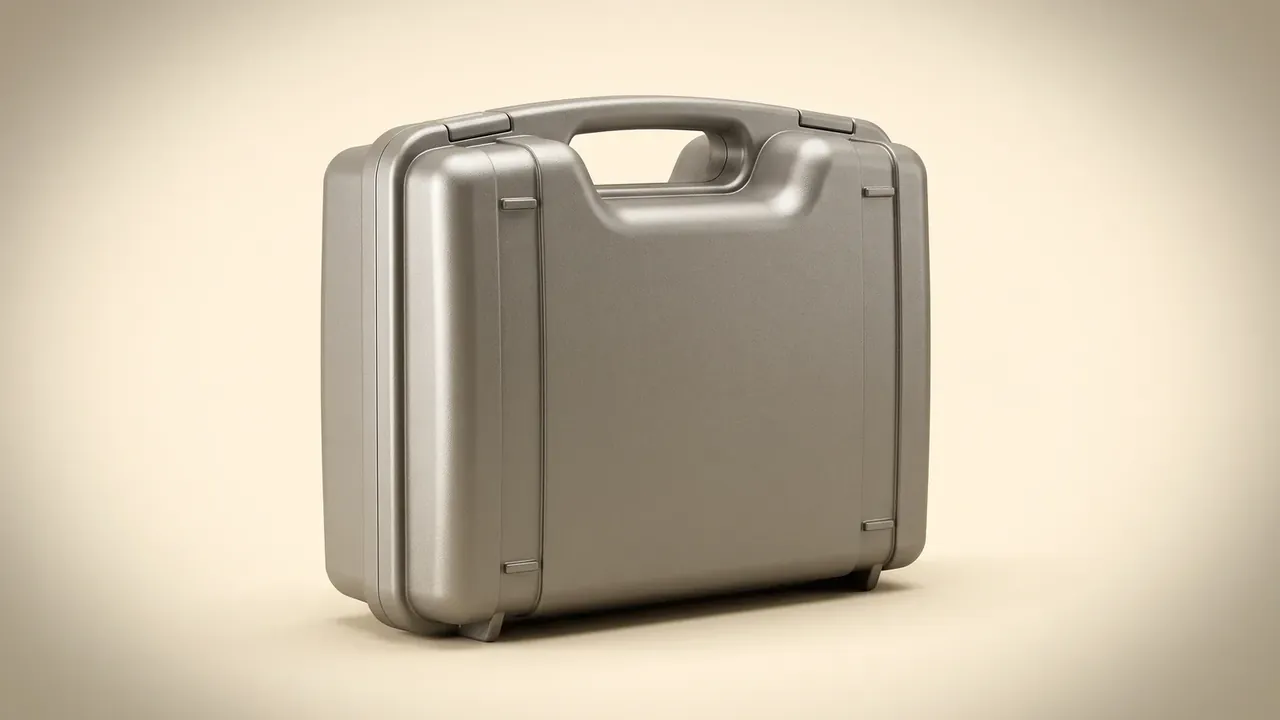
Quick answer: This plastic boxes buying guide sorts the market into six use categories, gives capacity, wall, material and check point for each, then narrows the choice in three steps.
Table of contents
- Six use categories that cover the market
- Tote and stacking boxes: how wall thickness is set
- Transit and tool boxes: seals, latches and inserts
- Household and cold chain: material safety and temperature
- Three-step selection and a material-cost matrix
- FAQ
1. Six use categories that cover the market
Readers of a plastic boxes buying guide know the size they need; what they cannot separate are six products that look identical on a shelf. The load path differs.
| Category | Typical capacity | Material | Wall | Key check |
|---|---|---|---|---|
| Tote and handling | 15–60 L | Copolymer PP | 2.8–3.5 mm | Rib pattern, handle pull |
| Storage and stacking | 40–120 L | HDPE or PP | 3.5–4.5 mm | Top load, stack height |
| Transit and protection | 10–80 L | PP plus gasket | 4.0–6.0 mm | Sealing class, drop height |
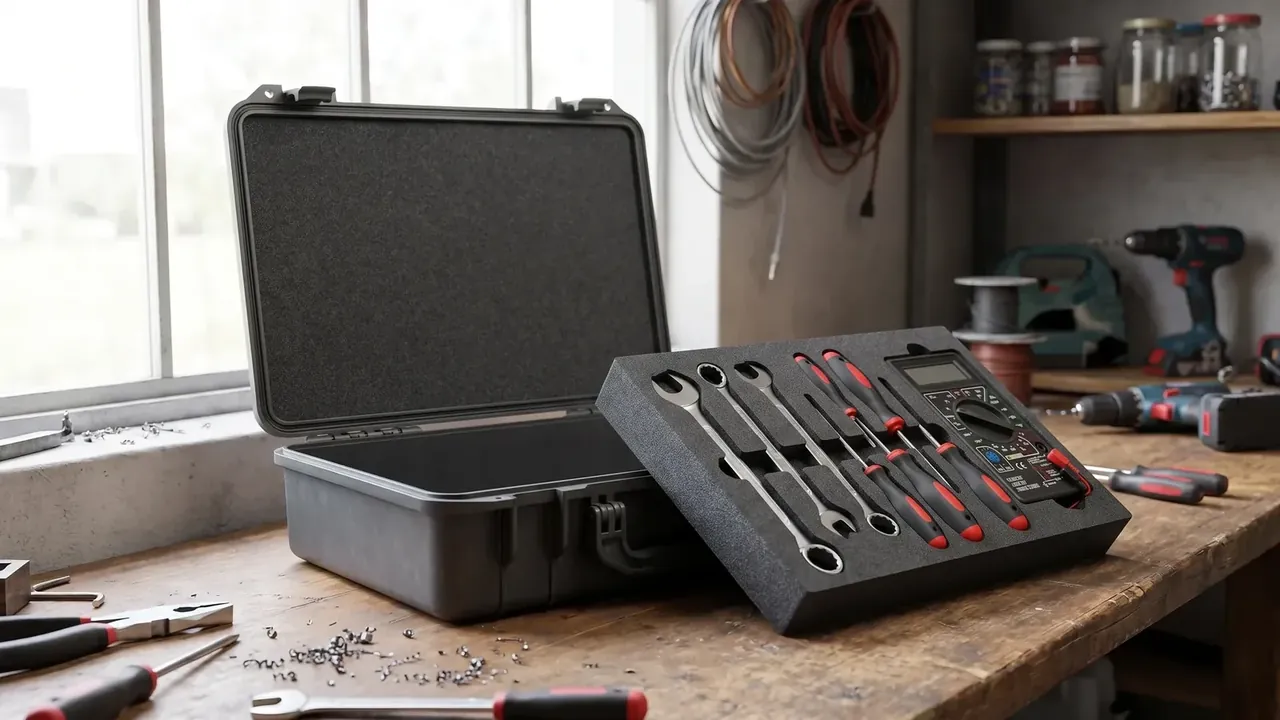
| Tool storage | 8–45 L | PP or ABS | 2.5–3.5 mm | Latch fatigue, insert fit |
| Household storage | 20–100 L | PP | 1.8–2.5 mm | Corner crack, stacking |
| Cold chain and food | 20–80 L | PP shell plus PU | 3 mm shell, 30–50 mm foam | Hold time, cold flex |
Capacities are usable volume, walls the thinnest point. The six diverge on who carries the load, and whether moisture, cold or sun is present.
2. Tote and stacking boxes: how wall thickness is set
In this plastic boxes buying guide, the tote pair sets the baseline: 400×300×230 mm, 25 L and 3.0 mm, hand carried at 50 kg static and five high; a stacking box runs 600×400×280 mm, 60 L and 3.5 mm on a ribbed plate.
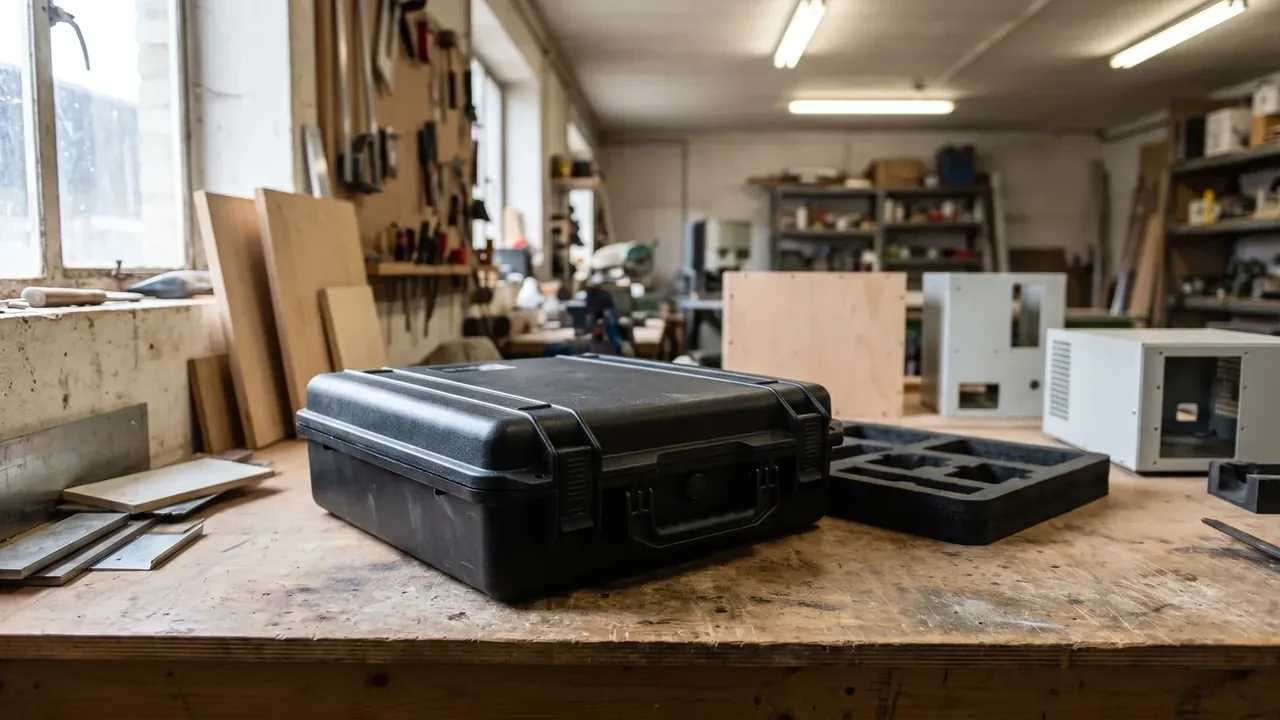
Stack ratings in any plastic boxes buying guide need their test: 500 kg on the lid for 24 hours, 2 mm maximum loss, dynamic three layers against static five, at a 60–80 mm rib pitch.
3. Transit and tool boxes: seals, latches and inserts
A transit case is specified inside: 450×330×180 mm, 4.5 mm wall, double-lip gasket to IP67, 1.2 m six-face drop, -20 to 60 °C. A tool box is 20–40 L at 2.8 mm with two latches.
Latches lose material first: under 15 percent force loss after 5,000 cycles, gasket compression of 25–35 percent, and three latches past 500 mm long.
An O-ring is not a gasket; a moulded double-lip closes the corners a square tongue leaves open.
4. Household and cold chain: material safety and temperature
Household boxes run 30, 50 and 80 L at 1.8–2.5 mm and 15 kg static. This plastic boxes buying guide treats cold chain separately: 50 L body, 3 mm PP shell, 40 mm PU, under a 5 °C rise in eight hours at -18 °C.
Food contact needs food-grade PP to GB 4806.7; regrind shows as a grey cast. A 3 mm radius marks from one knock, 8 mm survives.
PP holds -20 to 100 °C, HDPE -40 to 60 °C, ABS -20 to 80 °C; outdoor storage wants UV-stabilised HDPE.
5. Three-step selection and a material-cost matrix
A plastic boxes buying guide reduces to three questions: loaded weight, layer count, then environment.
| Step | Parameter | Threshold |
|---|---|---|
| 1 | Loaded weight per box | Above 25 kg, castors or two-person lift |
| 2 | Top load and layer count | Five or more layers, 3.5 mm wall |
| 3 | Sealing class, temperature, UV | Outdoors, UV-stabilised HDPE |
Cost below is indexed to homopolymer PP at 1.0, with process and material moving together.
| Material | Process | Temperature | Wall range | Cost index |
|---|---|---|---|---|
| Homopolymer PP | Injection | -20 to 100 °C | 1.8–4.0 mm | 1.0 |
| Copolymer PP | Injection | -20 to 100 °C | 2.5–6.0 mm | 1.1 |
| HDPE | Injection or rotomould | -40 to 60 °C | 3.0–12 mm | 1.3 |
| ABS | Injection | -20 to 80 °C | 2.5–4.5 mm | 1.5 |
| PU foam composite | Foaming plus assembly | -30 to 80 °C | 30–50 mm foam | 2.2 |
Injection tools run 80,000–250,000 RMB against 30,000–80,000 RMB for rotomould, minimums near 500 and 50 pieces.
Conclusion
Set side by side, the six categories turn selection into a lookup, and the steps land on wall thickness, stacking height and sealing class. Match these tables against test records, and this plastic boxes buying guide earns its keep.
This article discusses only the container (case body) side of specifications and design intent, and does not cover any handling, loading or use of the contents.
Related Reading
- PP plastic case selection points
- Stackable box specifications
- Tool organiser box structure
- Temperature-controlled case selection
Related Products
- 8 Series — Gun Cases; Military Equipment Cases; Camera Equipment Cases; Drone Cases; Watch Cases; Knife Cases; First Aid Cases; Electronics Equipment Cases
- WL8-2812 PP Gun Case — model WL8-2812
- All protective cases and toolboxes: 7 series, 158 models