

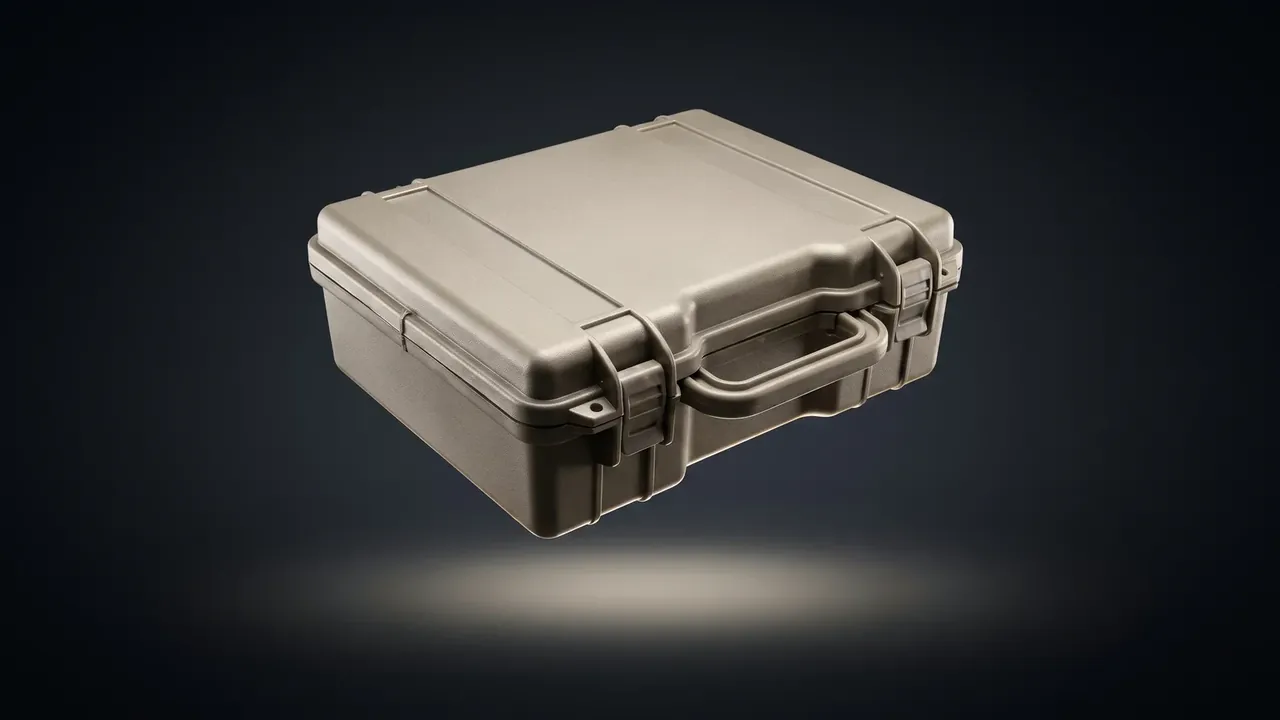
Quick answer: Read plastic box pictures for three numbers first: outside size, internal cavity, wall thickness. The tables below turn shape, latches, capacity maths and photo annotation into a checklist, so one image answers fit, load and sealing.
Table of contents
- What Plastic Box Pictures Reveal in Five Layers
- Latches, Hinges and Ribs
- Inside Dimensions and Capacity Maths
- How to Photograph and Measure
- Three Costly Misreadings
- FAQ
1. What Plastic Box Pictures Reveal in Five Layers
The usual mistake with plastic box pictures is reading appearance as the whole specification. Five layers share the frame: outline, latches, hinges, ribs and liner.
Classify the shape first: five families, each with a stable band of size and wall.
| Family | Outside size (mm) | Wall (mm) | Volume (L) |
|---|---|---|---|
| Carry case | 260×180×90 to 460×350×200 | 1.8–2.6 | 3–22 |
| Flip-lid | 300×200×120 to 600×400×300 | 2.0–3.2 | 5–45 |
| Clear-view | 180×120×60 to 400×300×160 | 1.5–2.2 | 1–12 |
| Compartment | 240×160×70 to 420×320×150 | 2.0–2.8 | 2–15 |
| Drawer | 400×300×200 to 700×500×400 | 2.5–4.0 | 20–90 |
Most shots lack a reference object, so use the latch as a ruler: a thumb-width catch is 45–55 mm, and reversing the long edge lands within 10 percent.
2. Latches, Hinges and Ribs
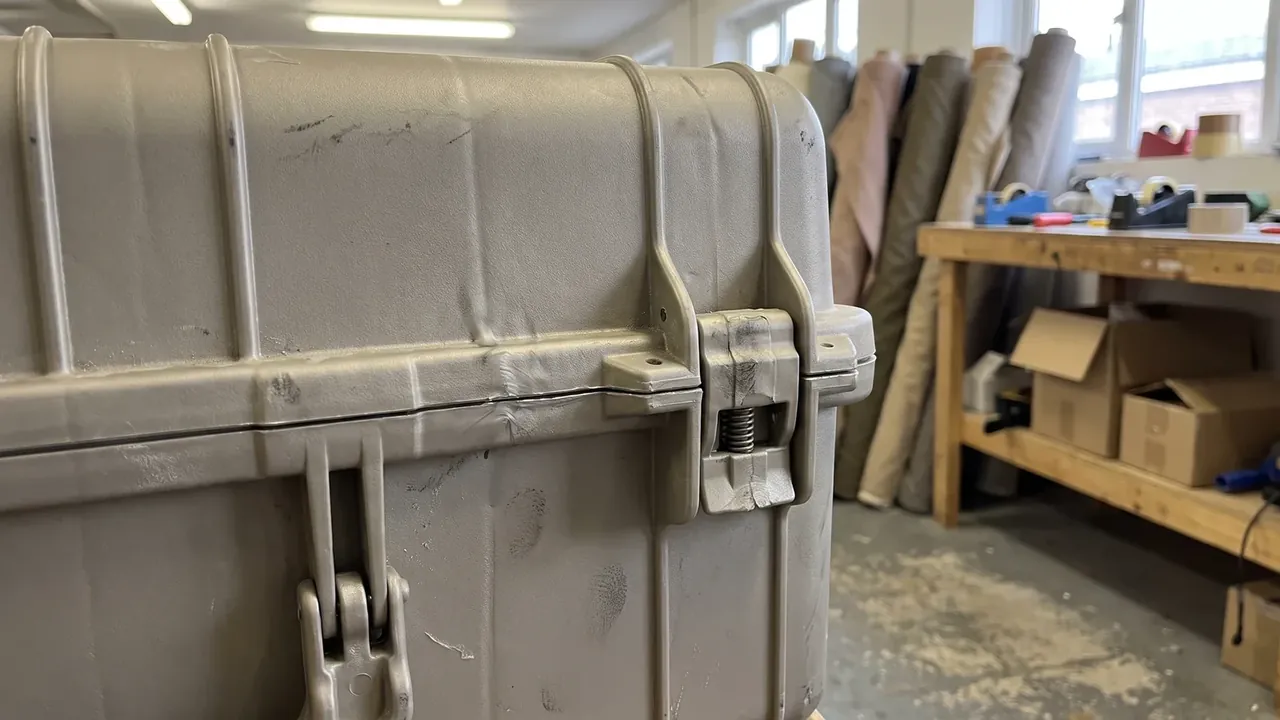
Latches are over-read in most photos. A flat catch clamps and holds off splashes; sealing needs a catch compressing a continuous gasket.
| Visible feature | Usually means | Read it as |
|---|---|---|
| Single flat catch, no groove | Splash resistance | No stacking under 40 mm |
| Two opposed catches, full groove | Airtight, about IP67 | Imprint must be unbroken |
| Twin-pin hinge, stops | 10,000 cycles | Single-pin sags at 3,000 |
| Cruciform base ribs | About 25 kg | Ribs under 3 mm cosmetic |
| Honeycomb ribs, posts | Up to 40 kg | Ribs must reach posts |
Then trace the load path: a lid-mounted handle sends payload through hinges and catches, capping at 25 kg; a body-moulded handle carries it down the walls to 35 kg.
3. Inside Dimensions and Capacity Maths
Outside size reserves floor space; the cavity decides fit. Moulding costs 8–15 mm per side, and the base gives 10–20 mm more to ribs and radii. A case sold as 400×300×180 mm measures about 372×272×158 mm inside, so a 350 mm tool will not lie flat.
Capacity carries a second gap: outside-based figures include the lid dome, cavity-based ones exclude it, 8–12 percent apart. The same case gives 21.6 L outside, 16.0 L inside, near 14 L after lining. Where plastic box pictures show 20 L, confirm the method first.
Corners matter too: outside R5–R8 serves release, inside R2–R3 decides whether square items sit flush, costing long items 5–10 mm.
4. How to Photograph and Measure
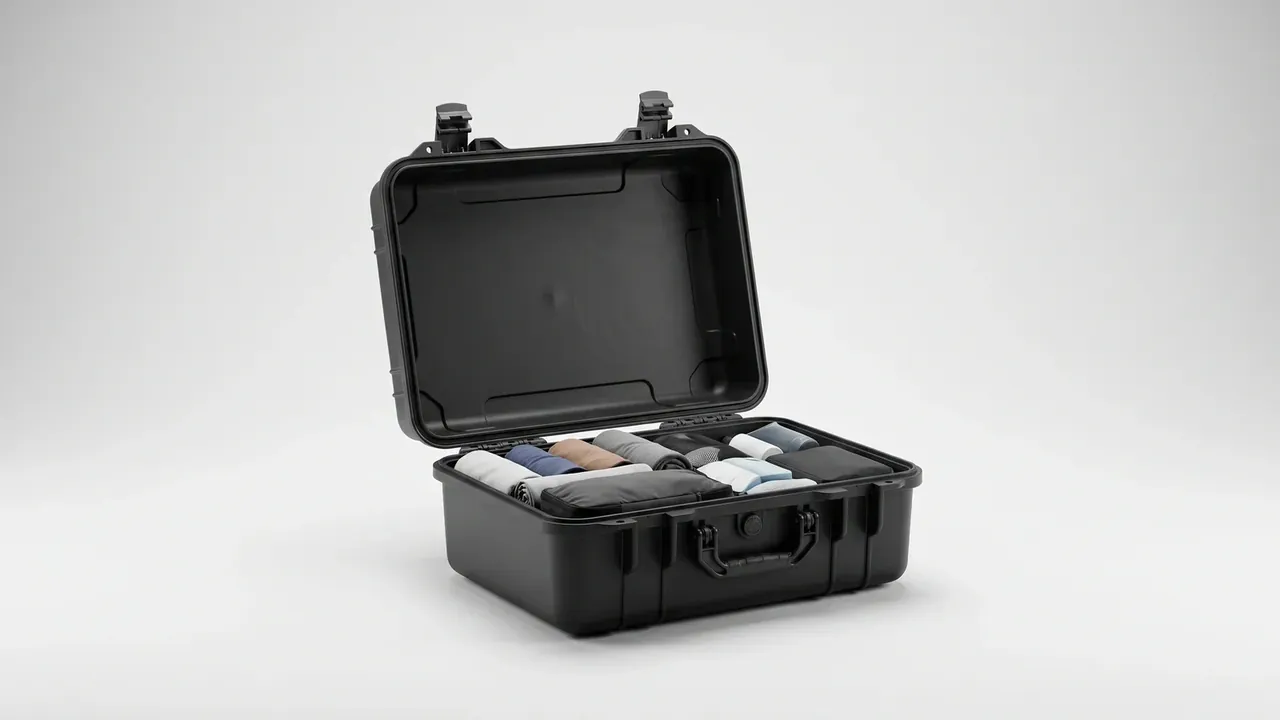
For plastic box pictures to serve as a specification, shoot five views: front, side, top, base, open.
| View | Dimensions to mark | Note |
|---|---|---|
| Front | Length, height, boss height | Boss apart |
| Side | Depth, folded handle thickness | Protrusion separately |
| Top | Flat lid area, print area | Edge offset 15–20 mm |
| Base | Rib height, pitch, foot | Pair height, pitch |
| Open | Cavity length, width, depth, radius | Three axes plus R value |
Two rules keep the set usable: the rule must lie in the body plane, since a tilted one reads 3–5 mm long, and every frame needs the same lens and distance.
5. Three Costly Misreadings
The first misreading treats equal outside size as the same box. Both quote 400×300×180 mm, yet cavities differ by 15 mm: the wall moved from 2.0 to 3.2 mm, taking 1.2 mm per side. The second mixes lid-inclusive and lid-exclusive capacity, where 20 L and 16 L sit one line apart. The third hits clear parts: polycarbonate starts at 88 percent transmission, but low hardness lets wiping drop it under 80.
Each symptom has one measurable cause, visible in one of the five views, so a photo checklist settles the question before a sample is cut. Cavity shortfall, capacity wording and rib height cover most disputes.
Conclusion
Shape sets the class, cavity the volume, latches the seal, ribs the load. With these tables, plastic box pictures answer fit, load and sealing in one pass. Shortlist by numbers, and plastic box pictures read as a specification sheet.
This article discusses only the container (case body) side of specifications and design intent, and does not cover any handling, loading or use of the contents.
Related Reading
- PP plastic case selection: material and wall thickness
- Protective case sizing: outside size to usable cavity
- Tool box organiser: dividers versus liner
- Small plastic case selection: small-part storage
Related Products
- 8 Series — Gun Cases; Military Equipment Cases; Camera Equipment Cases; Drone Cases; Watch Cases; Knife Cases; First Aid Cases; Electronics Equipment Cases
- WL8-2812 PP Gun Case — model WL8-2812
- All protective cases and toolboxes: 7 series, 158 models