

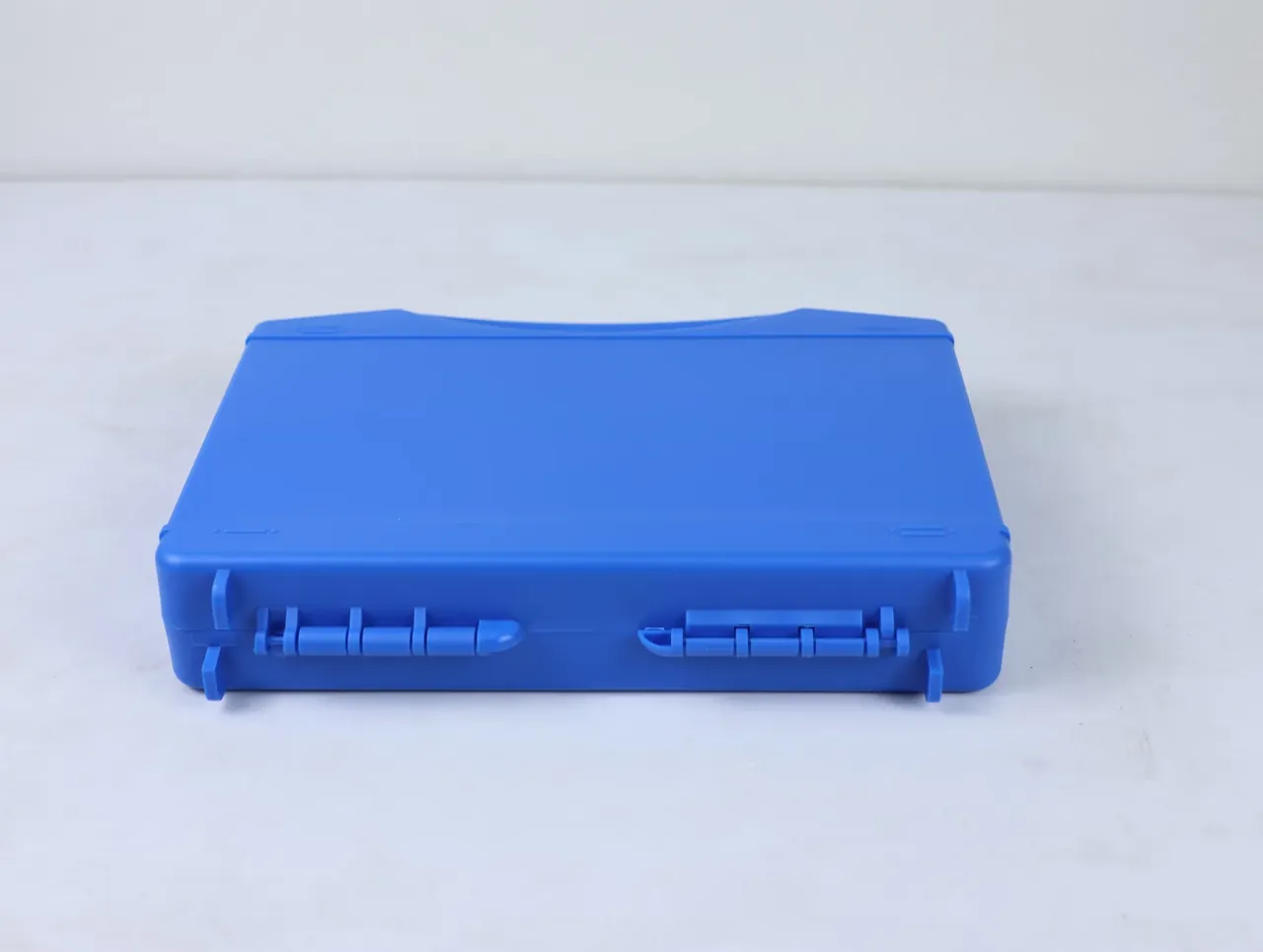
Quick answer: A Large Protective Case pays off between 1 and 1.8 m outside length, below 300 units a year, where impact resistance and field repair matter. Past 300 units move to injection moulding, for light and fast move to aluminium, for one-way export move to plywood, past 2.4 m move to steel.
Table of contents
- Where a Large Protective Case Stops and Injection Moulding Starts
- Lighter Than Aluminium, Cheaper Than Plywood
- Four Situations Where It Is the Wrong Tool
- When Size Forces a Different Route
- FAQ
1. Where a Large Protective Case Stops and Injection Moulding Starts
Above one metre of outside length, four routes compete with a Large Protective Case: rotomoulded polyethylene, injection-moulded polypropylene, folded aluminium and plywood.
Tooling comes first: a rotomould is a welded steel shell costing 60,000 to 120,000 yuan at 1200 mm, while an injection tool of that size passes 600,000 yuan and must survive 1800 tonnes of clamp force.
| Item | Rotomoulded | Injection | Aluminium | Plywood |
|---|---|---|---|---|
| Tooling | 60k to 120k yuan | Over 600k yuan | From 3,000 yuan | From 800 yuan |
| Volume break-even | Under 300 a year | Over 300 a year | Under 50 | One-way |
| Typical wall | 8 to 10 mm | 4 to 5 mm | 2.5 mm sheet | 12 mm |
| Empty weight | 21 kg | 15 kg | 13 kg | 26 kg |
| Lead time | 30 days | 55 days | 18 days | 3 days |
Repair is the missed difference. A forklift puncture is closed with a patch of the same resin, hot-air welded at 260 degrees Celsius, recovering about 80% of parent strength. Injection-moulded shells crack brittle and take no patch.
2. Lighter Than Aluminium, Cheaper Than Plywood
The weight case for aluminium is real: at 1200 by 500 by 400 mm a rotomoulded shell weighs 21 kg, a riveted 2.5 mm aluminium shell 13 kg. Air freight bills the volumetric weight, about 40 kg, so both sit inside it and the 8 kg gap costs nothing; only actual-weight billing turns it into money.
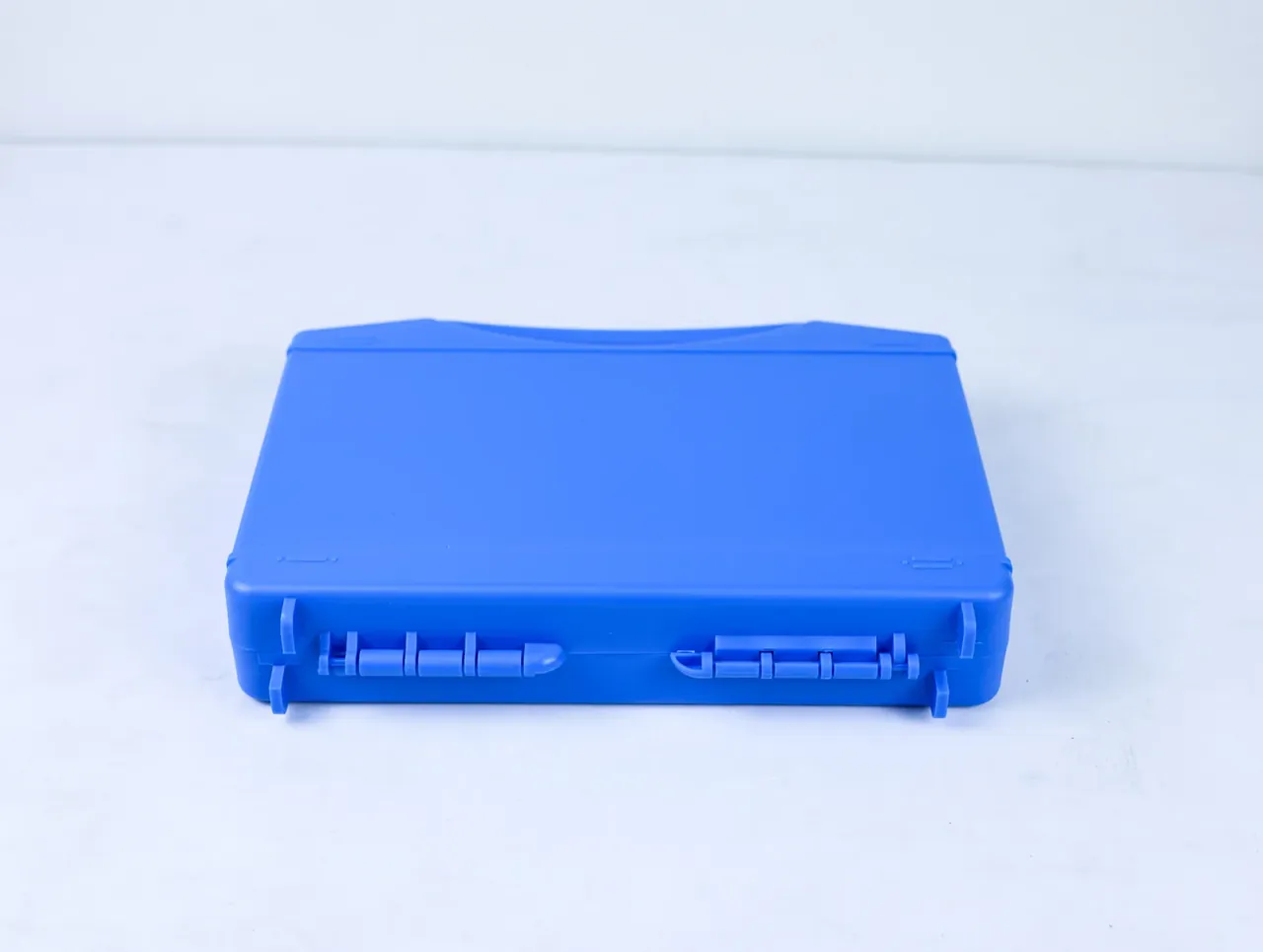
Aluminium spends its money elsewhere. A 2.5 mm sheet needs 180 rivets per box, so labour takes 40% of cost against 15% for a one-piece rotomoulded body. It dents worse: a 20 kg impact leaves an 8 mm hollow that stays, where plastic springs back 3 mm. Anodised 5052 shows no white rust after 500 hours, where the steel eye plates on a plastic case turn red unless they are 304 stainless. Price runs at 2.2 times the plastic version, but delivery is 18 days against 30 for a new rotomould. Aluminium fits small batches that must be light, fast and permanently wet; plastic fits steady volume that must take impact.
Plywood sits at the other end. A 1200 mm crate costs 280 yuan, a tenth of the plastic case, but it stacks four high only, loses half its strength when damp, and needs fumigation plus three days for ISPM 15.
One-way export goes to plywood, repeated circulation to plastic.
3. Four Situations Where It Is the Wrong Tool
When is a Large Protective Case the wrong buy? Four situations pay back immediately.
- More than 20 openings a day: a bolted lid means 12 fasteners each time, while a latch cuts 90 seconds of opening to 15
- Under 15 kg of contents going by air: the shell is over 60% of gross weight and freight bills on volume, so a thin-wall box or soft case wins
- Outside length past 2.4 m: the oven will not swing it, and splicing adds a water path that grows 3% per metre
- One-way export only: 280 yuan plywood against 2,800 yuan plastic, and returning empty shells costs more than new crates
One case sits outside these four: dangerous goods under UN certification. Drop and stack tests run per packing category, and only packaging with the UN mark qualifies.
4. When Size Forces a Different Route
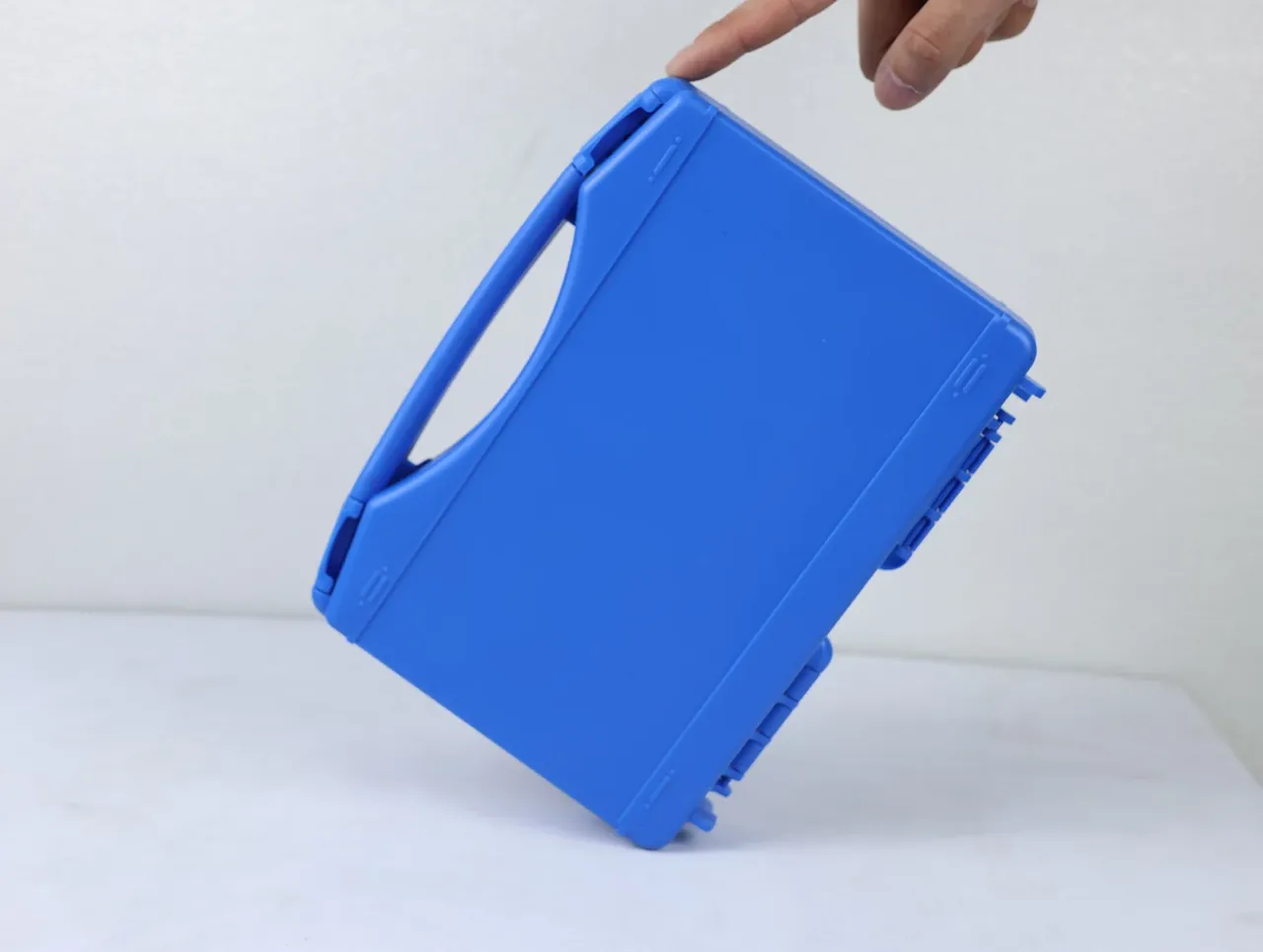
The ceiling on rotomoulding is the oven, not the process. A typical machine swings a 2.5 m arm, so a body whose diagonal passes 2.2 m will not turn. Splice it and the seam leaks at 3% per metre.
| Outside length | Recommended route | Why it changes |
|---|---|---|
| Under 1000 mm | Injection moulded | Low piece cost, even wall |
| 1000 to 1800 mm | Rotomoulded | Impact resistant, repairable, tooling amortised |
| 1800 to 2400 mm | Rotomoulded on steel base | Forklift and lifting loads land on the base |
| Over 2400 mm | Plywood or steel frame | The oven cannot take it |
Stack height is the second signal. A rotomoulded body stacks three empty and two loaded, plywood four on a pallet, so a four-level plan needs a steel shelf at 180 yuan per case.
Conclusion
Put the four routes side by side and the window is narrow: 1 to 1.8 m outside length, under 300 units a year, and a real need for impact resistance and field repair. Outside it a Large Protective Case loses on volume to injection moulding, on weight to aluminium, on one-way cost to plywood and on size to steel frames.
This article discusses only the container (case body) side of specifications and design intent, and does not cover any handling, loading or use of the contents.
Related Reading
- Wall Thickness, Ribs and Lift Points of a Large Case
- Where a Large Protective Case Is Used
- Case Requirements Differ by Industry
Related Products
- 8 Series — Gun Cases; Military Equipment Cases; Camera Equipment Cases; Drone Cases; Watch Cases; Knife Cases; First Aid Cases; Electronics Equipment Cases
- WL8-2812 PP Gun Case — model WL8-2812
- All protective cases and toolboxes: 7 series, 158 models