

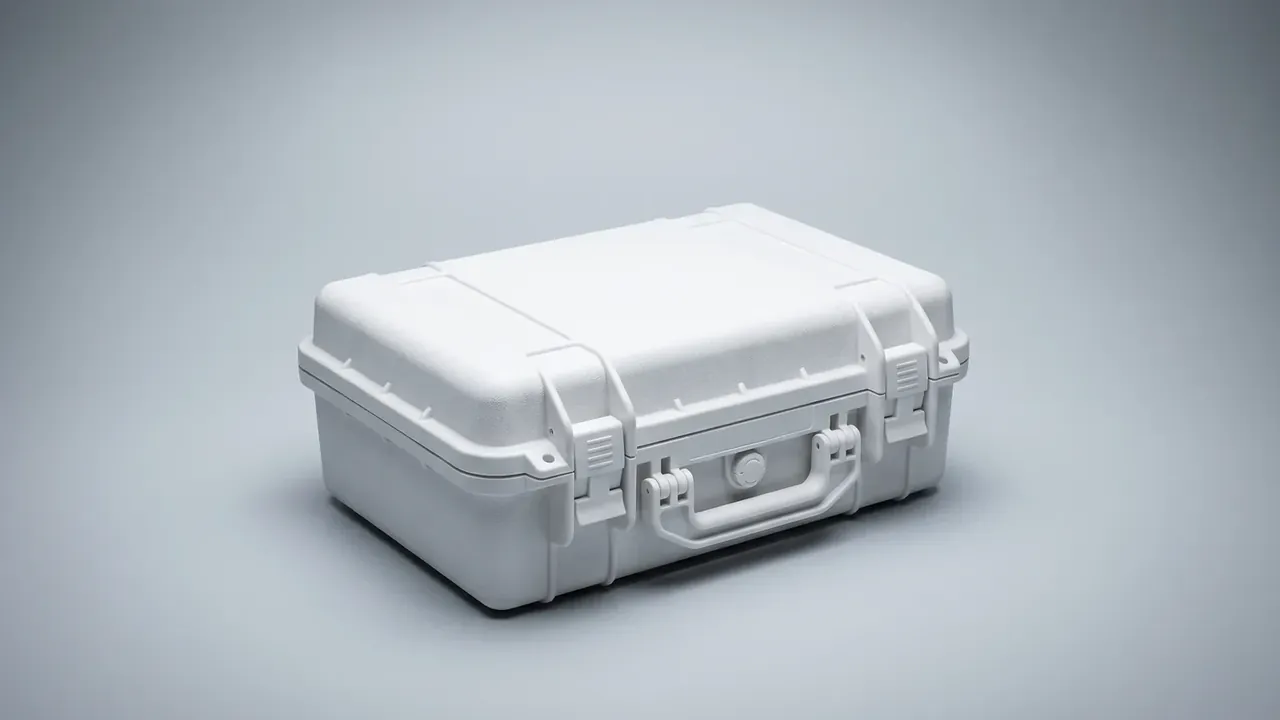
Quick answer: A large waterproof plastic box is accepted on six numbers: outline ±4 mm, wall 4.5 mm, water drop 2 mm in 30 minutes, 60 kg for 24 hours, latch 400 N, drop 1.2 m.
Table of contents
- Write the Acceptance Baseline Into the Purchase Order
- Full Water and Stacking: Where a Big Box Gives Way
- Lid Flatness, Latch Force and Handle Load
- Three Disposal Grades and the Report File
- FAQ
1. Write the Acceptance Baseline Into the Purchase Order
Most disputes over a large waterproof plastic box are contractual, not technical. One party measures the outer edge of a 1200 mm moulding, the other the rim, and the 6 mm between them eats a morning.
A baseline answers four things: what, where, with which instrument, how much is allowed. Leave one open and the inspector falls back on judgement.
| Baseline | How it is measured | Tolerance |
|---|---|---|
| Outline size | Closed and latched, longest outer edge | ±4 mm |
| Usable volume | Inner cavity less radii and draft, checked by filling | Not below nominal by 2% |
| Empty mass | 30 kg bench scale, five units | ±3% |
| Rated load | Declaration plus a 24 hour loaded test | Not below 150 kg |
Usable volume is the item most often glossed over; compute it from the inner cavity. Moulded walls carry 2 to 4 mm of draft, so a rim measurement overstates capacity by about 5%. On a nominal 480 L box, a filled volume under 470 L is rejected; a loose fill shifts in the truck, and that shift is an impact.
Empty mass is the cheapest filter. On one mould and one grade, unit scatter normally stays inside ±3%; past ±5% something has been thinned or regrind has crept in. Put 24.5 kg on the drawing and weigh five units at goods-in. It screens the obvious batch at the dock. Thickness still needs the gauge on four side walls, which takes twenty minutes. Do both, in that order, and nobody argues about unmeasured numbers.
2. Full Water and Stacking: Where a Big Box Gives Way
A large waterproof plastic box rarely leaks at the gasket first. It leaks when the body moves. Past one metre on the long side, stiffness comes from ribs and wall, and water plus stacking push that side outward.
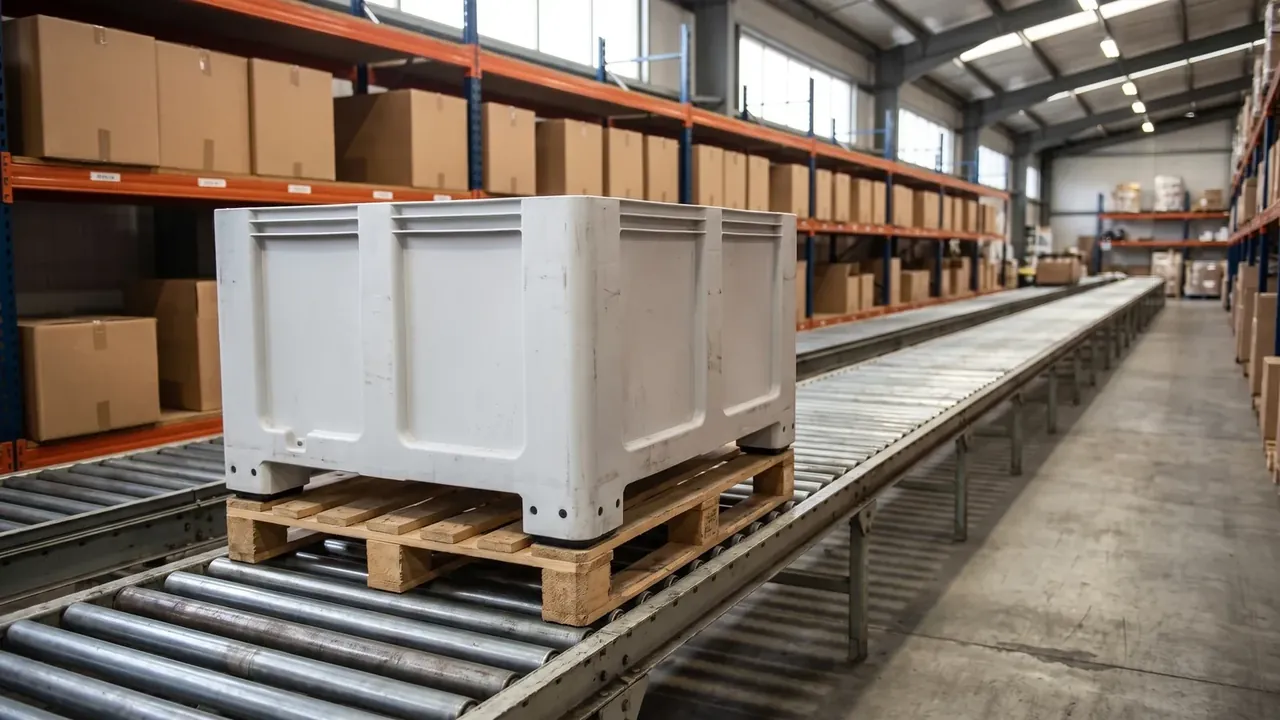
The full-water test uses the complete box at room temperature. Fill to 25 mm below the overflow lip and read the level after 30 minutes with a steel rule flat on the wall.
| Test | Condition | Limit |
|---|---|---|
| Still water | Clean water, 30 minutes | Level drop ≤ 2 mm |
| Base sag | Loaded, centre against corners | ≤ 3 mm |
| Long side bulge | Loaded, maximum outward | ≤ 4 mm |
| Stacking | 60 kg bags, three high, 24 hours | Set ≤ 1.5 mm |
| Corner drop | Loaded, 1.2 m, three corners | No crack, no seepage |
A level drop past 2 mm is not yet a gasket verdict. The difference sits in the body: as the base sags, water redistributes and the reading follows. Turn it over and look for whitening at the base rib roots, where stress concentrates.
Measure stacking set an hour after unloading; plastic recovers slowly and an instant reading fails good boxes.
3. Lid Flatness, Latch Force and Handle Load
Lid flatness decides whether the gasket is compressed evenly. A 1.2 m lid sagging 3 mm in the middle leaks at the centre, however tight the ends.
Six checks, in order:
- Flatness: lid face up on a grade 1 plate, feeler gauge at the widest gap, 2 mm per metre and 3 mm overall.
- Wall: eight ultrasonic points, two per side wall, one on base and one on lid, floor at 4.0 mm.
- Latch retention: pull gauge along the opening direction, three readings per latch, floor at 400 N.
- Handle: twice the rated load hung 30 minutes, residual gap under 1 mm.
- Pressure valve: 0.3 bar held 60 seconds, soap solution, no continuous bubbles.
- Hardware: 48 hours neutral salt spray, appearance rating 9 or better.
Of the six, a large waterproof plastic box fails most often at the latch. A weak latch passes every empty test and pops open the first time a loaded box is bumped. Seat it before reading; a half-engaged hook means nothing.
4. Three Disposal Grades and the Report File
Three grades, no more.
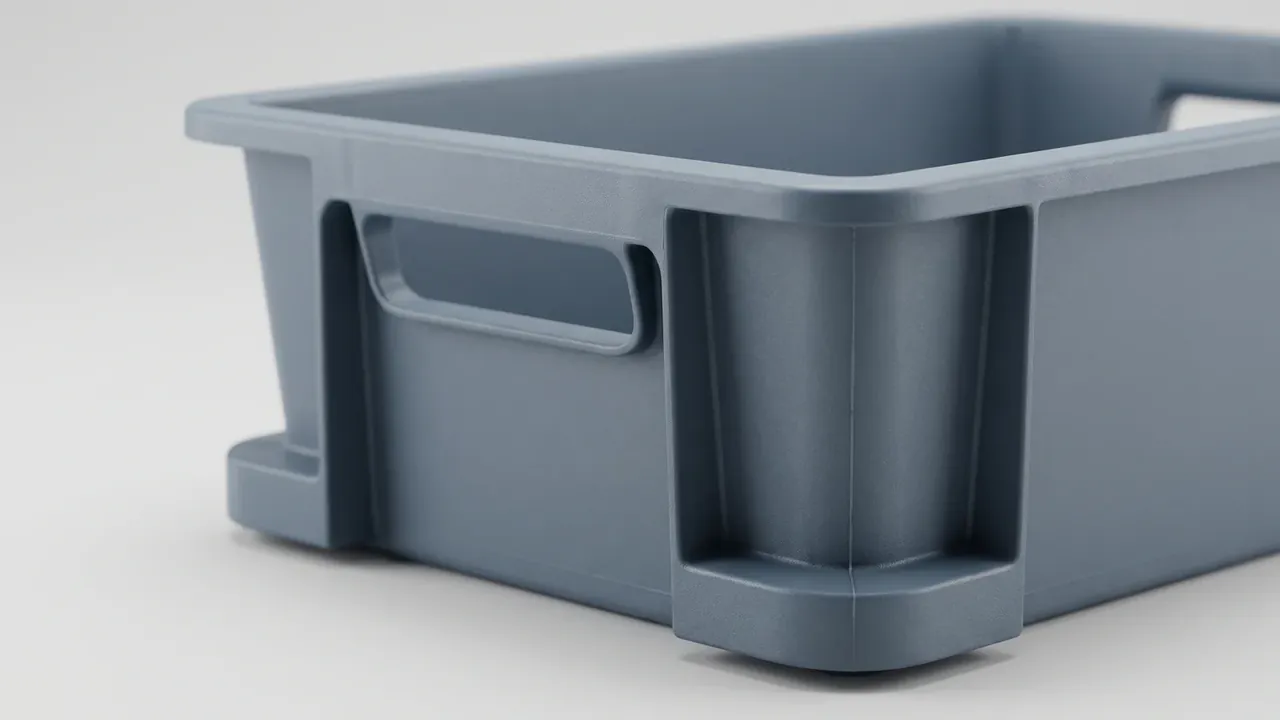
| Grade | Typical defect | Disposition |
|---|---|---|
| A | Leak, latch release, handle fracture, drop crack | Lot returned, 100% re-inspection |
| B | Wall below 4.0 mm, flatness past 3 mm, pressure decay | Sample doubled, second failure returns the lot |
| C | Colour shift, flash, label offset, faint flow line | Concession, price adjustment by ratio |
Grade A never takes a concession. A large waterproof plastic box is a pressure part, and once it leaks the rework costs more than the moulding.
Keep four images per report: defect, instrument reading, batch label, retained sample. Text runs three lines: location, measured value, verdict.
Conclusion
Acceptance is a writing job before it is a measuring job. Put the baseline in the order, the method in the work instruction, the limit in the template, and the three agree. Hold the six numbers and the large waterproof plastic box holds its side of the bargain.
This article discusses only the container (case body) side of specifications and design intent, and does not cover any handling, loading or use of the contents.
Related Reading
- Waterproof hard case grades and test conditions
- Marking rules for cases and pallets
- Standard work documents for case production
Related Products
- 8 Series — Gun Cases; Military Equipment Cases; Camera Equipment Cases; Drone Cases; Watch Cases; Knife Cases; First Aid Cases; Electronics Equipment Cases
- WL8-2812 PP Gun Case — model WL8-2812
- All protective cases and toolboxes: 7 series, 158 models