

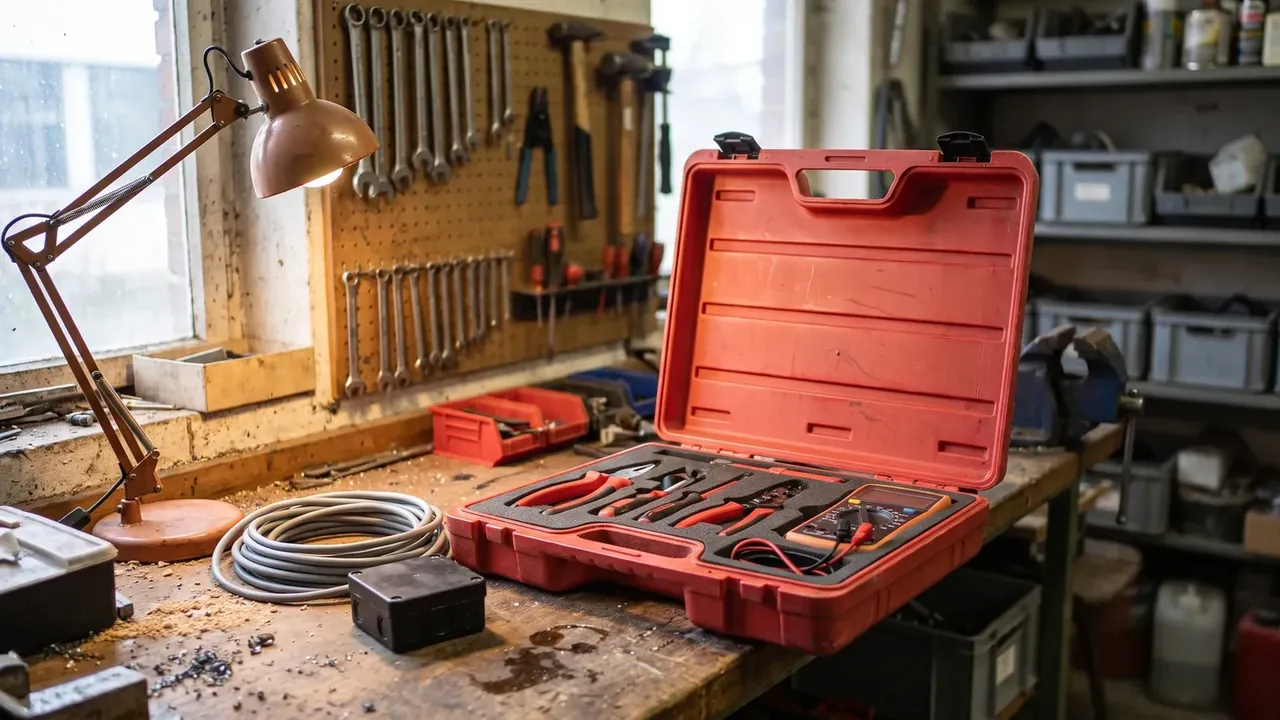
Quick answer: Laser Distance Meter Case: rebound travel 5.4 mm and tongue coating 2.2 mm hold wear under 0.12 mm after 3500 open-close cycles on a 3.8 mm shell.
Table of contents
- Latch Rebound Travel of the Laser Distance Meter Case
- Tongue Coating Thickness
- Tongue Wear after 3500 Open-Close Cycles
- Lost Motion on Static Re-Measurement
- Travel Setting for the Handheld Batch
- FAQ
1. Latch Rebound Travel of the Laser Distance Meter Case
Three thousand five hundred open-close cycles settle how much the tongue wears and how far lost motion grows, read at two points with a calliper. Rebound travel is the stroke a spring gives the latch tongue once the thumb lets go, nominal 5.4 mm on this Laser Distance Meter Case; the lid swing is separate. The shell is 465×325×170 mm outside and 405×270×115 mm inside, with a 4700-cycle hinge rating, so the latch answers only for its own short stroke.
A short stroke leaves the tongue scraping the keeper on closing; a long one adds sliding distance each cycle without adding contacts. A 3.8 mm wall gives the keeper a rigid seat, and at 5.4 mm the tongue just clears it without wandering. The calliper reads tip push-out against the keeper datum before and after release.
A Laser Distance Meter Case at 3.6 kg empty and 7.5 kg loaded carries two latches at 325 N each, one gasket at 17% compression, and a seal benchmarked to IP66 rain and dust. The pair share lid compression; if strokes differ, the latch releasing first wears harder, so each keeps its own travel record.
2. Tongue Coating Thickness
On the Laser Distance Meter Case, the 2.2 mm coating keeps bare metal off the keeper. With rebound travel fixed, coating thickness is the second dial on wear: over 3500 cycles a 2.2 mm layer delays the tongue showing through. It sits on the curved tip, edge lined up with the keeper lead-in.
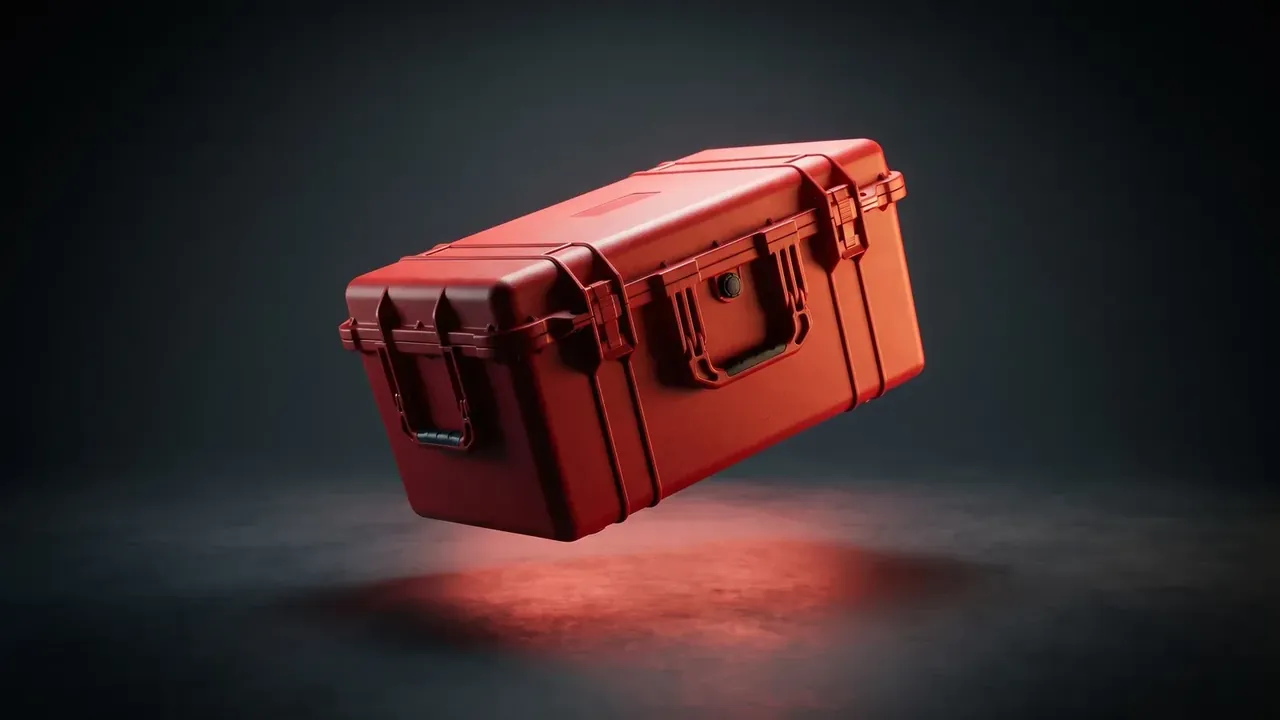
The rig sorts samples into three rebound steps from one mould, changing only spring preload. The table logs groups and tongue condition.
| Rebound step | Nominal travel | Tip contact width |
|---|---|---|
| Short | 5.4 mm | 3.1 mm |
| Middle | 6.2 mm | 3.4 mm |
| Long | 7.0 mm | 3.8 mm |
The short step concentrates wear on a narrow line; the long step spreads contact but stretches sliding distance. A 2.2 mm coating with 5.4 mm travel checks both, and JUNZHIJIA holds the pair as the reference sample for the Laser Distance Meter Case handheld batch.
3. Tongue Wear after 3500 Open-Close Cycles
One cycle is a lid lift and a press. The rig logs 3500 cycles in three bands, stopping to sweep the tongue, and drives only lid and latches while the Laser Distance Meter Case lies flat and unloaded, so the tongue-keeper pair alone changes. The 3500 figure sits below the 4700-cycle lid rating, leaving margin for a latch serviced on its own.
| Cycle index | Accumulated actions | Watch item |
|---|---|---|
| First band | 0 to 1200 cycles | Coating bedding-in |
| Middle band | 1200 to 2600 cycles | Tongue scuffing starts |
| Last band | 2600 to 3500 cycles | Lost motion climbs |
At the 3500th stop, tongue wear must stay under 0.12 mm, read as a tip depth difference, not scratch depth. The first band beds the coating, the middle starts scuffing, and late lost motion means local wear-through with extra spring travel. Three readings in a line separate a material fault from a stroke fault of a Laser Distance Meter Case.
4. Lost Motion on Static Re-Measurement
After stopdown the sample rests so the coating and spring shed residual set. Lost motion is the free play left once the latch is released, limited to 0.23 mm and read at the latch root; a hot reading runs loose, so the cooled value meets the drawing.
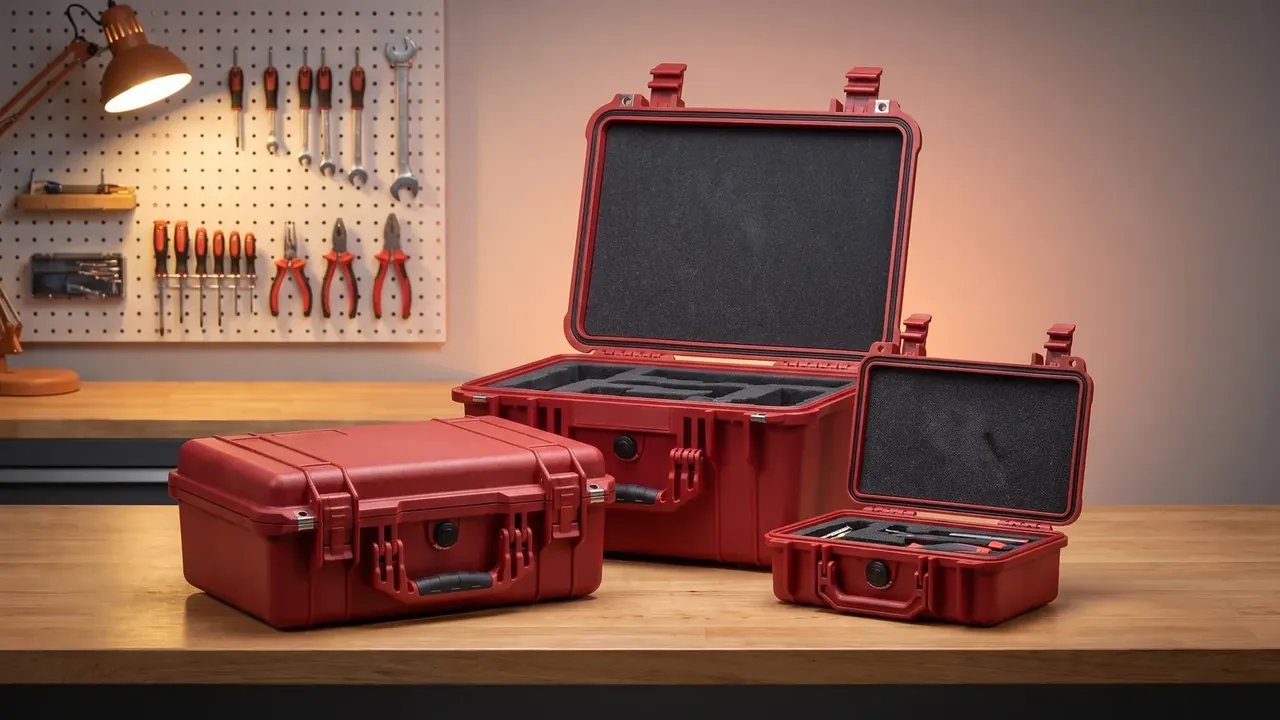
The re-measurement table places wear, free play and rebound remnant side by side, one measuring point per row, no conversion between them. A last-band figure over the line then shows whether the tongue cut deeper or the spring softened.
| Wear reading | Calliper point | Drawing limit |
|---|---|---|
| Tongue depth | Tip curve | ≤0.12 mm |
| Lost motion | Latch root | ≤0.23 mm |
| Rebound remnant | Spring seat | ≥4.8 mm |
The 0.23 mm play and 0.12 mm wear share one convention: keeper datum as zero, logged cooled, averaged over three passes. With one gasket at 17% compression, extra play keeps the tongue from its preset and drops squeeze, so this small figure links to the dust performance of the whole Laser Distance Meter Case.
5. Travel Setting for the Handheld Batch
For the Laser Distance Meter Case, the travel setting takes the shortest rebound step whose tongue wear at the 3500th cycle stays under 0.12 mm; longer-rebound latches move in bulk to a non-sealed specification. That line assumes three rebound steps and three rig tables are on file: certify the short step if it passes, revisit coating only if even the short step fails. The setting is the group that just suffices with no room for lost motion.
Cases moved to the non-sealed specification keep the Laser Distance Meter Case gasket groove but mark latch squeeze to a general transit rating, no longer benchmarked to IP66 rain. When JUNZHIJIA issues the drawing, 5.4 mm travel, 2.2 mm coating and the 0.12 mm wear line go on one latch detail sheet, and inspection checks rebound latch by latch so the handheld batch and rig samples keep one convention.
Conclusion
Choose a Laser Distance Meter Case by treating 5.4 mm rebound travel and 2.2 mm coating as one pair, then holding them to the 0.12 mm wear line and 0.23 mm lost motion after 3500 cycles. The 3.8 mm wall and 465×325×170 mm shell are only the base; the latch and tongue decide the dust-tight life of a Laser Distance Meter Case. JUNZHIJIA works from one latch detail sheet for drawing and inspection.
Related Reading
- Precision Instrument Cases: CMM, Spectrometer & Laser Rangefinder Protection
- Optical Instrument Case: Zoned Protection and Shock Isolation for Precision Optics
- Case Inner Height and Foam Thickness
Related Products
- 8 Series — Gun Cases; Military Equipment Cases; Camera Equipment Cases; Drone Cases; Watch Cases; Knife Cases; First Aid Cases; Electronics Equipment Cases
- WL8-2812 PP Gun Case — model WL8-2812
- All protective cases and toolboxes: 7 series, 158 models