

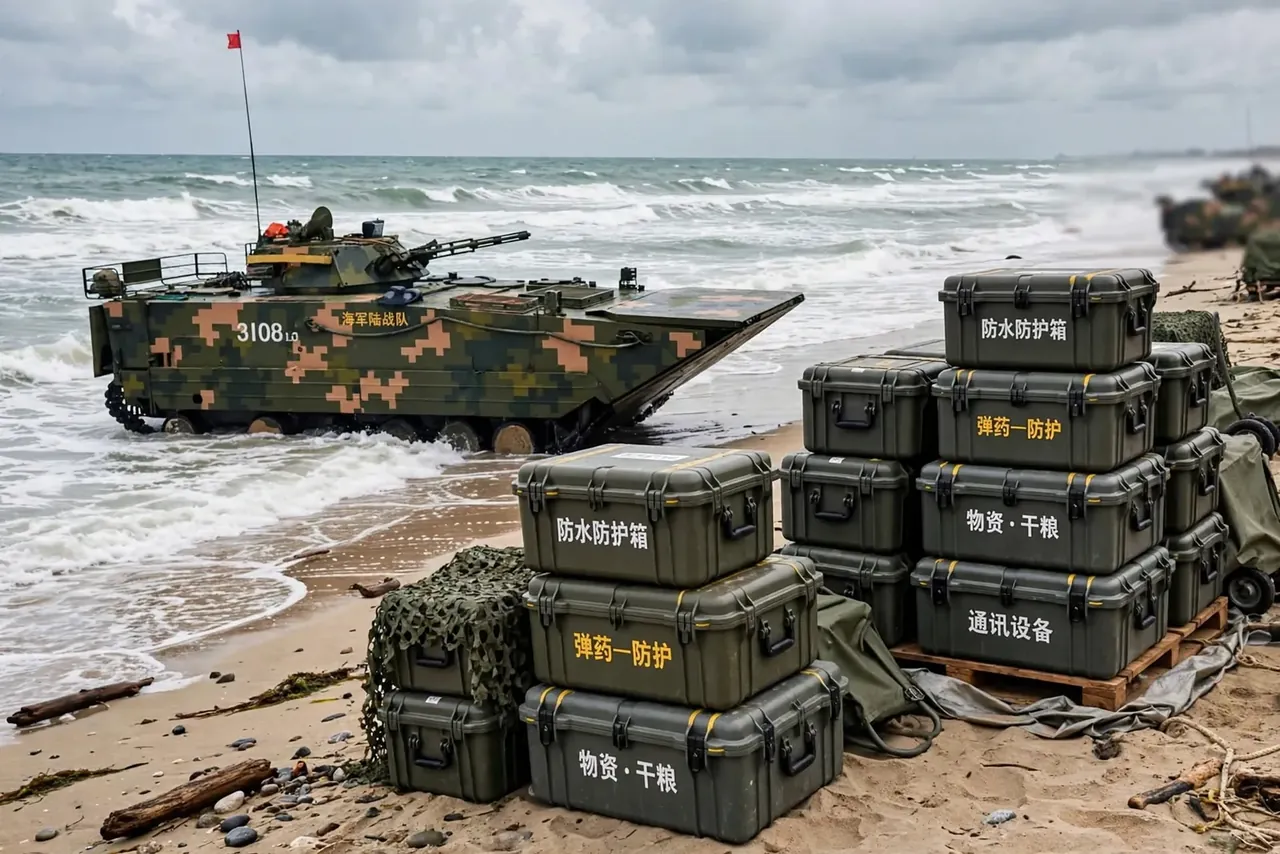
Quick answer: A mil spec vs outdoor case pair of one size differs by 1.6 kg, 0.7 mm of wall and 2.1× the price, buying four edges most users never reach.
Table of contents
- Where the 1.6 kg comes from
- Wall thickness and hardware
- Seal geometry and drop height
- Temperature window and the 516.8 profile
- Three invisible costs
- Three wastes in civil use
- FAQ
1. Where the 1.6 kg comes from
Two cases share a 560 mm × 350 mm × 230 mm envelope and 31 L, and on a pallet they look identical; on a scale one reads 5.8 kg, the other 7.4 kg.
Walls rise from 2.8 mm to 3.5 mm, adding 0.41 kg over 0.62 m² at 0.95 g/cm³. Latches and hinges move to 316 stainless for 0.28 kg, the flat seal becomes an O-ring for 0.09 kg, and a double base with eight ribs adds 0.82 kg. The four total 1.60 kg.
| Part | Mil spec | Outdoor | Added |
|---|---|---|---|
| Wall | 3.5 mm | 2.8 mm | 0.41 kg |
| Latches, hinges | 316 | Zinc plated | 0.28 kg |
| Seal | φ5.5 O-ring | 8 × 3 strip | 0.09 kg |
| Base | Double, 8 ribs | Single, 4 ribs | 0.82 kg |
| Total | — | — | 1.60 kg |
Weight is the first gap a buyer can feel, and the last one a quotation shows. On 400 units that 1.6 kg becomes 640 kg, pushing two pallets to three and lifting freight 11%, which is where a mil spec vs outdoor case decision is most often reversed.
2. Wall thickness and hardware
3.5 mm against 2.8 mm is not a 25% gain, because stiffness follows the cube: 3.5 divided by 2.8 cubed gives 1.95. At −20 ℃ the thick wall took 5.2 J before cracking, the thin wall 3.6 J before whitening.
The 0.7 mm is paid in cycle time: 26 min at 320 ℃ against 21 min, dropping a mould from 22 to 18 units a day.
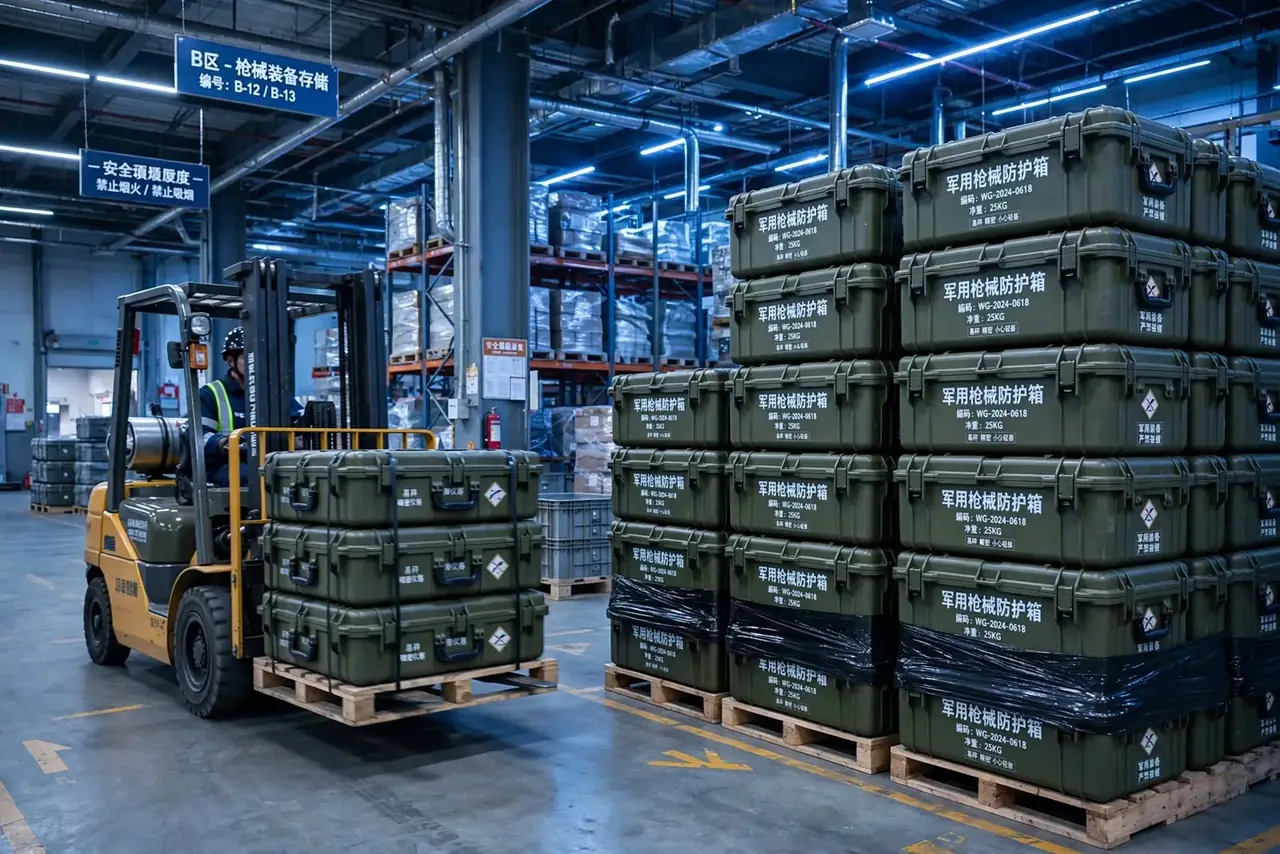
Hardware is the most underrated gap. Grade 316 holds 720 h of salt spray; zinc at 8–12 μm whitens at the fold after 240 h and rusts by 480 h. The pin grows from φ4 mm to φ6 mm and the boss from 3.0 mm to 4.5 mm, keeping a lid square after 20,000 openings.
3. Seal geometry and drop height
A flat strip relies on face pressure in a 2.1 mm groove at 30% compression; a φ5.5 mm O-ring compresses its body in a 7 mm groove 4.2 mm deep at 25%, leaving 1.3 mm. With a lid 1 mm out of square the strip opens a 0.6 mm gap while the O-ring still seats.
Drop height is the easiest gap to specify and the easiest to misread. At 1.8 m with 7.4 kg the impact energy is 130 J, at 1.2 m with 5.8 kg it is 68 J, a factor of 1.9. Sequence differs too: 1.8 m runs ten drops on six faces, three edges and a corner before the seal test; 1.2 m seals first.
4. Temperature window and the 516.8 profile
The gap between −40–71 ℃ and −20–60 ℃ looks like 20 ℃ and 11 ℃ but drives material choice. At −40 ℃ notched impact strength falls to 18% of its room value, so corners thicken to 6.2 mm. The 71 ℃ figure is the radiation balance in a closed cabin, reached at 50 ℃ ambient plus 21 ℃ sun load, where plain PP sags 0.4 mm in 30 days.
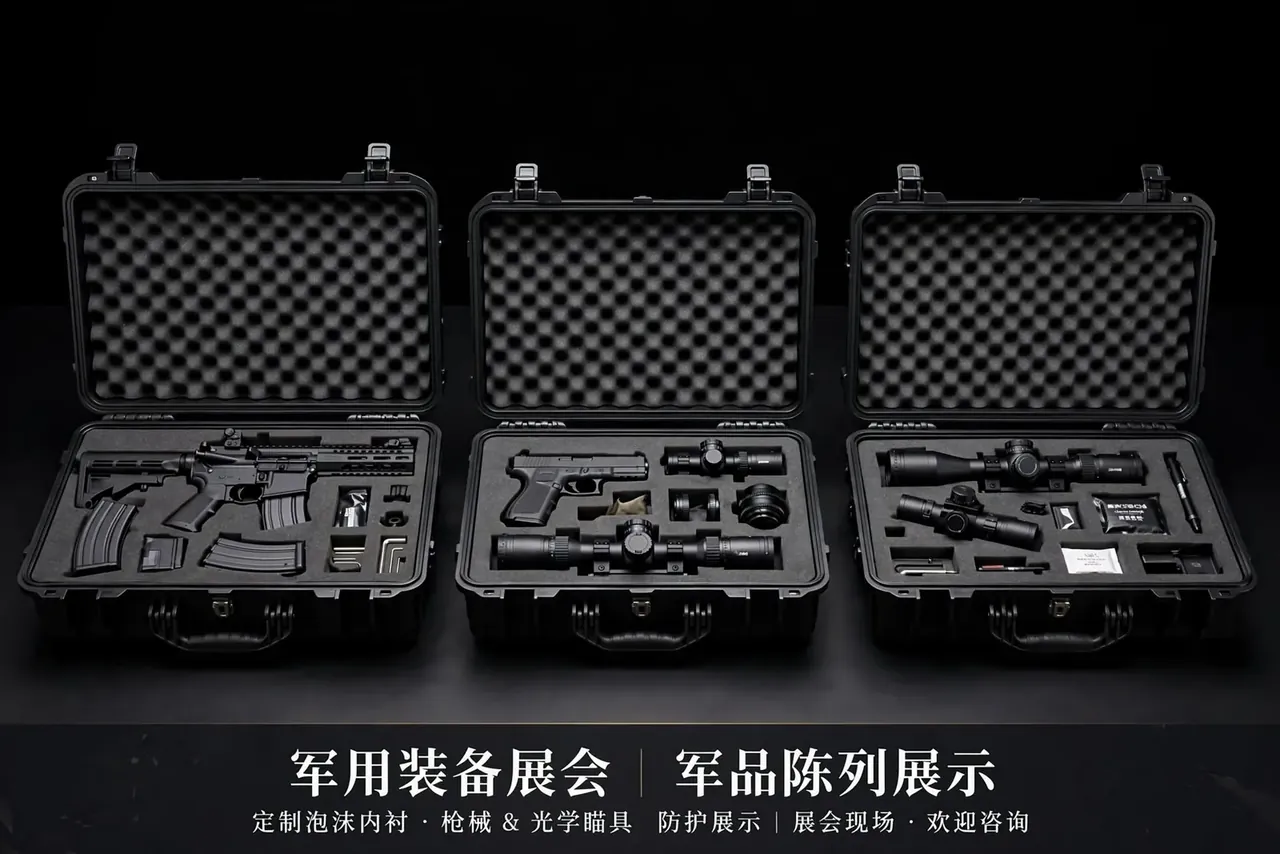
MIL-STD-810H Method 516.8 reads on three parameters together: pulse shape, peak acceleration and duration. Procedure I uses a terminal-peak sawtooth with 4.9 m/s of velocity change over 11 ms. The same peak over 6 ms cuts velocity change by 45% and moves the first crack from corner to rib root. A specification citing 516.8 without a procedure number or direction count is not a requirement; Procedure I, 4.9 m/s, three drops on six directions is one.
Temperature and shock belong in one run. Holding a sample at −40 ℃ for 4 h then running Procedure I triples corner cracking, and a room-temperature sample cracks in its first cold season.
5. Three invisible costs
Against 620 CNY and 295 CNY ex-works, material adds 117 CNY, hardware 74 CNY and seals 16 CNY, leaving 118 CNY for three items nobody photographs.
| Item | Mil spec | Outdoor | Delta | Share |
|---|---|---|---|---|
| Material, ribs | 217 | 100 | 117 | 36% |
| Hardware | 132 | 58 | 74 | 23% |
| Seals | 28 | 12 | 16 | 5% |
| Testing | 62 | 18 | 44 | 14% |
| Tooling | 96 | 42 | 54 | 16% |
| Documents | 85 | 65 | 20 | 6% |
| Total | 620 | 295 | 325 | 100% |
Testing comes first: one unit per 200 gets ten drops, three temperature cycles and 720 h of salt spray at 4,800 CNY a sample, or 24 CNY per unit, plus 20 CNY of leak checks and records.
Tooling follows: non-standard hardware runs at 40%, so latch seats and hinge bosses need dies at 18,000 CNY a set, or 6 CNY per unit across 3,000 pieces, while a rotomould costs 22% more and adds 13 CNY across 8,000.
Documents close it: first-article report, material certificate and lot traceability sheet, 6.5 h per lot or 1.9 CNY per unit, plus 18 CNY for annual re-verification.
6. Three wastes in civil use
Cold-chain transfer, server-room spares and stage equipment live between −5 ℃ and 45 ℃, leaving 35 ℃ of margin under −40 ℃, so 117 CNY buys nothing.
The 1.8 m figure covers lifting over the shoulder and a tailgate throw, while the median warehouse drop is 0.9 m, which a 1.2 m case covers for 96% of events. The extra 1.6 kg adds 7% to a 50 m carry.
Grade 316 lasts seven years on salt spray, yet civil fleets replace cases at year three, and a non-standard 316 latch has a 200-set minimum, so six broken units cost 200.
Three requirements do justify it: export sea-freight salt spray, storage below −30 ℃, and any project filing a 516.8 report.
| Gap | Mil spec | Outdoor |
|---|---|---|
| Wall | 3.5 mm, 1.95× | 2.8 mm |
| Hardware | 316, φ6 pin, 720 h | Zinc, φ4 pin, 240 h |
| Seal | φ5.5 O-ring, 25% | 8 × 3 strip, 30% |
| Drop | 1.8 m, 10 drops, 130 J | 1.2 m, 6 drops, 68 J |
| Temperature | −40–71 ℃ | −20–60 ℃ |
| Cost | 620 CNY | 295 CNY |
Conclusion
The six gaps belong in one table. Line up 3.5 mm against 2.8 mm, 316 against zinc, O-ring against flat strip, 1.8 m against 1.2 m, −40–71 ℃ against −20–60 ℃ and 620 CNY against 295 CNY, and every expensive column points at the same edge: lower temperature and higher drop. That leaves one line. If the case will see below −30 ℃, a drop above 1.5 m, or a 516.8 report within five years, take the mil spec build. If none applies, take the 2.8 mm outdoor build with catalogue hardware, save 1.6 kg and 325 CNY a unit, and cover 96% of handling events. This mil spec vs outdoor case choice is about how many rows of that table you can sign for, not about quality.
This article discusses container-side specifications and design implications only, and does not cover any handling, loading or use of the contents.
Related Reading
- Inspection items for military case standards
- Why outdoor equipment needs IP67
- Specification tiers for multi-purpose outdoor cases
- Rotomoulded military case standards
Related Products
- 8 Series — Gun Cases; Military Equipment Cases; Camera Equipment Cases; Drone Cases; Watch Cases; Knife Cases; First Aid Cases; Electronics Equipment Cases
- WL8-2812 PP Gun Case — model WL8-2812
- All protective cases and toolboxes: 7 series, 158 models