

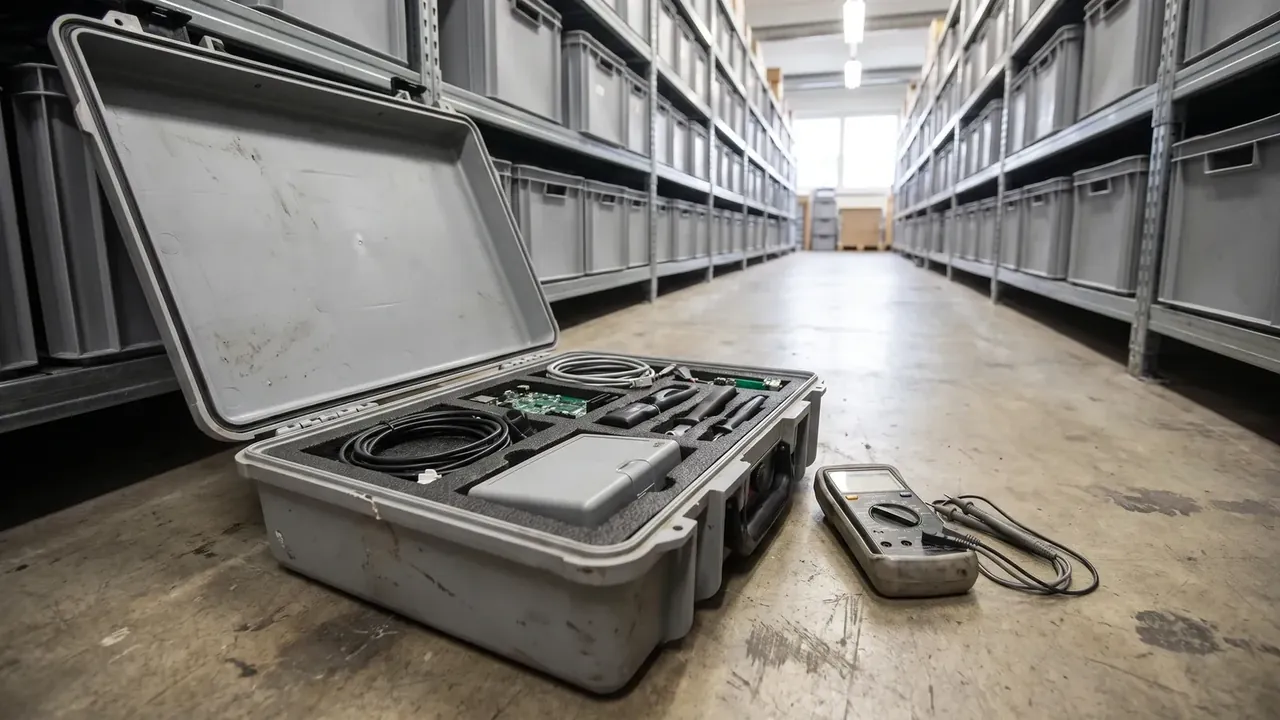
Quick answer: Military rotomolded case acceptance runs on three sheets: first-article approval for dimensions and fit, patrol by weight and mould curve, and release with a leak test and a moulded batch code on every unit.
Table of contents
- Three Sheets Instead of One
- What First-Article Approval Covers
- In-Process Checks by Weight and Mould Curve
- Release with Leak Test and Batch Code
- When Type Tests Are Triggered
- FAQ
1. Three Sheets Instead of One
Compressing acceptance into one final-inspection form is the usual gap in military rotomolded case programmes. Defects rarely show outside: they travel as wall drift, weight shift and poor foam fit, then surface at the drop test. Three sheets ask three questions, each signed by its own owner.
The judgements differ in form. First article is a one-off full check; patrol reads a trend from weight and mould temperature; release decides one unit at a time by leak test. Lending a first-article tolerance to release lets a leaking case through, while a single-unit criterion applied to patrol misses drift.
| Sheet | Signed by | Checks | Judgement |
|---|---|---|---|
| First article | Process, quality | Dimensions | Full, once |
| Patrol | Shift inspector | Weight, curve | Trend vs baseline |
| Release | Release officer | Leak, marking | Every unit |
2. What First-Article Approval Covers
A first article is not any case off the line. Mould temperature settles over the first shots and runs hot at shift end, so three samples are taken: first shot, mid-run, last of shift.
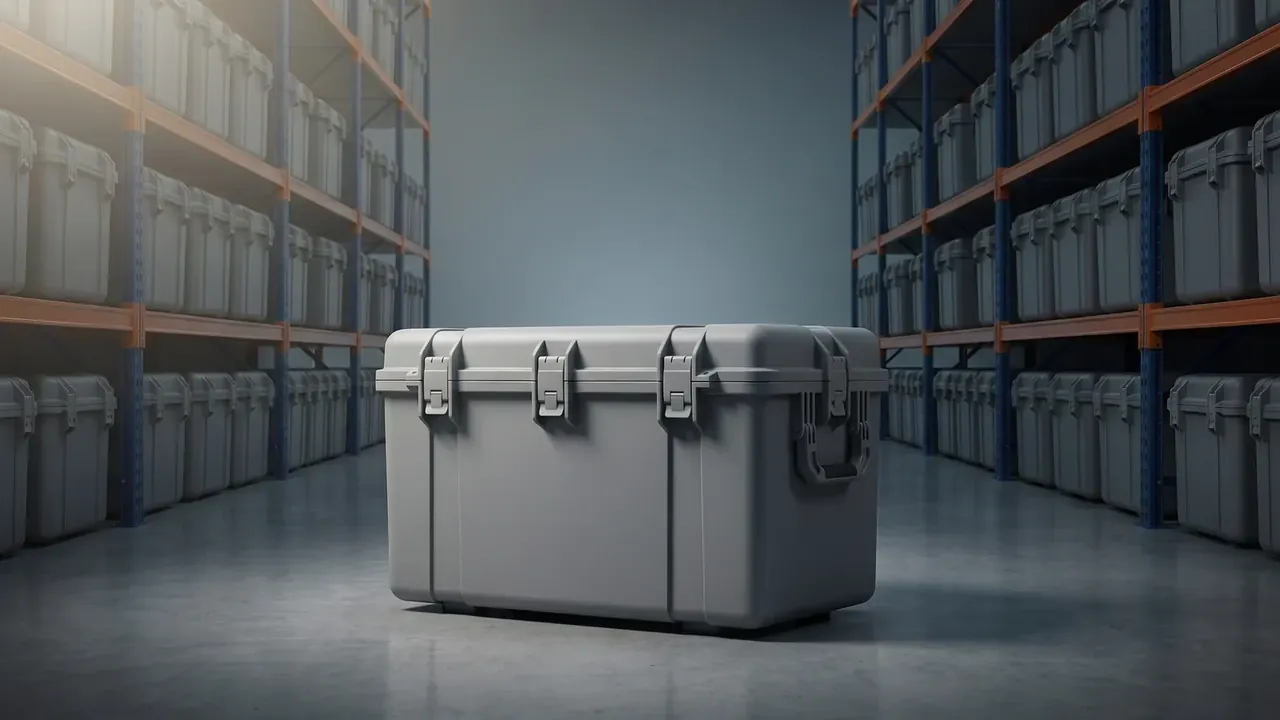
The 42 measuring points split as 12 on the envelope, 12 in the cavity, 8 on the lid face, 10 on holes and inserts. The lid face is checked with a straight edge and feeler: a 0.5 mm blade must not enter, since the gasket depends on it. Foam contact uses the same feeler; each latch must hold 450 N on a pull gauge. The response order is mould temperature, powder charge, rerun — never a mould rework, which fixes the deviation into the batch.
3. In-Process Checks by Weight and Mould Curve
Weight is the fastest trend signal on a military rotomolded case line. On one mould and one lot, weight tracks wall thickness: a 19.6 kg baseline drifting past ±3 percent means charge or distribution has moved, so stop the line first.
Patrol takes three units every two hours from the top, middle and bottom of the pallet; top-only sampling sees only the best-cooled cases. A range above 0.5 kg doubles the sample.
The mould curve is the second signal. Four peak temperatures are logged per shot against a 245 to 295°C window; a spread above 8°C stops the line, because one side is under-fused and loses wall thickness and impact strength together.
4. Release with Leak Test and Batch Code
One item cannot be sampled at release on a military rotomolded case: air tightness. Valved units are charged to 8 kPa and held 60 seconds, passing at a drop ≤ 0.2 kPa; unvalved units are immersed 30 seconds.
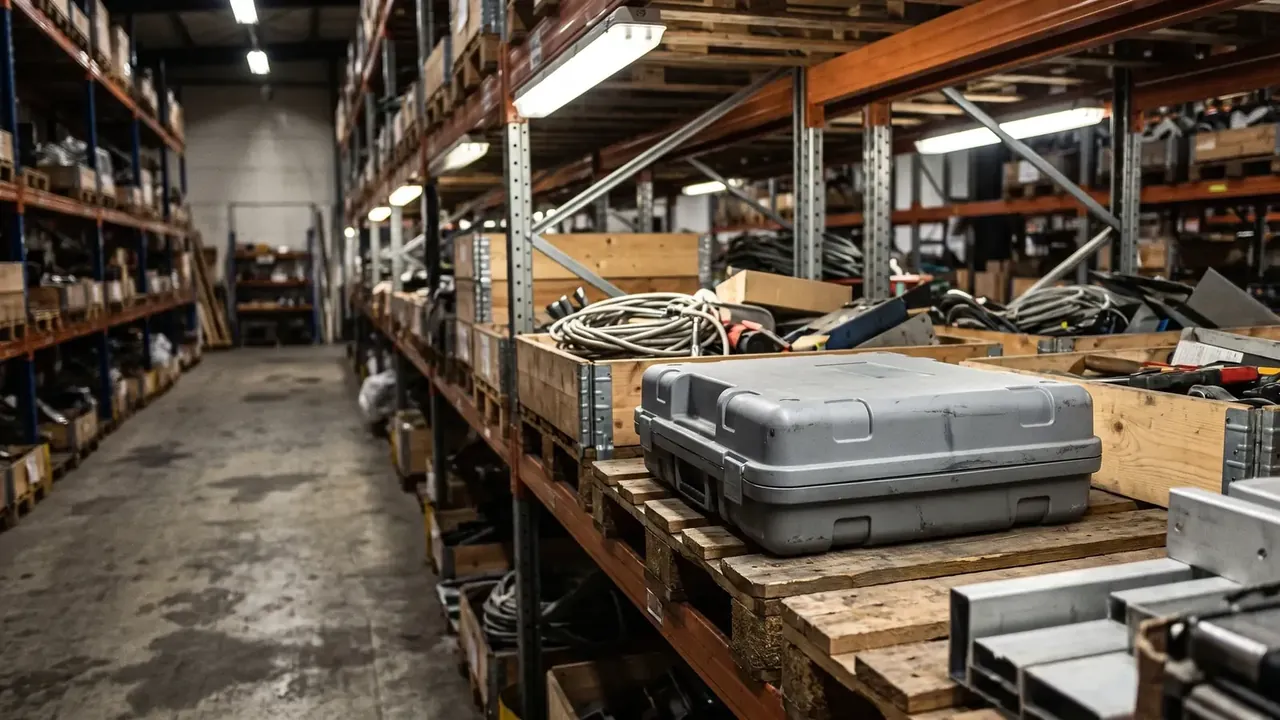
Marking matters too. The batch code is eight digits — six for the date, one machine, one mould — moulded in relief on the base, never printed, since a label rubs off in three field moves.
| Release item | Method | Criterion | Frequency |
|---|---|---|---|
| Air tightness | 8 kPa, 60 s | Drop ≤ 0.2 kPa | Every unit |
| Immersion | 100 mm, 30 s | No water film | Unvalved |
| Salt spray | Neutral, 96 hours | No red rust | 5 per lot |
| Latch hold | Pull gauge | ≥ 450 N | 5 per lot |
5. When Type Tests Are Triggered
A military rotomolded case type test is not a per-lot event. It is triggered by a new mould, a powder change, a structural change, or a restart after 12 months idle; all four move the forming window, so old data proves nothing.
Sequence is fixed: 60°C for 6 hours, then -32°C for 4 hours, vibrate within 30 minutes of removal, drop 1.2 m on six faces and four corners straight after vibration, then re-measure dimensions and air tightness. Heat, vibration, then drop puts the material in its worst state for the hardest impact; reversing the order hides defects. Three units are tested and one archived; 3,000 hinge cycles must not cost more than 15 percent of latch hold.
Conclusion
Acceptance for a military rotomolded case comes down to three separate questions: can the design be built, is this batch stable, is this unit sealed. Each sheet has its own criteria and signature, and records run back to a shot and a lot. Fix those three layers and military rotomolded case quality becomes repeatable.
This article discusses only the container (case body) side of specifications and design intent, and does not cover any handling, loading or use of the contents.
Related Reading
- Field problems and how to handle them
- Inspection practice for supply cases
- Assembly stage quality control
- Criteria for waterproof hard cases
Related Products
- 8 Series — Gun Cases; Military Equipment Cases; Camera Equipment Cases; Drone Cases; Watch Cases; Knife Cases; First Aid Cases; Electronics Equipment Cases
- WL8-2812 PP Gun Case — model WL8-2812
- All protective cases and toolboxes: 7 series, 158 models