

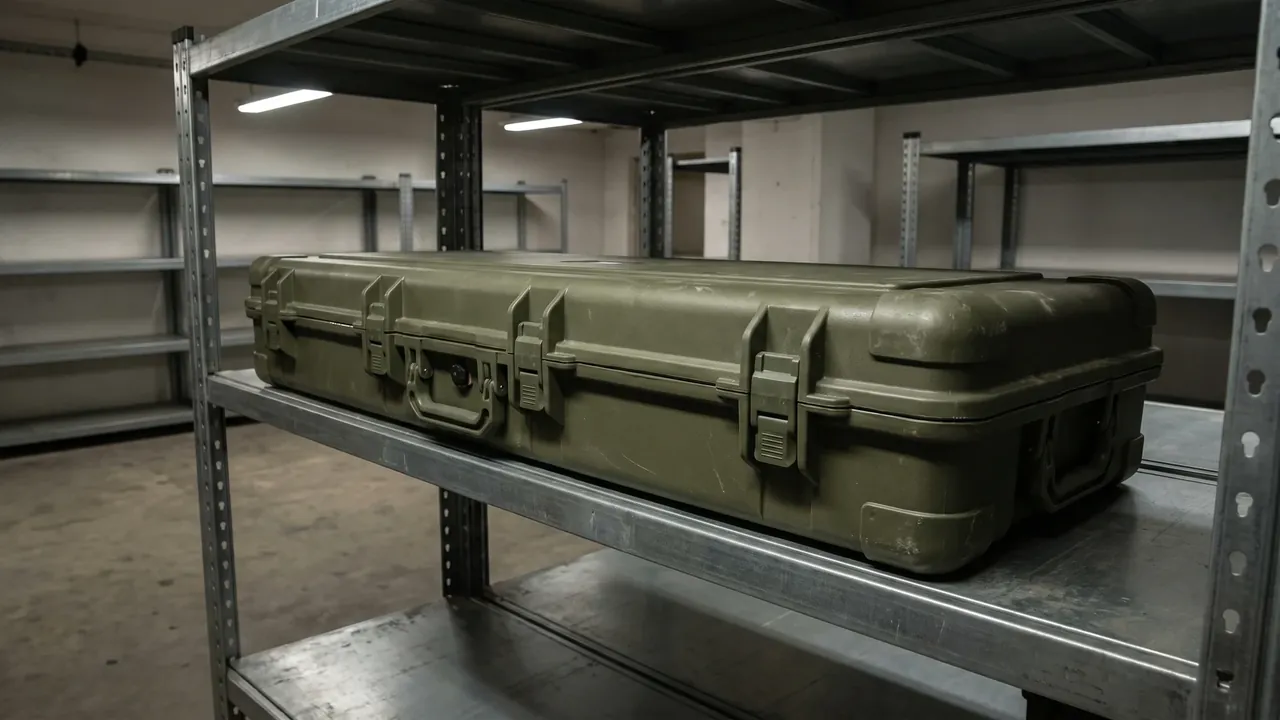
Quick answer: A military firearm storage case should be chosen by configuration scale, not by protection ratings. Single-unit use turns on cavity geometry and positioning, squad use on zoning and numbered pockets, and full-squad use on outer module, stacking layers, and handling. When scale changes, what fails first is rarely the protection rating but the match between internal zoning and outer dimensions.
Table of contents
- Start From Configuration Scale, Not Protection Ratings
- Single-Unit Configuration: Cavity Geometry and Positioning
- Squad Configuration: Zones, Numbering, and Layout
- Full-Squad Configuration: Stacking Modules and Handling
- Selection Checklist
- FAQ
1. Start From Configuration Scale, Not Protection Ratings
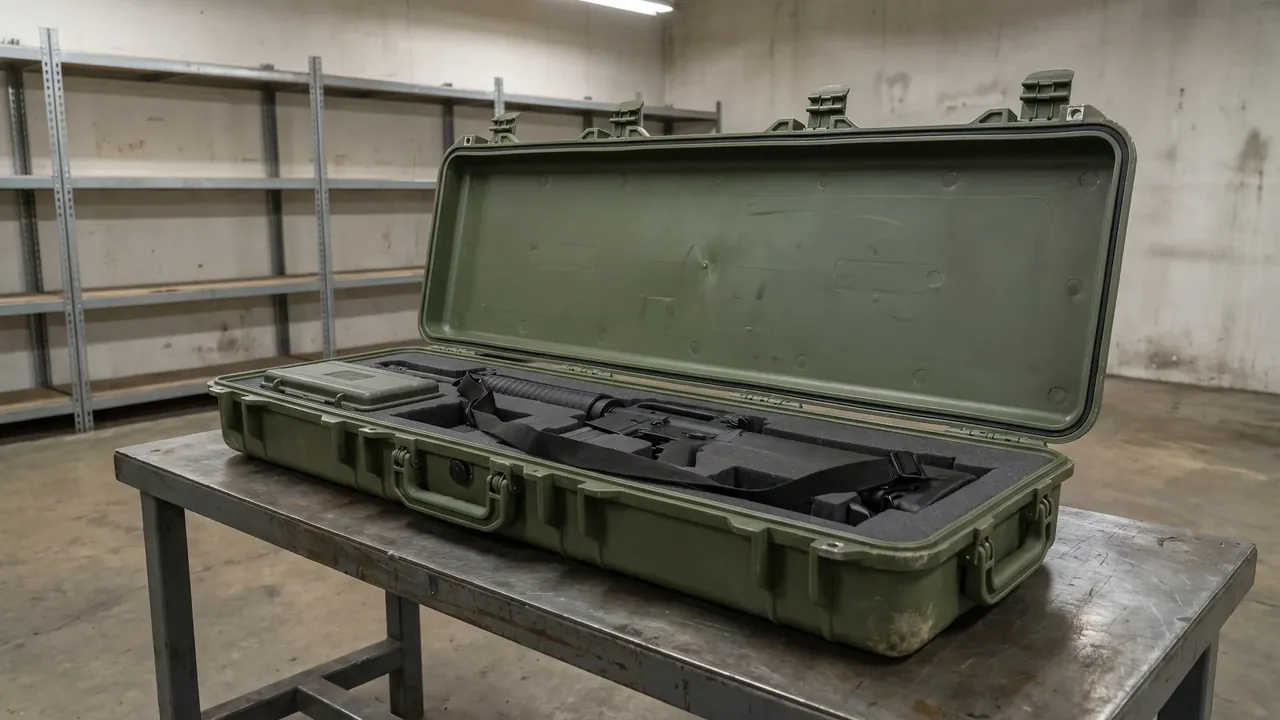
The starting point is configuration scale, not a comparison of protection parameters. Single-unit, squad, and full-squad setups demand different things: single-unit asks whether the cavity follows the outline of one item, squad asks whether zoning and numbering are clear, and full-squad asks whether the outer module aligns with pallets, racking, and vehicles. Apply full-squad standards to a single-unit case and you get excess size and cost; assemble a full-squad load from single-unit cases and you lose stacking efficiency and counting convenience.
Three quantifiable variables follow:
- Capacity per case: set by item count and the largest single outline, not by count alone.
- Internal zoning: whether fixed pockets are needed, and whether numbers or label spots are needed.
- Outer module: whether length, width, and height align with pallet module and racking height, and whether stacking is supported.
Once these are fixed, material, sealing class, latch, and color become optional choices.
2. Single-Unit Configuration: Cavity Geometry and Positioning
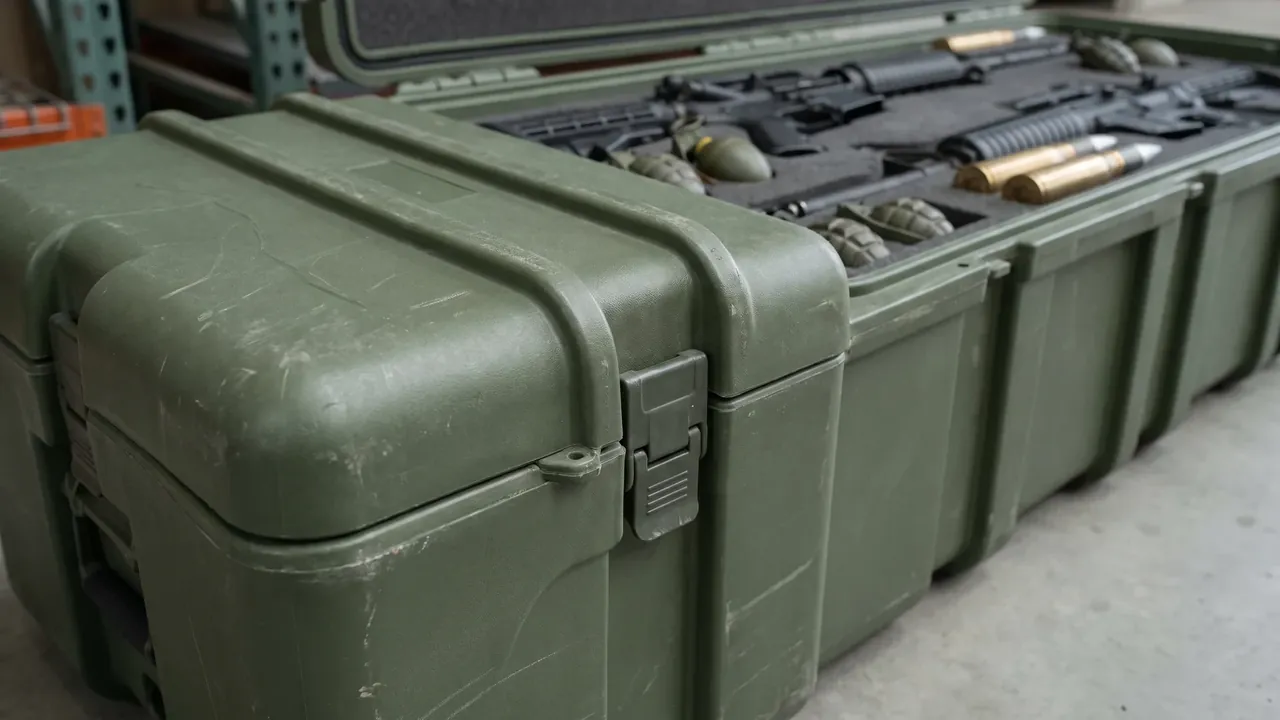
Positioning is the core problem. Whether contents hold a fixed posture depends on the match between cavity geometry and positioning method, not on cavity size. Three methods cover most needs: a single-piece cutout, a layered insert, and adjustable dividers.
A single-piece cutout machines the outline directly into foam and gives the highest repeat positioning accuracy, suiting runs with a highly consistent shape. A layered insert stacks foam of different thicknesses, each layer doing a different job, so wear or a specification change means replacing one layer. Adjustable dividers combine rigid boards and pads for the greatest flexibility, but repeat accuracy then depends on assembly consistency.
Two details matter here: net height must be calculated after lid compression, and both ends of the cavity need enough pocket wall thickness. Positioning comes from the pocket, not from pressure.
3. Squad Configuration: Zones, Numbering, and Layout
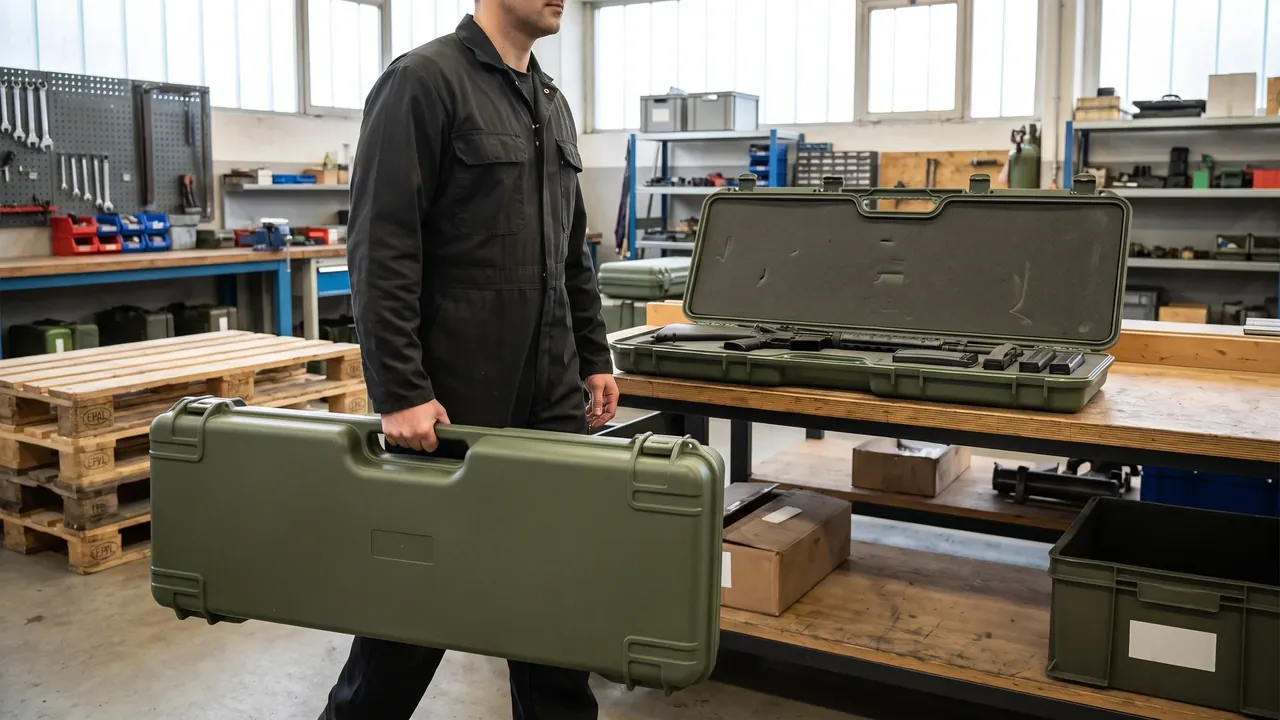
The main tension shifts from fixing one item to distinguishing many. The cavity needs clear zones and stable number positions, so counting and returning do not rely on memory.
| Zoning method | Positioning | Flexibility | Best suited to |
|---|---|---|---|
| Equal fixed pockets | High | Low | Uniform contents in a squad setup |
| Mixed-size pockets | Medium-high | Medium | Two or three item sizes |
| Adjustable dividers | Medium | High | Frequently changing contents |
| Numbering plus label spot | Depends on the base | Medium | Counting and return management |
Numbers and labels address container identifiability, which is a case-side design item.
4. Full-Squad Configuration: Stacking Modules and Handling
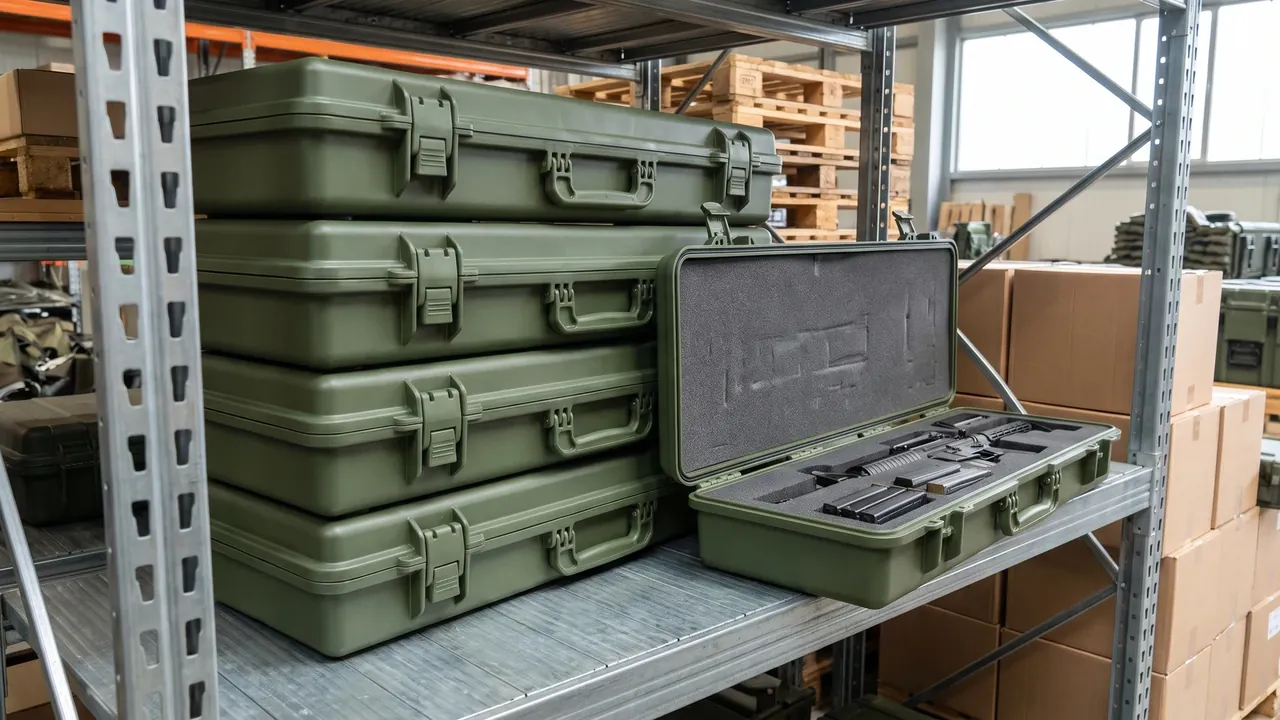
Here the priority is aligning the outer form with logistics, not refining the interior. Three points matter most: stacking stability, pallet module match, and handling method.
Stacking stability depends on how lid and base mate. A locating step or recess on the lid and a matching rib on the base decide how high a stack can go. More layers raise the static load on the bottom case, so wall thickness and rib layout must increase together.
Pallet module match means the base footprint divides evenly into the pallet's usable deck. A mismatch cuts pallet utilization and destabilizes the stack in transit. Handling decides whether wheels, lifting points, or a widened handle are needed. Full-squad cases normally exceed a comfortable one-person load, so handle position and load points should be designed for two-person or mechanical handling.
5. Selection Checklist
- Capacity per case set by configuration scale, with item count and largest single outline defined.
- Positioning method chosen, and compressed net height verified.
- Fixed pockets and label spots decided, and pocket specifications counted.
- Base footprint checked against pallet module, along with stacking layers and static load.
- Handling method set by full-load weight, covering handle, lifting points, or wheels.
Conclusion
Choosing a military firearm storage case means translating configuration scale into three variables: capacity per case, internal zoning, and outer module. Single-unit setups turn on positioning and compressed net height, squad setups on zoning and numbering, and full-squad setups on stacking and pallet match. The larger the scale, the more the outer form must align with logistics, and the more interior detail should be simplified. Work out both the current scale and the scale likely within a year first.
Scope note: this article covers container-side specifications and design implications only, and does not address the operation, loading, or use of items placed inside the case.
Related Reading
- Role split between military firearm storage cases and field armory cabinets
- Selection priorities and check order for military firearm cases
- Structure and safety points of firearm storage boxes
Related Products
- 8 Series — Gun Cases; Military Equipment Cases; Camera Equipment Cases; Drone Cases; Watch Cases; Knife Cases; First Aid Cases; Electronics Equipment Cases
- WL8-2812 PP Gun Case — model WL8-2812
- All protective cases and toolboxes: 7 series, 158 models