


Quick answer: A military firearm storage case and a field armory cabinet solve different problems. The case supports single-unit carry and distribution; the cabinet supports multi-unit central management at one fixed point. Three questions decide it: do contents have to leave the storage point, must they be distributed unit by unit, and must they be supervised centrally in one place. When all three point to yes, combine the two instead of choosing one.
Table of contents
- Role Split Between the Case and the Cabinet
- Structure and Protection Compared
- Management and Transfer Compared
- Fit Across Three Management Models
- Comparison Checklist
- FAQ
1. Role Split Between the Case and the Cabinet

A case assumes movement: a handle or strap, a controlled total weight, and internal positioning that resists vibration, so contents hold a fixed posture in transit. A cabinet assumes residence: it stays fixed and relies on structural strength and locking for centralized supervision, without pursuing portability. The case solves integrity during movement; the cabinet solves order at a fixed point. Confusing them produces two errors, demanding fixed-site security from a case, or using a case in place of a cabinet's central management capability.
- Case side: portable, vibration-resistant, positioned, distributable, stackable.
- Cabinet side: resident, centralized, rigid, lockable, zoned.
- Combined use: cabinet as the storage point, case as the transfer unit.
2. Structure and Protection Compared
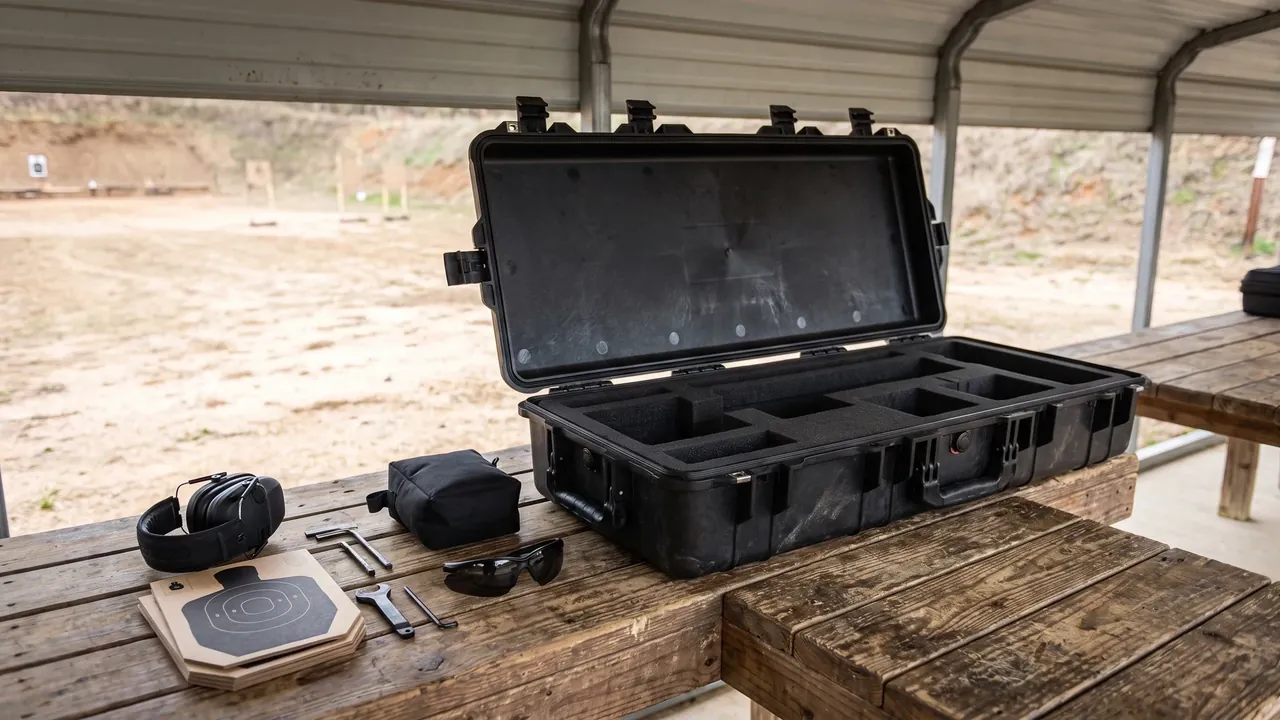
Structurally, a case emphasizes surface stiffness and cushioning, while a cabinet emphasizes overall rigidity and locking. Case wall thickness and ribs serve drop and stacking resistance; a cabinet focuses on door structure, hinge load, and multi-point locking against prying and concentrated impact.
On sealing, a case is usually designed with a sealing structure, for example following the ingress protection definitions in IEC 60529, because it faces temperature swings, humidity, and pressure change. A cabinet in a controlled indoor space needs less sealing and emphasizes ventilation and moisture control instead. The actual grade should be confirmed by a third-party test report.
| Dimension | Military firearm storage case | Field armory cabinet |
|---|---|---|
| Main load | Drop, vibration, stacking | Overall rigidity, prying |
| Sealing design | Gasket and pressure valve | Typically ventilation |
| Locking structure | Single or two-point latch | Multi-point lock and door |
| Portability | Handle, strap, wheels | Essentially none |
| Internal layout | Pockets and layered insert | Shelves and partitions |
3. Management and Transfer Compared

Management matters more than structure. The management unit of a case is the piece, configurable by person, by group, or by task. The management unit of a cabinet is the point, emphasizing centralized supervision and a unified opening record.
- Distribution granularity: a case splits and combines at the minimum configuration unit, while a cabinet works at whole capacity.
- Counting: a case uses internal pockets and numbering for visibility on opening; a cabinet uses fixed zoning and shelf numbering across a larger scope.
- Transfer cost: a case keeps protecting contents off-site, so it needs independent sealing and cushioning; a cabinet does not move, so its protection is fixed at the design stage.
4. Fit Across Three Management Models
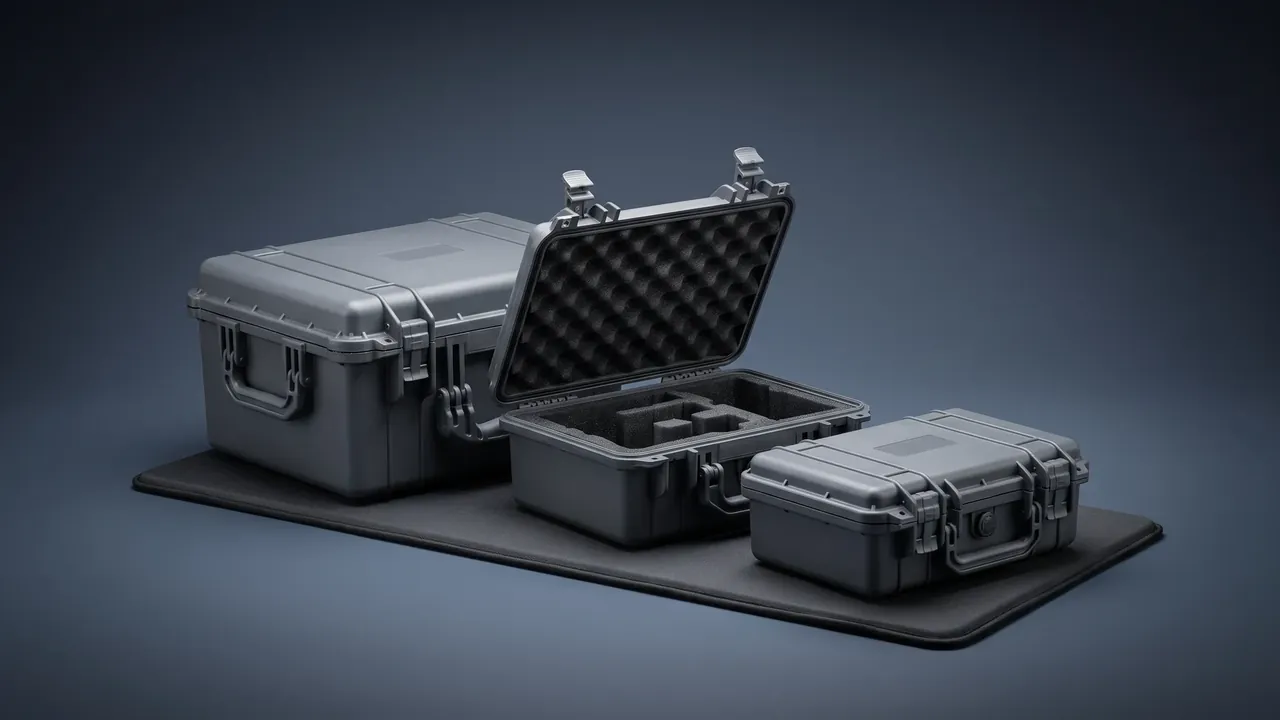
| Management model | Primary container | Strength | Limitation |
|---|---|---|---|
| Case-only distribution | Military firearm storage case | Fine granularity, travels with the person | Order at the storage point depends on external measures |
| Cabinet-only centralization | Field armory cabinet | Central supervision, clear order | No off-site capability |
| Case plus cabinet | Both together | Central storage with flexible transfer | Two marking and counting rules to align |
No model is absolutely better; it depends on whether contents leave the storage point and whether counting happens at the smallest unit.
5. Comparison Checklist
- Confirmed whether contents must leave the storage point, to decide if a case is needed.
- Confirmed whether distribution reaches the single piece, to set the case zoning.
- Compared the case's sealing design with the cabinet's ventilation approach for the intended environment.
- Checked locking structure and overall rigidity against the expected risk.
- Defined how the two marking and counting rules connect when both are used.
Conclusion
The split between a military firearm storage case and a field armory cabinet is the split between a mobile unit and a resident facility. Answer three questions first: must contents leave the storage point, must they be distributed at the smallest unit, and must they be supervised centrally at a fixed point. Movement and distribution point to a case; centralization and residence point to a cabinet; needing both means a cabinet as the storage point with cases as transfer units.
Scope note: only container-side specifications and design implications are covered here; no operation, loading, or use of the items held inside is addressed.
Related Reading
- Selection method for military firearm storage cases by configuration scale
- How military firearm cases differ from ordinary boxes
- Structure and safety points of firearm storage boxes
Related Products
- 8 Series — Gun Cases; Military Equipment Cases; Camera Equipment Cases; Drone Cases; Watch Cases; Knife Cases; First Aid Cases; Electronics Equipment Cases
- WL8-2812 PP Gun Case — model WL8-2812
- All protective cases and toolboxes: 7 series, 158 models