

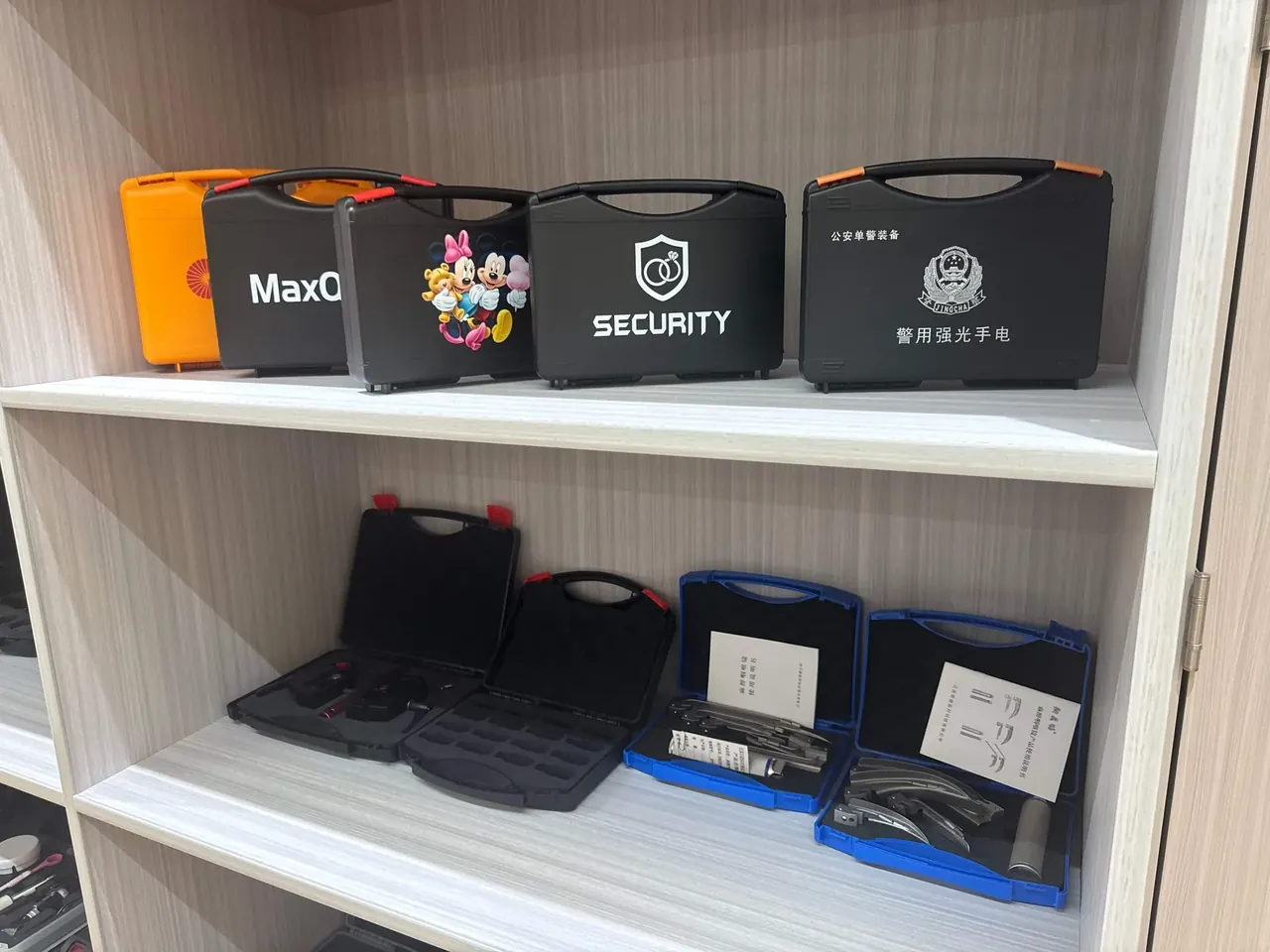
Quick answer: A military packing box runs on three rhythms, not repair after failure: visual every 7 days, function every 30, full every 12 months. Three limits drive replacement: gasket wear to 7 mm, hinge play of 0.8 mm, a 15 mm crack.
Table of contents
- A Three-Tier Inspection Rhythm for a Military Packing Box
- Shell and Rim Checks
- Latches, Hinges and Gasket Limits
- Inserts and Markings
- Storage, Cleaning and Repair Limits
- FAQ
1. A Three-Tier Inspection Rhythm for a Military Packing Box
Inspection splits into three tiers instead of re-checking everything at every opening. Seven days for a visual pass, thirty for closure, gasket contact and hardware travel, twelve months for a strip-down that measures gasket section and insert rebound.
The tiers decide ownership as much as checks: users run the visual pass, the store the function check, the full inspection a bench with calipers. Merged, only the visual pass survives.
| Tier | Interval | Main items | Tool | Decision |
|---|---|---|---|---|
| Visual | 7 days | Cracks, missing latches, markings | None | Log and pass on |
| Function | 30 days | Closure, gasket contact, hinge play | Feeler gauge | Over limit, bench |
| Full | 12 months | Gasket section, rebound, wall | Calipers | Service or replace |
2. Shell and Rim Checks
A military packing box shell is checked at the four base corners, the rim and the latch seats. Corners take the first load in a drop, the rim sets the gasket's compression space, and a crack beside a latch seat pulls that latch out whole.
Scratches are cosmetic; a crack under 15 mm clear of rim and seats can be stop-drilled; past 15 mm, or a third of wall thickness, the box is scrapped. On a 3.5 mm wall that third is 1.2 mm, and 2.8 mm or less means worn out.
3. Latches, Hinges and Gasket Limits
The military packing box gasket expires first. At a 12 by 9 mm section it is replaced once wear takes it to 7 mm, and past 30 percent compression set it stops rebounding while still looking whole, leaving a seam path that only a rain test finds.
Latches and hinges are judged on two numbers. Four-point closing force is checked at 350 N, and a latch that cannot be pressed by hand has a bent pin. Hinge play of 0.8 mm is the limit: past it the lid skews, pinning the gasket on one side and lifting it on the other. Screws go to 2.5 N·m each quarter with the box closed.
| Part | Signal | Limit | Action |
|---|---|---|---|
| Gasket | Chalky face, broken contact line | 7 mm or 30% set | New ring, never spliced |
| Latch | Stiff action, one side lifting | Under 350 N | Replace in pairs |
| Hinge pin | Lid wobble | 0.8 mm play | New pin and bush |
| Hardware | Red rust | Rust at 48 hours | Replace, re-protect |
4. Inserts and Markings
Insert care in a military packing box depends on the foam. Polyethylene hates long compression, so empty boxes in store sit unlatched and let the foam recover; polyurethane takes up moisture and dusts afterwards, which is why humidity stays under 70 percent.
Markings on a military packing box are skipped most often and cost the most. A lost label destroys a count at once, so labels sit on the reserved flat area with the seal number matching the box number, and worn stencils are re-sprayed rather than overprinted, since overprinting breaks traceability.
5. Storage, Cleaning and Repair Limits
Storage of a military packing box runs on three numbers: 70 percent relative humidity, minus 10 to 40 Celsius, 100 mm off the floor. Empty boxes stack no more than 8 high, because a loaded rim takes a permanent set, and no new gasket seals against a bent rim.
Cleaning stays under 40 Celsius with neutral detergent near pH 7, and boxes dry 30 minutes before closing; never aim a pressure washer into the gasket groove. Repair covers flat areas only: hot-air welding at 260 Celsius, 0.15 m per minute, 20 mm overlap. Damage crossing the groove or a radius is a replacement.
| Parameter | Range | Beyond it |
|---|---|---|
| Relative humidity | Up to 70% | Insert dusting, rust |
| Temperature | Minus 10 to 40 Celsius | Stress cracks, hard gasket |
| Floor clearance | At least 100 mm | Standing water, mould |
| Empty stacking | Up to 8 high | Permanent rim set |
Conclusion
The point is not more frequent repair but a fixed rhythm with fixed limits, so each inspection ends in a decision and each worn part has an owner. Put interval, section, play and crack length on the check sheet, and military packing box care can change hands cleanly.
This article discusses only the container (case body) side of specifications and design intent, and does not cover any handling, loading or use of the contents.
Related Reading
- Structure and process: five checkpoints
- How a military packing box compares
- Sizing, wall thickness and load
- Inspection and standard practice
Related Products
- 8 Series — Gun Cases; Military Equipment Cases; Camera Equipment Cases; Drone Cases; Watch Cases; Knife Cases; First Aid Cases; Electronics Equipment Cases
- WL8-2812 PP Gun Case — model WL8-2812
- All protective cases and toolboxes: 7 series, 158 models