

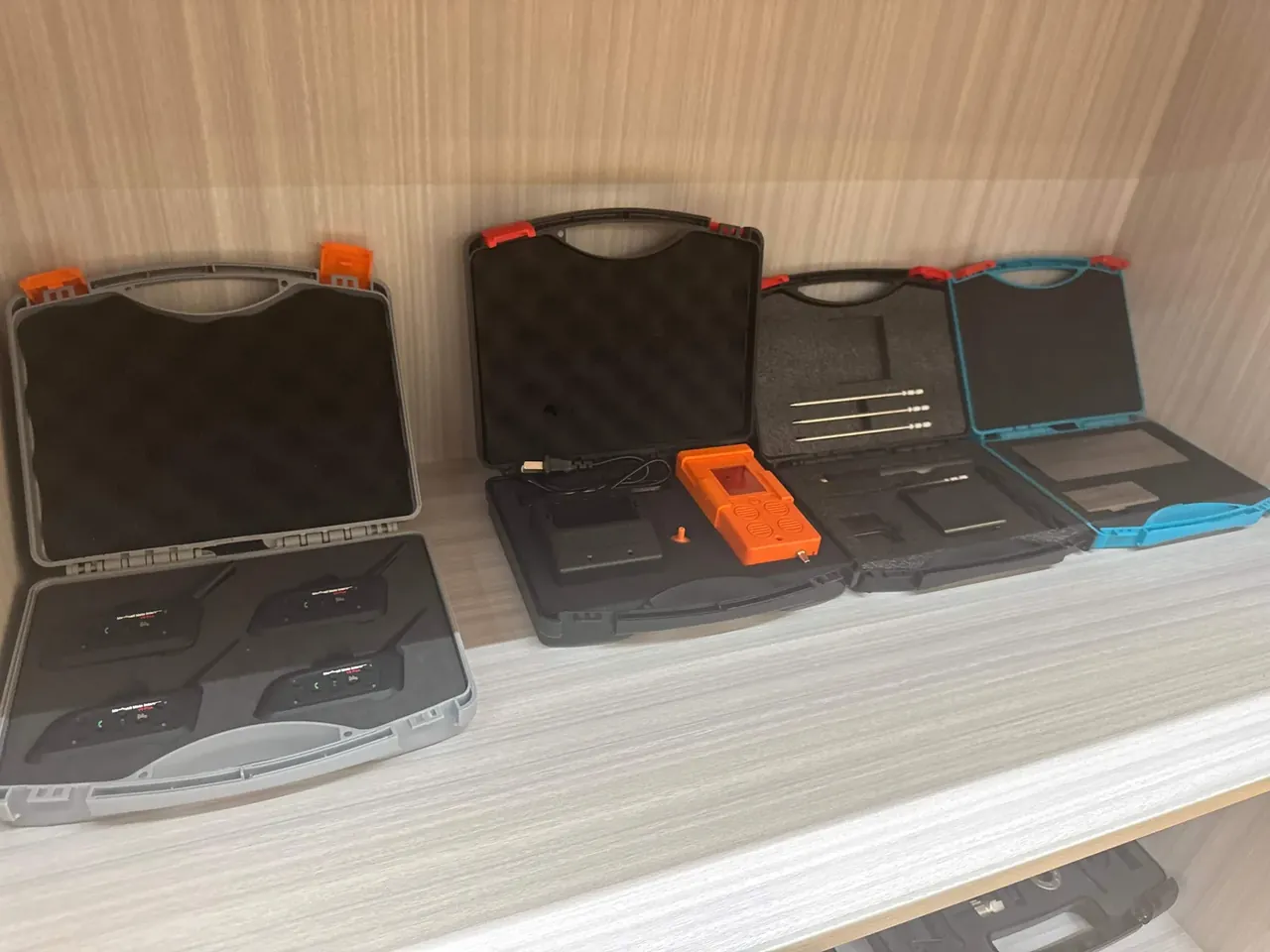
Quick answer: A military packing box rarely loses on durability and rarely wins on price. The fair comparison is against other forms on the same lane: single-trip corrugated, plastic tote bins, steel cases. Rank by cycle count, return leg and climate, then price.
Table of contents
- What a Military Packing Box Replaces
- Against Single-Trip Corrugated
- Against Plastic Tote Bins
- Against Steel Heavy-Duty Cases
- Three Routes Where It Loses
- FAQ
1. What a Military Packing Box Replaces
Set a military packing box beside a timber crate and the talk turns to materials. What matters is what the box replaces: corrugated replaces the return leg, tote bins the gasket, steel cases low mass.
Comparability needs three fixed variables: goods, lane, annual cycles. A bin price measured in-plant says nothing about a 40-day sea leg.
| Form | Reuse | Closure | Lane |
|---|---|---|---|
| Military packing box | 5-year life | Four latches, gasket | Road, sea, yard |
| Single-trip corrugated | One trip | Tape and strapping | Plant to customer |
| Plastic tote bin | 1 to 3 years in-plant | Tongue and groove | Internal delivery |
| Steel heavy-duty case | Long, repanelled | Bolted, gasketed | Static storage |
2. Against Single-Trip Corrugated
A corrugated carton costs about 38 yuan and survives one trip. The box costs about 620 yuan and runs 60 cycles with two repairs logged, or 10.33 yuan per cycle. At 120,000 cycles a year the gap passes 3.3 million yuan.
The maths assumes empties come home: over 300 km a nested 62 L box still fills 0.026 m³, about 4.6 yuan a unit, cutting the edge from 27.67 to 23 yuan. Closing speed splits them too: taping takes 90 seconds against 6 for four latches, so a 10,000-unit lot carries 200 extra hours.
| Option | Price (yuan) | Cycles | Per cycle (yuan) | Annual (10k yuan) |
|---|---|---|---|---|
| Single-trip corrugated | 38 | 1 | 38.00 | 456 |
| Timber crate | 260 | 8 | 32.50 | 390 |
| Plastic tote bin | 150 | 40 | 3.75 | 45 |
| Military packing box | 620 | 60 | 10.33 | 124 |
3. Against Plastic Tote Bins
A tote bin costs 150 yuan over 40 in-plant cycles, 3.75 yuan per cycle. Its lid is the weak point: no gasket, so rain and dust share one path inward.
The gasketed lid on a military packing box compresses 30 to 40 percent; below 20 percent the seam leaks, above 50 percent compression set flattens the lip within two closures. Empty bins nest to a quarter of volume, boxes to about 1 to 2.4, and bins count by eye, while boxes need a 120 by 80 mm label area clear of latches.
4. Against Steel Heavy-Duty Cases
At 90 L a steel case weighs about 21 kg against 8.6 kg, a 12.4 kg gap that pushes a two-person lift past the usual 25 kg limit.
Steel leans on zinc and paint, and cut edges, welds and bolt holes are the three corrosion starts; neutral salt spray reaches red rust at weld toes after 96 hours. A plastic shell does not rust, so latches and hinge pins carry that risk, accepted at 48 hours. Repair separates them too: field paint or a new panel, against a same-material hot-air patch in 15 minutes. Above 120 kg per unit, steel keeps the job.
5. Three Routes Where It Loses
A 30 km run with no return channel favours corrugated, because the divisor stays at one. Air freight billed on volume punishes mass: 1 kg less across 800 flights of 60 boxes saves about 24,000 yuan a year. A bench opening 40 boxes a day wears latches faster than the labour budget allows.
What the box wins on is a combination: a long single leg, weather nobody controls, and a return channel that exists.
| Route | Single leg | Suggested form | Reason |
|---|---|---|---|
| Plant to customer | Under 30 km | Corrugated | Divisor stays at one |
| Air freight | Over 800 km | Thin-wall box, foam | Mass becomes chargeable |
| High-frequency picking | In-plant | Open tote bin | 40 openings a day |
| Ocean freight | Over 3,000 nm | Military packing box | 40 days of humidity |
Conclusion
The honest summary is not that one form is tougher. The box loses per trip to corrugated, per cycle to bins and on stiffness to steel, yet none holds sealing, stacking and a long return leg at once. Fix cycles, distance and climate first, which is why the military packing box keeps the long-haul routes.
This article discusses only the container (case body) side of specifications and design intent, and does not cover any handling, loading or use of the contents.
Related Reading
- Structure and process: five checkpoints
- Material choices: timber, corrugated, plastic, steel
- Inspection and standard practice
- Maintenance: inspection items and replacement limits
Related Products
- 8 Series — Gun Cases; Military Equipment Cases; Camera Equipment Cases; Drone Cases; Watch Cases; Knife Cases; First Aid Cases; Electronics Equipment Cases
- WL8-2812 PP Gun Case — model WL8-2812
- All protective cases and toolboxes: 7 series, 158 models