

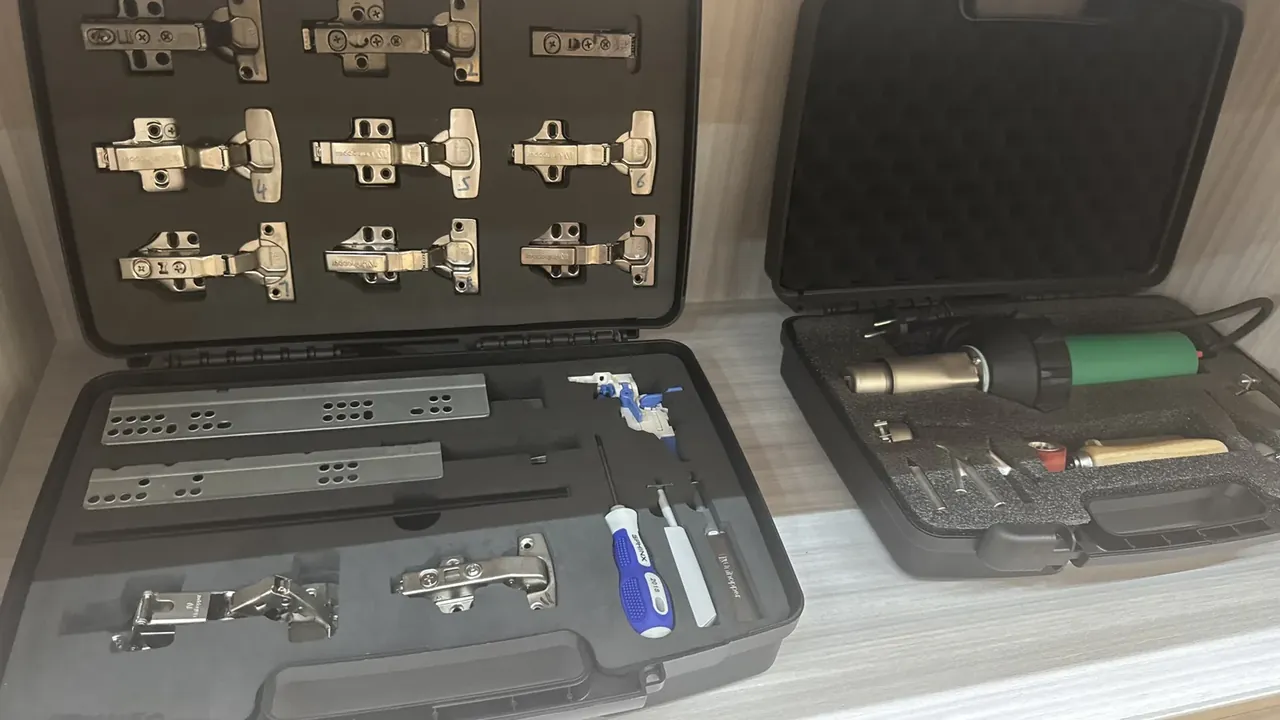
Quick answer:A military spare parts storage case starts from a 600×400×300 mm footprint, 22 kg empty and 500 kg of top load, with a 5 mm rotomoulded HDPE wall and a double-lip silicone gasket. Five high it does not sag, and 24 units fit a 1200×1000 mm pallet at 1.8 m.
Table of contents
- Footprint and stacking
- Shell structure and top load
- Sealing, humidity and shelf life
- Marking, seal holes and traceability
- Latches, hinges and cycle life
- FAQ
1. Footprint and stacking
The first constraint in a store is not volume, it is the bay. A standard 1200×1000 mm pallet takes four cases at 600×400 mm per layer with no gap, so 24 units make a six-layer stack that a forklift moves in one lift.
Step outside that module and everything downstream suffers. At 600×500 mm a layer still holds four but wastes 100 mm, and at 1.8 m the stack leans to one side, so the driver re-centres it every time. A 3:2 length-to-width ratio is the most space-efficient shape in practice.
Height decides how the case is lifted. At 300 mm a 40 kg unit still lets two people carry it naturally; past 350 mm the case blocks the view and catches on the rack. When long items are involved, give the length the extra millimetres, not the height.
The base needs a 15 mm recessed lip so the rim above drops into the boss below. Without it, stacking relies on friction, and one forklift stop cants the column.
2. Shell structure and top load
The shell is rotomoulded HDPE at 5 mm, the usual figure at this size. Rotomoulding forms ribs and a turned-up rim in one shot with even wall thickness, and 5 mm keeps ductility at -30℃, so handling knocks leave dents rather than splits.
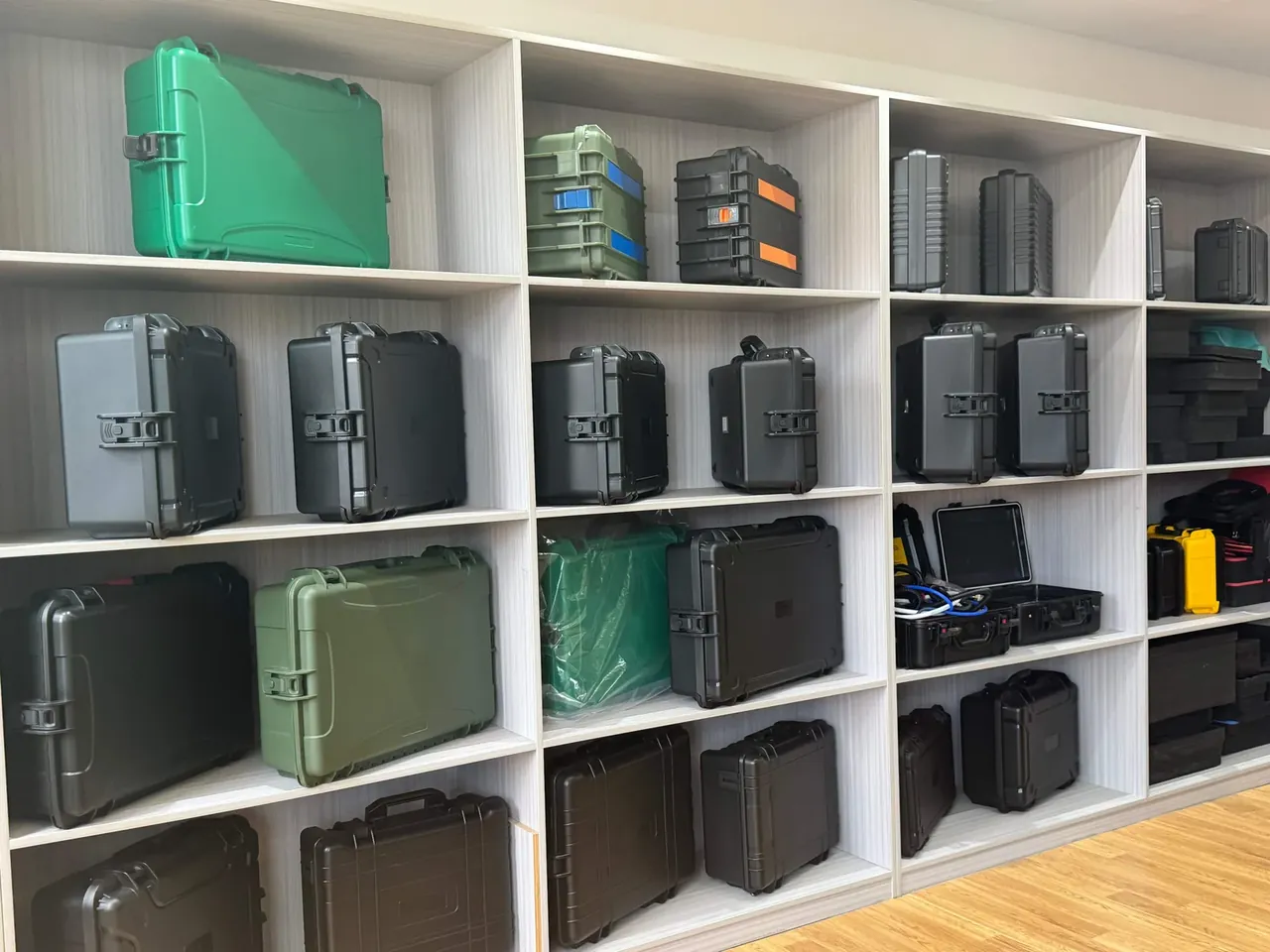
Top load is what makes stacking possible. 500 kg spread over an empty lid, equal to four loaded cases above, should deflect no more than 3 mm and recover. Beyond that the lid centre takes a permanent set and the sealing face goes with it.
Rib direction decides where the load goes. A grid of ribs spreads it to four edges evenly; ribs in one direction are stiff across and almost nothing along, which forces a single stacking orientation and annoys everyone on the floor.
| Zone | Thickness | Construction |
|---|---|---|
| Side wall | 5 mm | Vertical ribs at 80 mm centres |
| Base | 6 mm | Grid ribs plus recessed lip |
| Lid | 5 mm | Grid ribs, raised boss in the middle |
| Mouth | 8 mm | Double lip, 6 mm gasket |
Corner geometry outlives wall thickness. Rotomoulding piles material in corners, about 1.5 mm thicker than the side wall, but a radius under R10 still concentrates drop stress. Take corners to R15 with a 20 mm stub rib, and a 1.5 m drop costs paint only.
3. Sealing, humidity and shelf life
Sealing runs a double lip with a solid silicone cord at 30% compression, which lands at IP65. Military work often asks for IP67; the shell does not change, only the compression-set allowance on the cord tightens, and cost rises about 15%.
Humidity is the variable that sets shelf life. 500 g of montmorillonite desiccant holds the interior under 40% RH for roughly six months at 25℃. A 300 g molecular sieve absorbs more but saturates faster, which suits cases cycled every three months.
| Desiccant | Charge | Months at 25℃ |
|---|---|---|
| Montmorillonite | 500 g | About 6 |
| Molecular sieve | 300 g | About 3 |
| Fine-pore silica gel | 400 g | About 5 |
Desiccant needs its own bay. Loose bags shift, get crushed and spill powder into the foam, which is hard to clean out. Mould a 120×80×20 mm recess with a snap lid into the inside of the lid, clear of the gasket land, and a change takes a minute instead of a full repack.
A silicone cord loses about 4% of its compression a year across -30℃ to 65℃ cycles, so after five years sealing falls from 30% to 24% and the cord should go. Put that date on the record card rather than waiting for a leak.
4. Marking, seal holes and traceability
Marking is not a label. Reserve three positions: a 150×80 mm recess on the front for the main plate, 60×40 mm on the side for the batch code, and a matching internal label inside the lid. Three surfaces, one number, and a rebuild cannot mix two cases up.
Durability depends on process. In-mould labels last as long as the shell, five years and more; screen print on a rotomoulded surface lifts at the edges after two; pressure-sensitive labels curl within a year under oil and sun. For long storage, in-mould is the only quiet option.
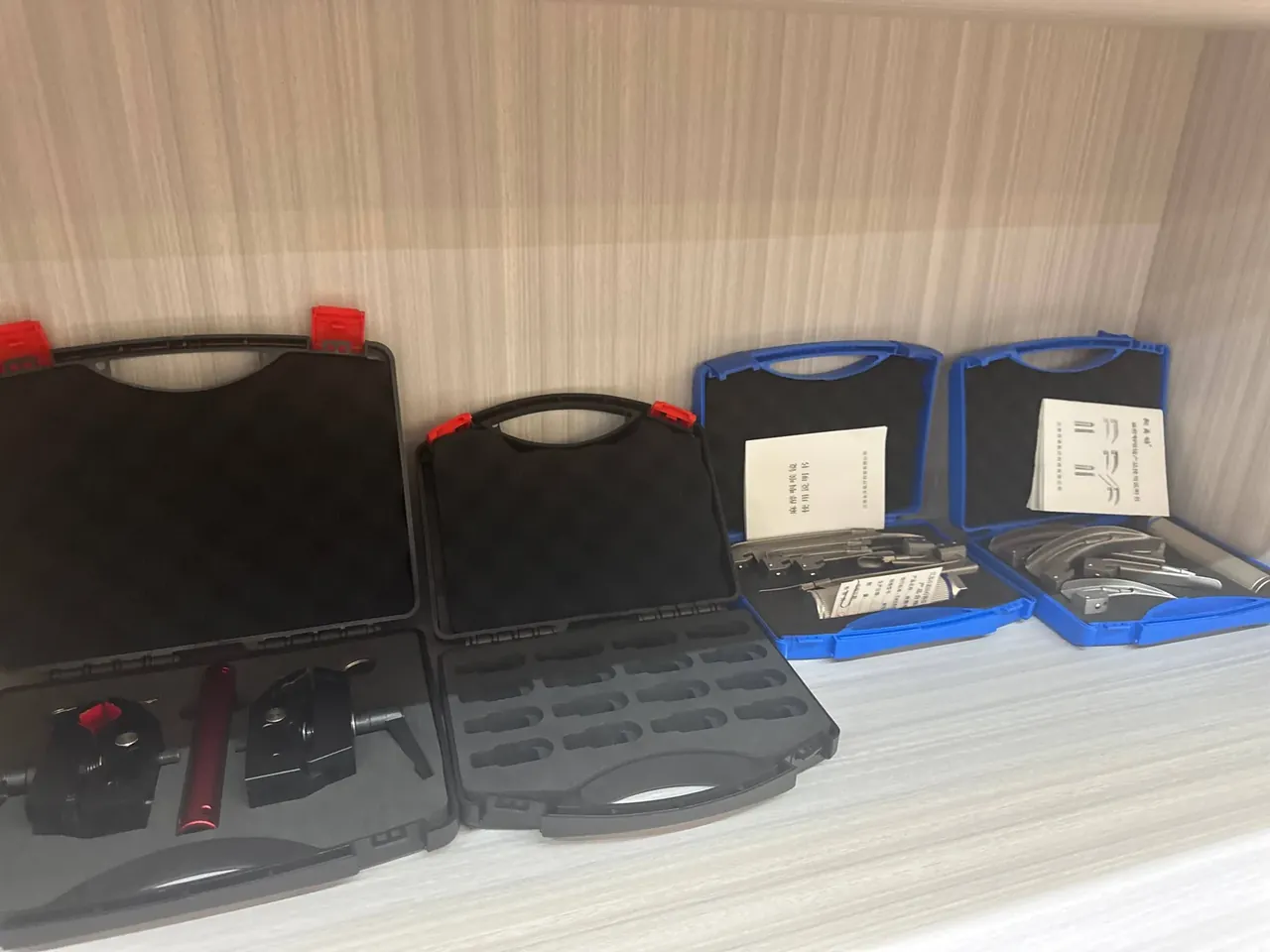
The seal hole goes through the latch, never the shell. Drill 4 mm through the tongue, 15 mm outboard of the pivot, and a numbered seal or nylon tie shows whether the lid was opened. A hole in the shell lets water into the double wall, and a rotomoulded part never drains.
Traceability needs three fields: case number, batch, storage start date. Laser or stamp the number 0.3 mm deep into the side recess, one per case; with the seal number that is a complete handover record.
5. Latches, hinges and cycle life
Latches are PA66 with glass fill, two of them symmetrical, each holding 60–80 N. Field use often adds a metal over-centre latch as backup; the drawback is corrosion, since zinc plating shows white rust after 200 h of salt spray and needs grease every two years.
Hinges are the weak point in cycle life. Two moulded hinges on a 5 mm stainless pin go from 0.2 mm to 0.6 mm of play after 10,000 cycles, and the lid starts to shift sideways. Make the pin removable: a new pin takes five minutes against a new lid.
Opening force needs checking. An empty case opens at 40–50 N, but at 40 kg the lid is held by internal vacuum and the pull climbs past 70 N. An 8 kPa relief valve, or a 0.5 mm vent notch in the mouth, takes that away.
Lock ratings get oversold: a padlock eye deters, the seal and the ledger secure. Use an 8 mm through hole for a 40 mm padlock with the shackle across both latch ears, so the latch carries the load and the lock only reports.
Conclusion
Five numbers carry a military spare parts storage case: a 600×400×300 mm footprint at 3:2 for pallet yield, a 5 mm rotomoulded wall with grid ribs for 500 kg of top load, a double lip and 6 mm cord for IP65, a 4 mm seal hole with three matching labels for traceability, and two 60 N latches that keep the lid shut. Put those on the inspection card, change the cord at five years and grease the metal parts at two, and ten years in a store is normal.
This article discusses container-side specifications and design implications only, and does not cover any handling, loading or use of the contents.
Related Reading
- Case marking and asset tracking
- How batch incoming inspection works
- Specs for military air transport cases
- Case accessories and how to pick them
Related Products
- 8 Series — Gun Cases; Military Equipment Cases; Camera Equipment Cases; Drone Cases; Watch Cases; Knife Cases; First Aid Cases; Electronics Equipment Cases
- WL8-2812 PP Gun Case — model WL8-2812
- All protective cases and toolboxes: 7 series, 158 models