

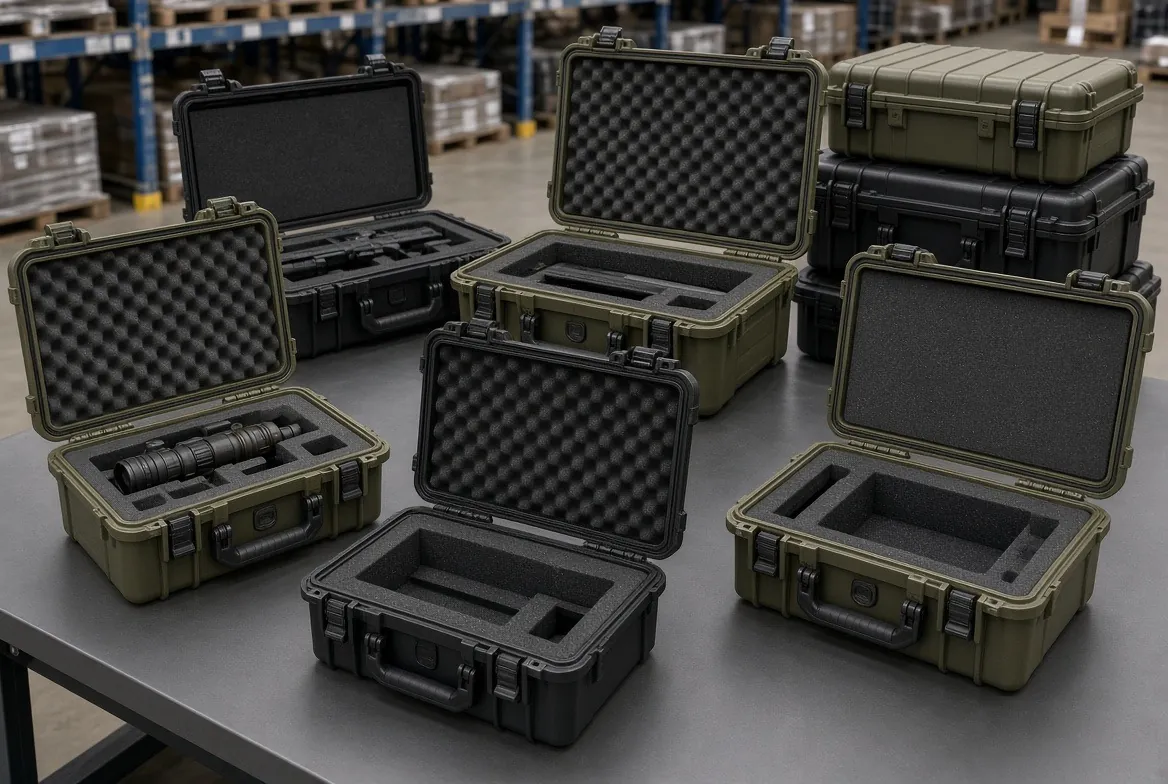
Quick answer: Selection follows three steps: fix the handling mode first (manual, forklift, hoist, airdrop — handling sets the weight ceiling and structure), balance volume versus load by cargo density (bulky goods hit volume first; dense goods hit load first), then check external dimensions against logistics modules (pallets, vehicle bodies, air pallets). The order cannot be inverted — handling is the strongest constraint; decide it and the remaining choice space becomes real. This article covers container selection only.
Table of contents
- Step 1: handling decides everything
- Step 2: balancing volume and load
- Step 3: module check
- Cargo type to case mapping
- Common selection mistakes
- FAQ
1. Step 1: handling decides everything
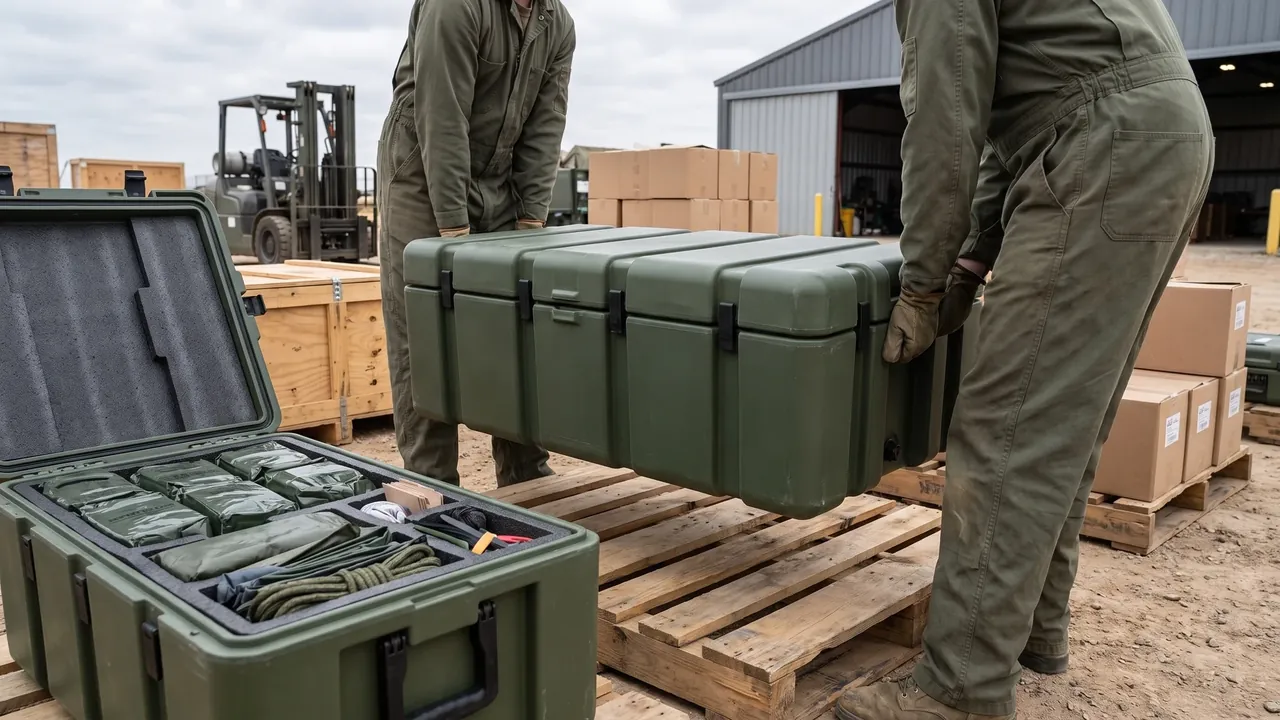
The handling mode is the first constraint because it sets both the weight ceiling and the structure:
| Handling | Weight-ceiling logic | Structural needs |
|---|---|---|
| Manual carry | Safe single-person weight (20–25 kg convention) | Handles, straps, light shell |
| Forklift | Fork rating and fork dimensions | Skid pockets, base strength |
| Hoisting | Lifting-point rating | Lifting eyes, centre-of-gravity marks |
| Airdrop | Parachute/cushion system limits | Cushioning, rigging and release interfaces |
| Rolling/towing | Tow mechanism limits | Wheels, handle, terrain ability |
The rule is the weakest link in the chain: a "forklift + manual last-meter" chain is capped by the manual leg. Draw the full chain, find the weakest link, set the weight ceiling — and the volume ceiling follows (volume × density ≤ weight ceiling).
2. Step 2: balancing volume and load
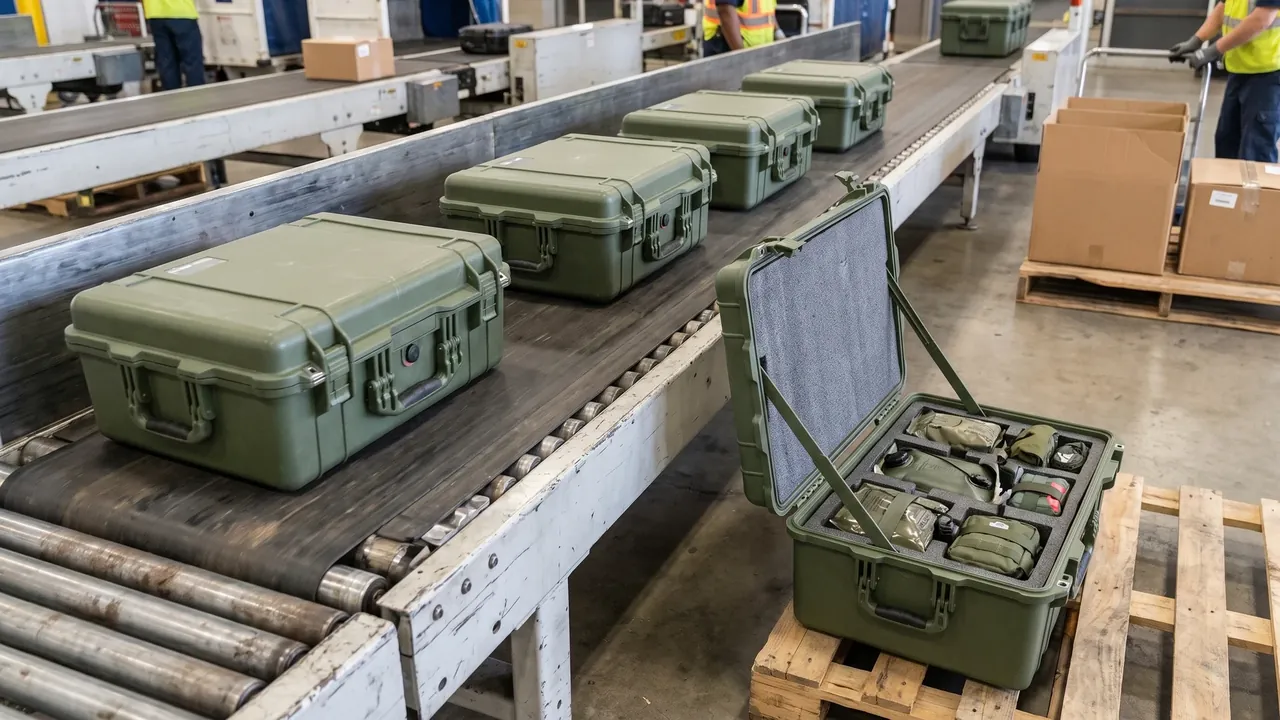
Cargo density decides which limit binds:
- Bulky, light goods (clothing, tents, cable): volume fills first, weight far from the limit — large thin-wall cases; load ratings can relax;
- Dense goods (metal parts, spares): weight hits first with volume to spare — small reinforced cases; spend the budget on structure and hardware;
- Mixed loads: check both "heaviest item's weight" and "bulkiest item's volume"; use two case types where needed.
A practical ratio: total loaded weight (goods + case) should not exceed 90% of the chain's weight ceiling — the margin absorbs uneven ground and human fatigue.
Tare ratio (case weight / loaded weight) is the overlooked metric: keep it within 15% for manual chains, up to 25% for mechanical ones — every extra kilo of case is a kilo of payload lost.
3. Step 3: module check
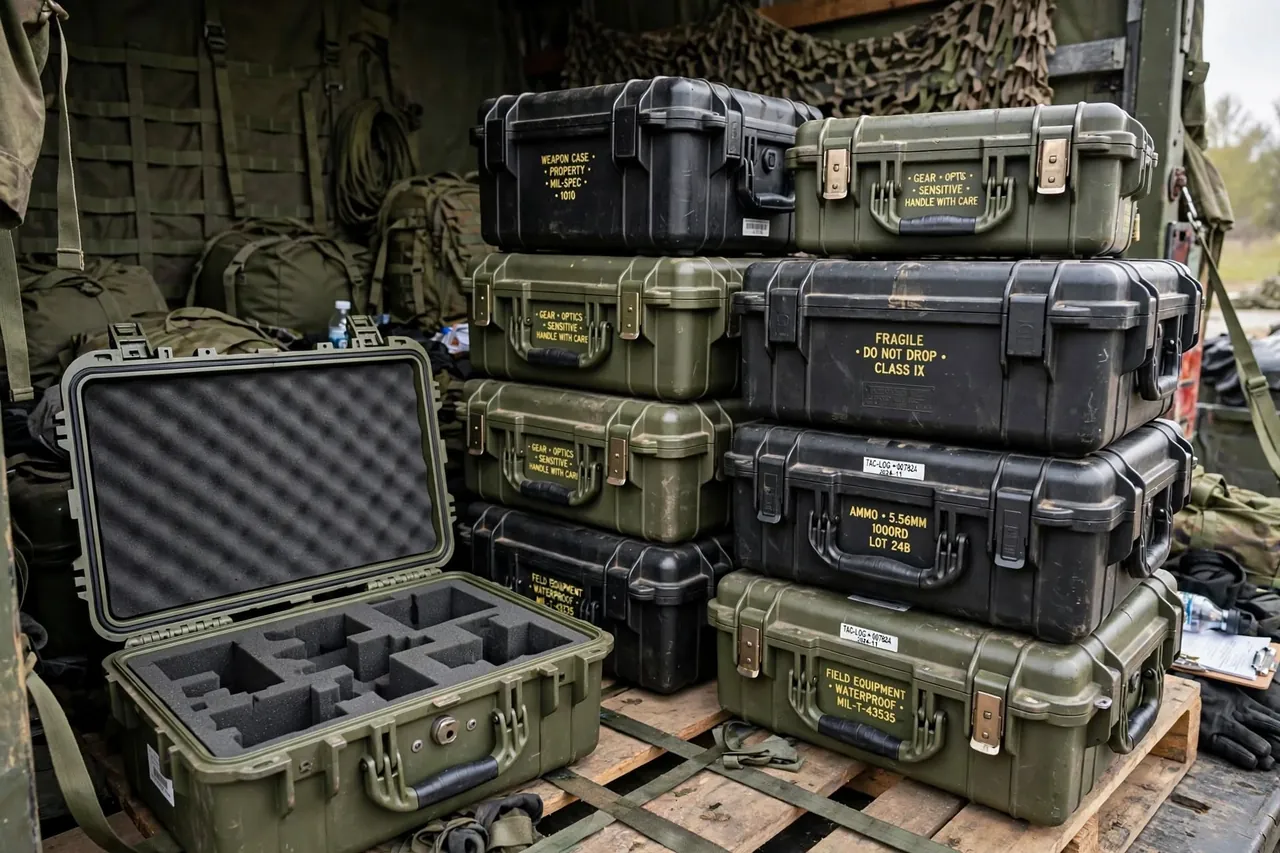
The final check is divisibility of external dimensions into logistics modules:
- Pallet module: 1200×1000 mm or 1200×800 mm; the footprint should divide cleanly;
- Vehicle/container: fixed internal sizes; external height sets stack layers;
- Air pallets: check against the aircraft pallet contour — height limits are usually far stricter than road.
Before volume shipping, run a layout simulation for "cases per pallet × pallets per vehicle" — that number directly sets unit transport cost. A case that misses the module pays a hidden tax on every trip.
4. Cargo type to case mapping
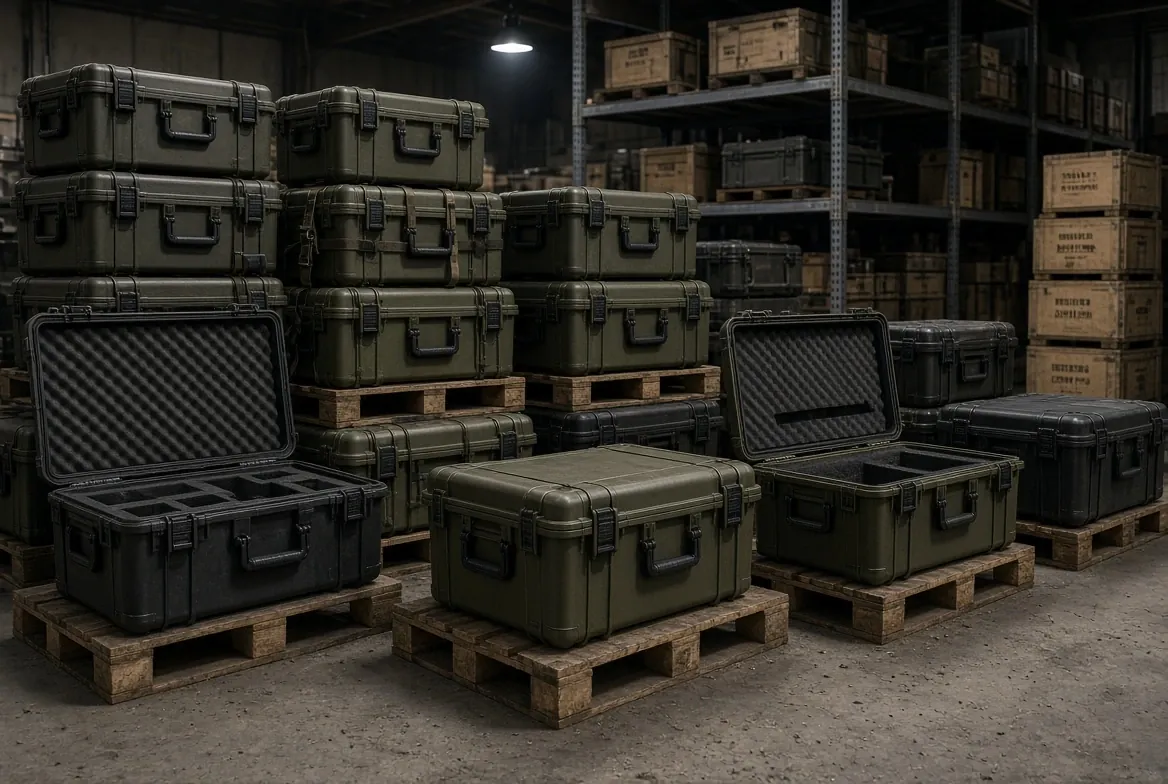
| Cargo type | Case orientation | Structural focus |
|---|---|---|
| Clothing and rations | Large-volume thin-wall | Volume utilization, light weight |
| Electronics and instruments | Mid-volume + custom insert | Cushioning, sealing, relief valve |
| Metal spares | Small-volume reinforced | Load, corner strength, skids |
| General mixed | Standard module cases | Stackable, interlocking, generic insert |
For mixed loads, prefer standardization: a few standard case types covering most goods beats per-type custom builds — spec convergence is itself a logistics efficiency.
5. Common selection mistakes
- Picking the case before the goods: volume fits but weight exceeds, or the reverse;
- Ignoring the last manual leg: what a forklift lifts is not what a person carries; the chain is capped by its weakest link;
- Runaway tare weight: over-reinforcing makes an empty case heavy and lowers payload ratio;
- Assuming modules: looking at single-case size but not arrangement, then discovering waste at container loading;
- Spec sprawl: one case type per good — spares, management and stacking all get complicated.
Conclusion
Selection is a three-step convergence: handling sets the weight ceiling and structure, cargo density balances volume versus load, and logistics modules fix the external size. The order is the logic — start from the strongest constraint and let each step narrow the space until the right answer is what remains. Work backwards (pick a case, then wonder how to use it) and you will almost certainly buy wrong.
This article covers container selection only. It does not cover anything about the handling of items placed inside.
Related Reading
- Military Supply Transport Cases in the Logistics Support System
- Logistics Support Box: Modular Resupply Configuration
- Cartridge Transport Box: Capacity Calculation and Loading Efficiency
Related Products
- 8 Series — Gun Cases; Military Equipment Cases; Camera Equipment Cases; Drone Cases; Watch Cases; Knife Cases; First Aid Cases; Electronics Equipment Cases
- WL8-2812 PP Gun Case — model WL8-2812
- All protective cases and toolboxes: 7 series, 158 models