

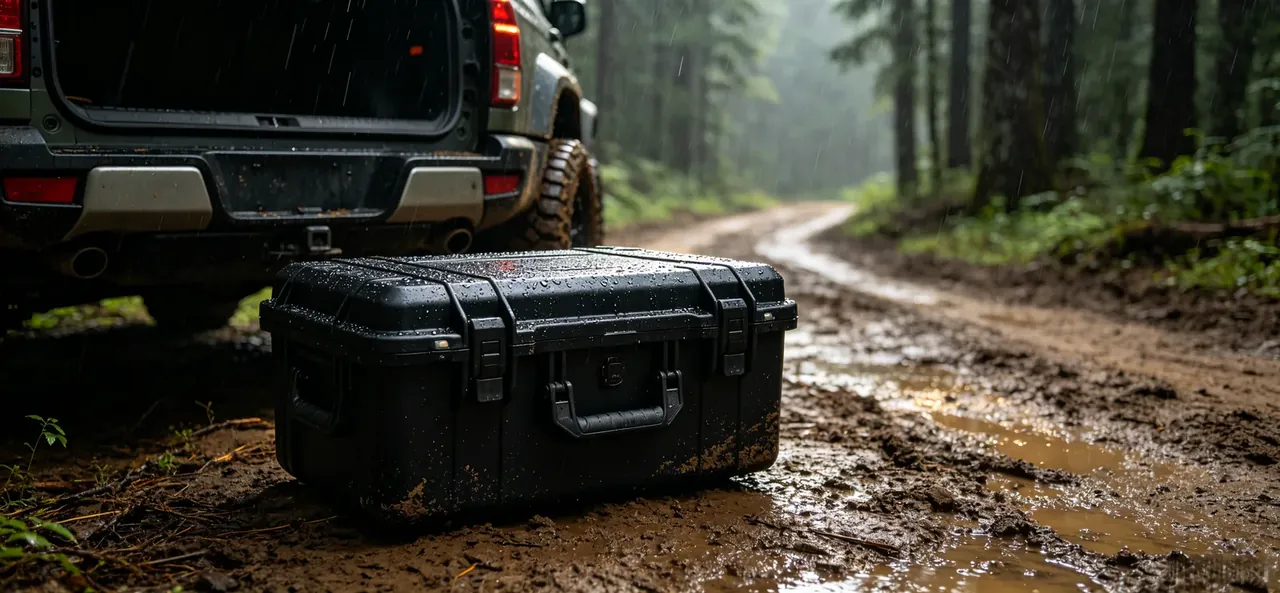
Quick answer: Military waterproof case with automatic pressure release valve uses a φ12 mm bore and 6 kPa crack to hold leak drop ≤0.2 kPa / 10 min after immersion.
Table of contents
- Military waterproof case with automatic pressure release valve: Valve-Seat Bore
- Calibrating the Membrane Cracking Pressure
- Reseat Readings After Pressure Cycles
- Airtightness Pressure Drop in the Immersion Re-Test
- Bore-Diameter Rejection Line for Valve Batches
- FAQ
1. Military waterproof case with automatic pressure release valve: Valve-Seat Bore
The Military waterproof case with automatic pressure release valve measures 620×450×270 mm outside, 550×385×195 mm inside, with a 4.4 mm wall and a φ12 mm seat bore. At 6.8 kg empty and 15 kg loaded, the bore is the only equalising path: too small and pressure builds across the membrane, too large and the seat edge thins while the reseat land narrows.
| Bore grade | Measured bore | Reseat leak after 12 cycles |
|---|---|---|
| Small | φ8 mm | 0.38 kPa / 10 min |
| Transition | φ10 mm | 0.27 kPa / 10 min |
| Baseline | φ12 mm | ≤0.20 kPa / 10 min |
| Large | φ14 mm | 0.25 kPa / 10 min |
A locked −30 ℃ to 60 ℃ / 12-cycle programme changes the bore alone. Reseat leak falls to φ12 mm, then rises at φ14 mm where the wider hole eats the clamping area. The Military waterproof case with automatic pressure release valve fixes φ12 mm as the baseline.
2. Calibrating the Membrane Cracking Pressure
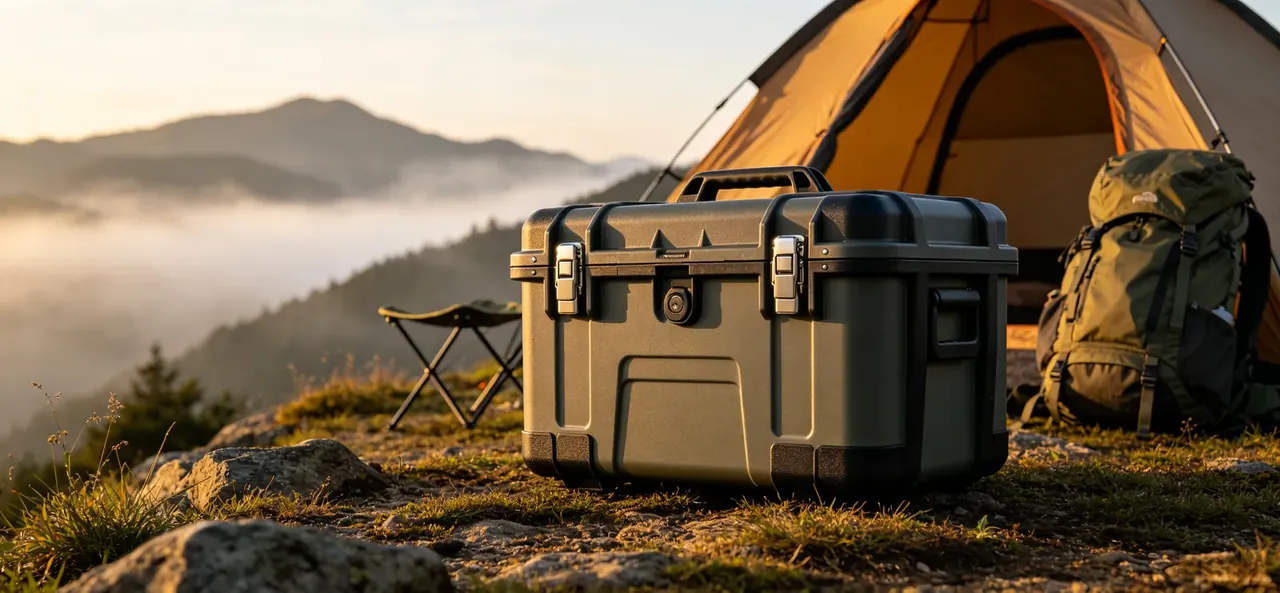
The Military waterproof case with automatic pressure release valve is calibrated to 6 kPa cracking and 3 kPa reseat on a differential rig, shell rated against IP68. A low crack pressure chatters through a −30 ℃ to 60 ℃ swing; a high one forces the lid gasket to leak first. The 6 kPa / 3 kPa pair lets the flap drop back.
| Pressure grade | Cracking pressure | Reseat pressure after 12 cycles |
|---|---|---|
| Low | 4 kPa | 1.6 kPa |
| Medium | 5 kPa | 2.3 kPa |
| Baseline | 6 kPa | 3 kPa |
| High | 7 kPa | 3.9 kPa |
Four catches at 420 N and two gaskets at 20% compression spread load around the mouth. After 4600 cycles the baseline reseats at 3 kPa, the low grade sinks to 1.6 kPa, and the high grade climbs to 3.9 kPa. JUNZHIJIA files a crack-pressure record per valve; a unit outside 6 kPa is held back from immersion.
3. Reseat Readings After Pressure Cycles
The Military waterproof case with automatic pressure release valve runs 12 cycles between −30 ℃ and 60 ℃, each with one pressure swing, then is read by decay over 10 min against ≤0.2 kPa / 10 min. Temperature drifts membrane stiffness and cycling lifts the flap, breaking the seat land into a discontinuous ring. Bore and crack pressure must be judged together: a thicker membrane only pushes reseat away from 3 kPa.
| Reseat reading | Bore | Cracking pressure | 10 min leak drop |
|---|---|---|---|
| Out of spec | φ8 mm | 4 kPa | 0.41 kPa |
| Borderline | φ10 mm | 5 kPa | 0.26 kPa |
| Pass | φ12 mm | 6 kPa | ≤0.20 kPa |
| Seat offset | φ14 mm | 7 kPa | 0.24 kPa |
One shell, one 12-cycle run, changing only bore or crack pressure: only φ12 mm with 6 kPa holds both lines, the other three miss a mark. This rig comparison is not a whole-shell ingress certificate rated to IP68.
4. Airtightness Pressure Drop in the Immersion Re-Test
The Military waterproof case with automatic pressure release valve soaks at 1.0 m for 2 h, closed with all catches engaged, rated against IP68. Neither membrane nor crack pressure changes: the decay line reconnects for another 10 min read. Water sits on the lid-to-shell seam, held by 420 N and two gaskets at 20% compression, while 3 kPa reseat closes the bore.
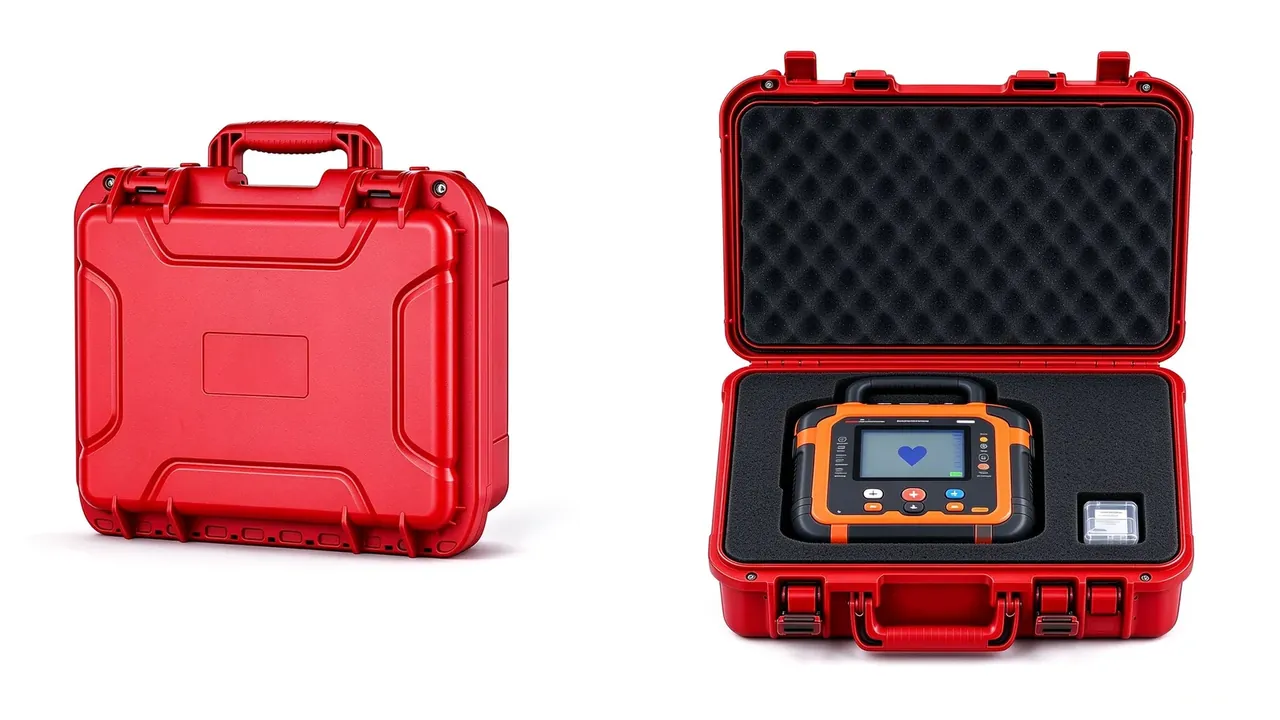
Baseline units still read ≤0.2 kPa / 10 min after soaking, matching the post-cycle figure, so φ12 mm and 6 kPa kept the seat land stable. Small and large bores climb past 0.30 kPa / 10 min, the gap coming from the seat land rather than gasket ageing. JUNZHIJIA runs immersion after the 4600 cycles so reseat drift shows first.
5. Bore-Diameter Rejection Line for Valve Batches
The scrap line is 11.4 mm: below it rig leak drop passes 0.26 kPa / 10 min and the shell is rejected. It comes from a scatter plot: every 620×450×270 mm shell finishes the cycles and the 1.0 m / 2 h soak, bore is paired with reseat leak, and the knee sets the line.
Below 11.4 mm the membrane cannot vent fast enough during a swing. JUNZHIJIA sets φ12 mm as the baseline for the Military waterproof case with automatic pressure release valve and 11.4 mm as scrap, leaving a 0.6 mm band.
Batch checks chain three readings: bore, reseat at 3 kPa after 4600 cycles, then a 10 min immersion leak drop within ≤0.2 kPa. Any miss fails the shell, with no sealant top-up. This turns the reseat behaviour of the Military waterproof case with automatic pressure release valve into three traceable figures. A 0.6 mm bore spread is tolerated, but reseat and leak limits never move outward, because the seat land fails first. Each serial keeps its three readings. Records are filed by batch code, letting a later review pull one shell without rerunning the cycles.
Conclusion
On the Military waterproof case with automatic pressure release valve, seat bore, crack pressure and reseat leak drop move together, so changing one shifts the other two. The φ12 mm, 6 kPa and ≤0.2 kPa / 10 min set still holds after a −30 ℃ to 60 ℃ swing, 1.0 m / 2 h immersion and 4600 open-close cycles. JUNZHIJIA benchmarks each batch this way and rates whole-shell sealing against IP68. When choosing a Military waterproof case with automatic pressure release valve, ask for the bore and crack-pressure records first, then the reseat re-test curve.
Related Reading
- Case Drain Valve: When to Fit
- Case Gasket Groove: Single vs Double Lip
- Leak Testing Protective Cases: Pressure Decay, Bubble and Tracer Methods
- Case Gasket and O-Ring Materials: EPDM, Silicone and Closed-Cell Foam Compared
Related Products
- 8 Series — Gun Cases; Military Equipment Cases; Camera Equipment Cases; Drone Cases; Watch Cases; Knife Cases; First Aid Cases; Electronics Equipment Cases
- WL8-2812 PP Gun Case — model WL8-2812
- All protective cases and toolboxes: 7 series, 158 models