

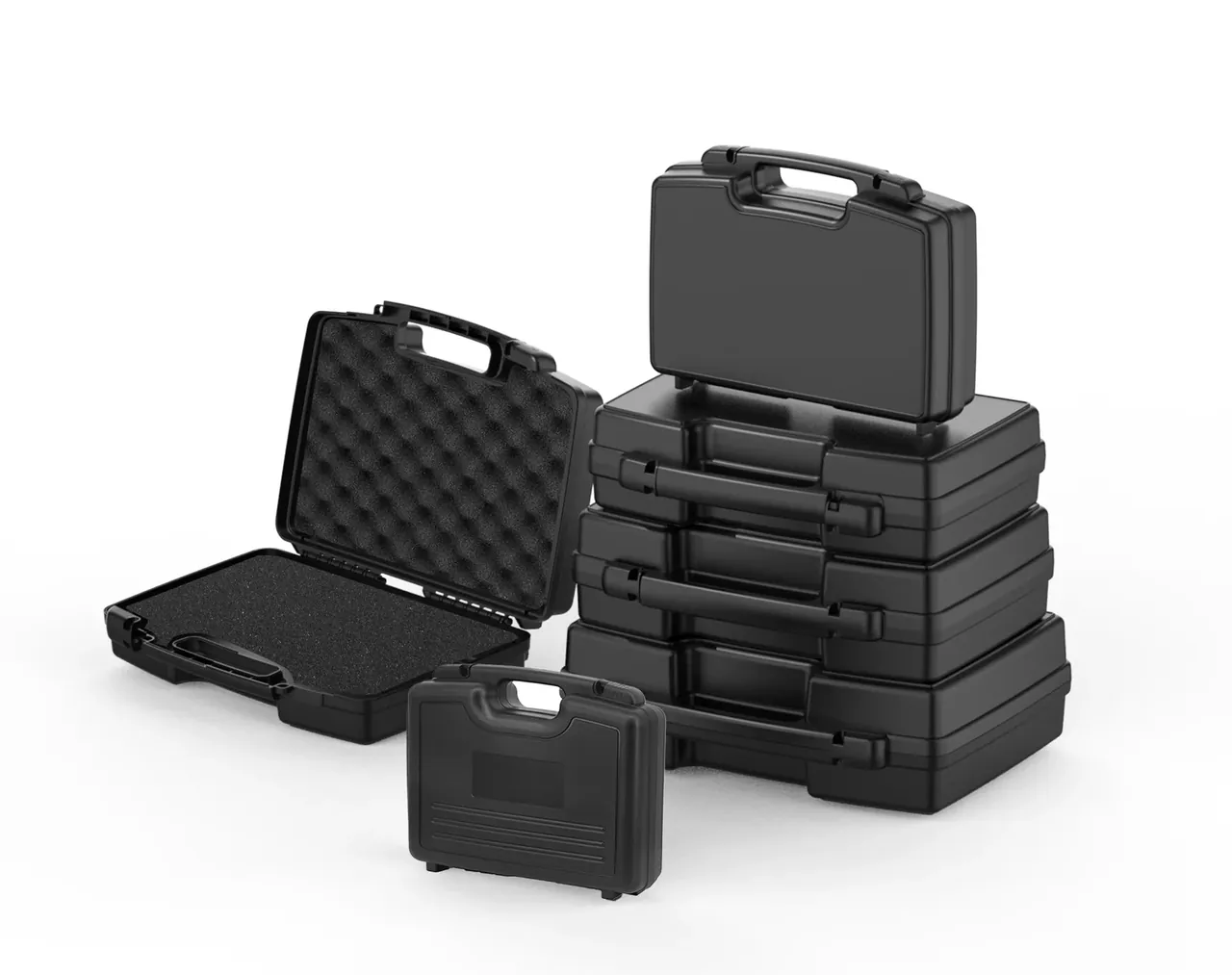
Quick answer: Transport asks three things of a missile box: securing, stacking and visible condition. Securing follows the handling mode, stacking the base and the temperature, condition whether a record point is readable. All three need features built into the shell.
Table of contents
- Three handling modes decide how a missile box is secured
- Load points and lifting: where the force goes
- Stacking and palletising: the base limit
- Condition monitoring: humidity, shock and opening records
- Colour and numbering: telling boxes apart
- FAQ
1. Three handling modes decide how a missile box is secured
Manual carry works on the handle, so the problem is sway and grip. Lifting works on slings, so the problem is contact pressure. Vehicle transport works on pallets and straps, so the problem is longitudinal inertia. Three load directions, three fixtures.
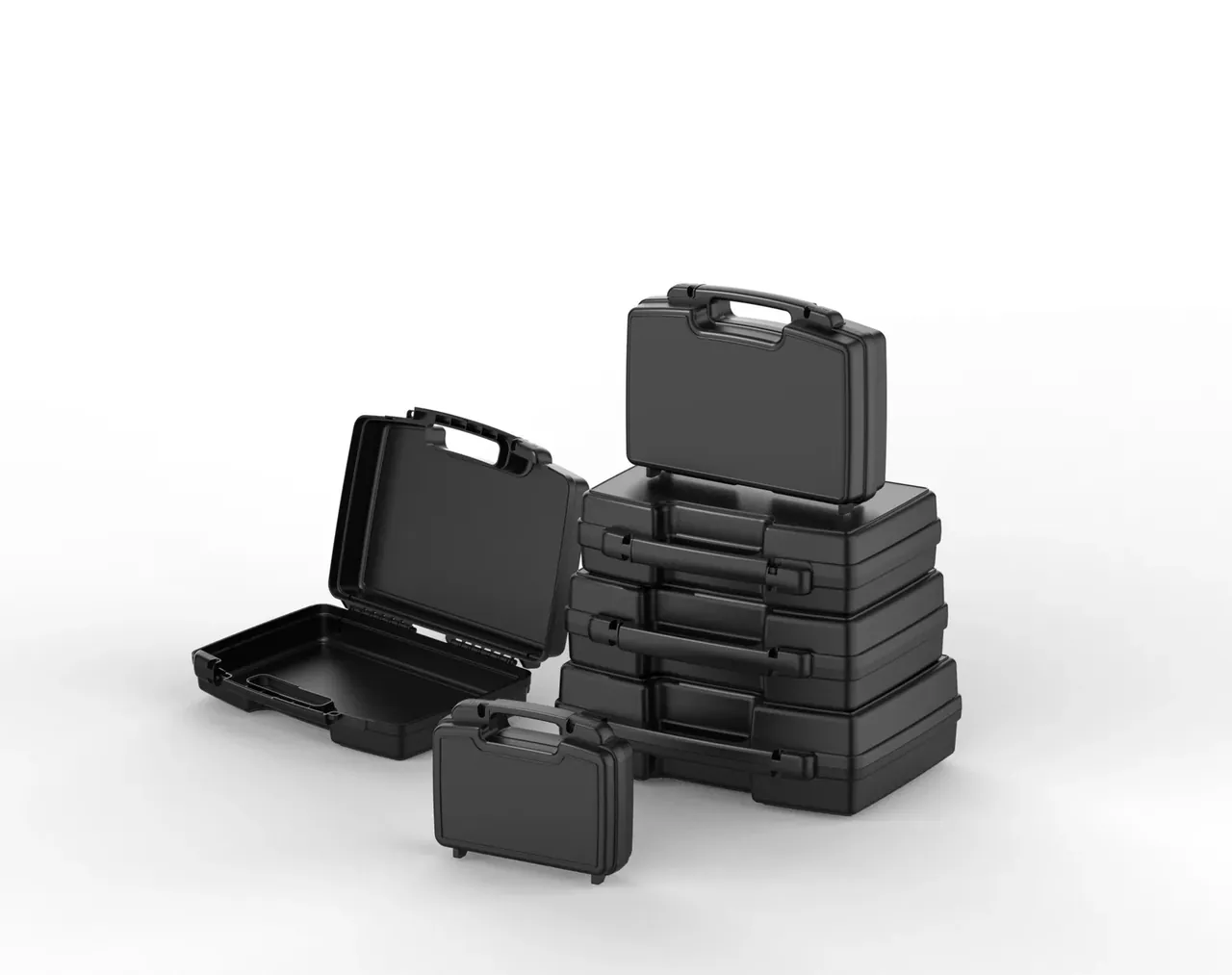
Fixture points belong in the design stage. Base feet decide whether the box drops into a pallet grid, side stiffening whether a strap can pull without crushing the wall, latch orientation whether two boxes sit flush.
One premise is often missed: the fixture must match the shell. A strap takes far more tension than the wall takes in compression, so the strap survives and the wall dents. Corner protectors spread that load over two faces.
2. Load points and lifting: where the force goes
The handle is the main manual load point. Force enters the lid through the root and spreads along the rim into both walls, so root thickness and transition matter more than opening size.
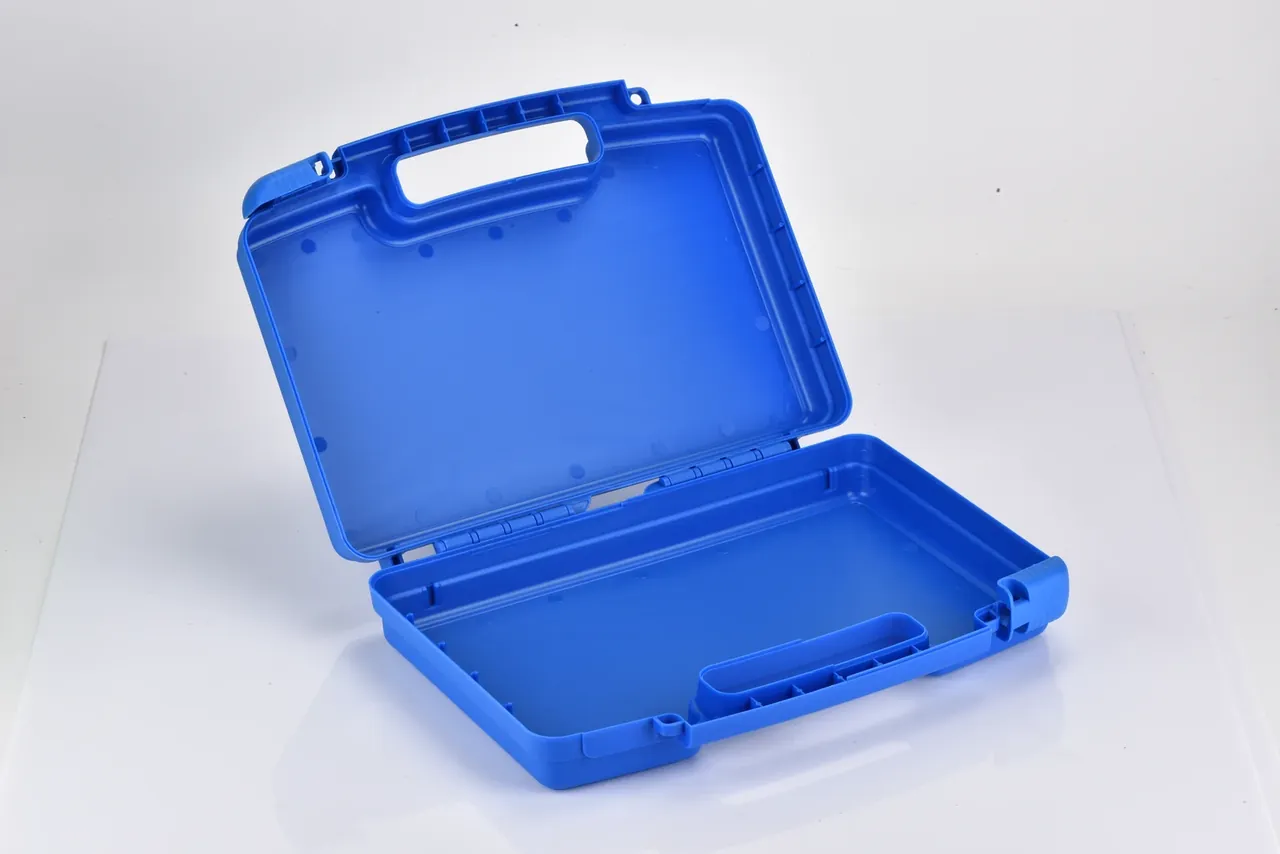
A sling contacts the box along a line, so pressure concentrates on the edge; without protectors it cuts a groove as it tightens. Four-point lifting is steadier, but the points must sit in one plane.
Base feet are the third support. They lift the body off the floor, leave fork access and keep it out of standing water. Foot height and pitch must match the pallet, or the box lands on points.
3. Stacking and palletising: the base limit
Stack load accumulates downward, so the base carries the column. If ribs run only through the middle, the corners are weak; if feet sit at the corners, load concentrates where foot meets wall. Stack height follows the base load path, not wall thickness.
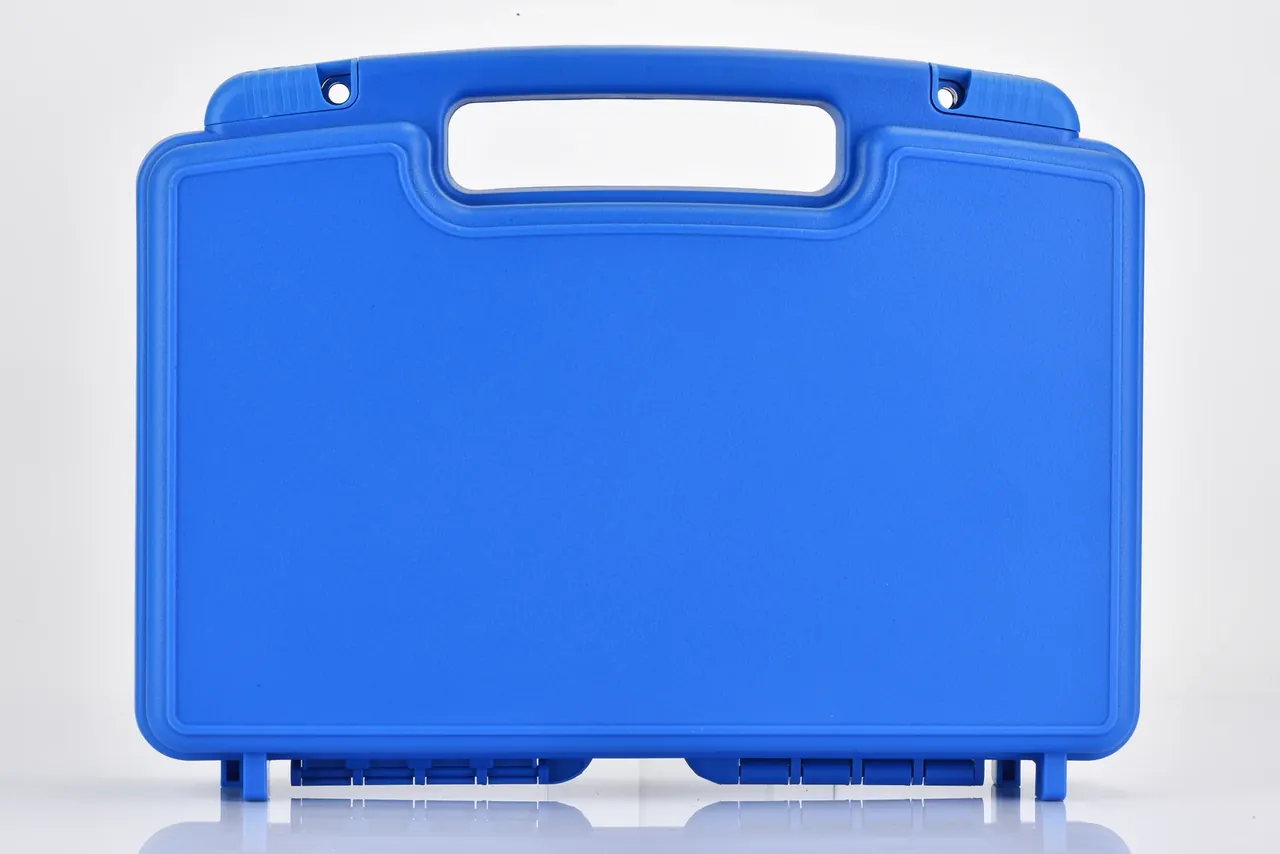
Palletising helps: the pallet turns point loads into area loads, straps tie the column together, and forks never touch the box. The pallet still has to match in size, or corners overhang and distort.
Friction matters too. Ribs and recesses cut the real contact area, so a slip mat helps, at the cost of height against hatch and rack clearance.
4. Condition monitoring: humidity, shock and opening records
Monitoring needs a place to live. A humidity card belongs where it reads with the lid open, a shock indicator near the load, a logger cable behind a sealed gland. Boxes without these get drilled later, and every added hole leaks.
Opening records rely on seals and numbers. A seal through the latch boss leaves a mark when broken, and the number matches the nameplate. Together they answer whether a box was opened, when, and from which batch.
5. Colour and numbering: telling boxes apart
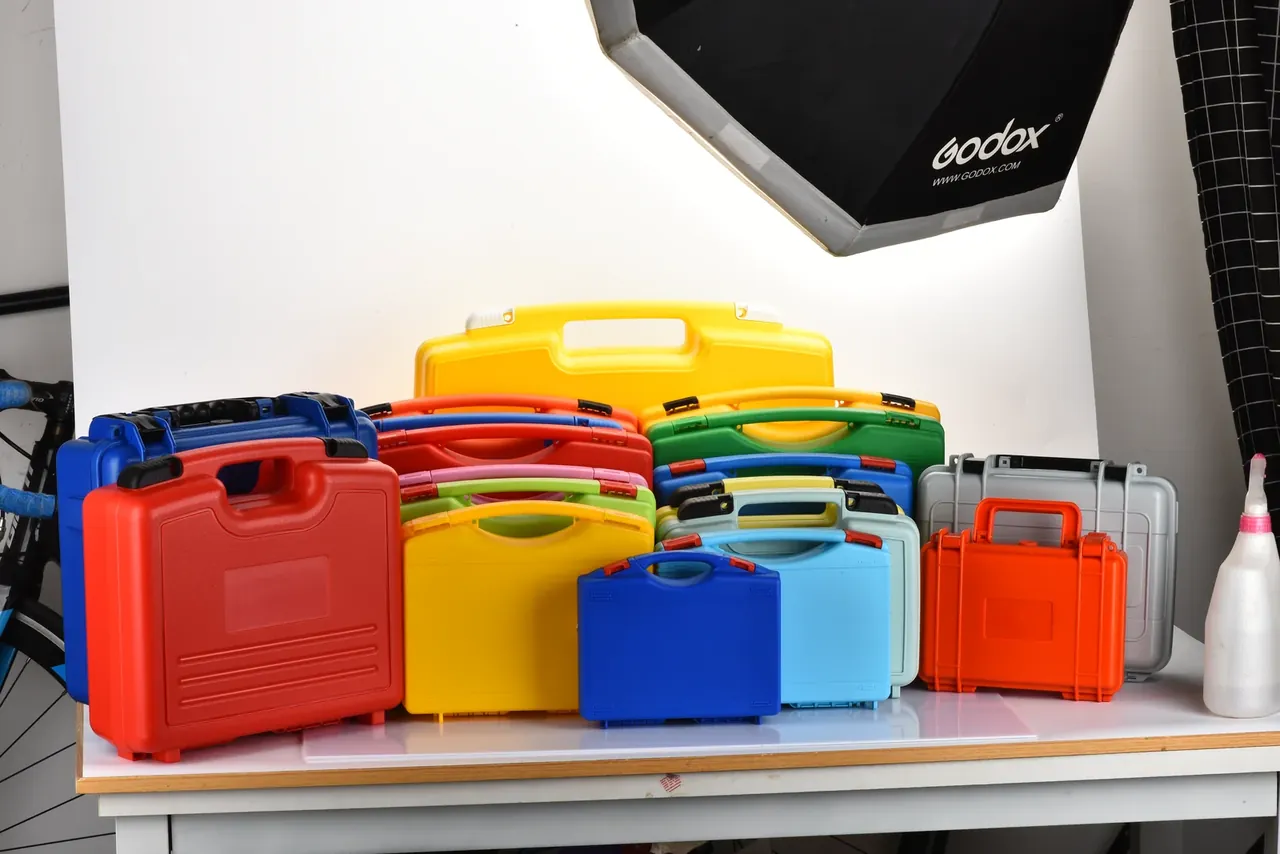
Colour is the fastest way to split a fleet: one batch, one colour, visible across a store. It cannot replace a number, because shade shifts under warehouse lighting and photographs. Colour groups; the number identifies.
Colour has a physical cost too. A dark shell absorbs more solar gain, so the cavity peaks higher and the thermal margin shrinks. Mixed batches should be stored separately, or test results no longer apply.
Numbering sits with colour. The front recess carries the main plate, the side band carries batch, the lid top carries destination. Three places, no repetition, read in order.
Conclusion
Securing, stacking and monitoring all land on the same shell: feet for the pallet, stiffened panels for the strap, pockets for the plate and the indicator card. Get the features right and transport runs; get them wrong and the wall absorbs the difference. When specifying a missile box, put those three on the drawing.
This article discusses the case body only: interior, load points, handling features, marking and fixing. It does not cover any operation or filling of the contents.
Related Reading
- Protective Case Transport Marking: Handling Pictograms and…
- Specialized Shipping and Storage Container: The Custom Route
- Military Rotomolded Case: Adapting Rotationally Molded Cas…
- Structure and protection of a warhead container
Related Products
- 8 Series — Gun Cases; Military Equipment Cases; Camera Equipment Cases; Drone Cases; Watch Cases; Knife Cases; First Aid Cases; Electronics Equipment Cases
- WL8-2812 PP Gun Case — model WL8-2812
- All protective cases and toolboxes: 7 series, 158 models