

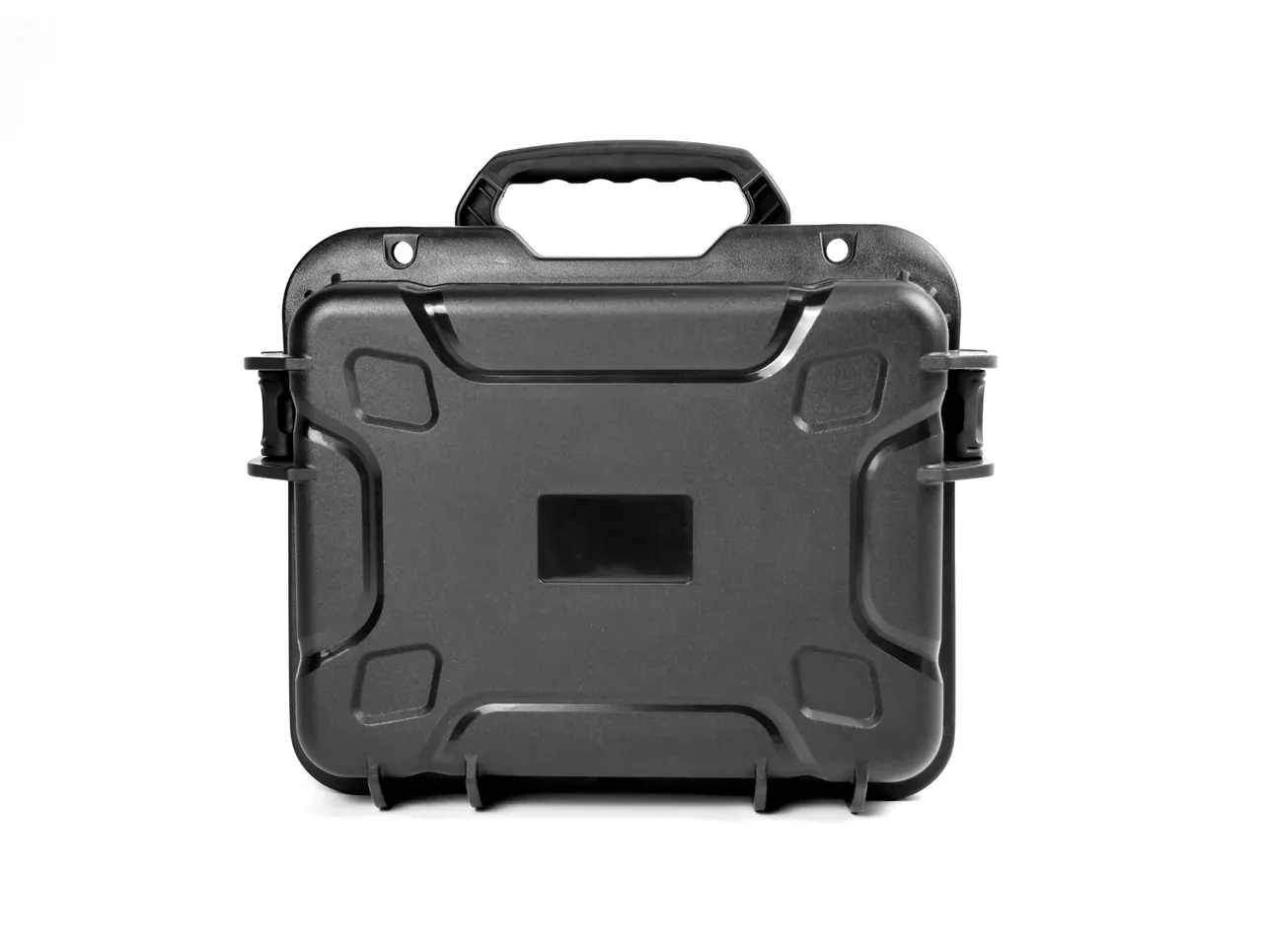
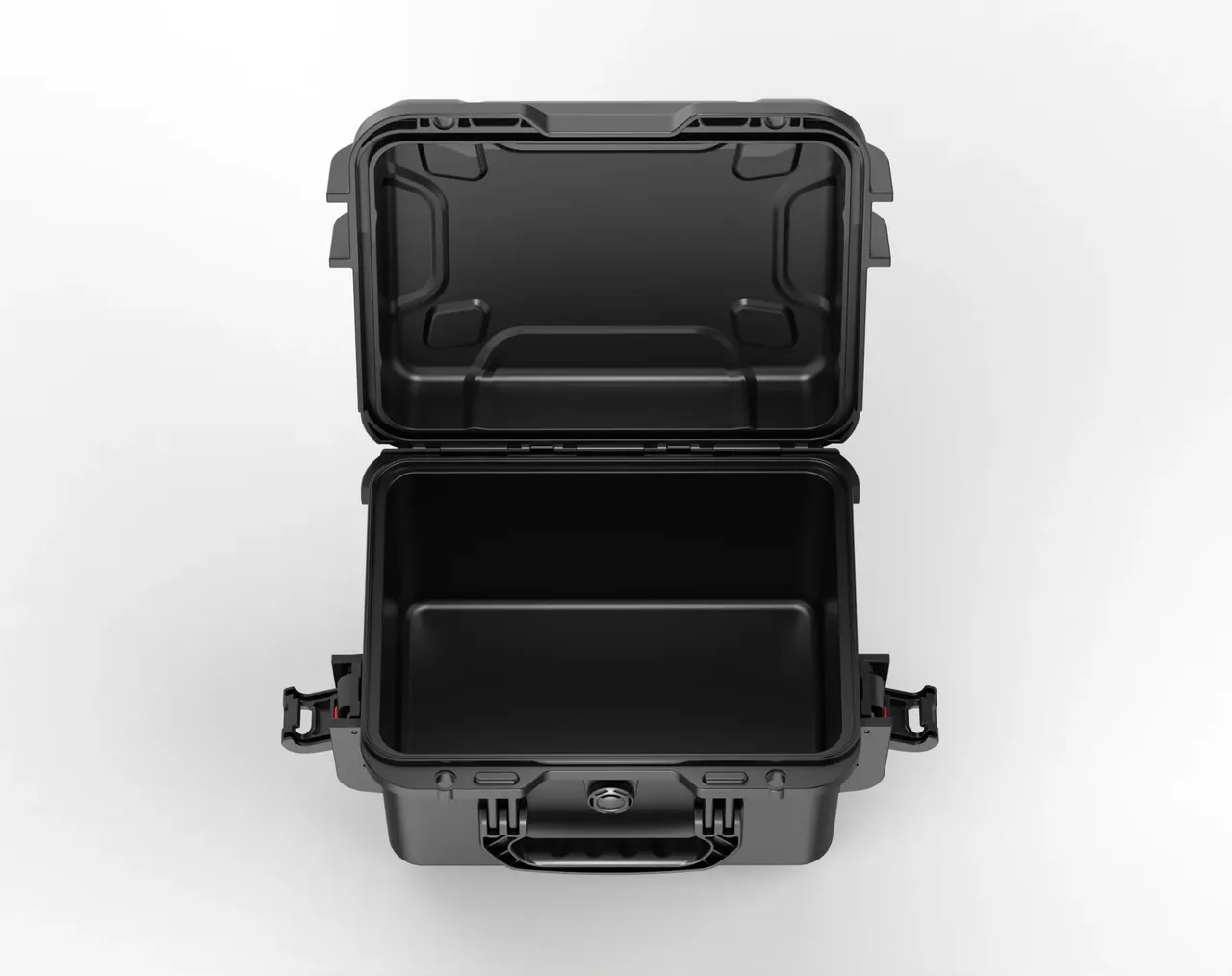
Quick answer: A missile warhead container is a reusable case that must answer four questions: where the support points sit, how much shock reaches the item in a one-metre drop, how humidity moves inside, and what can be read unopened. Shell, ribs, lining, seals and marking each cover one part; none carries the result alone.
Table of contents
- The four questions a missile warhead container must answer
- Shell: one-piece moulding and a closed frame
- Lining and support: spreading the load
- Double sealing: how two barriers divide the work
- Marking and status reading
- FAQ
1. The four questions a missile warhead container must answer
Calling a case a missile warhead container assumes four answers exist: support, shock, sealing, marking. Miss one and it is an ordinary hard case — the item fits, but nobody can say what happens next.
| Function | Structure | Failure looks like |
|---|---|---|
| Location and support | Lining zones, support blocks | Item shifts, local crushing |
| Shock attenuation | Foam density, thickness | Corners fail, ribs crack |
| Humidity control | Seal ring, pressure valve | Fogging, condensation, mould |
| Status reading | Label recess, seal tag | No sign of opening |
The four pull against each other. Thicker foam lowers shock but eats volume; a thicker wall adds stiffness and weight, making a drop likelier; tighter sealing raises the force to open the lid. Design is a crossing point, not a maximum.
2. Shell: one-piece moulding and a closed frame
The shell of a missile warhead container is rotationally moulded in polyethylene or PP alloy. One piece leaves no weld, so stress has no seam to gather; walls run three to six millimetres, and corners thicken where load is highest.
Flat panels bulge, so ribs turn panel bending into frame force along the rib lines, closed by the base skids.
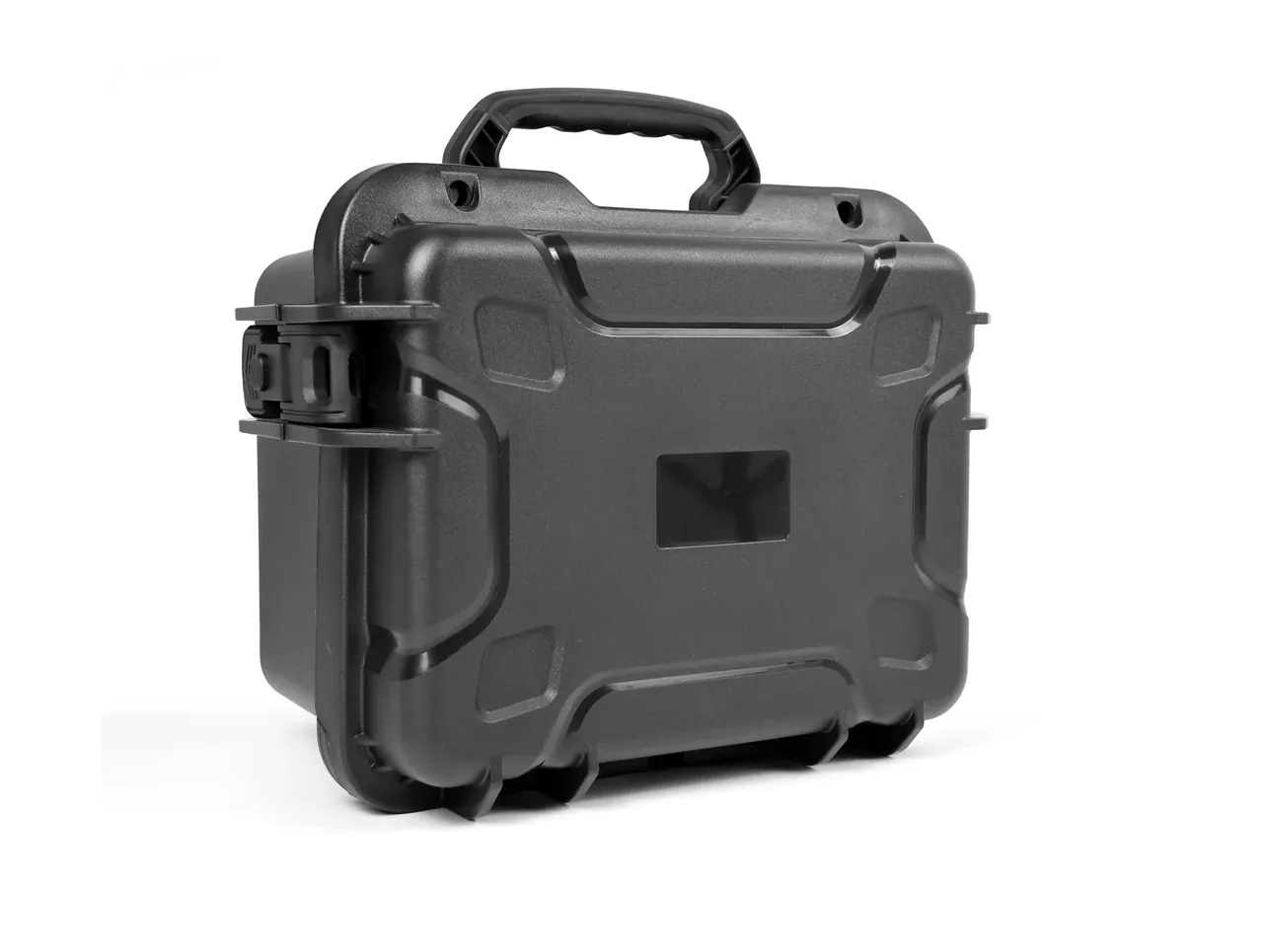
Hinges and latches make lid and base a closed frame. Fit two latches per short edge plus one at each long-edge midpoint, or the lid arches and the gasket goes slack.
3. Lining and support: spreading the load
The lining does two separate jobs: support controls displacement in millimetres, cushioning controls acceleration in g. Support blocks land on a rigid section such as a flange, never on thin shell.
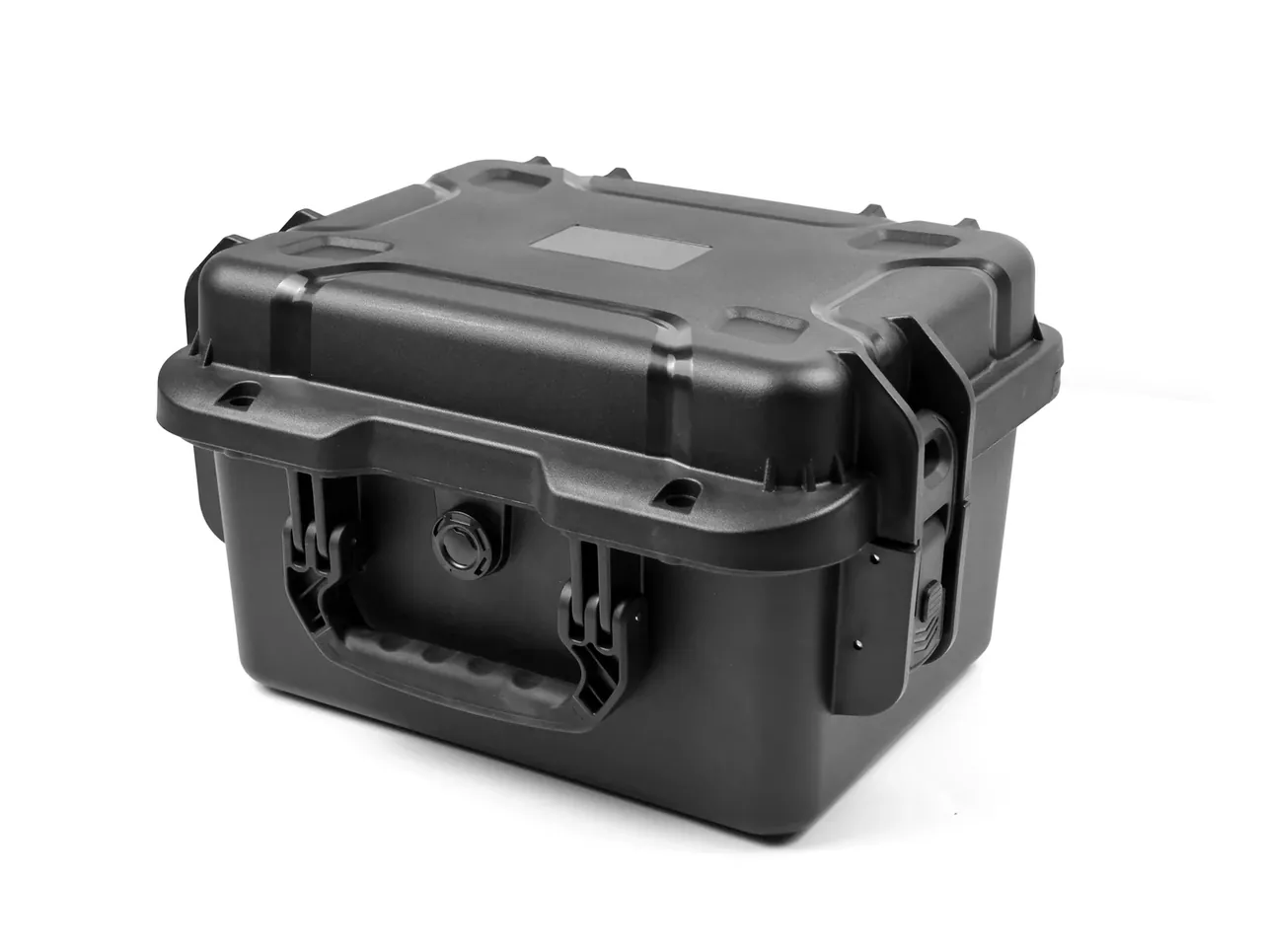
Point contact becomes stress concentration, so a hard pad turns it into an area. Foam compression stays between twenty and thirty percent: less and the item shifts, more and the second impact passes straight through.
4. Double sealing: how two barriers divide the work
Double sealing is not two identical rings. A lip or O-ring in the lid groove works by compression; a second groove set inboard slows ingress when the first fails and stops that ring being drawn out by negative pressure. In series, failure rates multiply.
Three variables decide it: an unbroken groove, twenty to thirty percent compression, and a stiff lid at that point. Clamp a paper strip under the lid and pull it round; any span that slides out is short of compression.
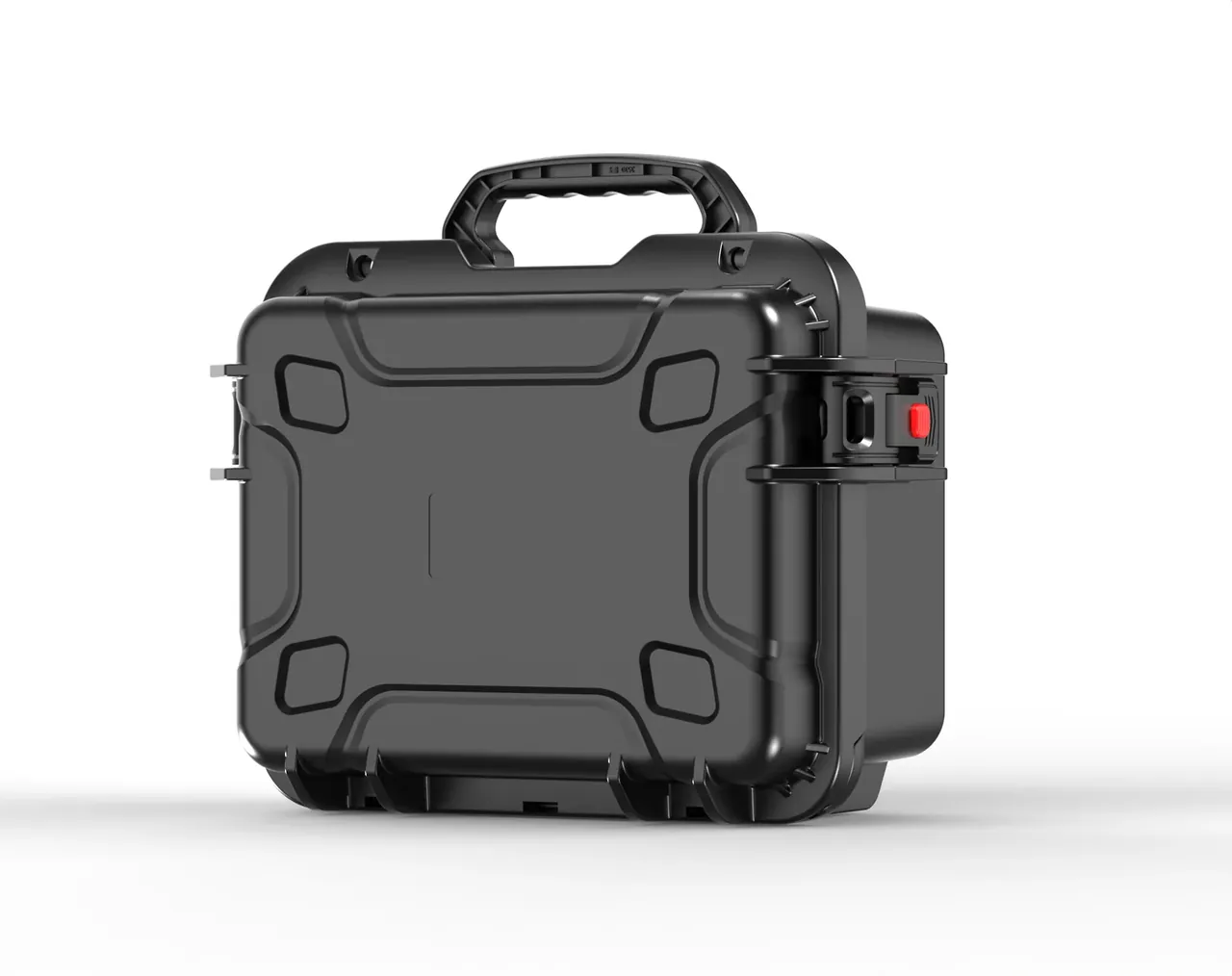
The better the seal, the more the case needs a pressure valve. A temperature or altitude change holds the lid shut, and forcing it pulls the gasket out. A bidirectional valve equalises without admitting vapour.
5. Marking and status reading
The label recess is moulded in, half to one millimetre deep, keeping the label below the surface so stacking does not scrape it off.
Marking on a missile warhead container should let four things be read unopened: serial, batch, orientation, and whether it was opened. Each needs its own carrier — stainless plate, moulded arrow, one-time seal tag — because one label cannot hold all four.
Colour and letter height matter: white on dark reads best, and small lettering fails at three metres.
Conclusion
A missile warhead container is worth its price only when four answers exist: support points, shock curve, humidity, status. All four and it is packaging; miss one and it is only a strong box.
This article covers container-side specifications and design implications only, not the handling, loading or use of the contents.
Related Reading
- Rotomolded Cases: Rotational-Moulded Shell Structure & Pro…
- What a pressure equalisation valve does
- Seal materials and ageing
- Stacking and securing transport packaging
Related Products
- 8 Series — Gun Cases; Military Equipment Cases; Camera Equipment Cases; Drone Cases; Watch Cases; Knife Cases; First Aid Cases; Electronics Equipment Cases
- WL8-2812 PP Gun Case — model WL8-2812
- All protective cases and toolboxes: 7 series, 158 models