

Quick answer: Moisture-Proof Grain and Dry Food Bins seal on three numbers: a 6 mm silicone cord at 30 percent compression, 55A hardness and a 0.8 L repellent box.
Table of contents
- Sealing Layers in Moisture-Proof Grain and Dry Food Bins
- Silicone Gasket Compression and Hardness
- Repellent-Box Volume and Replacement Cycle
- Castors Across Floor Joints
- Three Sampling Stages for an OEM Build
- FAQ
1. Sealing Layers in Moisture-Proof Grain and Dry Food Bins
The lid tells you the truth. Press it shut on a 25 L bin and you feel three stops: the rim lands, the cord flattens, the two catches arrive last.
Moisture-Proof Grain and Dry Food Bins sit inside a 400 × 300 × 380 mm envelope on a 3.0 mm wall. The first layer is a plain face joint, a 4 mm band around the mouth, enough for coarse grain dust. Flatness is held to 0.3 mm, because a soft cord cannot bridge a wider gap.
The second layer is radial compression: the cord lies in a groove shallower than itself, so closing squeezes it, and this layer controls air rather than dust. The third is the repellent box, walled off by a 1.2 mm bulkhead with six 2 mm holes.
None of the three replaces another. Drop the face joint and dust holds the cord off the mouth. Drop the cord and a flat mouth still leaks over 30 days.
2. Silicone Gasket Compression and Hardness
In Moisture-Proof Grain and Dry Food Bins a 6 mm cord squeezed to 30 per cent flattens by 1.8 mm, and that 1.8 mm carries the argument. Squeeze less and the cord merely rests on the mouth, so a 0.3 mm flatness error leaks. Squeeze more and rebound slows after a few dozen closings.
Hardness is the half that gets skipped. At 55A a cord gives under a fingertip and springs back at once; by 60A the lid feels brittle; at 70A almost nothing is left to compress. Fixing 55A against 30 per cent keeps a margin at both ends of −10 ℃ to +70 ℃.
| Compression | Flattening of a 6 mm cord | What the lid does |
|---|---|---|
| 20% | 1.2 mm | Leaks at a 0.3 mm error |
| 25% | 1.5 mm | Floor, moisture nears 14% at 30 days |
| 30% | 1.8 mm | Value used here, catch force balanced |
| 35% | 2.1 mm | Over-sealed, cord fatigues |
Below 25 per cent compression and above 70A, the moisture reading inside the bin passes 14 per cent after 30 days in a constant climate chamber, read on the worst of 20 bins held at 23 ℃ and 50 per cent relative humidity.
At 70 ℃ the silicone softens and the catches get heavier; at −10 ℃ rebound slows. A 5 per cent margin at each end is what 55A buys.
3. Repellent-Box Volume and Replacement Cycle
The box is not a random pocket. In Moisture-Proof Grain and Dry Food Bins it hangs at the short end, holds 0.8 L and takes 3.2 per cent of 25 L, and its flap opens upward.
Volume tracks capacity. A 0.5 L box on a bin under 20 L eats lid space the ribs need; a 1.2 L box on a 33 L bin needs 8 mm at the lid edge.
| Box volume | Share of capacity | Bin capacity |
|---|---|---|
| 0.5 L | 2.5% | Under 20 L |
| 0.8 L | 3.2% | 25 L |
| 1.2 L | 3.6% | 33 L |
The 90 day interval follows the vapour inside the box, not the calendar. At 90 days the fill has dropped a third and powder rings the vents; at 120 days it closes the 2 mm holes, at 60 the hinge loosens.
4. Castors Across Floor Joints
A kitchen floor is never one slab. Tile joints of 3 mm, a threshold of 8 mm and the shadow gap under a plinth are the obstacles. On Moisture-Proof Grain and Dry Food Bins a 45 mm wheel against an 8 mm threshold gives a ratio of 5.6, which decides whether the bin rolls over or jams.
Under a 40 mm wheel the load lands on one point of the rim and the push comes in two stages: over the lip, then up with the body. At 45 mm the contact arc is longer and one push carries the bin across; at 60 mm the clearance grows and the bin tips.
Four castors, two swivel at the front and two fixed at the back, let a 25 L bin turn in a 900 mm aisle. The two 12 mm ribs under the floor run unbroken past the mounts, and the rim carries a 2 mm radius so an arc meets the threshold rather than an edge.
5. Three Sampling Stages for an OEM Build
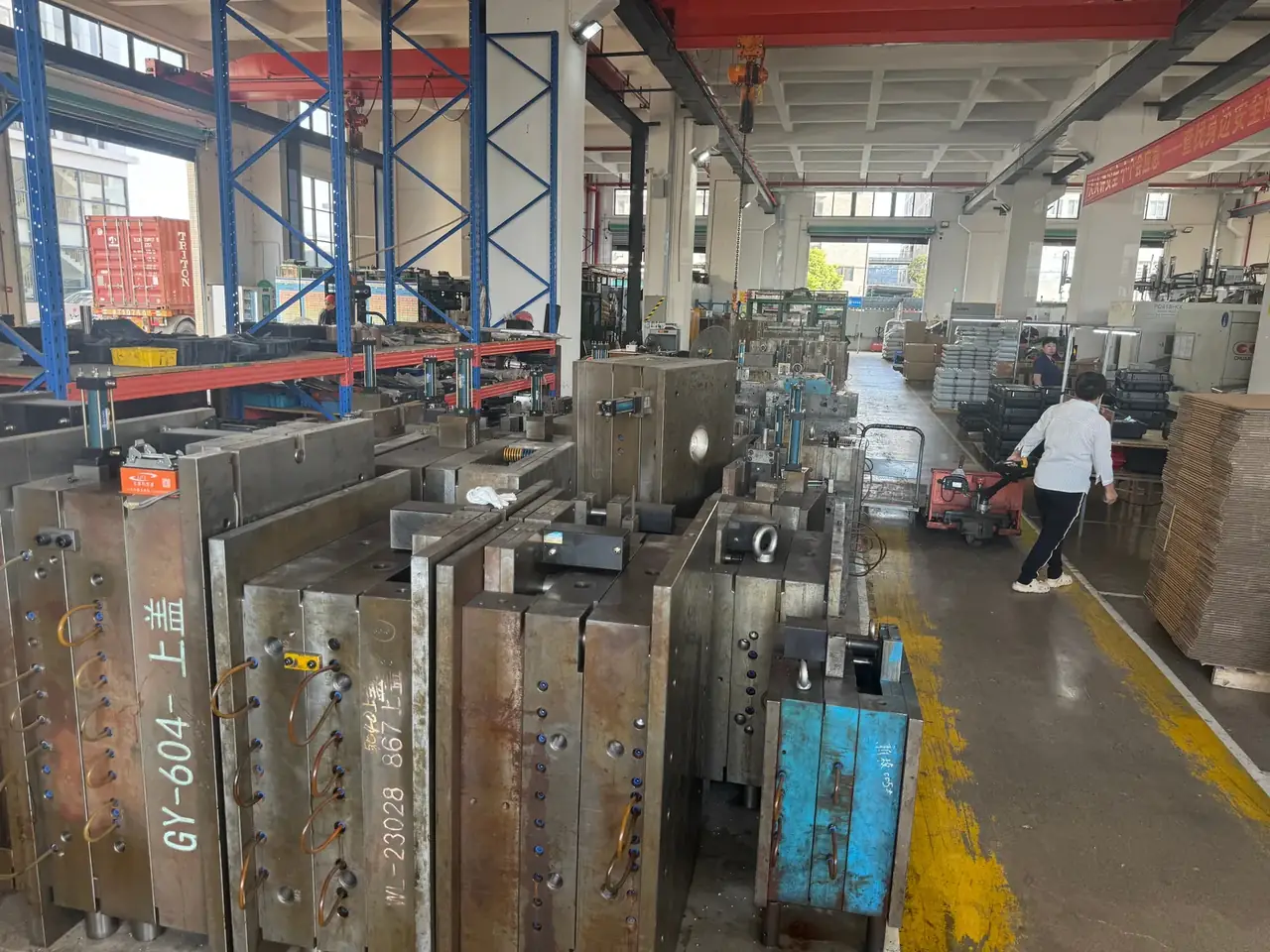
Most OEM arguments start in sampling because the stages were never separated. Structure, function and production each answer one question, and skipping one costs weeks. The structure sample is about shape: one cavity, hand-trimmed, checked for mouth flatness, lid interference and box position, with 3.0 mm wall verified on a cut section.
The function sample is about feel: with cooling in and mould temperature stable, 30 per cent compression, 55A and the 0.4 mm flap gap become measurable.
| Stage | Mould state | What is signed off |
|---|---|---|
| Structure | One cavity, hand-trimmed | Mouth flatness, interference, box position |
| Function | Cooling in place, stable mould | 30% compression, catch force, 0.4 mm gap |
| Production | Multi-cavity, continuous | 1.6 kg weight, colour, clearance |
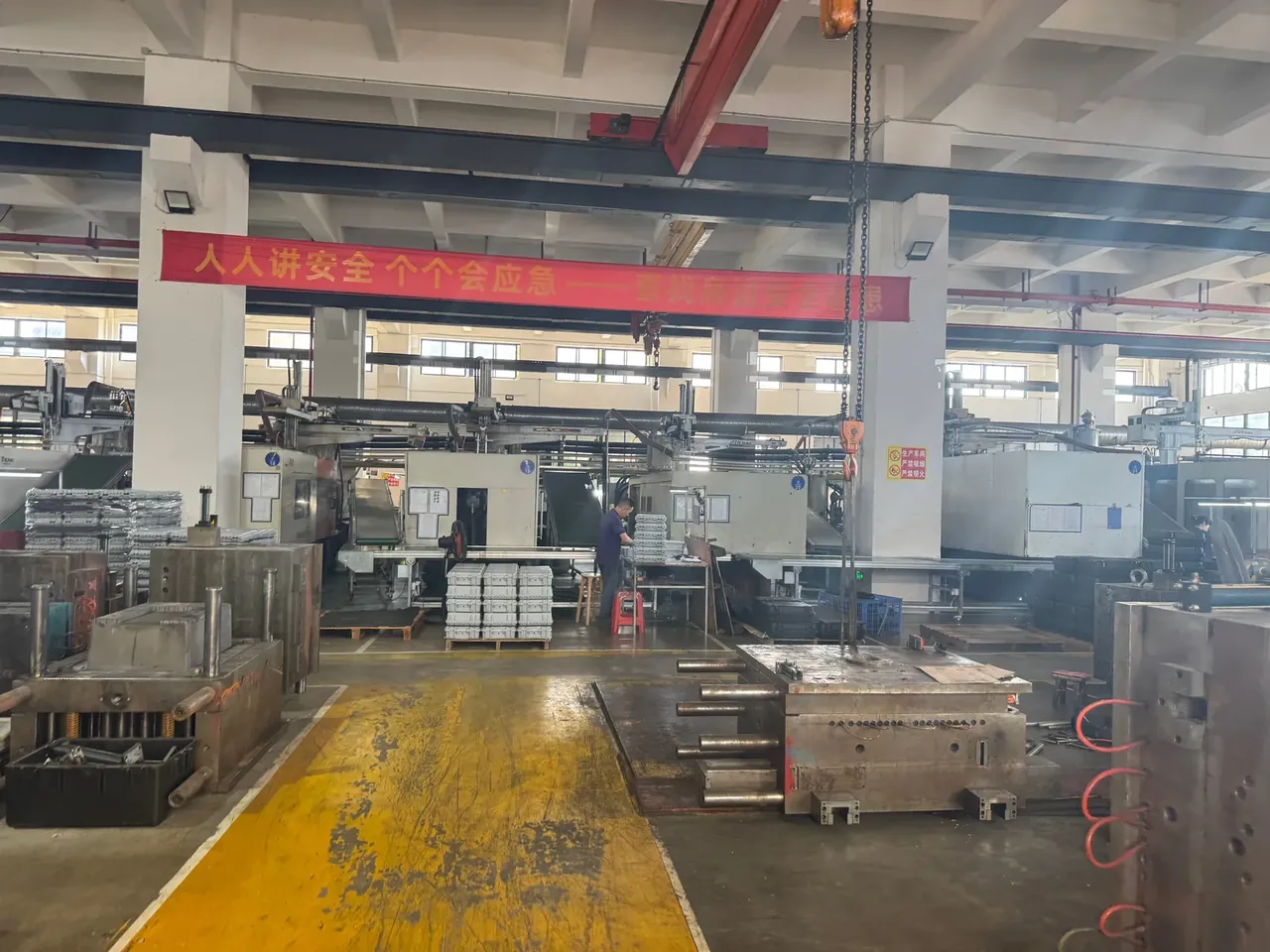
Production is about stability. After a multi-cavity run the part weight holds within 3 per cent of 1.6 kg, colour is held to ΔE 1.2, and castor clearance stops drifting. That build is sealed as the OEM reference for Moisture-Proof Grain and Dry Food Bins.
Conclusion
A grain bin is decided by numbers that can be measured: a 6 mm cord at 30 per cent, 55A hardness, a 0.8 L box against 25 L, a 45 mm castor over an 8 mm threshold, and three sampling stages. Fix those and the 0.3 mm mouth tolerance starts to mean something. For Moisture-Proof Grain and Dry Food Bins, settle these layers before colour.
Related Reading
- Material Criteria for Food-Grade Plastic Cases
- Structural Pest Protection in Storage
- Gasket Ageing and Replacement
Related Products
- 8 Series — Gun Cases; Military Equipment Cases; Camera Equipment Cases; Drone Cases; Watch Cases; Knife Cases; First Aid Cases; Electronics Equipment Cases
- WL8-2812 PP Gun Case — model WL8-2812
- All protective cases and toolboxes: 7 series, 158 models