

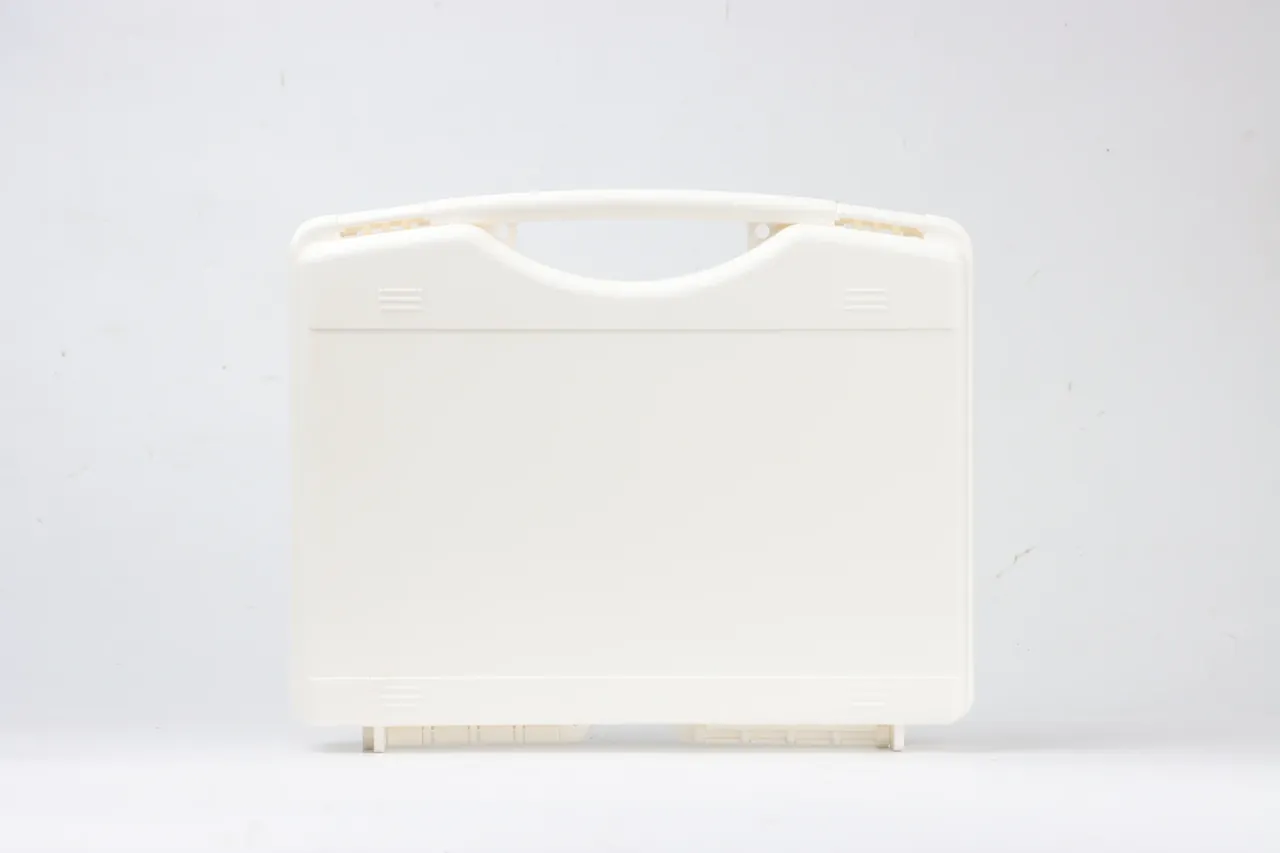
Quick answer: Food-grade status rests on three things at once: an approved resin grade, additives on a permitted list, and a migration test on the finished moulding. Medical-grade adds biocompatibility, judged by 10 mg/dm² overall migration and ISO 10993-5 cytotoxicity at grade 0.
Table of contents
- Three Pillars of Food-Grade: Grade, Additives, Migration
- Limits and Verdicts Across Three Regimes
- What Medical-Grade Adds
- Cleaning and Disinfection Resistance
- Regrind, Masterbatch and the Paper Trail
- FAQ
1. Three Pillars of Food-Grade: Grade, Additives, Migration
Food-grade compliance sits on three checkable points: the resin grade, additives on a permitted list, and a migration test on the finished case. In 2024 a lot of 3,000 tote cases went back: the supplier had an FDA statement for the resin and none for the moulding. Masterbatch, release agent and wall thickness sit in between.
Injection-moulded cases mostly use PP homopolymer at a melt flow index of 8–12 g/10 min, fluid enough to fill a 6 mm rib without warping. PP copolymer carries ethylene blocks and more low-molecular-weight fractions, reading 20%–40% higher under identical conditions. The grade must map to an olefin entry in 21 CFR 177.1520 or an authorised monomer in Annex I of (EU) 10/2011.
Additives come second: antioxidants, erucamide slip agents and calcium or zinc stearate must sit inside GB 9685 or Annex I, under the stated limit. Overdosed slip agent blooms, and a greasy feel or off odour sinks the GB 4806.7 sensory clause before any lab work.
Migration is third: the subject is the finished case, not the pellet. A 60 L interior with about 1.1 m² of contact surface works out near 18 dm²/L against a 6 dm²/kg default, so one formulation can pass at the default and double at the real ratio.
2. Limits and Verdicts Across Three Regimes
The three regimes cover different layers, and quoting them interchangeably produces wrong conclusions. The United States checks whether each component is listed, then extracts by food type and temperature; the EU computes overall and specific migration for the whole plastic layer; China folds four physical-chemical limits into the finished article.
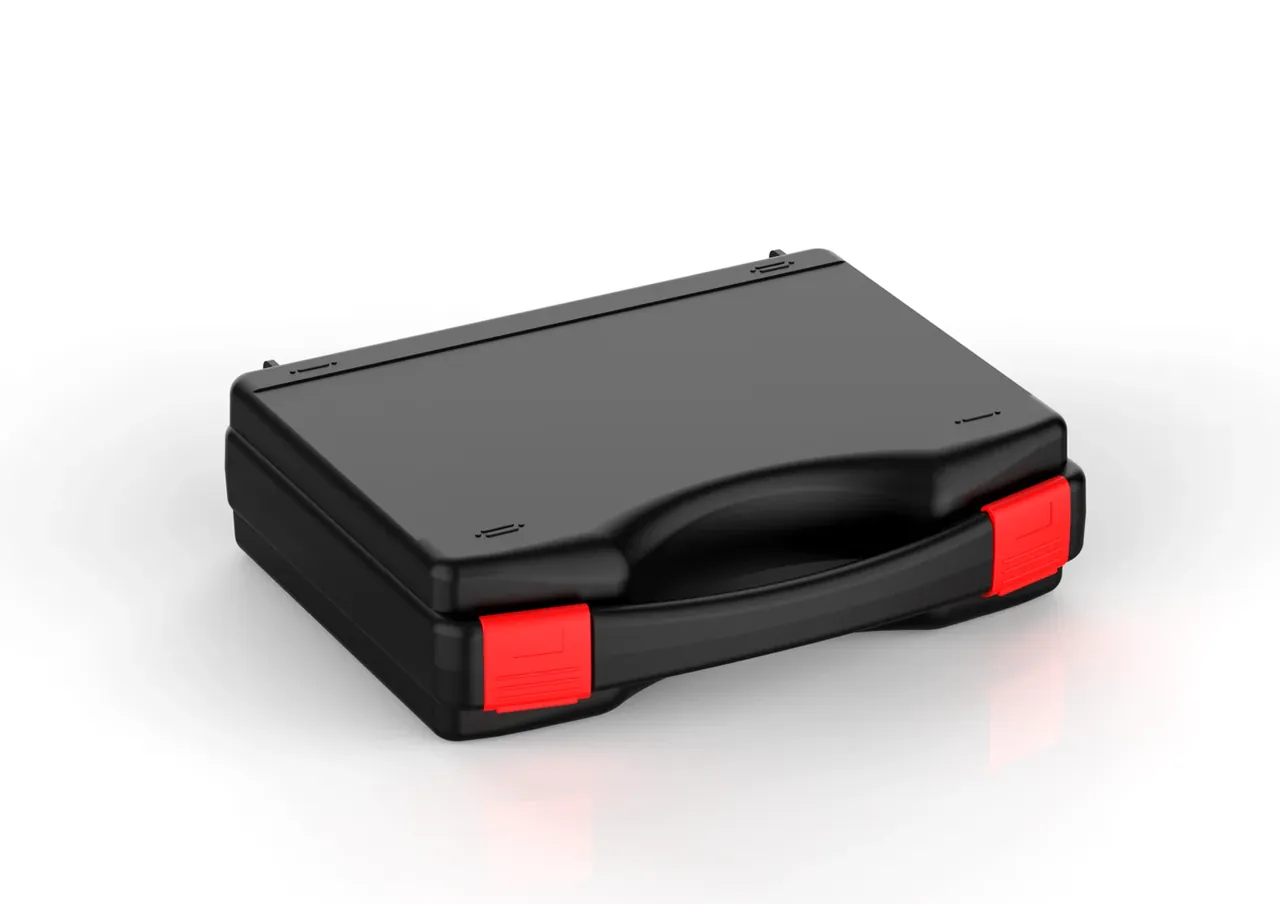
| Regime | Main basis | Layer covered | Key reading |
|---|---|---|---|
| United States | 21 CFR 177.1520 | Resin grade and additives | Extraction by food type and temperature |
| European Union | (EU) 10/2011 | Whole plastic layer | Overall ≤10 mg/dm², SML per substance |
| China | GB 4806.7, GB 9685 | Finished article and additives | Overall ≤10 mg/dm², KMnO₄ ≤10 mg/kg |
OM1 is 2 hours at 70 °C for hot fill, OM2 10 days at 40 °C for ambient storage, with 10% ethanol to 3% acetic acid and vegetable oil as simulants.
The verdict leaves no room: 10 mg/dm² is a hard line, and 10.2 does not pass. Specific migration is judged per substance, with heavy metals as lead at ≤1 mg/kg and permanganate consumption at ≤10 mg/kg. Raising melt temperature from 210 °C to 240 °C alone lifts the reading about 15%.
3. What Medical-Grade Adds
A medical-grade case clears food contact and then adds biocompatibility. ISO 10993-5 cytotoxicity follows ISO 10993-12 extraction: 3 cm²/mL, 24 hours at 37 °C, MTT assay, viability below 70% scored as cytotoxic. USP Class VI runs three in-vivo tests on a 1:20 extract held 72 hours at 50 °C.
Material choice shifts with sterilisation. PC hydrolyses under steam at 121 °C and loses more than 30% of notched impact strength after three cycles; for repeated autoclaving move to PPSU, which survives 134 °C for a thousand cycles at roughly four times the price. ABS carries residual acrylonitrile, so a PC/ABS housing needs a residual monomer test, and residual ethylene oxide is capped at 4 mg per device under ISO 10993-7.
4. Cleaning and Disinfection Resistance
Food plants and hospitals never clean a case with water alone: 5 minutes in 200 ppm available chlorine, 15 minutes of steam at 121 °C, or 70% isopropanol wipes, each turned into a cycle count and a pass criterion.
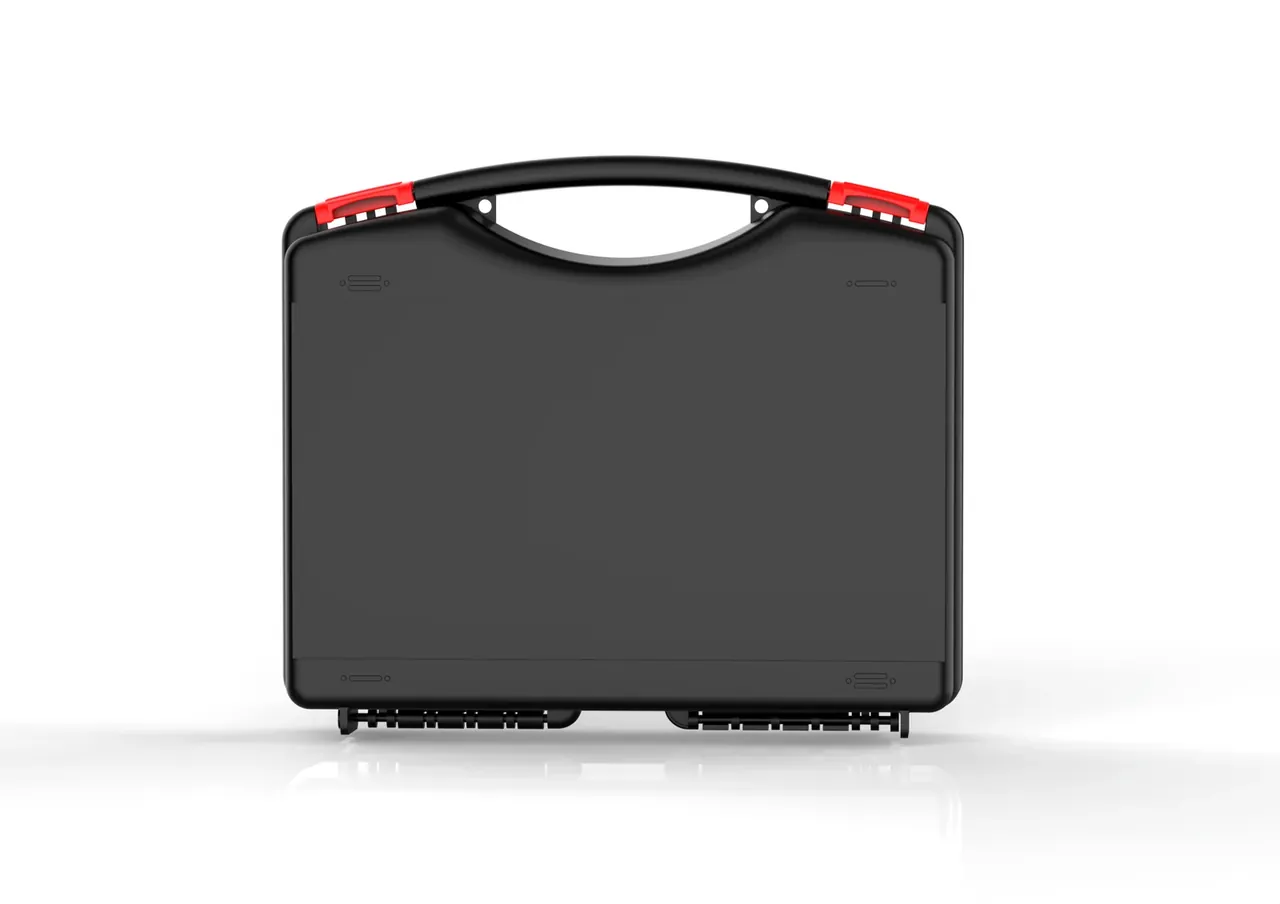
| Routine | Condition | Cycles | Pass criteria |
|---|---|---|---|
| Chlorine | 200 ppm available chlorine, 20 °C, 5 min | 500 | No crazing, ΔE ≤3 |
| Autoclave | 121 °C, 15 min | 20 | Sag ≤0.5 mm, compression set ≤25% |
| Alcohol wipe | 70% isopropanol | 300 | No stress whitening |
| Alkaline wash | pH 12, 60 °C, 10 min | 100 | Surface Ra ≤1.2 µm |
Chlorine fails most often: hypochlorite consumes the antioxidant package, and after 500 cycles the surface turns tacky and yellows past ΔE 3; that case then repeats overall migration.
Alcohol wiping targets PC and PC/ABS. Isopropanol penetrates, stress releases, and cracks run from a boss root outward; check roots at 5× or drop the case from 1 m. Steam tests dimensions: after 20 cycles lid sag must stay within 0.5 mm, and the gasket takes 24 hours at 70 °C under GB/T 7759, where set above 25% forces a material change.
5. Regrind, Masterbatch and the Paper Trail
The food-contact layer may not contain regrind, a hard requirement in (EU) 10/2011 and GB 4806.1; recycled input needs process approval under (EU) 2022/1616.
Two-shot moulding is the usual route: 0.8 mm of virgin material inside, 2.2 mm of regrind as structure. Keep regrind at 30% or below from a single grade and colour; mixing drifts the melt index and leaves flow marks.
Masterbatch is tighter than it looks: carrier resin matching the base, loading at or under 2%, food-contact titanium dioxide, and no optical brighteners.
| Document | Contents | Frequency |
|---|---|---|
| Declaration of Compliance | Grade, lot, migration verdict, legal basis | Every lot |
| Test report | Overall, specific migration, sensory | Annual |
| Batch traceability | Resin lot, masterbatch lot, tool number | Every lot |
| Change notice | Re-test after formula, supplier or tool change | Event-driven |
The common mistake is filing a resin report as a finished-article report, with attachments three years old.
Conclusion
Food-grade compliance is a chain, not a certificate: a grade mapping to 21 CFR 177.1520 or (EU) 10/2011, additives inside GB 9685, and a finished case tested at 70 °C for 2 hours or 40 °C for 10 days with overall migration under 10 mg/dm². Medical-grade stacks ISO 10993-5 cytotoxicity, three USP Class VI in-vivo tests and a re-test after 15 minutes at 121 °C on top. What settles entry to a plant is those three documents arriving together, not four words on a datasheet.
This article discusses only the container (case body) side of specifications and design intent, and does not cover any handling, loading or use of the contents.
Related Reading
- Materials and cleaning interfaces for food processing line cases
- Cold chain food case insulation and low-temperature structure
- Liners and seals in catering insulated cases
- Building batch traceability for case raw materials
Related Products
- 8 Series — Gun Cases; Military Equipment Cases; Camera Equipment Cases; Drone Cases; Watch Cases; Knife Cases; First Aid Cases; Electronics Equipment Cases
- WL8-2812 PP Gun Case — model WL8-2812
- All protective cases and toolboxes: 7 series, 158 models