


Downtime on a food-processing line is extremely expensive. Every hour a filling or cooking line stands still can mean tens of thousands in lost output plus an entire batch of material. Whether a spare part is immediately available when it is needed therefore directly determines the line's effective availability, and every move of that spare, from warehouse to shop floor, from head office to satellite plant, from supplier to factory, is the moment it is most likely to be damaged. A food-processing component case has to satisfy three conditions at once: precision parts must survive vibration and impact (validated under ISTA, ASTM D4169, or the GB/T 4857 transport test series), the case itself must be washable and sanitizable before it enters a clean zone (hygienic design requirements), and the materials must not fail in low temperature, high humidity, or cleaning-chemical exposure (enclosure ingress protection per IEC 60529 / GB/T 4208). JUNZHJIA provides custom EVA milled inserts sized to specific component models, temperature-rated gasket options, and matching structure drawings and material certificates.
In practice, spare-part management at many plants stops at a plastic tote and some newspaper. That approach fails predictably in three situations: a servo encoder drifts after vibration, stainless valve bodies and fittings gouge each other's sealing faces inside the tote, and water left in the tote after washing causes a humidity alarm once an electronic module is installed. This article follows the sequence of component classification, hygienic design, material compliance, insert architecture, sealing, transport validation, inventory management, and acceptance with life-cycle cost, and gives a complete selection and implementation method for food-processing spare-part cases.
Table of Contents
- 1. Why Food-Processing Line Components Need Special Protection
- 2. Grading the Line Component and Spare-Part Inventory
- 3. Hygienic Design: CIP/SIP Thinking and Cleanable Architecture
- 4. Food-Contact Compliance Boundary: GB 4806
- 5. Shell Material and Structure Comparison
- 6. Protecting Precision Parts: Servo Motors, Gearboxes, Sensors
- 7. Insert Design: EVA Milling and Removable Dividers
- 8. Sealing, Dust, and Wash-Down: IEC 60529 and GB/T 4208
- 9. Corrosion and Chemical Resistance: Cleaners and Process Liquids
- 10. Low-Temperature Embrittlement in Chilled Areas
- 11. Vibration and Impact Validation: ISTA, ASTM D4169, GB/T 4857
- 12. Latch, Hinge, and Gasket Selection
- 13. Spare-Part Inventory, Marking, and Traceability
- 14. Acceptance, Cleaning Maintenance, and Life-Cycle Cost
- Frequently Asked Questions
- Conclusion and Further Reading
1. Why Food-Processing Line Components Need Special Protection
Compared with general industrial equipment, food-processing machinery imposes three additional constraints, and together they define the design direction for a spare-part case.
The first is a hygiene constraint. Anything entering a clean zone, an ingredient room, or a packaging hall, including the spare-part case itself, falls within the scope of hygiene observation. If the case surface has texture, burrs, or stitched seams that cannot be cleaned, it will be recorded as a hazard during an audit. This is entirely different from the tool-cabinet logic used in general industry.
The second is a wet and cold constraint. Washing, rinse-down, steam disinfection, and cold-store staging keep parts of a food plant at high humidity or low temperature for long periods. An ordinary ABS case left in a minus 18 C cold store becomes brittle and cracks on impact, while an ordinary rubber gasket hardens with low temperature and loses its resilience.
The third is line-stop pressure. A spare-part case is typically used in a situation where the machine has already stopped and an engineer has thirty minutes to bring the part to the line. Opening must be fast, retrieval must be unambiguous, the tool set must be complete, and the checklist must be verifiable at a glance. Any rummaging lengthens the outage.
In one sentence: a food-processing spare-part case must get into the clean zone, withstand the cold store, open quickly, and locate precisely.
2. Grading the Line Component and Spare-Part Inventory
Protection priorities vary enormously between component types, and grading is the precondition for controlling budget. The table below maps common categories to protection strategy.
| Category | Typical components | Primary failure mode | Suggested IP class | Suggested insert |
|---|---|---|---|---|
| --- | --- | --- | --- | --- |
| Drive | Servo motors, gearboxes, stepper motors | Bearing damage, encoder zero drift | IP65 | High-density EVA full wrap plus axial retention |
| Sensing | Photoelectric and proximity switches, load cells | Vibration-induced error, lens contamination | IP65 | Zoned small cavities plus individual foam |
| Fluid | Sanitary valves, fittings, pump bodies | Sealing-face scoring, deformation | IP65 | Round bore retention plus face protection cap |
| Electrical | VFDs, PLC modules, terminal blocks | Moisture short circuits, ESD damage | IP65/IP67 | Anti-static foam plus desiccant |
| Cutting | Cutting blades, knife discs, die punches | Edge chipping, corrosion | IP54 (sheathed) | Knife slots plus hard backing plate |
| Fasteners and consumables | Bolts, clamps, O-rings, gaskets | Mixing, loss, ageing | IP54 | Compartmented bins plus transparent lid |
The most important message in this table is that a single spare-part system usually needs two or three case grades rather than one universal spare-part box. Using an IP67 case to store bolts wastes money; using a thin-wall IP54 case to store a VFD is an uncontrolled risk.
In practice, JUNZHJIA generally advises clients to complete this graded inventory first and then derive case dimensions, insert format, and gasket material from it, which concentrates spending on the categories that genuinely fear vibration, moisture, or static discharge.
3. Hygienic Design: CIP/SIP Thinking and Cleanable Architecture
The food industry is familiar with CIP (clean-in-place) and SIP (sterilize-in-place). A spare-part case is not piped equipment and cannot simply inherit CIP logic, but it can borrow the core idea: surfaces must let the cleaning medium reach them and let residue leave.
Practical hygienic design points:
- Rounded transitions. Avoid right angles inside and out to reduce soil accumulation, and do not leave closed layers between liner and shell that admit water but do not drain.
- No texture, no burrs. A fine grain or smooth finish is preferable to deep grid patterns, because pattern crevices retain organic matter.
- Liner removable as a whole. Once removed, the liner can be washed, air-dried, and UV-sanitized while the shell is rinsed separately, so there is no situation where the liner interior is cleaned but the shell is not.
- Drainage. Provide a closable drain port and flow channels at the base so water can be removed on the return leg.
- Sanitizer resistance. Confirm tolerance to chlorinated sanitizers, peracetic acid, and quaternary ammonium compounds, running immersion tests where necessary.
- Verifiable drying. After washing, verify residual water by an explicit check, such as wiping crevices with blotting paper, rather than judging by feel.
The full wash and maintenance sequence is described in this guide to cleaning and maintaining protective cases. The core principle is that the cleaning action must reach every surface and drying must reach the depth of every crevice.
4. Food-Contact Compliance Boundary: GB 4806
This is the most frequently misunderstood area, so the boundary should be stated first.
- The GB 4806 series comprises mandatory national standards for food-contact materials and articles, governing materials that contact food directly, such as liner bags, trays, holding containers, and conveyor belt top layers.
- A spare-part case shell is normally an indirect-contact or non-contact component and is not managed as a food-contact material. If the case is used to hold raw materials, ingredients, or semi-finished product directly, however, it must be specified as a food-contact material with supporting compliance documentation.
A "function separation" design is therefore recommended:
- The spare-part case carries spares and tools only and never holds product directly.
- If site constraints force dual use as a material container, use a removable inner tray or inner bag compliant with GB 4806, and ensure it can be cleaned independently.
- Shell and liner materials should be traceable, with resin grade and compliance statements supplied, avoiding sheet from unidentified recycled sources that can cause odour migration and excessive extractables.
Wording advice: when explaining the design to an auditor, describe the two-level architecture of "spare-part case plus food-grade inner tray" accurately rather than claiming the whole case is a food-contact material. Accurate wording is itself part of compliance competence.
For plants that manage both spares and materials, physical zoning is easier still: use a dark shell marked "spares only" for component cases and a light-coloured food-grade case for material circulation, so mixing is prevented by appearance alone.
5. Shell Material and Structure Comparison
Shell material governs impact resistance, chemical resistance, temperature tolerance, and dead weight. A food plant combines cleaners, grease, wet cold, and occasional hot wash-down, so material selection should lean toward cleanability.
| Material | Impact resistance | Chemical / cleaner resistance | Temperature range (typical) | Dead weight | Typical use |
|---|---|---|---|---|---|
| --- | --- | --- | --- | --- | --- |
| HDPE | Excellent | Good | -20 C to 70 C | Medium | General spare cases, cold staging |
| Copolymer PP | Excellent | Excellent | -20 C to 100 C | Medium | High-frequency spare cases |
| Glass-fibre reinforced PP | Excellent | Excellent | -20 C to 100 C | Medium to heavy | Heavy drive parts, precision parts |
| ABS | Medium | Medium | -20 C to 70 C | Light | Indoor ambient, light loads |
| Stainless steel (304/316) | Medium (dents easily) | Excellent | Wide | Heavy | Fixed racking in clean zones |
| Aluminium alloy | Medium | Medium | Wide | Medium | Electrical enclosures needing low weight |
Engineering guidance:
- Long-term cold-store storage: prefer HDPE or low-temperature modified PP and avoid standard ABS. ABS loses notched impact strength markedly at low temperature and cracks on impact.
- High opening frequency, several times a day: reinforcing ribs are essential at hinge bosses and latch points to prevent stress-crack initiation.
- Hot wash-down required: keep wash water at least 20 C below the material's heat deflection temperature and confirm the case does not distort under long-term thermal cycling.
- Flame retardance: if the case contains chargers or lithium battery tools, confirm the material's flame rating, commonly targeting UL94 V-0 or V-2, and obtain the flame test report.
Thicker walls are not automatically better. For a medium spare-part case with internal dimensions around 500 x 350 x 250 mm, a wall thickness of 3 to 5 mm with reinforcing ribs normally satisfies ordinary impact requirements; adding thickness indiscriminately raises dead weight and therefore the probability of a handling drop.
6. Protecting Precision Parts: Servo Motors, Gearboxes, Sensors
This is where a spare-part case delivers the most value. Precision parts rarely fail by being visibly smashed; they fail by looking fine and then not working correctly once installed.
Servo motors and gearboxes. Protection priorities:
- Separate axial and radial retention. The output shaft is the most sensitive area and should not be loaded axially in transit. Leave a 5 to 10 mm cavity at the shaft end so the shaft cannot bear directly on the insert.
- Encoder protection. The encoder sits at the rear of the motor, which therefore needs softer and thicker cushioning than the shaft end.
- Ship without a coupling fitted. A coupling forms a lever arm that significantly amplifies vibration loads.
- Centre-of-gravity alignment. Insert supports should sit as close as possible to the motor's centre of gravity to reduce sway.
Sensors. Protection priorities:
- Photoelectric and proximity switches: the sensing face is the vulnerable surface and needs its own small cavity with soft foam; never share a compartment with metal parts.
- Load cells: these are force-sensitive and any shock exceeding the rated capacity can cause permanent drift, so use one part per cavity with thicker cushioning and mark the outside "do not stack."
- Temperature and pressure transmitters: protect the process connection thread, since thread damage translates directly into a leak at installation.
A practical benchmark: if a spare part needs recalibration or re-zeroing before installation, its transport protection has failed. That test is more intuitive than any parameter.
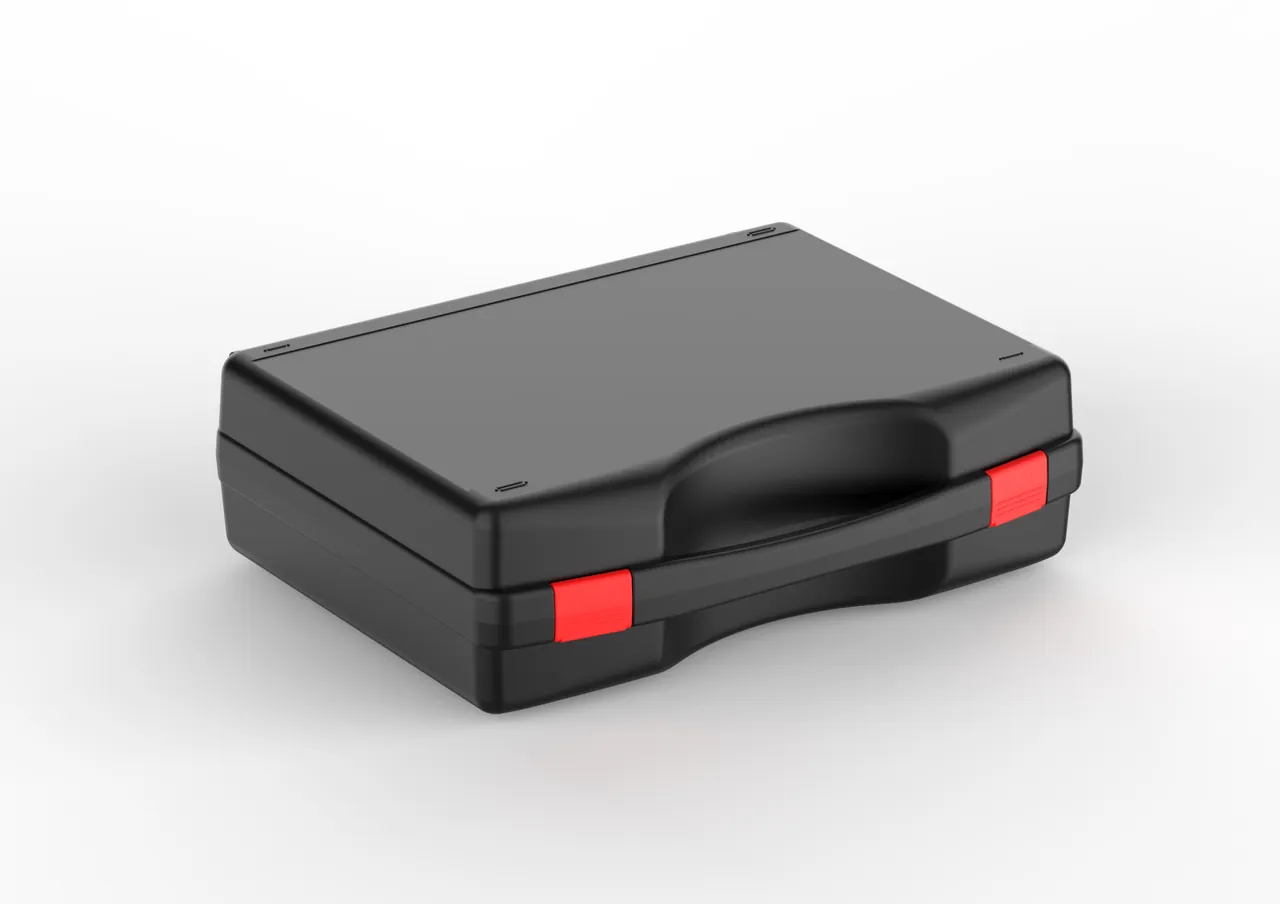
7. Insert Design: EVA Milling and Removable Dividers
An insert cushions, locates, and separates. If any of the three is missing, the weakness shows up after a few dozen trips.
EVA milled inserts are the first choice for food-processing spare-part cases:
- Density is tunable, typically 45 to 90 kg/m3 with the upper range for precision parts;
- Precise milling gives stable dimensions that do not distort with humidity;
- Edge sealing produces a dense, wipeable surface that resists oil and water absorption;
- Contour fitting locates each component and prevents movement in transit.
Removable dividers suit situations where specifications change frequently. Their advantage is flexibility; their cost is lower locating accuracy than a custom milled insert, and the slots themselves trap debris and need extra attention during cleaning. Where spare-part specifications are stable, a custom milled insert performs better overall.
Insert materials differ noticeably in compression behaviour and moisture uptake, so it is worth reviewing a comparison of protective case foam materials before fixing a grade.
Key insert design parameters:
- Interference fit: allow 1 to 3 mm of interference so the material's elasticity grips the component.
- Base cushion: generally no less than 20 mm, and 30 to 50 mm for heavy drive components.
- Hand clearance: leave 30 to 40 mm finger clearance at both sides, otherwise staff pull the component itself out of the case, tearing the insert and possibly damaging the part.
- Marking: engrave or print component name and specification directly at the corresponding insert position to reduce retrieval errors.
On batch projects, JUNZHJIA typically produces insert drawings from 3D equipment data and builds a first-article sample for trial fitting on the real component before tooling for mass production, which avoids the rework of a drawing that looked right but would not accept the physical part.
8. Sealing, Dust, and Wash-Down: IEC 60529 and GB/T 4208
An IP code has two digits: the first for solid particle protection from 0 to 6 including dust, the second for water from 0 to 9. Common needs in a food plant are:
- IP54: dust protected with limited ingress that does not impair operation, plus splash resistance. Suitable for cases carried short distances in indoor corridors.
- IP65: dust tight plus water-jet protection. Suitable near wash-down areas where spray may reach the case.
- IP67: dust tight plus temporary immersion, typically 1 metre for 30 minutes. Suitable where the case may fall into a tank or faces prolonged high humidity.
Three points must be emphasized:
- An IP rating is a conclusion under type-test conditions, not a permanent capability. A gasket ages, a latch deforms, or the shell is gouged, and practical protection falls.
- IP65 and IP67 differ mainly in water, since both reach dust class 6. Where there is wash-down but no immersion, IP65 is more economical.
- Distinguish clearly between empty-case protection and loaded-case protection. Most tests are run on a closed empty case; if a sharp component inside presses on the sealing face, actual sealing fails.
IEC 60529 and GB/T 4208 describe corresponding test methods. For domestic procurement it is advisable to cite GB/T 4208 in the technical agreement and state: "Dust and water testing shall be performed at the specified class; after testing there shall be no significant water or dust ingress."
For electronic spares, preventing static discharge matters alongside dust and water. VFDs and PLC modules damaged by electrostatic discharge generated through friction during transport are not rare, and the relevant measures are set out in this guide to ESD-shielded protective case design.
9. Corrosion and Chemical Resistance: Cleaners and Process Liquids
Chemical exposure in a food plant is more complex than in general industry and typically includes:
- Alkaline cleaners, mainly sodium hydroxide, which attack aluminium aggressively, so aluminium shells and aluminium insert hardware need caution;
- Chlorinated sanitizers such as sodium hypochlorite, which under certain conditions cause pitting in stainless steel and accelerate ageing of ordinary rubber gaskets;
- Acidic cleaners based on nitric or phosphoric acid, which corrode many metals and some plastics;
- Greases and organic acids, which over prolonged contact swell and deform some foam materials.
Handling guidance:
| Exposure type | Preferred materials | Materials requiring caution |
|---|---|---|
| --- | --- | --- |
| Alkaline cleaners | PP, HDPE, EVA | Aluminium, some coated parts |
| Chlorinated sanitizers | PP, HDPE | Standard nitrile, natural rubber gaskets |
| Acidic cleaners | HDPE, PP | Carbon steel, some metal inserts |
| Greases | Sealed EVA, PP | Unsealed EPE, PU foam |
Gasket material should be selected against both chemical and temperature duty: EPDM suits ambient service, while low-temperature cold-chain use calls for low-temperature silicone or a dedicated low-temperature compound so the gasket does not harden and lose resilience.
10. Low-Temperature Embrittlement in Chilled Areas
Cold stores, freezers, and chilled staging are normal environments in food plants. Low temperature affects two parts in particular: the shell and the gasket.
Shell embrittlement. Below the glass transition temperature, polymers shift from ductile to brittle fracture. Standard ABS cracks readily on impact at minus 18 C, which is why HDPE or low-temperature modified PP is recommended for cold stores. The test is simple: condition a material sample at the target temperature for 24 hours, then drop it and observe whether failure is cracking or denting.
Gasket hardening. Ordinary rubber rises in hardness and loses resilience at low temperature, so it fails to recover after compression and sealing is lost. For low-temperature service, confirm the gasket's low-temperature performance or select a lower hardness grade to compensate for the loss of elasticity.
Insert performance. EVA stiffens at low temperature and cushions less effectively. If the transport route includes prolonged cold exposure, increase cushion thickness or select a formulation with better low-temperature behaviour.
Condensate management. A component taken out of a cold store condenses rapidly and can raise internal humidity above 90 percent. Place a desiccant or replaceable moisture-absorbing module in the case, and dry the case promptly after opening so moisture does not linger and corrode metal parts.
11. Vibration and Impact Validation: ISTA, ASTM D4169, GB/T 4857
Transport testing is the most economical way to validate a design. The typical food-processing route is warehouse to in-plant vehicle to shop floor, or supplier to long-haul trunking to satellite plant warehouse to shop floor, and its shock signature is dominated by low-to-medium frequency vibration and manual handling drops.
Citable test frameworks:
- ISTA series: transport performance validation for packages, covering drop, vibration, and stacking, well suited to validating an individual spare-part case.
- ASTM D4169: a distribution-cycle performance test standard that combines test sequences according to distribution cycle and assurance level, suited to projects needing systematic validation.
- GB/T 4857 series: China's basic test methods for transport packages, covering drop, vibration, and stacking, convenient for domestic acceptance and contract citation. See the key points of GB/T 4857 transport packaging testing.
A recommended validation sequence:
- Define the representative load state, meaning the heaviest combination and least favourable centre of gravity, with components secured exactly as in service.
- Choose drop height from real handling height; manual handling commonly corresponds to 600 to 900 mm.
- Run fixed-frequency or random vibration testing and inspect insert displacement, latch loosening, and witness marks on components.
- Re-test sealing after the sequence to confirm the IP class has not failed.
- For precision parts, perform a functional check or calibration after testing rather than judging appearance alone.
One clarification: MIL-STD-810H and similar standards are often cited as method references, but they are methodology standards and do not constitute military certification. External communication should say "test methods referenced," never "military standard certified."
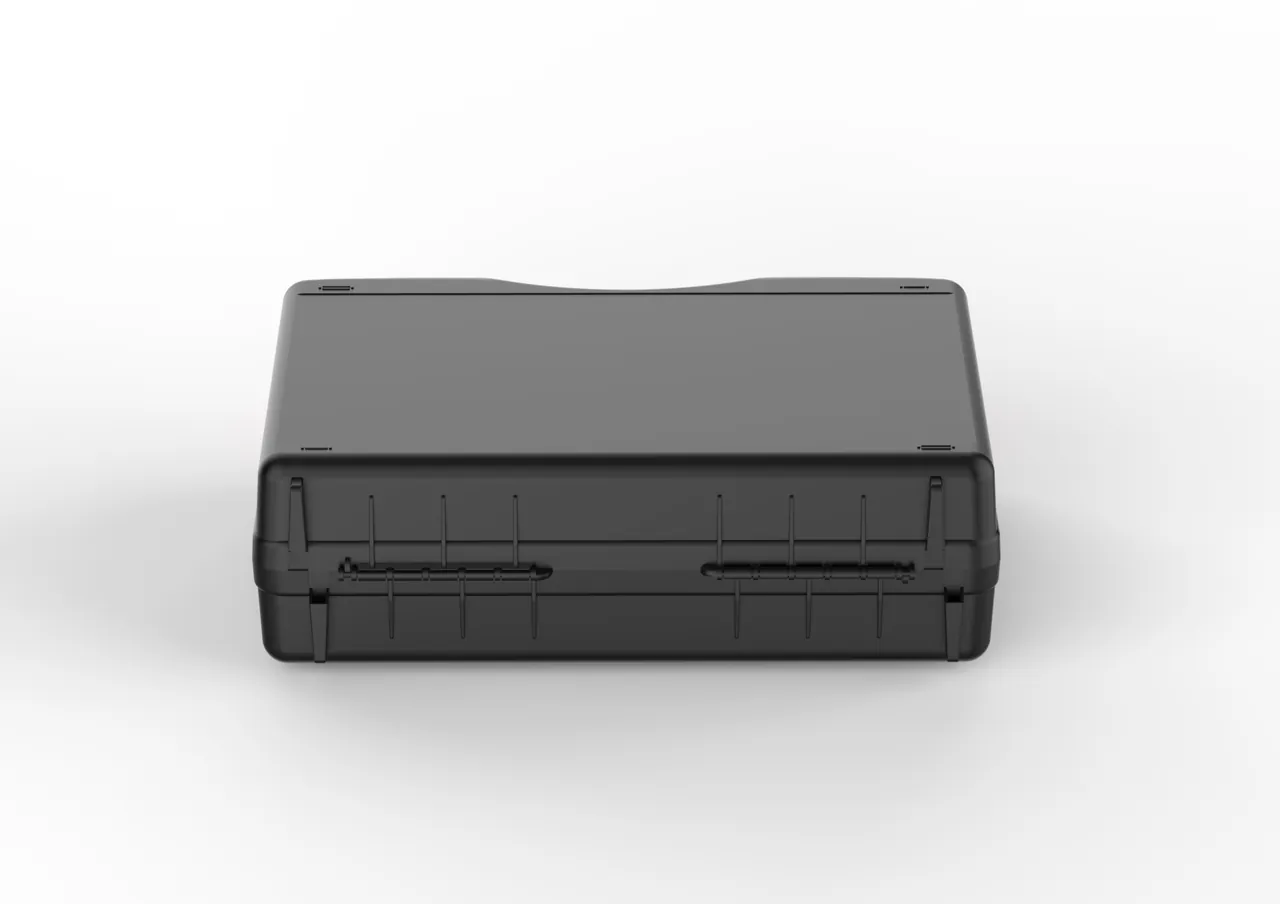
12. Latch, Hinge, and Gasket Selection
These components set the lower bound of case life, and most "failed within six months" complaints trace back to them.
Selection guidance follows the engineering logic in this toolbox hinge, latch, and gasket selection guide. Core conclusions:
- Hinges need a metal core. All-plastic hinges fatigue-crack under frequent opening; specify a metal pin or metal hinge boss.
- Latches need secondary security. After an impact during in-plant handling, a single-point latch can pop open; prefer two-point or self-locking designs.
- Gaskets must be replaceable. A gasket is a wear part and should be field-replaceable rather than co-moulded into a shell that must then be scrapped whole.
- Match gasket material to temperature. EPDM for ambient, low-temperature silicone or a dedicated compound for cold-chain service.
Gasket groove compression ratio is typically held between 20 and 30 percent. Too little compression leaks, too much accelerates permanent set. Where a client wants the ratio optimized for actual duty, JUNZHJIA can supply sample gaskets in several hardness grades for comparative testing.
13. Spare-Part Inventory, Marking, and Traceability
The case is only the carrier; what really determines downtime is whether the correct spare can be found within ten minutes.
A "one case, one code, one list" system is recommended:
- Numbering. Laser-mark or hot-stamp a serial number on every case and bind it to the asset register.
- Checklist. Include a rewritable checklist card listing component name, model, quantity, and shelf life.
- Colour coding. Green for available, yellow for awaiting replenishment, red for issued and not yet restocked, so status is visible at a glance.
- Fixed locations. Assign and label storage positions so parts are not merely known to exist but actually findable.
- Stocktaking. Sample-count weekly and full-count monthly, with discrepancies entering a traceability process.
For ageing items such as O-rings, gaskets, and seals, record the receipt date and recommended replacement interval on the checklist so that a part stored for three years does not leak the moment it is installed. Rubber items should also be stored away from light and heat and free from crushing deformation, ideally in original packaging with periodic hardness spot checks.
14. Acceptance, Cleaning Maintenance, and Life-Cycle Cost
The most common procurement mistake is comparing unit price alone. The true cost of a spare-part case should be assessed over its full life cycle:
Cost per trip = (purchase price + insert tooling amortization + annual maintenance) / (annual trips x service life in years)
Acceptance should follow a sampling plan, and the method described in this guide to AQL sampling for custom protective case acceptance applies directly. Key checks:
| Acceptance item | Method | Pass criteria |
|---|---|---|
| --- | --- | --- |
| Appearance and burrs | Visual plus hand check of interior | No sharp edges, no flash, no unsealed foam |
| Dimensions and fit | Trial-fit the actual component | Clearance matches drawing, no forced compression |
| Sealing class | Test per GB/T 4208 at the specified class | No significant water ingress after test |
| Latch life | Open-close cycling | Function normal after the agreed cycle count |
| Insert retention | Re-inspect after vibration | No displacement, no tearing |
| Material evidence | Document review | Resin grade and flame test reports complete |
For service-life management, the logic in this assessment of protective case service life evaluation is useful: track the three wear parts, the gasket, hinges, and latches, rather than waiting for the whole case to fail. Cleaning and maintenance should also run on a fixed cycle to prevent the habit of using a case until it can no longer be used at all.
Frequently Asked Questions
Q: Does a food-processing spare-part case need to be IP67?
A: Not necessarily; decide from the actual exposure environment. The second digit of an IP code indicates water protection, increasing from splash resistance to immersion. If the case is only carried short distances in indoor corridors, IP54 splash protection is usually enough. If it operates near a wash-down area where spray may reach it, specify at least IP65, combining dust tightness with water-jet protection. Only when there is genuine risk of falling into a tank or short immersion is IP67 justified. Clarify whether the rating applies to an empty or a loaded case, and require the supplier to provide test evidence at the corresponding class under GB/T 4208, whose methods correspond closely to IEC 60529. Over-specifying raises cost and dead weight and can actually increase the chance of handling drops.
Q: Can a spare-part case be used directly to hold raw materials or ingredients?
A: It is not recommended. The GB 4806 series consists of mandatory national standards for food-contact materials and articles and governs materials that touch food directly. A spare-part case is positioned as an indirect-contact or non-contact component and is not normally managed as a food-contact material. Once it is used as a holding container, however, it must be specified as food-contact compliant with documentation. A safer approach is function separation or physical zoning: the spare-part case carries spares and tools only, and where dual use as a material container is unavoidable, a removable inner tray or bag compliant with GB 4806 is used inside. Both parts can be cleaned and replaced independently, satisfying audits without paying food-contact certification cost across the whole case.
Q: A servo motor shows encoder zero drift after transport. How can this be prevented?
A: Encoder zero drift usually originates in axial shock and accumulated vibration. Four improvements help. First, leave a 5 to 10 mm cavity at the shaft end in the insert so the shaft never bears directly on it. Second, cushion the motor rear, where the encoder sits, with softer and thicker material. Third, do not ship with the coupling fitted, since it forms a lever arm that amplifies vibration loads. Fourth, place insert supports close to the motor's centre of gravity to reduce sway. It is also worth writing a post-test functional check into the acceptance clause rather than judging appearance alone. If a part needs recalibration before installation, the transport protection scheme is not yet acceptable.
Q: Why do cases crack when used in a cold store?
A: This is classic low-temperature embrittlement. Below the glass transition temperature, polymers shift from ductile to brittle fracture, and standard ABS cracks after impact at minus ten to twenty degrees. The solution is a material with better low-temperature performance such as HDPE or low-temperature modified PP, not a thicker wall. The test is straightforward: condition a material sample at the target temperature for 24 hours and drop it, then observe whether failure is cracking or denting. Also remember that gaskets harden and lose resilience at low temperature, so a low-temperature compound or a lower hardness grade should compensate.
Q: The case never dries fully after washing. What is the cause?
A: In most cases the structure contains a layer that admits water easily and drains poorly. Three causes are common: a gap between liner and shell with no drainage path, so water can only evaporate; a flat case base with no flow channel, so water pools and dries naturally; and insufficient corner radii leaving true right angles as dead spots. The remedy is a closable bottom drain with flow channels, an insert design that avoids closed cavities, and a post-wash blotting-paper check for residual water. For cases entering a clean zone, drying verification should be a mandatory step in the work instruction rather than a judgement by feel.
Q: Does MIL-STD-810H mean the case holds military certification?
A: No. MIL-STD-810H is an environmental test methodology standard describing how to simulate and evaluate environmental effects. It can serve as a method reference for vibration, shock, and temperature-humidity testing, but it must be described as "test methods referenced" and never as "military standard certified" or as evidence of military qualification. For food-processing spare-part cases, a more realistic validation path is to cite the ISTA series, ASTM D4169, or the GB/T 4857 series for transport package testing, combined with actual in-plant handling drop heights and transport vibration spectra, which yields conclusions closer to real service duty.
Q: How often should a spare-part case gasket be replaced?
A: There is no fixed interval; judge by condition rather than calendar time. A gasket is a wear part whose main failure modes are compression set, hardening and cracking, and adhesive separation. Assess in three steps: visually check for cracks, deformation, or a gasket that has come out of its groove; press it to test whether resilience has clearly dropped; and run a waterproof re-test at the specified GB/T 4208 class. In cold stores and wash-down areas gaskets age faster, so inspection intervals should be shortened. Design selection should ensure the gasket is field-replaceable on its own, since co-moulding it into the shell forces whole-case scrapping, an effect on life-cycle cost that is often underestimated.
Q: Is a milled EVA insert or a removable divider system better?
A: It depends on how stable the spare-part specifications are. If models are fixed and dimensions change rarely, a custom milled EVA insert is usually better: locating accuracy is high, dimensions are stable and unaffected by humidity, the sealed surface is dense and wipeable, and contour support protects precision parts more reliably. If specifications change frequently and one case must serve many combinations, a removable divider system offers more flexibility, though its locating accuracy is lower and the slots gather debris that needs extra attention when cleaning. A middle path is removable dividers combined with replaceable milled blocks, which balances adaptability against locating precision.
Q: What principles should determine spare-part case size and quantity?
A: Work backwards from the spare-part list and the usage scenario, not forwards from existing shelf dimensions. Three steps help. First, survey the external dimensions and weight of every circulating spare and identify the heaviest and largest. Second, derive the internal cavity dimension from the intended combination, allowing 1 to 3 mm interference and 30 to 40 mm hand clearance. Third, calculate the loaded weight and confirm it stays within a safe manual handling load, splitting into two cases if necessary. On quantity, configure critical spares at one part per case and consumables at multiple parts per case, and provide a dedicated on-site case for high-turnover wear items so trips back to the warehouse are reduced.
Conclusion and Further Reading
Selecting a food-processing component case is essentially about achieving hygiene constraints, precision protection, and fast retrieval at the same time. The implementation path compresses into five steps: build a graded spare-part inventory, define the material compliance boundary from contact relationships, set the protection class from the exposure environment, solve locating and cushioning through insert design, and verify through transport testing and acceptance sampling. What determines cost is not unit price but the replaceability of the three wear parts, the gasket, hinges, and latches, along with whether the liner can be removed as a whole for cleaning.
For buyers and maintenance managers, the three most practical rules are: write cleanability and dryability into the technical agreement, write the protection class test basis into the acceptance clause, and write post-test functional checks for precision parts into the delivery conditions. With those three in place, a spare-part case fleet will run reliably for years across cold stores, wash-down areas, and clean zones.
When a project requires insert design for specific component models, temperature-rated gasket selection, or OEM/ODM volume supply, JUNZHJIA can provide matching structure drawings, material certificates, and test-basis documents, and can schedule first-article trial fitting to the project timeline.
Further Reading