


Cold-chain food losses rarely come from a lack of cold. They come from temperature fluctuation and broken chains. A case of frozen food exposed for twenty minutes during loading, staging, or handover can develop melt-and-refreeze ice crystals on the surface, degrading both quality and shelf life, while fresh produce waiting on a summer loading dock can see internal temperature rise by more than 5 C in ten minutes. The job of a cold-chain food transport case is not to be cold but to be stable: use insulation to slow the temperature rise, use a cold source to hold a steady temperature, use sealing and pressure equalization to preserve the internal environment, and make the whole process temperature-recordable and traceable. At the standards level, temperature-controlled transport requirements can reference GB/T 22918 for perishable food, cold-chain logistics hygiene management can reference GB 31605, enclosure protection can be judged under IEC 60529 / GB/T 4208, and transport performance can be validated through ISTA cold-chain sequences and the GB/T 4857 series. JUNZHJIA provides insulation structure design, gel pack cavity configuration, low-temperature gasket selection, and OEM/ODM volume supply for cold-chain circulation cases, along with material and test-basis documentation.
Four problems dominate day-to-day operations. Cases are thick enough but do not hold temperature long enough because the fill rate is too high and leaves no air circulation space. Water is found inside the case on the return leg because condensate was not drained, leading to mould and odour. Temperature records are missing, so handover disputes cannot be evidenced. Latches crack in the cold because the material lost toughness at low temperature. All four can be avoided through parameter decisions and process design at the selection stage. This article follows the sequence of temperature metrics, scenario differences, insulation structure, cold-source configuration, loading management, sealing and compliance, records and traceability, transport validation, and acceptance and maintenance.
Table of Contents
- 1. Temperature Control Challenges in Cold-Chain Food Transport
- 2. Temperature Metrics and Standards Trails
- 3. Different Requirements for Fresh and Frozen Products
- 4. Insulation Structures and Material Comparison
- 5. Configuring Gel Packs and Phase-Change Materials
- 6. Fill Rate, Door Openings, and Hold Time
- 7. Sealing Class and Pressure Equalization
- 8. Food-Contact Compliance: GB 4806
- 9. Hygienic Design: HACCP Thinking and Cleanable Architecture
- 10. Temperature Records and Broken-Chain Traceability
- 11. Vibration and Drop Validation: ISTA and GB/T 4857
- 12. Latches, Hinges, and Low-Temperature Gasket Selection
- 13. Handover, Marking, and Batch Management
- 14. Acceptance, Cleaning Maintenance, and Life-Cycle Cost
- Frequently Asked Questions
- Conclusion and Further Reading
1. Temperature Control Challenges in Cold-Chain Food Transport
The temperature control challenge in cold-chain food transport can be summarized as four "nots."
First, not cold but stable. Frozen food fears not insufficient cold but repeated passage through the ice crystal formation zone. Repeated freeze-thaw cycles destroy cell structure, release drip, degrade texture, and deposit frost on packaging. The control target should therefore address fluctuation amplitude, not just peak temperature.
Second, not the case but the chain. A case of food passes from cold store release, loading, trunking, deconsolidation, delivery, and store acceptance, with multiple openings and handovers. Any prolonged opening causes significant temperature rise, and no case can compensate for a lid left open for half an hour.
Third, not thickness but matching. Increasing insulation thickness does extend hold time, but returns diminish and dead weight rises. What really matters is matching the insulation's thermal conductivity, the sealing integrity, and the cold-source configuration. A sufficiently thick case with poor sealing can underperform a slightly thinner case that seals well.
Fourth, not filling but leaving space. Overfilling blocks air circulation and creates a temperature gradient inside the case, with the region near the gel pack too cold and the far region too warm. The fill rate must therefore be deliberately limited.
In one sentence: cold-chain case performance does not depend on a single parameter but on how well insulation, sealing, cold source, and loading are matched.
2. Temperature Metrics and Standards Trails
Building an executable set of metrics is the precondition for selection and acceptance. At least five items should be defined:
- Target temperature range, for example frozen below minus 18 C, chilled 0 to 4 C, or fresh at ice temperature minus 1 to 2 C;
- Permitted fluctuation, for example no more than plus or minus 2 C during transport;
- Minimum hold time, for example no less than 6 hours from release to acceptance;
- Maximum allowable temperature, for example a ceiling that must not be exceeded at any point;
- Recording requirement, for example a reading every 5 minutes with an exportable trace.
Citable standards trails:
- GB/T 22918: technical requirements for temperature-controlled transport of perishable food, usable as a reference for temperature-transport parameters and operating requirements;
- GB 31605: the national food safety standard covering cold-chain logistics hygiene, addressing hygiene management across the cold chain;
- ISTA 7D and similar cold-chain sequences: used to simulate temperature loads across a temperature-controlled distribution route;
- GB/T 4857 series: basic test methods for transport packages, including drop, vibration, and stacking, used to validate structural reliability;
- IEC 60529 / GB/T 4208: determination of enclosure dust and water protection class.
Note that specific temperature requirements for particular product categories may be further detailed by industry codes or company standards. Selection should follow the applicable regulation in each case, and the technical agreement should state the agreed values explicitly.
3. Different Requirements for Fresh and Frozen Products
Fresh and frozen products differ markedly in what they demand of a case, and treating them as a single "cold-chain box" type usually means both fall short.
| Dimension | Fresh (chilled or ice temperature) | Frozen products |
|---|---|---|
| --- | --- | --- |
| Target temperature | 0 to 4 C or ice temperature minus 1 to 2 C | Typically minus 18 C or lower |
| Primary risk | Microbial growth as temperature rises | Quality loss and frost from repeated freeze-thaw |
| Permitted fluctuation | Tighter, ideally within plus or minus 2 C | Focus on whether the ice crystal zone is crossed |
| Cold source | Gel packs with phase change near 0 C | Low-temperature gel packs with phase change below minus 18 C |
| Insert needs | Crush protection, protection of packaging | Crush protection, preventing frost adhesion to packaging |
| Cleaning focus | Blood and juice residue | Thaw water and condensate |
| Typical hold time | 4 to 8 hours | 6 to 12 hours or longer |
The table shows that the phase-change temperature of the cold source must match the target temperature zone. Using a gel pack with a 0 C phase-change temperature for frozen food does not maintain minus 18 C; during its freezing process it can release heat and act as a heat source. This is frequently overlooked in procurement because gel packs look similar and the parameters are not prominently labelled.
4. Insulation Structures and Material Comparison
Insulation performance is determined by the thermal conductivity of the material combined with structural integrity. Common insulation materials compare as follows.
| Insulation material | Thermal conductivity (typical, W/m.K) | Insulation efficiency | Dead weight | Cost | Typical use |
|---|---|---|---|---|---|
| --- | --- | --- | --- | --- | --- |
| EPS foam | About 0.033 to 0.040 | Medium | Light | Low | Short deliveries, one-way |
| PU polyurethane foam | About 0.020 to 0.028 | Good | Medium | Medium | Standard cold-chain circulation |
| VIP vacuum insulation panel | About 0.004 to 0.008 | Excellent | Light | High | Long hold time, space-constrained |
| Aerogel composite layer | About 0.013 to 0.020 | Excellent | Light | High | Premium long-hold applications |
| Hollow sheet with air layer | Structure dependent | Medium | Light | Low | Inner support and separation |
Selection logic:
- Short deliveries (2 to 4 hours): EPS or PU is sufficient, with the emphasis on sealing and loading method;
- Medium to long deliveries (6 to 12 hours): a PU foam shell is recommended, combined with a sensible cold-source configuration;
- Long duration or extreme conditions (over 12 hours, hot loading dock): a VIP vacuum insulation panel is worth considering because its conductivity is much lower than conventional materials, but the panel must not be drilled or cut arbitrarily or the vacuum layer is destroyed;
- Structural strength: insulation does not carry load, so the shell must bear stacking and impact. HDPE or copolymer PP shells have lower low-temperature embrittlement risk.
Materials behave quite differently in extreme temperatures, so it is worth reviewing the low-temperature performance data in this analysis of protective case materials in extreme temperature environments before fixing a specification.
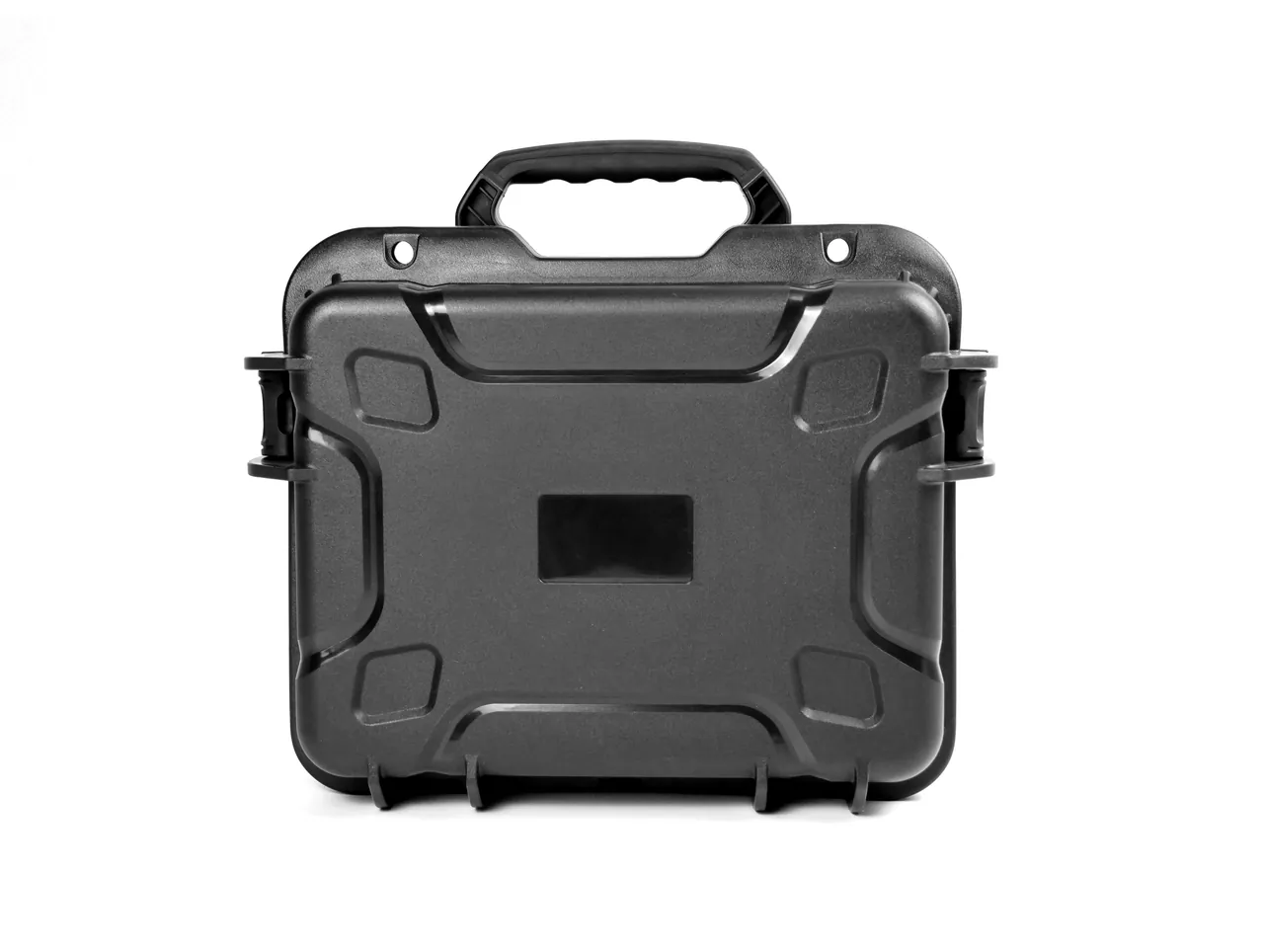
5. Configuring Gel Packs and Phase-Change Materials
Cold-source configuration is the key variable in cold-chain performance. Poor configuration produces one of two outcomes: insufficient cooling capacity so temperature rises in the later part of the journey, or excessive capacity causing local freezing damage.
A basic configuration calculation, using an engineering-estimate approach:
- Estimate total heat load on the case, including leakage through the insulation, air exchange heat when the lid opens, and respiration heat from the produce itself where relevant;
- Calculate the total cooling energy required for the target hold time;
- Convert to required gel pack mass using the latent heat per unit mass of the pack;
- Add a 20 to 30 percent safety margin;
- Validate by physical testing and adjust the configuration from the results.
Phase-change temperature selection:
- Chilled and ice-temperature transport: choose gel packs with a phase-change temperature near 0 C;
- Frozen transport: choose low-temperature gel packs with a phase-change temperature of minus 18 C or lower;
- Mixed loads: do not mix gel packs with different phase-change temperatures in one case, since this produces clear temperature unevenness.
Placement:
- Gel packs should sit against the case walls or above the product, not pressed directly onto food packaging where they cause local freeze damage;
- Leave spacing between gel packs to allow air circulation;
- Use a divider rack to separate gel packs from food while maintaining airflow passages;
- Pre-chill gel packs thoroughly to the set temperature before loading, so heat is not introduced with the pack.
Replaceability and maintenance. Gel packs are wear items and develop deformed shells, leaking seams, and reduced capacity over time. Design a removable cold-source cavity so packs can be replaced individually without scrapping the whole case.
6. Fill Rate, Door Openings, and Hold Time
These two operating variables are the most frequently underestimated and are the main reason that specifications look adequate but real performance is not.
Fill rate. An empirical range of 70 to 80 percent of internal design volume is recommended. Overfilling blocks air circulation and creates a temperature gradient, while underfilling leaves relatively excessive cooling capacity that can cause local overcooling and wastes space. The practical approach is to load 70 to 80 percent of design volume and ensure an airflow path exists between gel packs and product.
Door openings and duration. Every opening releases cold air and admits moisture. Empirically, the temperature rise caused by one minute of open lid may take 15 to 30 minutes to recover. Measures to reduce the impact include:
- Use compartmentalized or layered design so retrieving one item does not require opening the whole case;
- Place frequently used items near the opening;
- Consolidate openings during handover rather than opening repeatedly;
- Record opening times and the resulting internal temperature change to refine procedures.
Validating hold time. Hold time should be validated under real conditions: place a temperature logger inside the case and test with the real load, real ambient conditions, and real opening frequency and duration, recording the temperature curve over time, rather than relying only on theoretical data from a supplier.
7. Sealing Class and Pressure Equalization
The sealing integrity of a cold-chain case directly determines insulation performance. A single leak causes continuous cold-air loss and moisture ingress.
Sealing class. The dust and water protection class of a closed case can be determined under IEC 60529 / GB/T 4208. A common target in cold-chain work is IP65, combining dust tightness with water-jet protection, and IP67 may be considered where wash-down or short immersion is possible. Two points need emphasis: an IP rating is a conclusion under type-test conditions that degrades as gaskets age or the shell is gouged, and a clear distinction must be drawn between empty-case and loaded-case protection.
Pressure equalization. This is the most commonly overlooked structural detail in cold-chain work. When a case leaves a cold store for an ambient environment, the air inside warms and expands; moving the other way creates negative pressure. The differential deforms the gasket, makes the lid hard to open, and under negative pressure can draw in moist external air that accelerates frosting. Fitting a pressure equalization valve equalizes internal and external pressure while maintaining the IP class; the principle and selection points are described in this guide to pressure equalization valves for protective cases.
Condensate management. Cold-chain cases commonly show condensation on the inner walls on the return leg. Provide flow channels and a closable drain at the base, and drain and dry after the return trip. A replaceable moisture-absorbing module can also be placed inside to reduce mould and odour risk.
8. Food-Contact Compliance: GB 4806
A cold-chain case sits closer to food than an equipment case does, because food, packaged or otherwise, is often placed directly inside, and bulk fresh product may be carried loose.
The compliance boundary:
- The GB 4806 series comprises mandatory national standards for food-contact materials and articles, governing materials that contact food directly, including inner liners, inner trays, and liner bags;
- If the case is used to hold food directly, for example bulk fresh produce, seafood, or loose frozen product, the liner or inner tray material must satisfy the applicable food-contact requirements with documented compliance;
- If food always enters the case in complete packaging, the case is an indirect-contact item and is not normally managed as a food-contact material, though the liner should still use low-odour, low-migration materials.
Practical advice:
- Prefer a two-level structure. The outer insulated case handles temperature control while a compliant inner tray or bag handles food containment and cleaning, so both can be replaced independently.
- Keep materials traceable. Supply resin grades and compliance statements, and avoid sheet from unidentified recycled sources that can bring odour and extractables risk.
- Avoid odour-absorbing materials. Foam liners readily absorb fish, blood, and grease odours and are hard to clean, so cold-chain applications should use washable EVA or plastic liners.
- Keep cleaning reachable. The liner should be removable as a whole, with no dead corners in the base or around the rim.
Compliance note: cold-chain hygiene management normally identifies critical control points along HACCP lines, in which case case cleaning and temperature control are often listed as monitored steps. Keeping cleaning records together with temperature records is the most effective way to be audit-ready.
9. Hygienic Design: HACCP Thinking and Cleanable Architecture
Hygiene risk in a cold-chain case comes from three residues: blood and juice, thaw water and condensate, and grease and protein. All three share the same traits: they linger easily, support microbial growth, and generate odour.
Cleanable design points:
- Rounded corners and no dead ends. Avoid right angles and deep textures inside the case to reduce residue area.
- Liner removable as a whole. Once out, it can be scrubbed, rinsed, sanitized, and air-dried, with no water trapped in a closed layer.
- Drainage. Provide flow channels and a closable drain at the base so the return leg can be fully emptied.
- Low-temperature sanitizer resistance. Confirm tolerance to the low-temperature sanitizers in use so the material does not crack after prolonged exposure.
- Verifiable drying. Check corners and crevices for residual water with blotting paper after washing rather than judging by feel.
Recommended cleaning frequency: empty and wipe after every delivery; deep clean daily; sanitize weekly with records; inspect gaskets, hinges, and drains monthly. The full method is described in this guide to cleaning and maintaining protective cases.
Odour control. Once odour penetrates a material it is very hard to remove, so prevention beats treatment: avoid leaving blood or juice in the case, use a washable liner, leave the lid open to ventilate when the case is not in use, and clean with a neutral detergent rather than a strong alkaline chemical that ages the surface and makes it more odour-absorbent.
10. Temperature Records and Broken-Chain Traceability
Temperature records are the strongest evidence in a cold-chain handover dispute and are how traceability requirements are actually implemented.
Recording options:
| Option | Advantages | Limitations | Typical use |
|---|---|---|---|
| --- | --- | --- | --- |
| Single-use indicator label | Low cost, intuitive | Records only extremes, no curve | Short deliveries, one-way |
| Electronic temperature logger (internal) | Exportable curve, good accuracy | Needs retrieval and readout | Standard circulation needing evidence |
| Wireless temperature and humidity logger | Real-time upload with alarms | Higher cost, needs network | High-value goods, long trunking |
| Vehicle or warehouse monitoring system | Covers the whole chain | Applies to a batch rather than one case | Trunking and storage |
Usage points:
- Placement. Put the logger at the most representative position, such as the product centre or away from the gel pack, not against the gel pack itself.
- Interval. A reading every 5 to 15 minutes is generally recommended, and can be tightened on long trunking routes.
- Export and management. Export data after every delivery and archive it linked to the handover document.
- Alarm thresholds. Set upper and lower limits, with any excursion triggering a review process.
- Traceable fields. Case serial number, loading time, release temperature, arrival temperature, and opening record.
Binding temperature records to case serial numbers enables per-case traceability. When a quality dispute arises, the specific case and time window can be located immediately rather than offering only an average for the whole vehicle.
11. Vibration and Drop Validation: ISTA and GB/T 4857
A cold-chain case must insulate and also survive transport impact. Once the structure deforms, the insulation layer can open a gap and thermal performance drops quickly.
Typical route shock signature: van or refrigerated truck trunking vibration, manual loading drops, loading-dock trolley impacts, and last-mile road irregularities, dominated by low-to-medium frequency vibration and manual handling drops.
Citable test frameworks:
- ISTA series: transport performance validation for packages, covering drop, vibration, and stacking. For temperature-controlled routes, sequences such as ISTA 7D can be referenced, and the project sequence and pass logic are described in this overview of ISTA transport testing procedure.
- GB/T 4857 series: China's basic test methods for transport packages, covering drop, vibration, and stacking, convenient for domestic acceptance and contract citation. See the key points of GB/T 4857 transport packaging testing.
A recommended validation sequence:
- Define the representative load state, including the heaviest combination with gel packs and product installed;
- Choose drop height from real handling height; manual handling commonly corresponds to 600 to 900 mm;
- Run vibration testing and inspect the shell, gasket, and insulation for displacement or cracking;
- Re-test sealing class and thermal performance to confirm no significant degradation;
- Check that the cold-source cavity retains packs reliably and prevents them moving inside the case.
One clarification: MIL-STD-810H and similar standards are often cited as method references, but they are methodology standards and do not constitute military certification. External communication should say "test methods referenced," never "military standard certified."
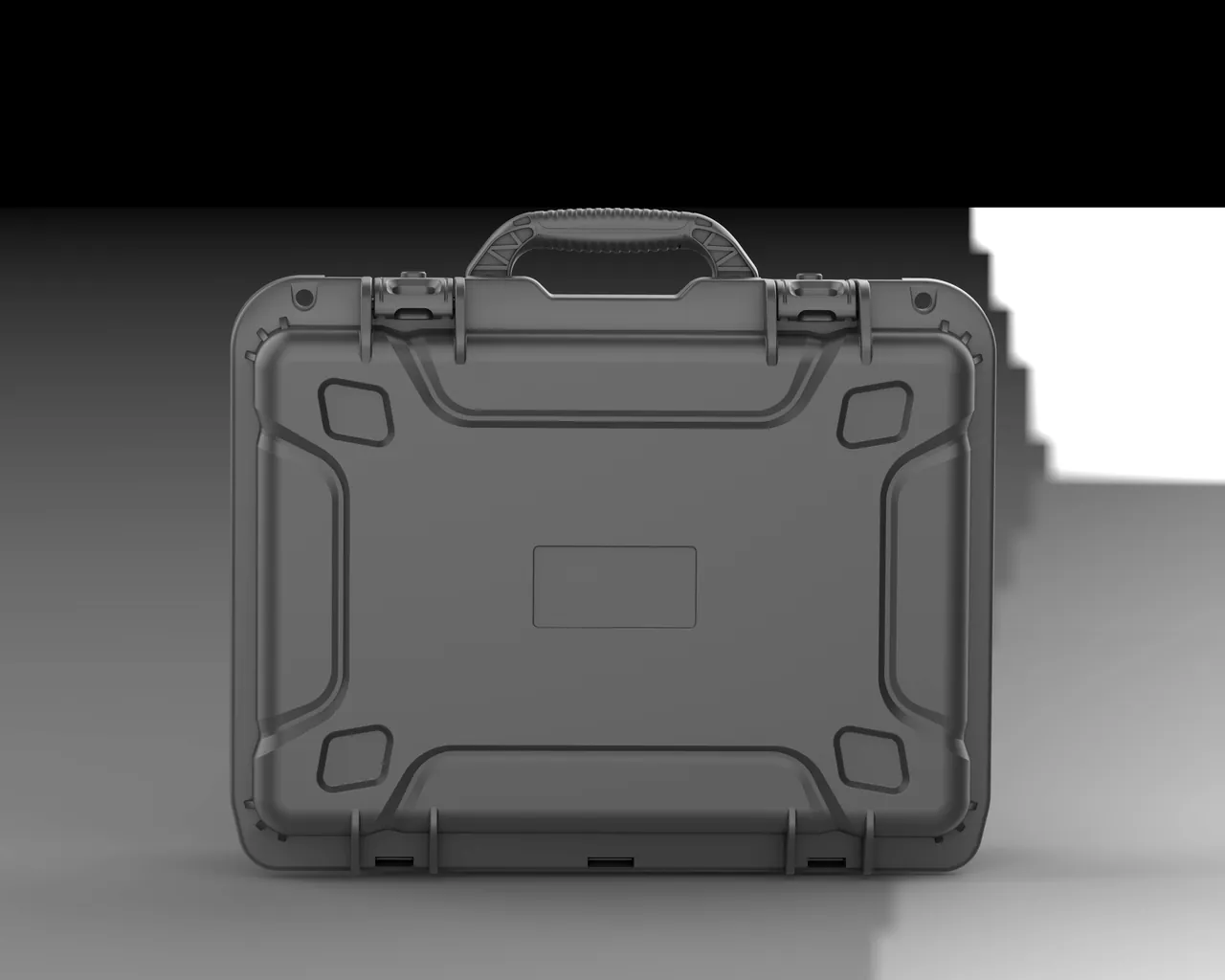
12. Latches, Hinges, and Low-Temperature Gasket Selection
Low temperature is harder on hardware than ambient conditions, and selection errors here are the main cause of cases failing after a single season.
Low-temperature embrittlement. Standard plastics lose toughness in the cold and latches crack on impact. Recommendations:
- Use materials with good low-temperature performance for hinges and latches, or use metal reinforcement;
- Hinges should have a metal pin or metal hinge boss to avoid fatigue cracking in all-plastic designs;
- Prefer two-point or self-locking latches so an impact during handling cannot pop them open.
Low-temperature gaskets. An ordinary rubber gasket hardens at low temperature, loses resilience, fails to recover after compression, and sealing is lost. Selection advice:
- Confirm the gasket's low-temperature performance and, where necessary, specify low-temperature silicone or a dedicated low-temperature compound;
- Consider a lower hardness grade to compensate for lost elasticity;
- Ensure the gasket is field-replaceable so the whole case need not be scrapped.
Details of low-temperature sealing and hinge selection follow the engineering method in this toolbox hinge, latch, and gasket selection guide. Gasket groove compression ratio is typically held between 20 and 30 percent, and can be adjusted in cold-chain service to compensate for hardening. Where optimization against actual duty is needed, JUNZHJIA can supply sample gaskets in different hardnesses and materials for low-temperature comparative testing.
13. Handover, Marking, and Batch Management
Cold-chain handover is characterized by tight timing, many steps, and easily blurred responsibility, so marking and records must be simple and error-resistant.
Marking recommendations:
- Case serial number bound to the asset register;
- Product category and target temperature range, for example "frozen below minus 18 C";
- Loading time and required arrival time;
- Gel pack count and pre-chill temperature;
- Cleaning status colour code, with green for available, yellow for awaiting wash, and red for awaiting repair.
Handover recommendations:
- Release confirmation. Record release time, initial internal temperature, and gel pack condition.
- Transport record. The temperature logger collects automatically without manual intervention.
- Arrival confirmation. Record arrival time, internal temperature, and external condition, signed by both parties.
- Exception handling. When temperature exceeds the threshold, trigger a review process and record the disposition.
- Return-leg management. Empty, drain condensate, dry, and mark status by colour code.
Batch management. Case serial numbers for one consignment should be recorded on the same handover document so that any issue can be traced by batch. Use water-resistant labels or silkscreen numbering, since ordinary paper labels fall off quickly in humid conditions.
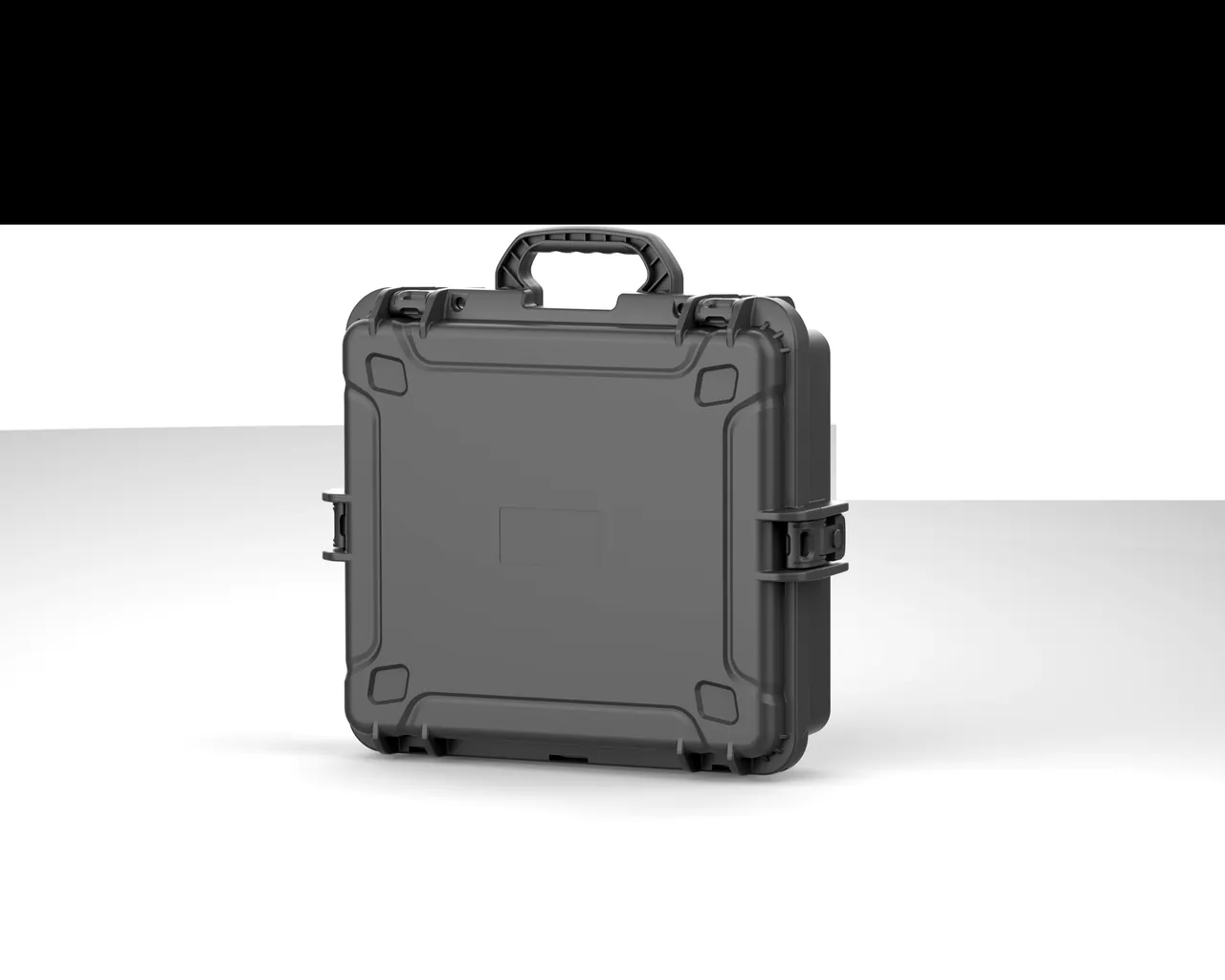
14. Acceptance, Cleaning Maintenance, and Life-Cycle Cost
The purchase price of a cold-chain case is only part of total cost; gel pack replacement, cleaning labour, and quality loss usually account for more.
Cost per delivery = (purchase price + gel pack amortization + annual maintenance and cleaning + quality loss) / annual deliveries
Acceptance priorities:
| Acceptance item | Method | Pass criteria |
|---|---|---|
| --- | --- | --- |
| Thermal performance | Measured hold time including real opening frequency | Meets the agreed duration with no threshold exceedance |
| Sealing class | Test per GB/T 4208 at the specified class | No significant water ingress after test |
| Pressure equalization | Lid-opening test after hot-cold cycling | Lid opens smoothly with no noticeable pressure suction |
| Low-temperature toughness | Drop test after cold conditioning | Shell and latches do not crack |
| Liner cleanability | Load a simulant then clean | No residue, no odour, fully dryable |
| Material and compliance | Document review | Resin grade and food-contact compliance statements complete |
Life management. Focus on four items: gaskets, latches, hinges, and gel packs. A gel pack showing bulging, leakage, or a clear drop in holding time should be replaced immediately. For overall case life, the logic in this assessment of protective case service life evaluation applies.
Maintenance cycle: clean daily, sanitize weekly with records, inspect sealing and drainage monthly, and re-test thermal performance quarterly. The quarterly thermal re-test is the most effective way to detect performance that is quietly degrading.
Frequently Asked Questions
Q: How should the hold time of a cold-chain food transport case be determined?
A: Determine it from the real distribution route rather than from theoretical values. First define four parameters: target temperature range, such as frozen below minus 18 C or chilled 0 to 4 C; permitted fluctuation, such as plus or minus 2 C; the maximum time from release to acceptance; and the number and duration of lid openings. Then run a measured hold-time validation under the least favourable conditions, placing a temperature logger at the product centre and recording the full curve under the real fill rate, real ambient temperature, and real opening frequency. At the standards level, GB/T 22918 on temperature-controlled transport of perishable food can serve as a reference for parameters and operating requirements, and cold-chain logistics hygiene management can reference GB 31605. Theoretical hold times from suppliers are usually measured under ideal conditions and can differ substantially from reality, so measured validation should be written into the technical agreement.
Q: Is a colder gel pack always better?
A: No, what matters is matching the phase-change temperature to the target zone. The phase-change temperature is the point at which a gel pack holds a relatively constant temperature while freezing or melting. Using a gel pack with a 0 C phase-change temperature to protect frozen food cannot hold the case at minus 18 C, and during its own freezing process it can release heat and act as a heat source. Conversely, using a minus 18 C pack to control temperature for chilled fresh produce easily causes local freeze damage. The correct approach is to select the phase-change temperature to match the target zone for each category: near 0 C for chilled and ice-temperature transport, minus 18 C or lower for frozen. Do not mix packs with different phase-change temperatures in one case, since the result is clear temperature unevenness.
Q: Can a chilled case and a frozen case be used interchangeably?
A: For short durations it is possible, but long-term sharing is neither economical nor trouble-free. The two differ not only in cold-source configuration but also in insulation design and sealing requirements. A case built for frozen use needs thicker insulation and a lower phase-change cold source, so using it for chilled duty amounts to over-design with more dead weight, higher cost, and harder handling. Using a chilled case for frozen food makes it very difficult to hold minus 18 C over a long delivery. A better approach is to configure cases separately by main category and mark the applicable temperature zone and colour code clearly to prevent misuse on site. Where flexibility is genuinely needed, use a common insulated case with replaceable cold-source modules so different phase-change temperatures can be swapped in for different categories.
Q: Thermal parameters meet spec but real deliveries still exceed temperature limits. Why?
A: In most cases the problem is not the case but three operating variables. First, an excessive fill rate: loading above 80 percent of design volume blocks air circulation and creates a temperature gradient, so stay within 70 to 80 percent. Second, openings that are too frequent or too long: the temperature rise from one minute of open lid may take 15 to 30 minutes to recover, and repeated opening during handover is particularly damaging. Third, inadequate gel pack pre-chilling, since loading warm packs directly consumes effective cooling capacity. When investigating, check in the order of fill rate, opening record, and gel pack pre-chill temperature, and compare the logger curve against the operating record, which usually locates the cause quickly.
Q: Water appears on the inner walls after a cold-chain case returns. How should it be handled?
A: Condensate is normal in cold-chain work; what matters is draining and drying it. Address it in three ways. Structurally, the base should have flow channels and a closable drain that is opened and emptied on the return leg. On materials, the liner should be washable and non-absorbent, avoiding foam liners that are extremely hard to dry once wet and readily produce odour. Procedurally, write empty, drain, dry, and ventilate with the lid open into a fixed sequence and include it in handover confirmation. If the case repeatedly shows frost or heavy condensation on the inner walls after moving from a cold store to ambient conditions, consider fitting a pressure equalization valve to reduce moist external air being drawn in by differential pressure.
Q: What waterproof rating does a cold-chain case need?
A: In cold-chain service, sealing is primarily about thermal performance and hygiene rather than waterproof use. A common target is IP65, combining dust tightness with water-jet protection, which covers wash-down and rain-exposed loading. IP67 may be considered where there is a risk of falling into a tank or short immersion. The basis can reference IEC 60529 and GB/T 4208. Three points need attention: an IP rating is a conclusion under type-test conditions that degrades as gaskets age, so periodic re-testing is advisable; empty-case and loaded-case protection should be distinguished; and for a cold-chain case, sealing integrity matters mainly because it prevents air exchange and therefore preserves temperature control, so gasket condition should be inspected more often than in general applications.
Q: Where should a temperature logger be placed inside the case?
A: Place it at the most representative position, normally at the product centre or away from the gel pack, not against the gel pack or the case wall. There are two reasons. A point near the gel pack records a local minimum that does not reflect the temperature the food actually experiences, while a point near the wall is more affected by the external environment and fluctuates more. Where a clear gradient exists inside the case, consider two measurement points, one near the gel pack and one at the product centre, to quantify the gradient and refine the cold-source configuration. A recording interval of 5 to 15 minutes is generally recommended, tightened on long trunking routes. Export the data after each delivery and archive it linked to the handover document and case serial number to build a per-case traceability record.
Q: What kind of liner should a cold-chain case use?
A: In cold-chain service, prioritize washability and non-absorbency over cushioning. Foam materials, particularly unsealed EPE and PU, absorb blood, juice, and thaw water, are hard to dry, and readily produce odour, so they are not recommended as cold-chain liners. Use a removable EVA liner or a plastic inner tray instead: the former has a dense, wipeable surface while the latter cleans more thoroughly. Where cushioning and separation are also needed, the thickness and structure can be determined using the method in this guide to cushion liner design, with an air circulation channel left between liner and case wall. Where a liner must conform to irregular packaging, a sealed-edge milled EVA design works, but the bores must not form closed cavities so that drainage and ventilation remain possible.
Q: What service life can be expected from a cold-chain case?
A: There is no single figure; condition-based assessment is the right approach. Four wear items dominate: gaskets, which harden, deform, and come out of their grooves; latches and hinges, which suffer low-temperature cracking and fatigue; gel packs, which bulge, leak, and lose capacity; and the insulation layer, which can develop gaps or delaminate after impact. Inspect external condition and sealing monthly and re-test thermal performance quarterly. Replace the relevant component when hold time has fallen by more than 20 percent from the initial state, when a gasket no longer recovers its resilience, or when a gel pack's holding time shortens markedly. As long as the shell and insulation remain sound, replacing wear parts is usually far more economical than buying a new case.
Conclusion and Further Reading
Selecting a cold-chain food transport case is fundamentally about balancing temperature stability, hygiene compliance, and transport robustness. The implementation path compresses into five steps: define the temperature metrics and maximum delivery duration, select a cold-source configuration whose phase-change temperature matches the category, set the insulation solution from thermal conductivity and structural strength, maintain a stable internal environment through sealing and pressure equalization, and confirm performance through measured hold-time validation and transport testing. What really drives cost is often not the purchase price but the replaceability of the gel packs, gaskets, and latches, and whether fill rate and opening frequency are effectively controlled.
For buyers and operations managers, the three most practical rules are: write the measured hold-time method and pass thresholds into the technical agreement, write food-contact compliance statements and cleaning records into the acceptance clause, and write per-case numbered temperature record archiving into the handover procedure. With those three in place, a cold-chain case fleet will maintain stable performance through repeated circulation.
When a project requires insulation structure design by category, cold-source module configuration, low-temperature gasket selection, or OEM/ODM volume supply, JUNZHJIA can provide matching structure drawings, material certificates, and test-basis documents, and can arrange sample validation to the project timeline. When evaluating suppliers, the criteria in this guide to choosing a protective case OEM factory are also relevant.
Further Reading