

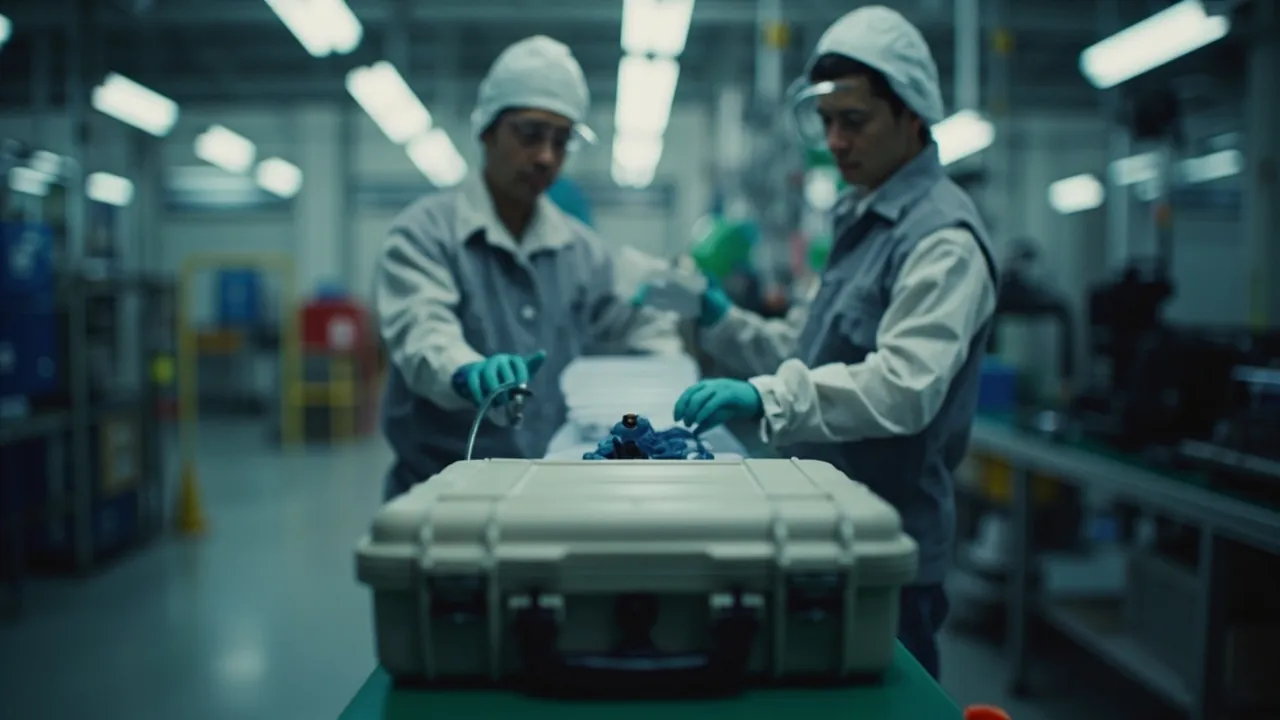
Short answer: when choosing a protective case OEM factory, the audit should examine not how large the workshop is, but whether the critical processes are done in-house, whether the process is traceable, and whether the capability can be verified. The ten audit points, in order of importance, are: business licence and quality system, in-house capacity and outsourcing ratio, tooling and moulding capability, raw material and incoming inspection, testing capability and standards execution, OEM/ODM engineering and prototyping capability, shop-floor management and traceability, lead time and capacity flexibility, cost structure and minimum order quantity, and compliance, audit support and confidentiality. The first four are threshold items — failing any one is grounds for elimination. The remaining six are differentiators that decide which of several equally qualified factories carries the lower long-term cost. A worthwhile audit completes four things within half a day to a day — see the floor, check the documents, question the process, verify a physical part — and ends on a scorecard rather than an impression. This article gives a verification method, common misrepresentation patterns and criteria for each point, plus a ready-to-use audit scorecard. All figures and ratios are empirical values; the customer's technical agreement and the factory's actual documents govern.
The most common mistake in sourcing is reducing factory selection to comparing three quotations. A protective case is not a commodity: the same IP67 claim can rest on complete process control or on a single submitted sample, and the same "we support customisation" reply can come from an in-house engineering team with its own tool shop or from a trading intermediary that outsources everything. Price differences are usually not profit differences but capability differences. Choose wrongly and the cost is paid at production: dimensional drift, seal failure, runaway lead times, disputes over tool changes. An audit is therefore not a formality but a due-diligence exercise that makes a supplier's hidden capability visible. This article is written for brand owners, trading companies and equipment makers who need stable long-term supply, and offers an executable audit framework.
Table of Contents
- Why a factory audit matters more than price comparison
- Preparing for the audit: what to bring, see and ask
- Point one: business licence, production qualification and quality system
- Point two: in-house capacity and outsourcing ratio
- Point three: tooling and moulding equipment
- Point four: raw materials and incoming inspection
- Point five: testing capability and standards execution
- Point six: OEM/ODM engineering and prototyping capability
- Point seven: shop-floor management and traceability
- Point eight: lead time and capacity flexibility
- Point nine: cost structure, MOQ and commercial terms
- Point ten: compliance, audit support and confidentiality
- The audit scorecard and decision method
- FAQ
- Closing remarks and related reading
Why a factory audit matters more than price comparison
Three basic judgements shape how an audit should be run.
First, a protective case is a process-determined product. Its ingress protection rating depends on wall-thickness consistency, seal groove dimensions, seal compression and latch fit — all set by process control, not by one test. A test report proves a submitted sample passed; only process capability proves a batch will pass.
Second, the source of a price difference must be separated. A low quotation can come from four causes: genuine cost advantage (scale, automation, management efficiency), material downgrading (recycled content, thinner walls), outsourcing (avoiding self-build cost but losing control), or pricing strategy (low entry then variations). The audit exists to tell these apart.
Third, an audit is two-way due diligence. You are evaluating them, and they are judging whether you are worth engineering resources. A well-prepared audit often buys better pricing and scheduling.
| Judgement dimension | Can price comparison answer? | Can an audit answer? |
|---|---|---|
| --- | --- | --- |
| Unit price level | Yes | Yes |
| Material downgrading | No | Yes |
| Outsourced critical processes | No | Yes |
| Process traceability | No | Yes |
| Capacity flexibility | Partly | Yes |
| Long-term quality stability | No | Yes |
Preparing for the audit: what to bring, see and ask
A useful audit is not a tour but a check against prepared questions. Three preparations help.
Bring three things: a written requirement statement (dimensions, material, target ingress protection rating, estimated annual volume), a question list (the points below), and a scorecard (final section).
See four areas: the moulding workshop, the tool shop, the assembly and inspection area, and raw material plus finished-goods storage. The housekeeping and management level of these four areas usually reflect overall management at the same time.
Ask three kinds of question: process questions ("how is this dimension kept consistent?"), exception questions ("how did you handle the last batch with a dimensional deviation?"), and boundary questions ("what is the maximum capacity?" "how do you schedule in peak season?"). Asking about exceptions reveals real capability better than asking about normal operation.
A time benchmark: if half a day cannot cover all critical processes, the shop-floor flow itself has a problem; if a full day shows no documents at all, the management system is weak. Reserve half a day for the floor and half a day for documents and discussion.
Point one: business licence, production qualification and quality system
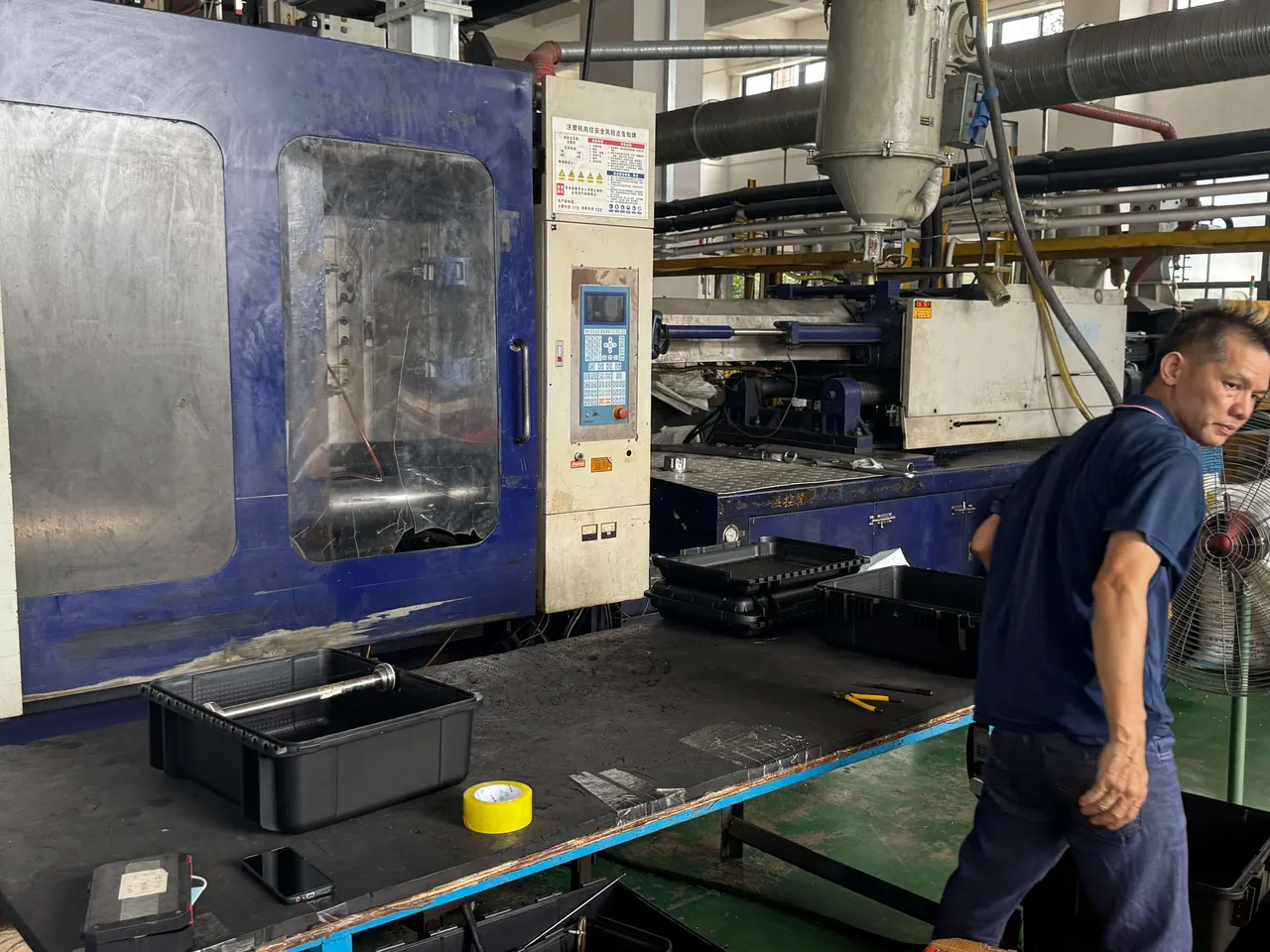
This is the first threshold item. Content and criteria:
- Business licence and scope: confirm the entity is real and the scope covers plastics or case manufacturing.
- Quality system certificate: ISO 9001 is the minimum threshold. Verify the certificate number and validity, not just a photocopy on the wall.
- Environmental and safety systems: ISO 14001 and ISO 45001 are plus points, especially for moulding and painting operations.
- Product compliance documents: where restricted substances apply, check the relevant declarations and third-party reports.
A common problem is a certificate on the wall whose audit scope excludes the actual production site, or one that has expired. The criterion is simple: check the certificate number against the certification body's public register, then confirm the system documents are genuinely used on site — for example, whether controlled process records exist.
Point two: in-house capacity and outsourcing ratio
This point defines the factory's real capability boundary and is the one most easily hidden by an impressive showroom.
Ask about in-house status for five processes: moulding, tool machining, assembly, seal fitting and testing. If testing — especially ingress protection testing — is entirely outsourced, day-to-day process control is usually weak; if tooling is entirely outsourced, tool changes and prototyping respond slowly.
| Process | In-house means | Outsourced means | Risk note |
|---|---|---|---|
| --- | --- | --- | --- |
| Moulding | Own machines, parameters, cycle | Dependent on partner scheduling | Lead time and quality swings |
| Tool machining | Fast changes and sampling | Slow response, split responsibility | Hard to localise problems |
| Assembly | Controllable, traceable process | Manual steps invisible | Unstable seal compression |
| Seal fitting | Compression can be controlled | Dependent on incoming consistency | Rating may fall short |
| Testing | Own data, fast iteration | Only results, not process | No closed-loop improvement |
Criterion: ask the supplier to draw a process flow from raw material to finished goods and mark each step as in-house or outsourced. Those who can draw it on the spot and name their outsourcing partners are usually more transparent; vague answers usually mean a higher outsourcing ratio than described.
Point three: tooling and moulding equipment
Tooling capability decides whether a part can be made and how fast it can be changed; moulding capability decides how consistently it is made.
On the tool side, check: whether machining equipment (CNC, EDM, wire cutting) is in-house; whether tool numbering and a management ledger are complete; whether maintenance and repair records are available; and whether the shop has made deep-cavity, long-flow parts similar to yours.
On the moulding side, check: whether machine tonnage and count match your case size; whether stable process parameter sheets exist; whether masterbatch and colour-change management procedures exist; and whether online or offline dimensional monitoring is used.
A practical criterion: ask how many corrections the last tool needed between trial and production, and ask to see the correction records. A factory with complete correction records that can explain each change is usually underestimated in engineering capability; one that cannot say how many corrections occurred carries higher consistency risk. For structural and tooling fit, see the design points in high-strength case structure.
Point four: raw materials and incoming inspection
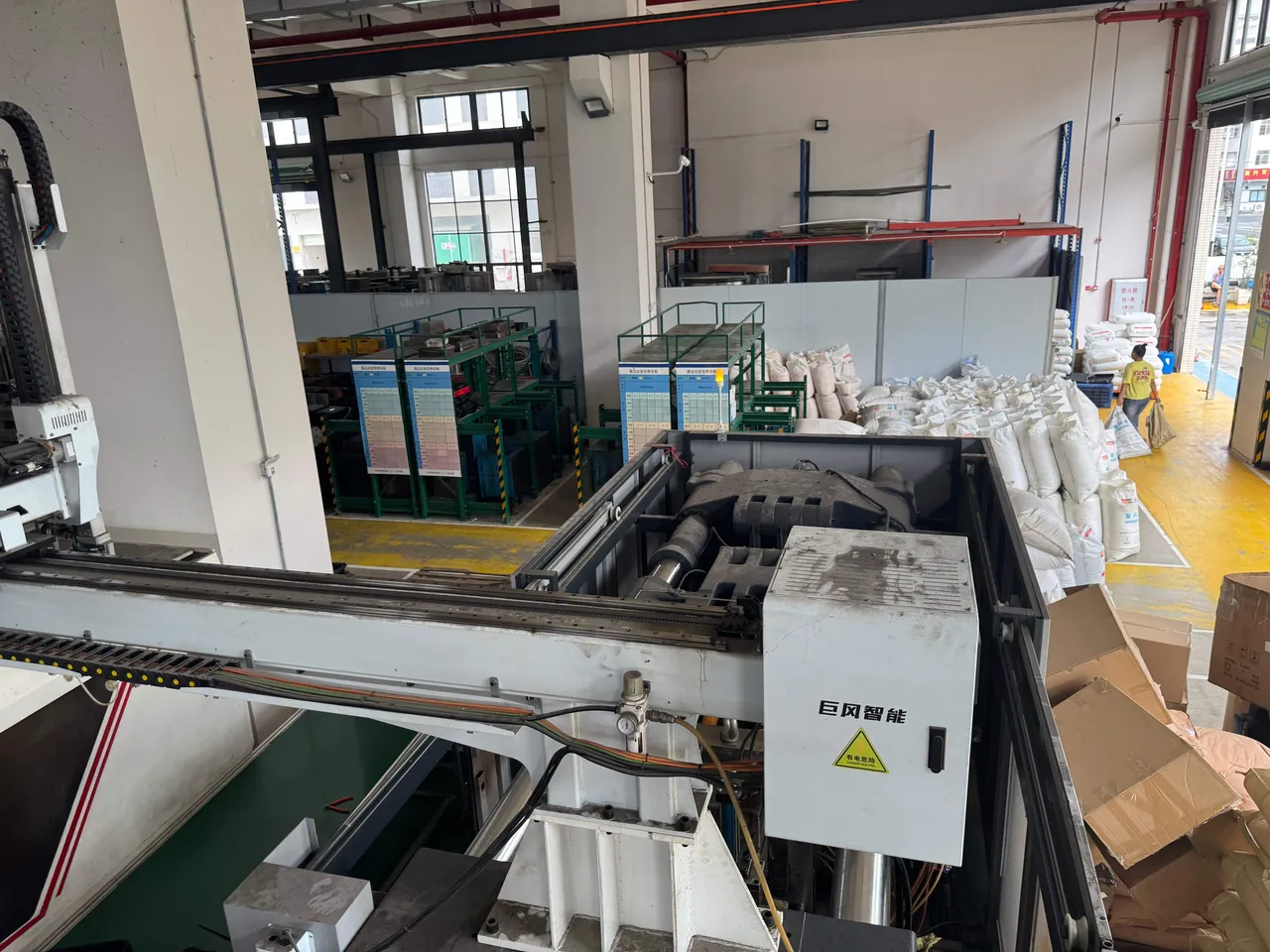
Material sets the underlying performance of a protective case and is the easiest place to cut cost quietly.
Check five things:
- Source and grade: whether reputable grades are used (for example HDPE, copolymer PP, PC) and whether material certificates are available.
- Recycled content: whether it is explicitly controlled and matches your agreed formulation. A high recycled ratio significantly affects low-temperature toughness and long-term strength.
- Masterbatch and additives: batch stability of colour and compliance of additives.
- Incoming inspection: whether receiving inspection records, sampling ratios and criteria exist.
- Material substitution process: whether changing a supplier or grade triggers written change control and re-verification.
For a full comparison of material systems, see protective case plastic materials and outdoor case material selection.
Criterion: pull a random bag of raw material from the warehouse and check whether the packaging label, batch number and inspection tag are complete. A factory that can produce complete incoming inspection records carries significantly lower material-downgrading risk.
Point five: testing capability and standards execution
Testing capability is the core evidence that the process is closed-loop. Check:
| Test category | Common items | Reference standard | Should be in-house |
|---|---|---|---|
| --- | --- | --- | --- |
| Dimensional | Critical dimensions, seal groove | Drawing tolerance | Yes |
| Dust and water | IP rating | IEC 60529 / GB/T 4208 | Basic equipment recommended |
| Material properties | Density, tensile, hardness | Relevant material standards | May be outsourced |
| Foam performance | Compression, resilience | ASTM D3574 | May be outsourced |
| Weathering | Artificial climate | ISO 4892 | May be outsourced |
| Sampling inspection | AQL judgement | GB/T 2828.1 | Yes |
Three criteria:
- Is ingress protection test equipment on site? A factory with a basic immersion tank and spray rig has clearly stronger day-to-day verification. For criteria detail, see understanding the IP67 rating.
- Does the report cover only the submitted sample? A reputable factory states the scope of its reports explicitly.
- Is the sampling plan written down? Agree an AQL level with GB/T 2828.1, turning "acceptable" from subjective to rule-based.
Point six: OEM/ODM engineering and prototyping capability
The higher the share of custom work, the more this point matters. Check:
- Whether dedicated engineering or R&D staff exist, rather than sales doing structural design as a side task.
- Drawing capability: whether requirements can be turned into mouldable drawings with a DFM review covering uniform wall thickness, draft, rib ratio, gate position and a closing tolerance stack. For drawing completeness, see the technical parameter checklist for protective case drawings.
- Whether the prototyping flow is standardised: clear stage definitions and cycle commitments; see protective case prototyping milestones.
- Scope of customisation: how inserts, colour, branding and structural changes are delivered, and the associated minimum order quantities. For inserts, see custom foam design factors; for branding, see protective case logo printing methods.
- Intellectual property and confidentiality: willingness to sign an NDA and define drawing ownership.
Criterion: ask the supplier to present one complete "customer requirement to production" case and explain the engineering problems encountered and how they were solved. Those who can explain the problems and solutions usually have genuine engineering capability; those who only show finished goods are more often trading or pure contract-manufacturing operations.
Point seven: shop-floor management and traceability
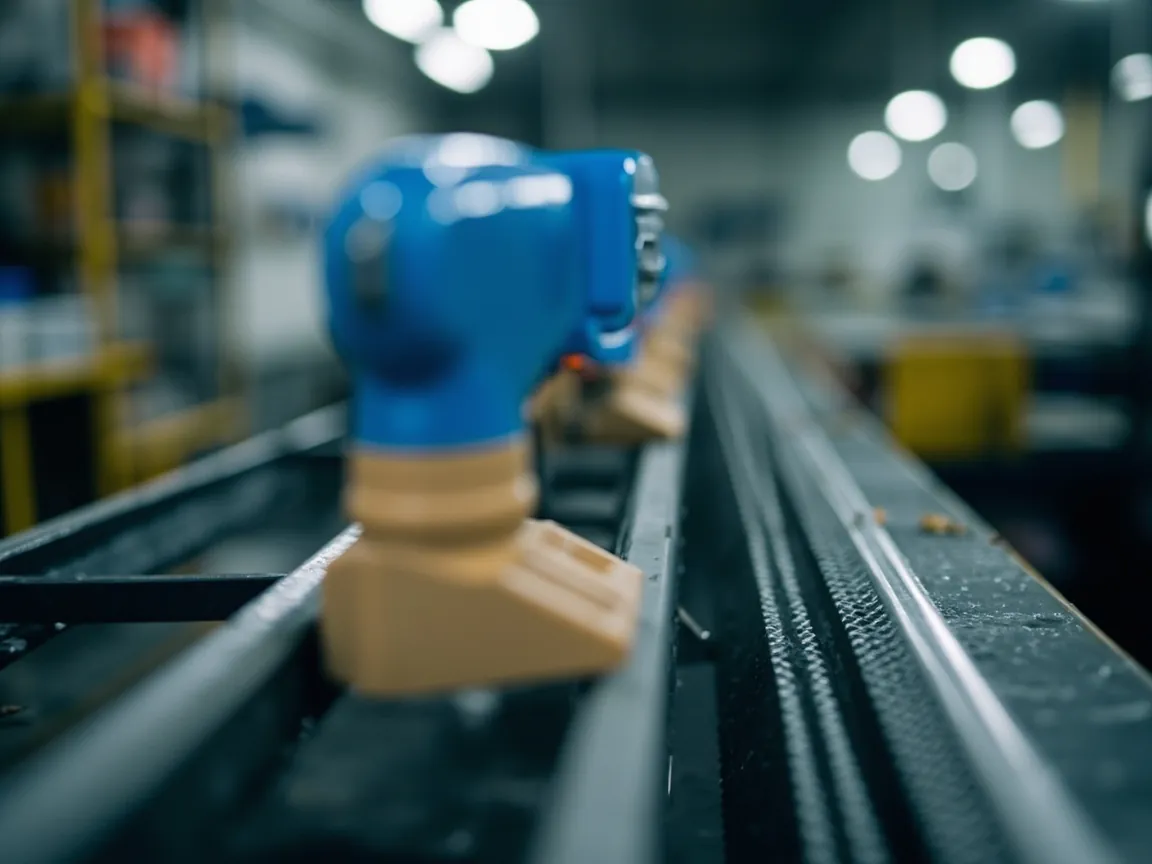
Shop-floor management is not an aesthetic question of tidiness but external evidence of process stability.
Look at three things:
- 5S and location management: material zoning, clear labelling, unobstructed aisles.
- Whether process documents are on the floor: controlled work instructions and parameter cards beside each machine.
- Traceability: whether a finished-goods batch number can be traced back to the moulding batch, material batch and inspection records.
A verification method: pick a finished case at random and ask the factory to produce its complete process records within 15 minutes. Those who can do it have a real traceability system; those who cannot usually have "traceability" only on paper. The value of traceability in a long-term relationship is that it localises a problem instead of forcing a line-wide rework.
Point eight: lead time and capacity flexibility
This point decides whether supply arrives on time.
- Confirm standard and custom lead times separately, not a single vague number.
- Capacity ceiling: monthly capacity at full loading, and your estimated volume as a share of it. Too high a share creates pricing risk; too low a share risks being scheduled last.
- Peak-season flexibility: whether overtime or outsourcing supplements exist, and how outsourcing preserves consistency.
- Material strategy: whether safety stock is held for common materials.
An empirical criterion: write the lead-time commitment into the contract with delay liability — far more effective than a verbal promise. Also agree a capacity reservation ratio to avoid being squeezed in peak season.
A practical way to test delivery claims is to ask for the last three months of on-time delivery records, ideally by order, and to ask what caused any late orders. Factories that track this data at all are already ahead of those that answer from memory. If the records are unavailable, ask instead how the factory measures on-time delivery and what target it sets. A supplier that cannot state a target is unlikely to manage to one. When the volume justifies it, agree a monthly capacity reservation and a rolling forecast window, so the supplier can plan materials and machine time rather than treating your order as fill-in work.
Point nine: cost structure, MOQ and commercial terms
Break the price into structure rather than reading only the unit price.
| Quotation component | What to confirm | Common trap |
|---|---|---|
| --- | --- | --- |
| Material cost | Grade, usage, recycled ratio | Using recycled content to cut price |
| Processing cost | Machine hours, yield assumption | Over-optimistic yield |
| Tooling fee | Whether separate, ownership | Hidden in unit price |
| Prototyping fee | Whether creditable | Repeated prototyping charges |
| Packaging and logistics | Method, origin | Later surcharges |
| MOQ | Threshold and tiers | Threshold too high or too low |
Three rules of thumb: handle the prototyping and tooling fees at quotation, as in custom protective case tooling cost analysis; confirm the minimum order quantity baseline in advance, as in the custom case minimum order quantity baseline; and keep the price tiers sensible, since a steep tier often signals an inflated early price.
Point ten: compliance, audit support and confidentiality
A long-term relationship needs safeguards at the institutional level.
- Compliance capability: willingness to support customer or third-party audits (social responsibility, quality system, environment) and export-related compliance documents.
- Confidentiality mechanism: willingness to sign an NDA and how drawings and tooling information are kept.
- Change management: whether material, process or supplier changes are notified to the customer and re-verified.
- Spares and after-sales: whether consumables such as seals, latches and hinges can be supplied continuously.
Criterion: suppliers who raise change management and after-sales terms proactively carry lower hidden long-term cost. Those who are vague about "would you notify us if you changed a supplier" are often the source of production quality swings.
Compliance and confidentiality work best when they are active rather than defensive. A supplier that maintains its own compliance file — current certificates, third-party test reports, material declarations, an audit history — saves the customer repeated document chasing and signals an organised operation. On the confidentiality side, ask how drawings are issued and returned, whether the tool shop keeps customer drawings separated, and what happens to tooling if the relationship ends. These questions are not adversarial; a professional factory welcomes them because it protects both sides. A factory that has never been asked and has no answers is a warning about how it would treat your drawings.
The audit scorecard and decision method
Quantify the ten points to avoid deciding on impressions. Score by weight.
| Audit point | Weight | Scoring focus | Score (1 to 5) |
|---|---|---|---|
| --- | --- | --- | --- |
| Qualification and system | 10% | Valid certificate, scope covers site | — |
| In-house capacity | 15% | Degree of in-house critical processes | — |
| Tooling and moulding | 15% | Equipment, ledger, correction records | — |
| Material control | 10% | Verifiable grade, controlled recycled content | — |
| Testing capability | 15% | Basic ingress test in-house, sampling written | — |
| Engineering and prototyping | 10% | Dedicated engineering, complete case | — |
| Shop floor and traceability | 10% | Process records reproducible in 15 minutes | — |
| Lead time and flexibility | 8% | Lead time written, capacity reserved | — |
| Price and commercial | 5% | Transparent structure, sensible tiers | — |
| Compliance and confidentiality | 2% | NDA, change management | — |
Decision method: set thresholds first, then total the score. The first four points (qualification, capacity, tooling, material) disqualify the factory if scored 1 or 2; among candidates that pass, compare the weighted total. Verify at least two factories on site and run a small trial order with the final candidate to test promises against real delivery.
JUNZHJIA, manufactured by KeXin New Materials (Guangdong) Co., Ltd., covers protective cases, toolboxes, military-specification storage boxes and waterproof junction boxes, serving wholesale, distribution, OEM/ODM and global supply. It provides system documents, test reports, drawing and prototyping support and spare-parts supply, and welcomes on-site audits against a customer checklist.
FAQ
Q: Which points matter most in a protective case factory audit? A: Divide them into threshold and differentiator items. Four threshold items eliminate the factory if any one fails: qualification and quality system (whether ISO 9001 is genuinely valid and its audit scope covers the actual production site), in-house capacity and outsourcing ratio (in-house status of the five critical processes: moulding, tooling, assembly, seal fitting and testing), tooling and moulding equipment (whether equipment is in-house and whether tool ledgers and correction records are complete), and raw materials and incoming inspection (verifiable grades, controlled recycled content, receiving inspection records). Six differentiator items decide which of several equally qualified factories carries the lower long-term cost: testing capability and standards execution, OEM/ODM engineering and prototyping, shop-floor management and traceability, lead time and capacity flexibility, cost structure and MOQ, and compliance and confidentiality. The single most effective check is to pick a finished case at random and ask the factory to produce its complete process records within 15 minutes — if it can, traceability is real; if it cannot, "traceability" exists only on paper.
Q: How do I tell a trading company from a genuine factory during an audit? A: Look for four signals. First, the process flow. Ask them to draw a flow from raw material to finished goods on the spot and mark each step in-house or outsourced; those who can draw it and name partners are usually more transparent, while vague answers usually hide a higher outsourcing ratio. Second, tool records. Ask how many corrections the last tool needed between trial and production and see the records. Complete records that explain each change indicate genuine engineering capability; an inability to say how many corrections occurred signals higher consistency risk. Third, engineering staff. Whether dedicated structural design and R&D people exist, rather than sales drawing as a side task. Fourth, test equipment. Whether basic ingress test equipment such as an immersion tank and spray rig is on site. Beyond these, ask for one complete "customer requirement to production" case with the engineering problems and solutions — those who explain problems and solutions are usually genuine manufacturers, while those who only show finished goods lean toward trading.
Q: What should I check in a protective case factory's quality system? A: Check three layers. The first layer is the certificate itself. ISO 9001 is the minimum threshold; verify the certificate number against the certification body's register, confirm validity, and check whether the audit scope covers the site where your order is actually produced — a common problem is a certificate on the wall whose audited address differs from the production site, or which has expired. The second layer is whether the system is genuinely used on site: controlled process records, controlled work instructions and parameter cards beside machines, and incoming inspection records. The third layer is whether standards execution is written down. Specify the ingress protection rating digit by digit per IEC 60529 and GB/T 4208 with test conditions; agree a GB/T 2828.1 AQL level for production acceptance; reference ASTM D3574 for foam performance and ISO 4892 for weathering. ISO 14001 and ISO 45001 are plus points, particularly for moulding and painting operations. The truth of system documents ultimately rests on whether a finished case's process records can be reconstructed within 15 minutes.
Q: How should I assess OEM/ODM customisation capability? A: Check it in five steps. First, whether dedicated engineering or R&D staff exist, rather than sales doing structural design as a side task. Second, drawing capability: turning requirements into mouldable drawings with a DFM review covering uniform wall thickness, draft angle, rib ratio, gate position and a closing tolerance stack. Third, whether the prototyping flow is standardised: clear stages and cycle commitments such as requirement review, structural design, tooling, moulding trial and assembly, and test and golden-sample sign-off. Fourth, the scope of customisation: how inserts (EVA, EPE, XPE, PU), colour, branding processes and structural changes are delivered, with the associated minimum order quantities. Fifth, intellectual property and confidentiality: willingness to sign an NDA and define drawing ownership. The criterion is to ask for one complete "customer requirement to production" case with the engineering problems and solutions described — those who can explain problems and solutions usually have genuine capability.
Q: Is a low price always a problem? How do I judge whether it is reasonable? A: Not always, but separate its source. A low quotation usually has one of four causes: genuine cost advantage (scale, automation, management efficiency), material downgrading (higher recycled content or thinner walls), outsourcing (avoiding self-build cost but losing control), or pricing strategy (low entry then variations). The audit separates them. Break the quotation into six components and confirm each: material cost (grade, usage, recycled ratio), processing cost (machine hours, yield assumption), tooling fee (whether separate and its ownership), prototyping fee (whether creditable), packaging and logistics (method, origin), and MOQ with price tiers. Three rules of thumb: settle the prototyping and tooling fees at quotation; confirm the MOQ baseline in advance; and keep price tiers sensible, since a steep tier often signals an inflated early price. Material downgrading is the most common source of a low price, so pull a random bag of raw material at the warehouse and check its label and inspection tag.
Q: What should I prepare for an audit, and is half a day enough? A: Bring three things and allow about a day. Bring: a written requirement statement (external and cavity dimensions, material, target ingress protection rating, estimated annual volume), a question list, and a scorecard. See four areas: the moulding workshop, the tool shop, the assembly and inspection area, and raw material plus finished-goods storage — the management level of these areas tends to correlate. Ask three kinds of question: process questions ("how is this critical dimension kept consistent?"), exception questions ("how did you handle the last batch with a dimensional deviation?"), and boundary questions ("what is the maximum capacity?" "how do you schedule in peak season?"). Asking about exceptions reveals real capability better than asking about normal operation. A time benchmark: if half a day cannot cover all critical processes, the shop-floor flow or capacity layout itself has a problem; if a full day shows no documents, the management system is weak. Reserve half a day for the floor and half a day for documents and discussion, finish with a weighted scorecard using thresholds first, and run a small trial order with the final candidate.
Q: How do I assess capacity flexibility and delivery risk? A: Assess four dimensions. First, separate lead-time confirmation: confirm standard and custom lead times separately rather than one vague number, write the commitment into the contract and attach delay liability. Second, capacity share: confirm monthly capacity at full loading and calculate your estimated volume as a share of it. Too high a share creates pricing and supply risk; too low risks being scheduled last. Third, peak-season flexibility: whether overtime or outsourcing supplements exist and how outsourcing preserves consistency — the most easily uncontrolled link. Fourth, material strategy: whether safety stock is held for common materials and how long special grades or masterbatches take to order. The empirical criterion is that writing a promise into the contract is far more effective than a verbal one, and a capacity reservation ratio should be agreed to avoid being squeezed in peak season. For a long-term relationship, also agree notification and re-verification when materials, processes or suppliers change — that is the institutional safeguard for stable delivery.
Q: How should confidentiality and IP be handled with a contract manufacturer? A: Define the boundary in writing, across four items. First, sign a non-disclosure agreement (NDA) covering drawings, tooling information, customer lists and process parameters. Second, define drawing and tool ownership: who funded the tool, who owns it, where it is stored and whether it can follow demand. Third, agree how information is kept: whether drawings are issued under control, how electronic files are managed, and whether photography is permitted. Fourth, agree change management: material, process and supplier changes must be notified to the customer in advance and re-verified. Criterion: suppliers who proactively raise change management and after-sales terms carry lower hidden long-term cost; those vague about whether they would notify you of a supplier change are often the source of production quality swings. Also confirm that consumables such as seals, latches and hinges can be supplied continuously, along with spare-part lead times — maintainability is a key part of long-term value.
Q: Should I use one supplier or two? A: It depends on volume and criticality; a primary-plus-backup arrangement is usually best. A single supplier concentrates purchasing power, lowers communication cost and deepens process familiarity, but carries the risk of having no alternative if capacity swings or the relationship breaks down. Two suppliers spread risk and enable mutual price comparison, but double development cost and make batch consistency harder to guarantee, since the two cannot be fully identical in material and process. The compromise is a primary supplier carrying 70% to 80% of volume and a backup carrying 20% to 30%, preserving both purchasing power and switching room. If the product demands very high ingress protection or dimensional consistency (for example precision instrument cases or military-specification boxes), batch consistency usually matters more than price leverage, so a single primary supplier with stronger contractual terms may be preferable. If the product is standardised and easily substitutable, two suppliers pay off. Either way, run a small trial order early and lock the drawings, golden sample and inspection standard.
Closing remarks and related reading
Back to the title question: when choosing a protective case OEM factory, the audit should examine not how large the workshop is, but whether the critical processes are done in-house, whether the process is traceable, and whether the capability can be verified. Of the ten points, the first four are thresholds — qualification and system, in-house capacity, tooling and moulding, and material control — and failing any one is grounds for elimination. The remaining six are differentiators — testing capability, engineering and prototyping, shop floor and traceability, delivery flexibility, price structure, and compliance and confidentiality — deciding which of several qualified factories carries the lower long-term cost. An audit is not a tour but a check against prepared questions: bring a requirement statement, a question list and a scorecard, see four areas, ask process, exception and boundary questions, and finish on a weighted scorecard.
Three actionable recommendations. First, set thresholds before totalling the score, treating qualification, capacity, tooling and material as disqualifiers so only candidates that pass enter price comparison. Second, verify traceability with one action — reconstruct process records in 15 minutes — which is more direct than any display of system documents. Third, write the promises into the contract — lead time, capacity reservation, change notification, tool ownership and spare-parts supply — and run a small trial order with the final candidate.
JUNZHJIA, manufactured by KeXin New Materials (Guangdong) Co., Ltd., covers protective cases, toolboxes, military-specification storage boxes and waterproof junction boxes, serving wholesale, distribution, OEM/ODM and global supply, and provides system documents, test reports, drawing and prototyping support and spare-parts supply.
Related reading