


Quick answer: Case pest protection means dry cases under 10% moisture, sealed gaps over 1.5 mm, gaskets at 30% compression, traps checked every 30 days.
Table of contents
- Three gaps let pests in
- Cleaning and drying before storage
- Gaps of 1.5 mm and 30% gasket compression
- 25 ℃, RH 65% and the 6-month limit
- Traps at 50 m², checks every 30 days
- FAQ
1. Three gaps let pests in
A carton stood in a corner for half a year; on opening, the foam edge carried fine bite marks 1.5 mm wide and 30 mm long. Case pest protection almost never fails at a large panel — it fails at a gap.
Three gaps get overlooked: the lid joint where the gasket does not sit flat, measured at 0.4 mm; the latch bore at 2 mm; and the breather hole of the relief valve at 1 mm. An insect 1.5 mm wide passes a 1.5 mm gap and in practice squeezes through 0.5 mm, so all three are open doors.
Bite marks reveal body size. A clean 1.5 mm bite fits an adult around 2 mm wide, while a ragged edge under 0.5 mm means larvae started first. Dark pellets of 0.3 mm appear beside the marks before the marks themselves, and one 0.2 mm notch chewed in a gasket costs a full IP class while the shell still looks intact.
2. Cleaning and drying before storage
Three moves before a case goes into storage: vacuum, wipe, dry. Finish them and moisture drops below 10%, which removes half of the entry routes for case pest protection.
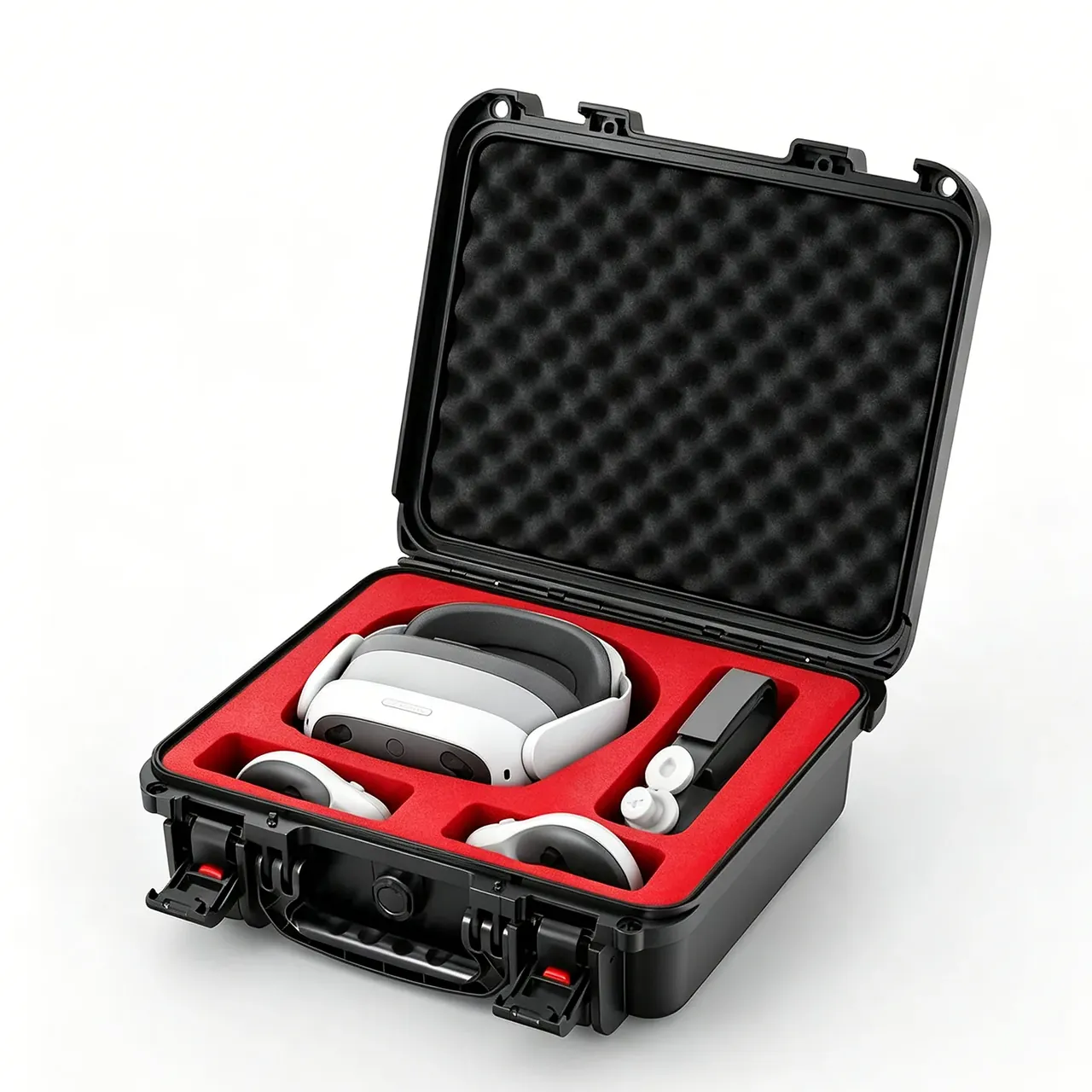
Vacuum with 0.05 MPa of compressed air and a soft brush, seams facing down, working from base to opening. Above 0.2 MPa the jet drives crumbs deeper into the seam.
Wipe the shell and gasket with 1% neutral detergent and never soak the foam: water needs 24 h to leave, and one soaking leaves 8% permanent compression set, which is where a gasket that will not sit flat begins.
Dry in a ventilated area at 25 ℃ for 24 h, 0.3 m off the floor on a pallet and away from the wall, then read moisture with a pin meter at four corners. Below 10% passes; fewer readings let an average hide a damp corner that moulds first. Crumbs in the lining, dust in seams or a flattened gasket all mean clean again, because whatever is sealed inside feeds the next generation.
3. Gaps of 1.5 mm and 30% gasket compression
1.5 mm is the dividing line. Insects narrower than 1.5 mm pass a 1.5 mm gap, so anything above that must be closed, while gaps under 0.5 mm close on gasket compression alone.
| Location | Measured gap | Treatment | Target |
|---|---|---|---|
| Lid joint | 0.4 mm | Gasket at 30% compression | 0.5 mm feeler blocked |
| Latch bore | 2.0 mm | φ2 mm plug plus sealant | No through path |
| Valve breather | 1.0 mm | Factory diaphragm reseated | No lifted edge |
| Hinge ends | 1.2 mm | 3 mm self-adhesive strip | Strip bedded, no bubbles |
Compression of 30% balances rebound against stress. A 10 mm gasket pressed to 7 mm keeps 3 mm of travel to follow shell deflection; at 20% contact stress is too low and the joint opens itself, while at 50% the rubber takes a permanent set in 3 months.
Pick material by gap width: a 0.4 mm joint takes only the gasket, 1.0–1.5 mm gaps a 3 mm EPDM self-adhesive strip that compresses 40%, and a 2 mm latch bore a colour-matched plug with 0.5 mm of sealant.
One test settles it: a 0.5 mm feeler gauge must not travel around the joint. Without a gauge, an 80 g sheet of paper that cannot be pulled out passes too. Measure 10 cases first, because widths scatter from 0.3 mm to 1.6 mm and a worn tool leaves gaps 0.4 mm wider. Apply strip above 15 ℃ and press it 3 times, or tack falls to 60% and the joint reopens overnight.
4. 25 ℃, RH 65% and the 6-month limit
25 ℃ with RH 65% is where case pest protection and mould both become active. Eggs hatch in 21 days under those conditions, so 6 months covers 8 generations and one adult becomes a thousand.
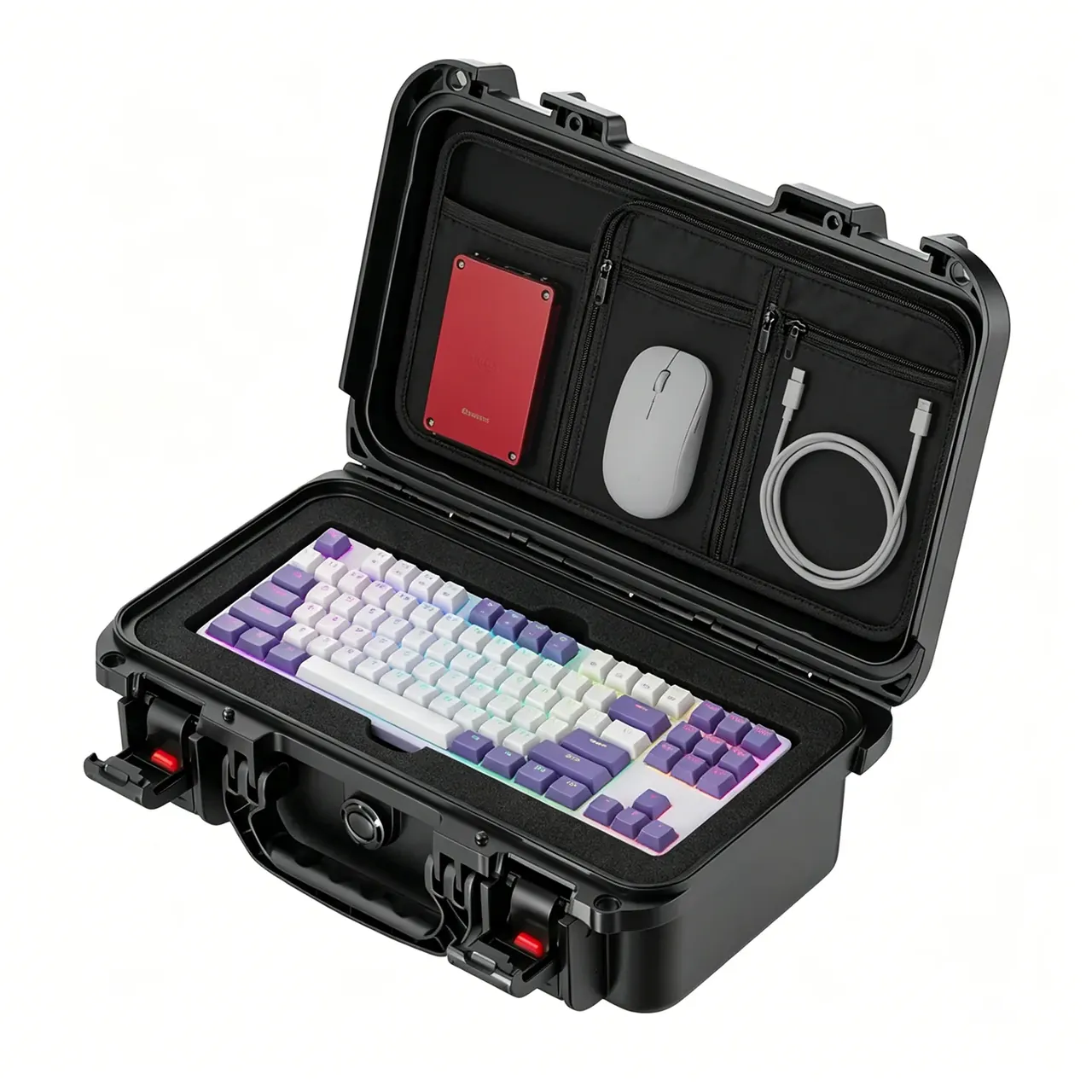
Above RH 65% foam takes water, and at 12% moisture mould shows within 30 days — it does not chew the shell but loosens the fibres into a better nest.
Six months is a boundary, not a shelf life. Inside 6 months a gasket still returns above 90%, so an inspection is enough; past that, rebound falls to 80% and the case needs opening, airing and re-compression.
| Months stored | Action | Criterion |
|---|---|---|
| 0–3 | Closed, visual check and traps | 0 bite marks |
| 3–6 | Sample 20%, open and inspect | ≤1 bite mark |
| 6–12 | Open all, air 24 h | Moisture ≤10% |
| Over 12 | New gasket, reseal | 30% compression restored |
Warmer stores run faster cycles: the egg stage is 30 days at 20 ℃, 21 days at 25 ℃ and 16 days at 30 ℃, so a warehouse reaching 30 ℃ in summer supports over 10 generations in 6 months. Put the probe 0.5 m up inside a stack gap, since a corner and the middle differ by 10 points of RH, and ventilate once RH passes 65%.
5. Traps at 50 m², checks every 30 days
Place one trap per 50 m², 0.3 m from the wall, with one more at each corner of a stack. Below that density a low population reads as zero, and by the time it reads, the insects have spread.
Check every 30 days and investigate when a board counts more than 5 insects. The search covers every case within 5 m, gap by gap.
Isolate any case with bite marks at once: 3 m away, downwind, red-tagged, opened within 24 h on its own aisle.
Treatment runs in three steps: vacuum out pellets and crumbs, replace the chewed lining, replace any notched gasket, then dry the shell with 50 ℃ air for 30 min. Stand it 7 days and recheck; no new marks means it can return.
When 3 or more cases in a batch carry marks, treat the whole batch as suspect and open all of them, because case pest protection fails in groups and isolating one case never stops the next round. Sample 20% up to 100 cases and 10% above 500, at least three seams per case, and trust bite marks over trap counts when the two disagree.
Conclusion
Case pest protection in storage reduces to one card: vacuum, wipe and air for 24 h with moisture at or below 10%; close every gap above 1.5 mm with 3 mm strip or a plug; hold gaskets at 30% compression so a 0.5 mm feeler cannot pass; check traps every 30 days at one per 50 m² and open every case after 6 months. Order decides it: clean, seal, store, inspect without opening. Put those lines on the location card and chewed linings stop appearing in the budget.
| Stage | Action | Setting | Criterion |
|---|---|---|---|
| Intake | Vacuum, wipe, air | 25 ℃, 24 h | Moisture ≤10% |
| Sealing | Strip, plug, gasket | 30% compression | 0.5 mm feeler blocked |
| Storage | Closed, three records | 6 months | 0 bite marks |
| Inspection | Traps every 30 days | One per 50 m² | ≤5 insects a board |
| Treatment | Isolate, replace, dry | 3 m, 50 ℃, 30 min | No new marks in 7 days |
This article discusses container-side specifications and design implications only, and does not cover any handling, loading or use of the contents.
Related Reading
- Day-to-day case care in a warehouse
- Storage rules for stacked cases
- Moisture risk when cases are stacked
- How moisture-proof cases are built
Related Products
- 8 Series — Gun Cases; Military Equipment Cases; Camera Equipment Cases; Drone Cases; Watch Cases; Knife Cases; First Aid Cases; Electronics Equipment Cases
- WL8-2812 PP Gun Case — model WL8-2812
- All protective cases and toolboxes: 7 series, 158 models