

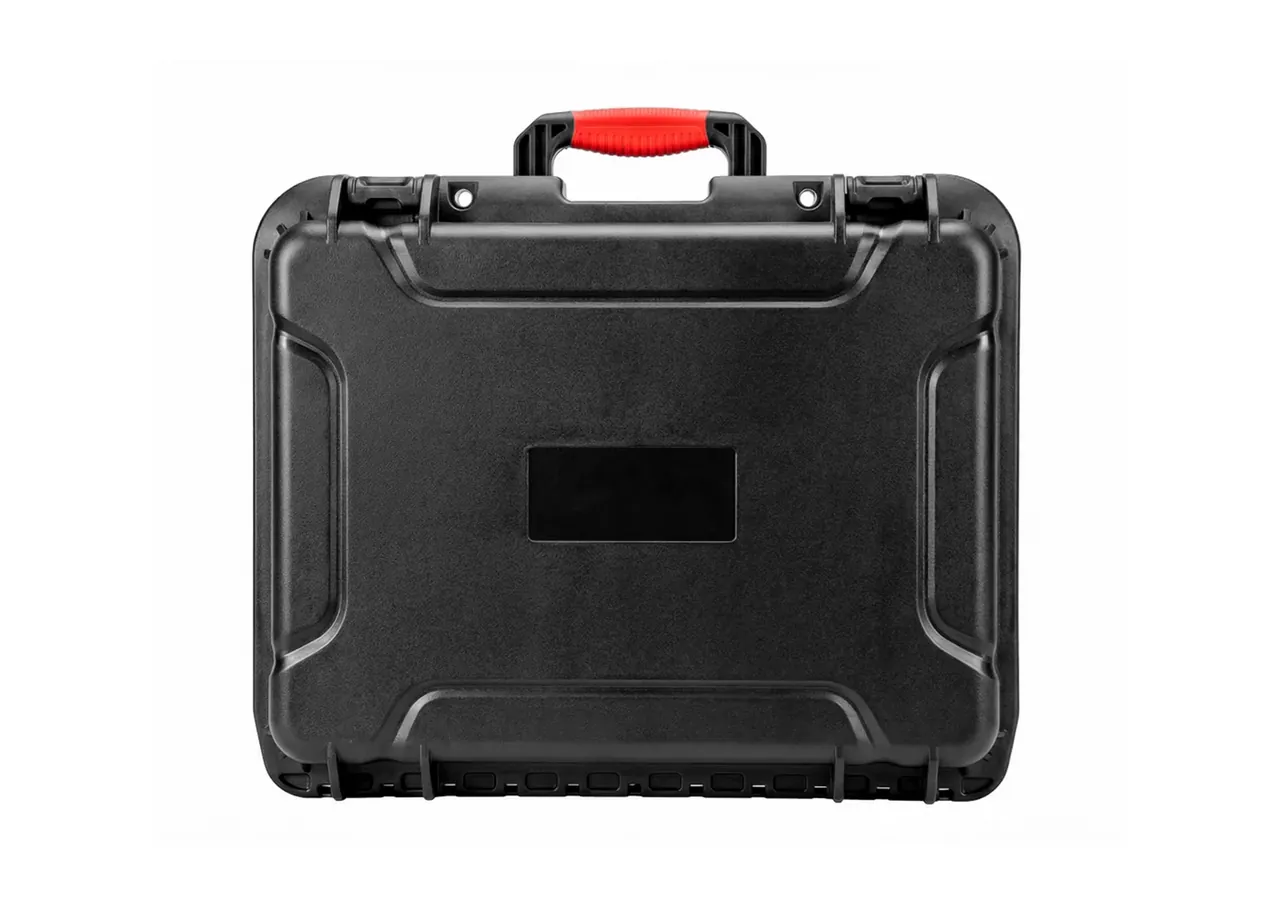
Quick answer: A moisture-proof case is not a sealed box plus desiccant. It is a loop: the seal blocks vapour, the desiccant removes what gets in, the indicator says when to recharge. Remove one and it is only a sturdy box.
Table of contents
- What a moisture-proof case is: a three-part loop
- Sealing: keeping vapour outside
- Absorption: the capacity limit of a desiccant
- Indication: how to read a humidity card
- Why all three parts are needed
- FAQ
1. What a moisture-proof case is: a three-part loop
One target defines it: hold internal humidity below a set point for months. That needs a gasket closing under pressure, enough desiccant, and something showing the state inside. They form a chain, not a parts list.
It differs from a waterproof case, which handles droplets. Moisture-proof handles vapour, which crosses a splash-proof gasket at a few percent a month. Ask what presses the seal, how much desiccant is dosed, and where the indicator sits.
| Part | Role | Failure looks like |
|---|---|---|
| Gasket and latches | Blocks vapour exchange | Humidity climbs back fast |
| Desiccant | Removes vapour that enters | Card always pink |
| Indicator | Shows internal state | Nobody knows when to recharge |
2. Sealing: keeping vapour outside
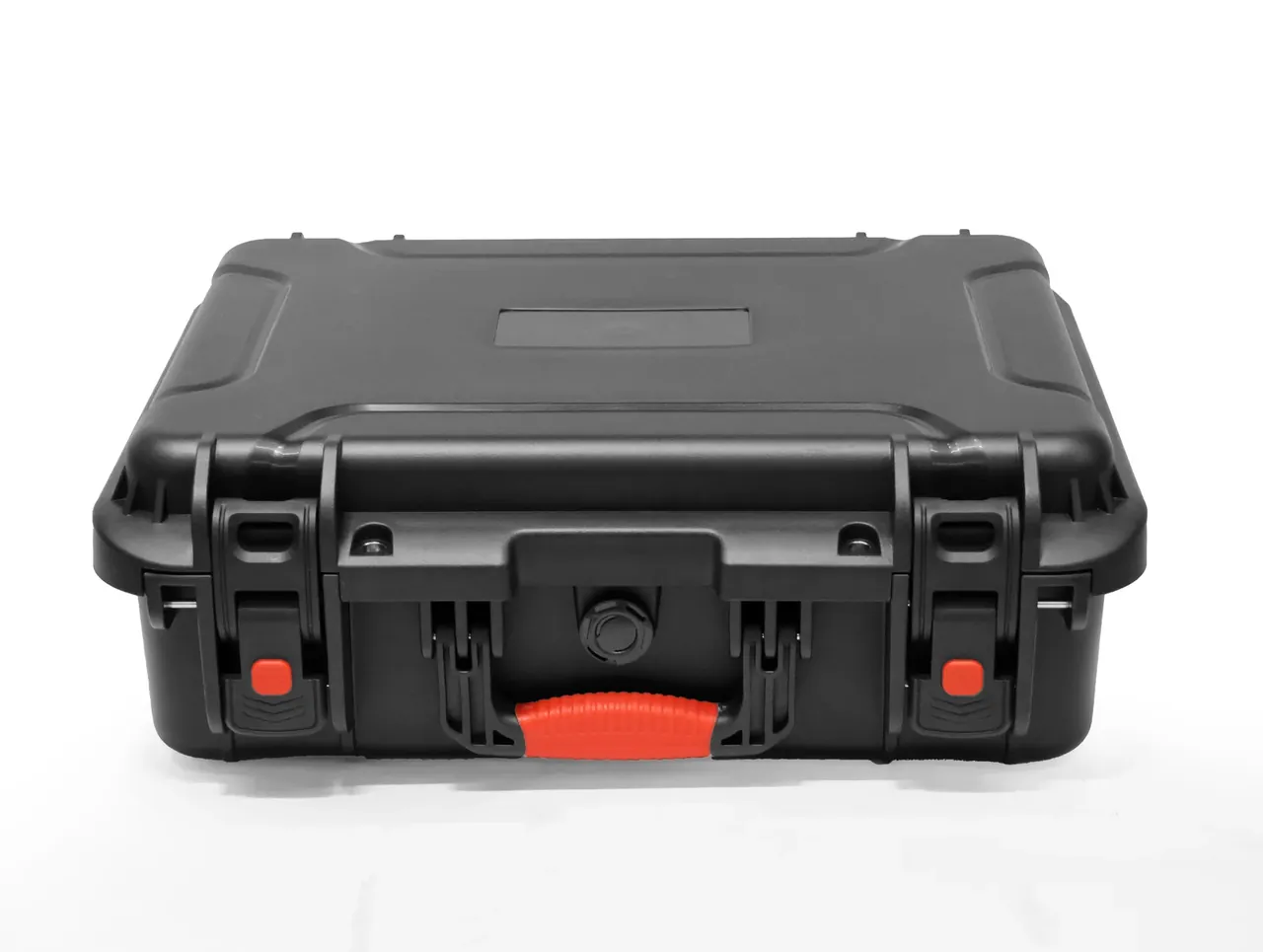
Geometry comes first: a continuous channel holds a compressible gasket, squeezed twenty to thirty percent by the latches. Under fifteen the surface stays open; over thirty-five the rubber takes a set. A gritty face leaks however hard the latches pull, so wipe the channel before closing.
Stiffness comes second. A soft lid lifts along the middle even with corners clamped. Latch the case, run thin paper around the joint, and wherever it pulls out is a leak.
Material is third. Silicone rebounds well, EPDM resists weather but stiffens in cold, neoprene resists oil and takes a set. A wrong choice leaks after six months, with uneven compression marks.
3. Absorption: the capacity limit of a desiccant
Silica gel is standard, taking twenty to thirty percent of its weight and regenerating at 120 degrees Celsius. Molecular sieve is faster at low humidity. Calcium chloride absorbs most and deliquesces, so a split sachet becomes a spill.
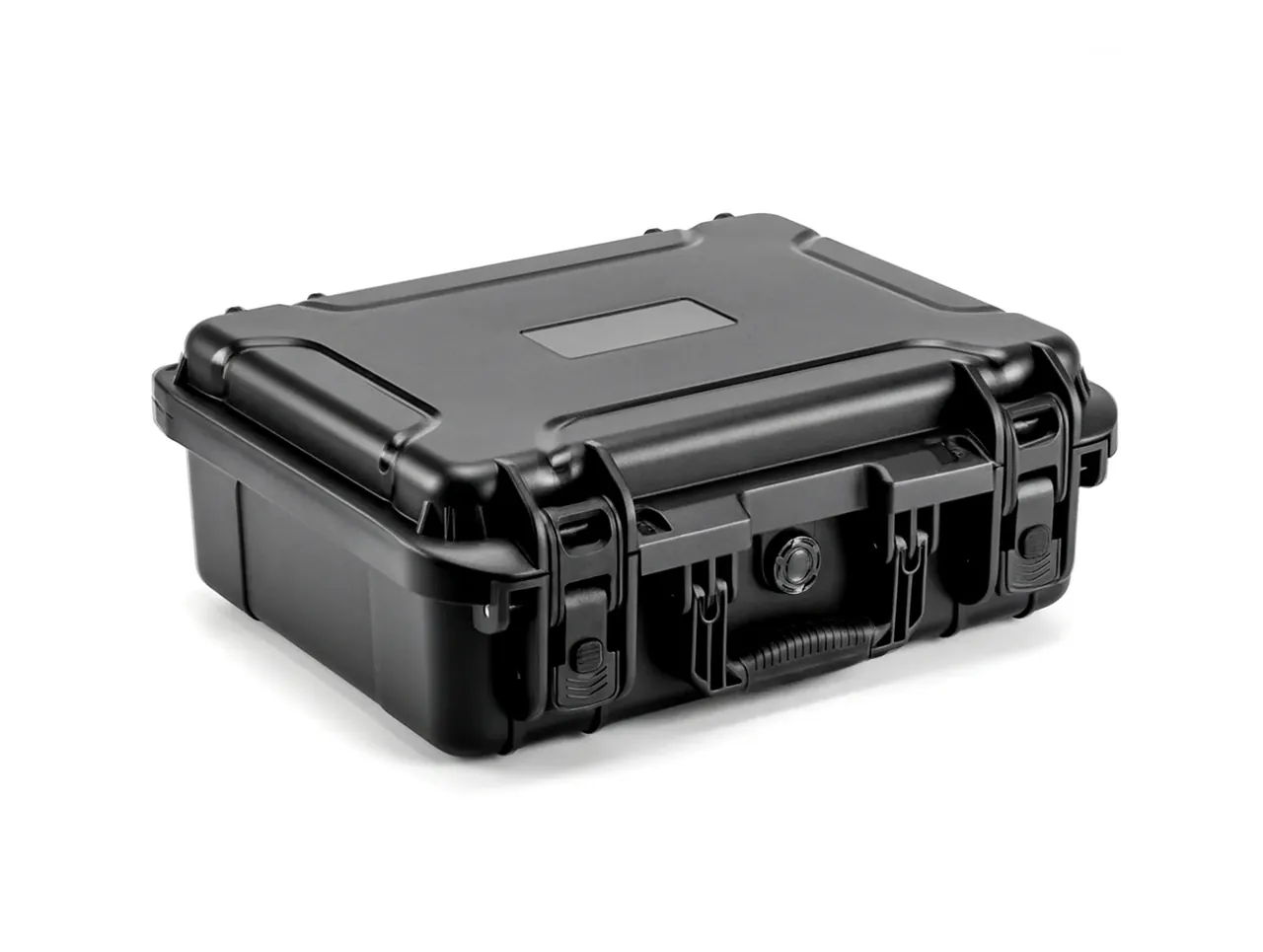
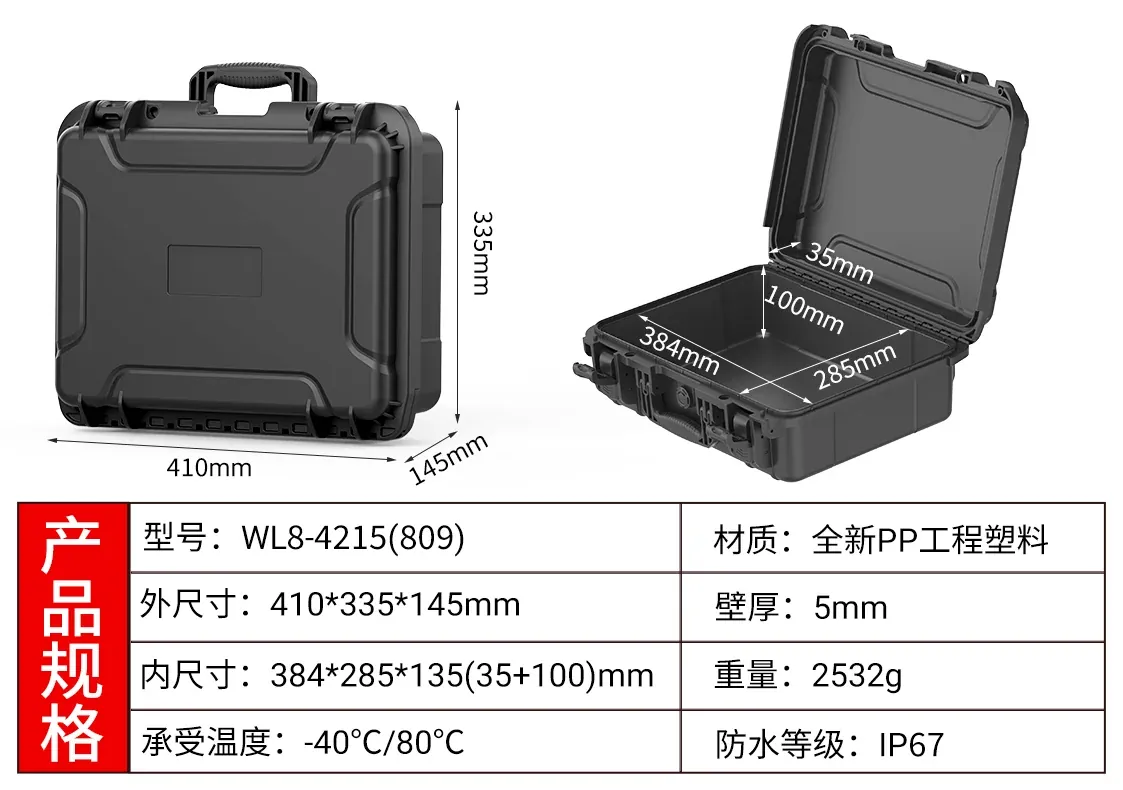
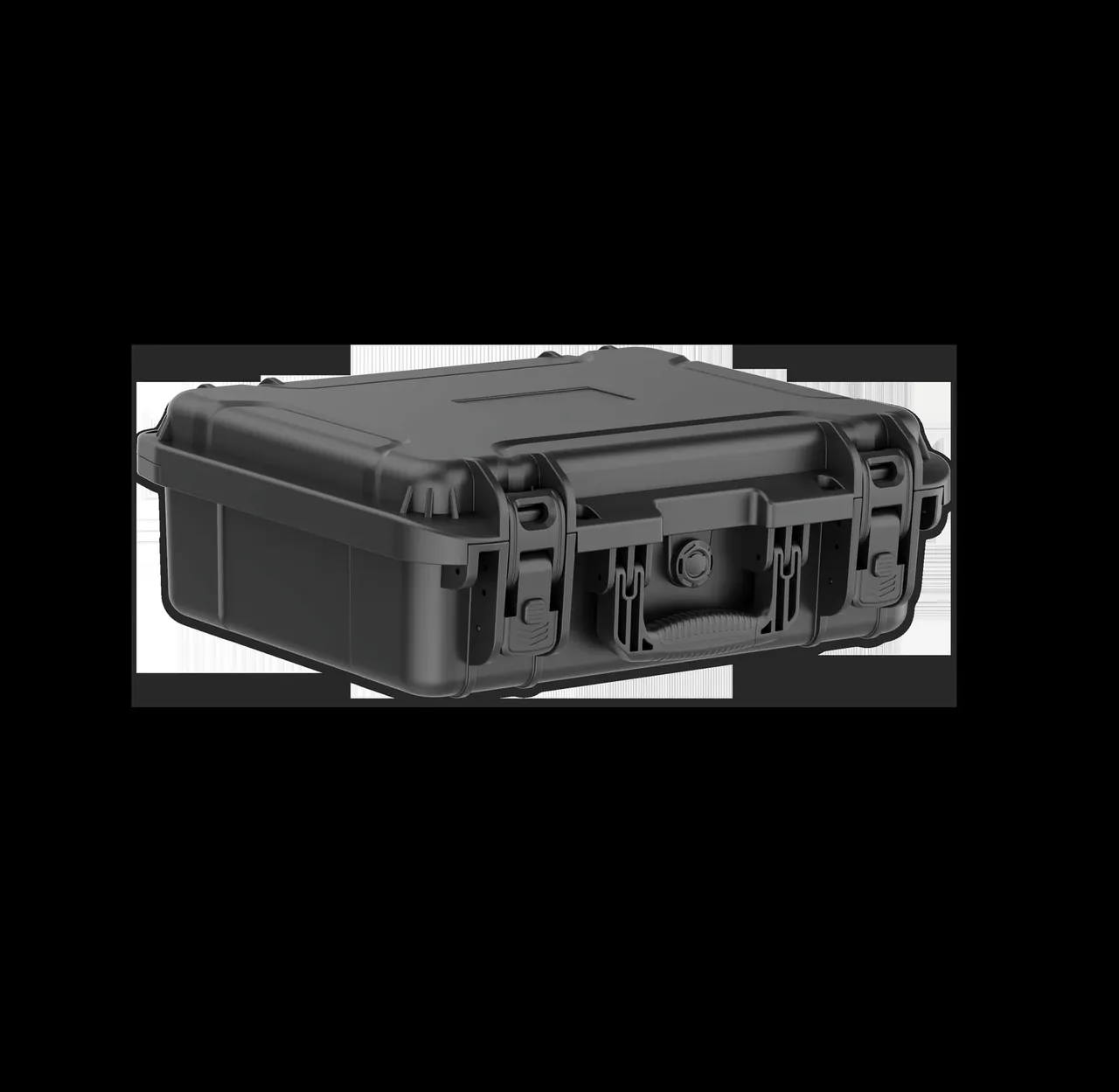
Dose by internal volume at one to two grams per litre. The cavity here measures 384 by 285 by 135 millimetres, about 14.8 litres, so fifteen to thirty grams. Cases opened often need double, because every opening swaps the air.
Absorption releases heat, so a case in a sunlit vehicle adsorbs by day and releases at night. That is temperature driving the material, not failure. Sealed in a hot vehicle, the daily swing can exceed twenty points, so keep the case where temperature is steady.
4. Indication: how to read a humidity card
A humidity card carries dots at ten, twenty, thirty, forty, fifty and sixty percent. The dot above the threshold turns pink, so the first change gives the upper bound inside.
Read within thirty seconds of opening, before room air mixes in, or probe through the valve. Cards passivate after about six months in damp air; replace the batch then.
An electronic meter drifts three to five points but logs a curve, which shows a seal degrading. Cards serve the daily check, the meter the quarterly review.
5. Why all three parts are needed
Seal without desiccant is the common half-product: damp air enters at every opening and nothing removes it, so the interior ends up matching the room.
Desiccant without a seal makes the sachet a consumable; a two-millimetre gap passes tens of milligrams a day. Both without an indicator is driving blind, with no idea when saturation arrives, and a fixed interval is wrong in one direction or the other.
Conclusion
A moisture-proof case is a loop: the seal blocks, the desiccant takes, the indicator reports. Each depends on the other two, and any missing link discounts the rest. Ask about all three before buying, and recharge by the card afterwards.
This article covers container-side specifications and design implications only, not the handling, loading or use of the contents.
Related Reading
- Seal strip compression and ageing
- Where condensation inside cases comes from
- Airtight and leak testing for cases
- Gasket material selection
Related Products
- 8 Series — Gun Cases; Military Equipment Cases; Camera Equipment Cases; Drone Cases; Watch Cases; Knife Cases; First Aid Cases; Electronics Equipment Cases
- WL8-2812 PP Gun Case — model WL8-2812
- All protective cases and toolboxes: 7 series, 158 models