

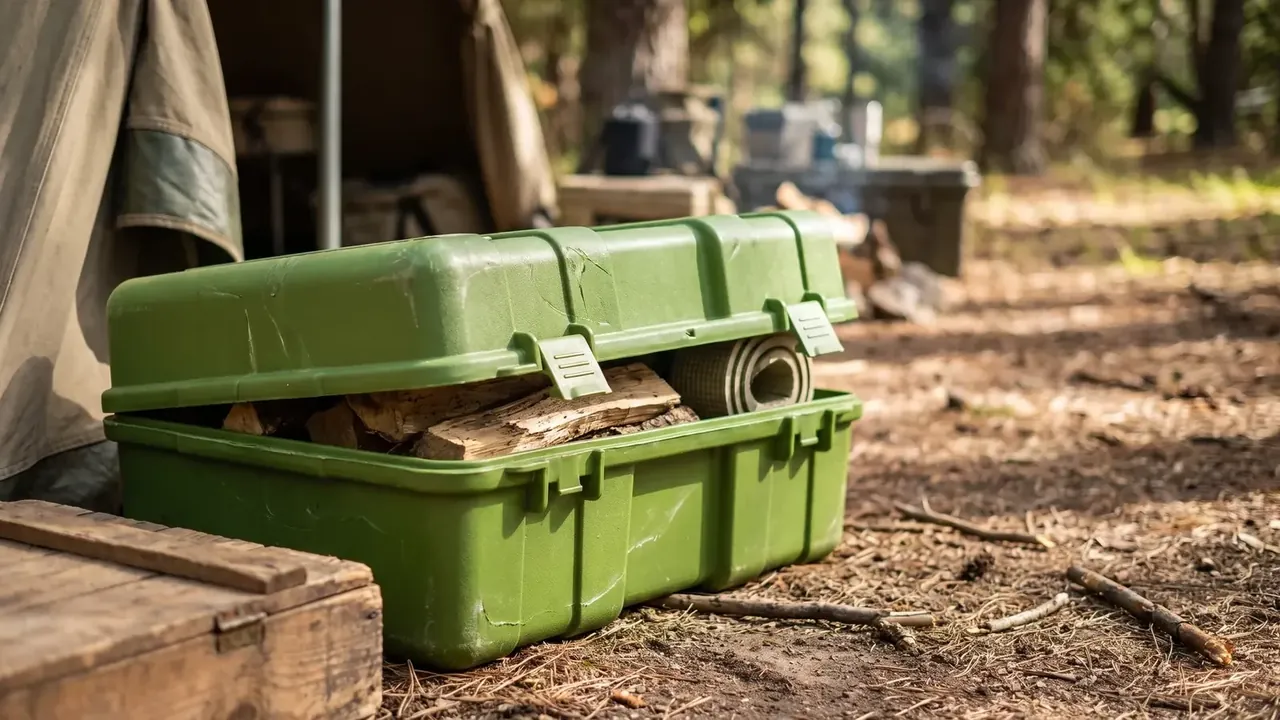
Quick answer: Case Warehouse Storage maintenance runs three tiers: daily on latches, monthly on seal faces and torque, quarterly on pressure and salt fog. Torque 2.5 N·m, hinge play 0.3 mm and 30% set separate keep from replace.
Table of contents
- The Three-Tier Inspection Cycle
- Cleaning the Seal Face and Drain Port
- Latch, Hinge and Handle Limits
- Retesting Humidity, Salt Fog and UV
- Replacement Lines and Life Extension
- FAQ
1. The Three-Tier Inspection Cycle
Case Warehouse Storage intervals follow the speed of failure, not the size of the maintenance team. Polyethylene ages slowly indoors, so gasket and latch fail first. A gasket held above 30 °C can take 30% set within a year, and a latch spring loses half its closing force after two thousand cycles.
| Tier | Interval | Coverage | Focus | Decision line |
|---|---|---|---|---|
| Daily | Every shift | Cases handled | Shell, latch, handle | Unlatched catch is pulled |
| Monthly | 30 days | 10% of locations | Seal face, hinge play | Play above 0.3 mm is shimmed |
| Quarterly | 90 days | Full store | Pressure, salt fog | Drop above 0.3 kPa fails |
Daily checks answer whether a case can go out today; quarterly checks answer whether it retires. Skip the monthly pass and gaskets appear crushed flat in their grooves, cracking on the first lift.
2. Cleaning the Seal Face and Drain Port
The target in Case Warehouse Storage is the 8 mm band where lid meets body. One sand grain above 0.5 mm opens a water path and an immersion test fails.
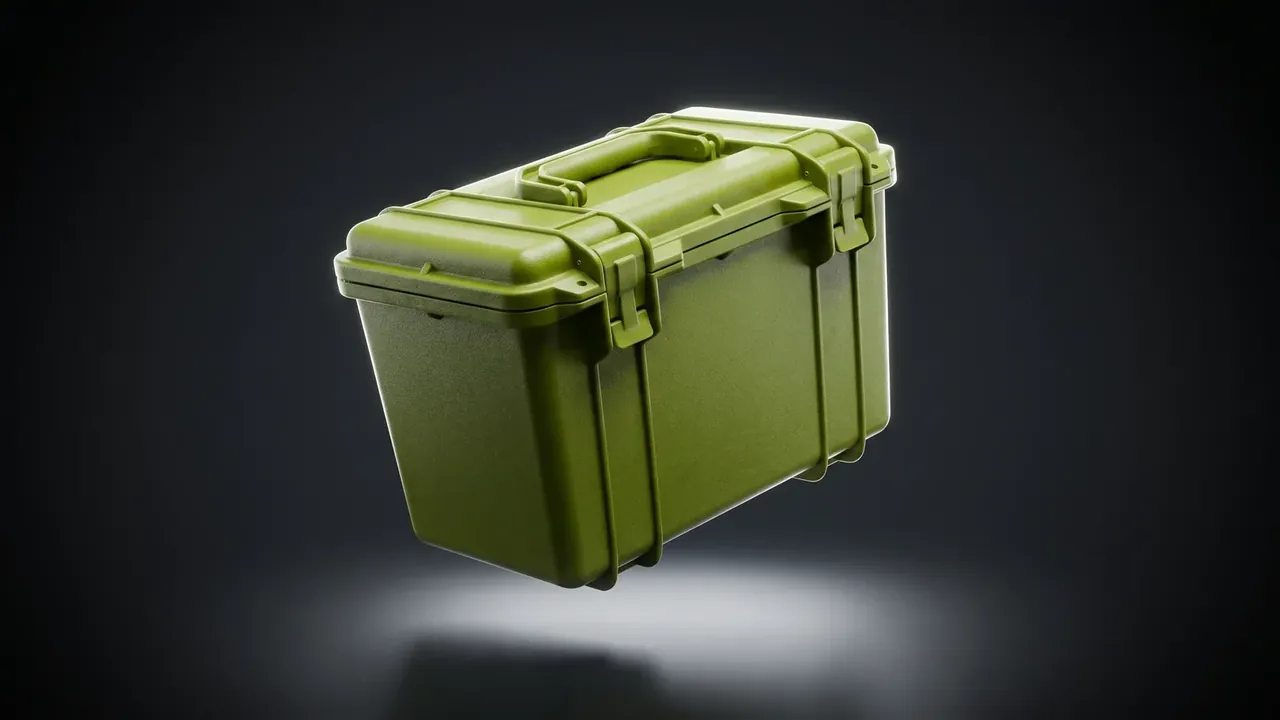
Never point a pressure washer at the seal. Above 0.4 MPa the jet lifts the gasket and drives water behind it; the outside looks dry and the next test finds the leak. Detergent stays at 2%, water below 40 °C, nozzle 300 mm away.
- Dry-brush the foam insert; do not soak it.
- Wipe the seal face in one direction, never scrubbing back and forth.
- Clear the drain port with an 8 mm probe, swapping it when the tip loads with grit.
- Rinse, blot dry, rest 30 minutes, then apply silicone grease thin enough that no gloss shows.
Thick grease collects dust, which becomes lapping paste. Dusty stores move to a 20-day interval.
3. Latch, Hinge and Handle Limits
Metal parts are the only part of Case Warehouse Storage accepted by number. Latches are stainless pressings on M5 screws; 2.5 N·m is enough, and below 2.0 N·m two hours of transport vibration backs a screw out half a turn, so the catch closes crooked and one side of the gasket never seats. Hinge play is read with a feeler gauge: shim at 0.3 mm, replace at 0.5 mm, or the lid rocks and shears the gasket.
Handles get skipped most often. Once the nylon pivot bushing wears 1 mm, a loaded case tilts about 5 degrees when lifted, and repeated tilting cracks the wall at the pivot boss.
| Item | Tool | New | Replace at |
|---|---|---|---|
| Latch screws | Torque wrench | 2.5 N·m | Stripped thread |
| Hinge end play | Feeler gauge | 0.2 mm | 0.5 mm |
| Handle bushing | Vernier caliper | 0 mm wear | 1.0 mm |
| Gasket hardness | Shore A durometer | 55±5 | 70 |
4. Retesting Humidity, Salt Fog and UV
Environmental variation in Case Warehouse Storage ends up in three tests. They belong in the store too: one case pulled every 12 months, logged in the quarterly record.
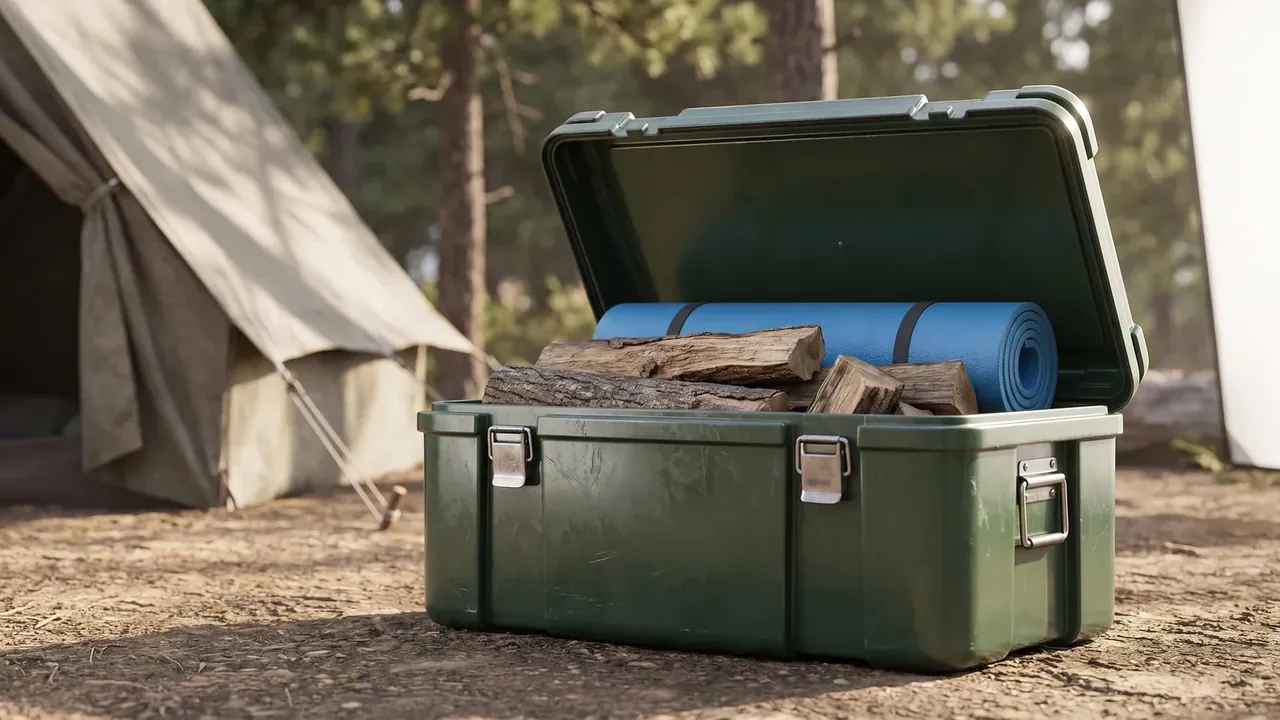
MIL-STD-810H Method 507.6 runs damp heat in 10 cycles of 24 hours between 30 °C and 60 °C above 95% humidity, with the pressure test after the last cycle. Salt fog follows Method 509.7: 5% sodium chloride, 35 °C, 48 hours, red rust on latches as the failure line. UV ageing uses a xenon lamp, where 500 hours approximates a year outdoors; stay below ΔE 3, and above 5 the batch is downgraded. Air-tightness uses pressure decay, charged to 20 kPa and held 60 seconds, accepting 0.3 kPa. Sealing is retested to IEC 60529, where IPX7 means 1 metre for 30 minutes with no water in the groove. Gasket hardness reads 55±5 when new, and 65 puts it on the watch list.
Order matters: damp heat, then salt fog, then UV. A swollen gasket lets salt reach the joint; a dry one blocks it and flatters the result.
5. Replacement Lines and Life Extension
Decision lines must be measurable. Four apply: wall thickness down more than 10%, a crack longer than 20 mm, gasket set above 30%, or latch force under 30 N. Any single hit retires the case.
Life extension has three levels: new gasket, new latch set, local reinforcement. A gasket set costs about 12 yuan and 8 minutes and restores roughly 90% of immersion performance. Reinforcement means a 3 mm stop hole at the crack tip, hot weld with matching rod, then grinding flush; without the stop hole the crack runs on within three months.
Extension happens once. A case repaired twice drops from three-high to two-high stacking, and that margin is what Case Warehouse Storage cannot give away.
Conclusion
Case Warehouse Storage maintenance is a chain from frequency to threshold: 20 seconds daily on latches, 6 minutes monthly on play, 15 minutes quarterly on pressure, with 2.5 N·m, 0.3 mm, 0.3 kPa and 30% set dividing usable from retired. Grease stays thin and wash pressure stays under 0.4 MPa. Run the chain and Case Warehouse Storage gains one gasket cycle over an untracked store.
This article discusses only the container (case body) side of specifications and design intent, and does not cover any handling, loading or use of the contents.
Related Reading
- Maintenance points for explosive storage cases
- Daily care for submachine gun storage boxes
- How a case warehouse is laid out
- Grenade container maintenance intervals
Related Products
- 8 Series — Gun Cases; Military Equipment Cases; Camera Equipment Cases; Drone Cases; Watch Cases; Knife Cases; First Aid Cases; Electronics Equipment Cases
- WL8-2812 PP Gun Case — model WL8-2812
- All protective cases and toolboxes: 7 series, 158 models