

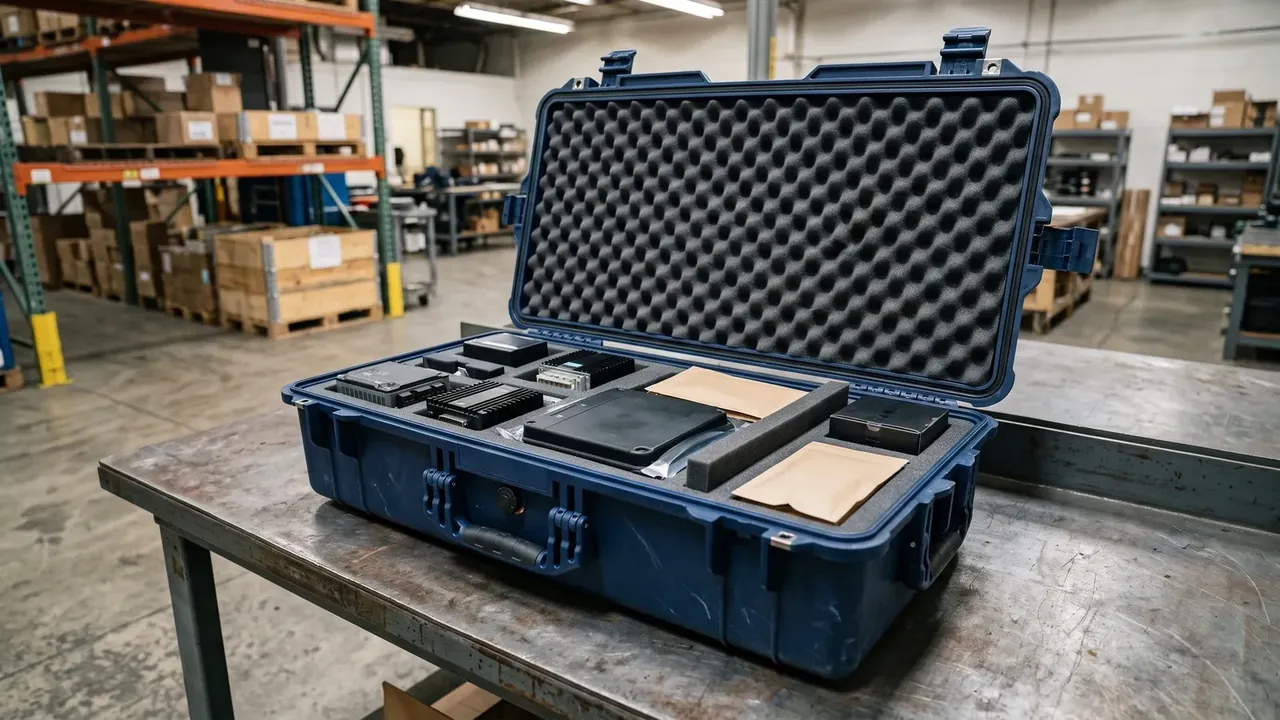
Quick answer: Case mould ownership rests on four clauses: title, 38,000 CNY over 20,000 units, a 300,000-shot life, handover after 18 months idle.
Table of contents
- Title and steel-stamped number
- Amortising 38,000 CNY over 20,000 units
- 300,000-shot life and service duty
- Handover after 18 months idle
- FAQ
1. Title and steel-stamped number
The invoice for the 38,000 CNY tooling sat in the buyer's file, but the press shop's fixed-asset register carried the mould as its own property, with a number, an original value and a yearly depreciation line. The contract said only that the tool was made on the buyer's behalf.
Money and registration sat with two different parties, so the paperwork and the ledger drifted apart. That is where case mould ownership usually fails.
Three sentences fix it. Title: the mould body, frame, hot runner, spares, drawings and programs belong to the buyer from the day the tooling fee is paid in full, and the supplier holds only possession and use rights for the contract product. Identity: a steel-stamped number on the frame side, built from the buyer's asset code plus the product model, matched one to one with the asset card, with any change confirmed in writing. Limits: no pledge, no sublease, no lending, and no second customer for the same case design.
The number is not decoration. Three frames of similar size sit on one warehouse floor after a programme ends, and only a 12-digit stamp narrows the search to one hour.
Add a recovery path to the title clause: on insolvency, acquisition or relocation, the buyer may enter the plant with the contract, the payment record and a photo of the stamp. That sentence costs nothing at the table and saves six months of dispute later.
2. Amortising 38,000 CNY over 20,000 units
The arithmetic is settled: 38,000 CNY divided by 20,000 units is 1.9 CNY a case. The wording is not settled, and three versions behave differently when an order stops early.
Lump sum keeps the tooling on a separate invoice and the unit price free of amortisation; it reads clean until an order ends at 8,000 units, leaving 12,000 units unamortised and the money unrecoverable. Per-piece amortisation puts a line in the quotation reading 1.9 CNY per case until 20,000 units are reached, then stops. A deposit model takes 20,000 CNY up front and recovers it at 0.9 CNY per case from the running invoice.
The per-piece version wins if three details are written. Cap the count at 20,000 units and state that later orders pay nothing further. Reconcile the running count every quarter with both signatures. On termination, settle by units already amortised and bill the balance at 1.9 CNY, or release the tool against a 30% penalty.
The weakest wording in any case mould ownership clause is a line saying the tooling cost is included in the unit price. It erases the term, the count and the exit, and the supplier can later argue either that the tool is fully paid or that it is not.
Keep tooling separate from the unit price in the quotation. Only then does a comparison show where the difference sits: 38,000 CNY tooling at 42 CNY a case against 26,000 CNY tooling at 45 CNY a case is a 2.8 CNY gap per unit, or 56,000 CNY across 20,000 units.
| Wording | Clause text | Result if the order stops |
|---|---|---|
| Lump sum | Separate invoice, no amortisation in unit price | Unamortised balance lost, tool still on supplier books |
| Per piece | 1.9 CNY a case, capped at 20,000 units | Settle by units amortised, balance at 1.9 CNY |
| Deposit | 20,000 CNY up front, recovered at 0.9 CNY | Deposit balance refunded, refund date fixed in writing |
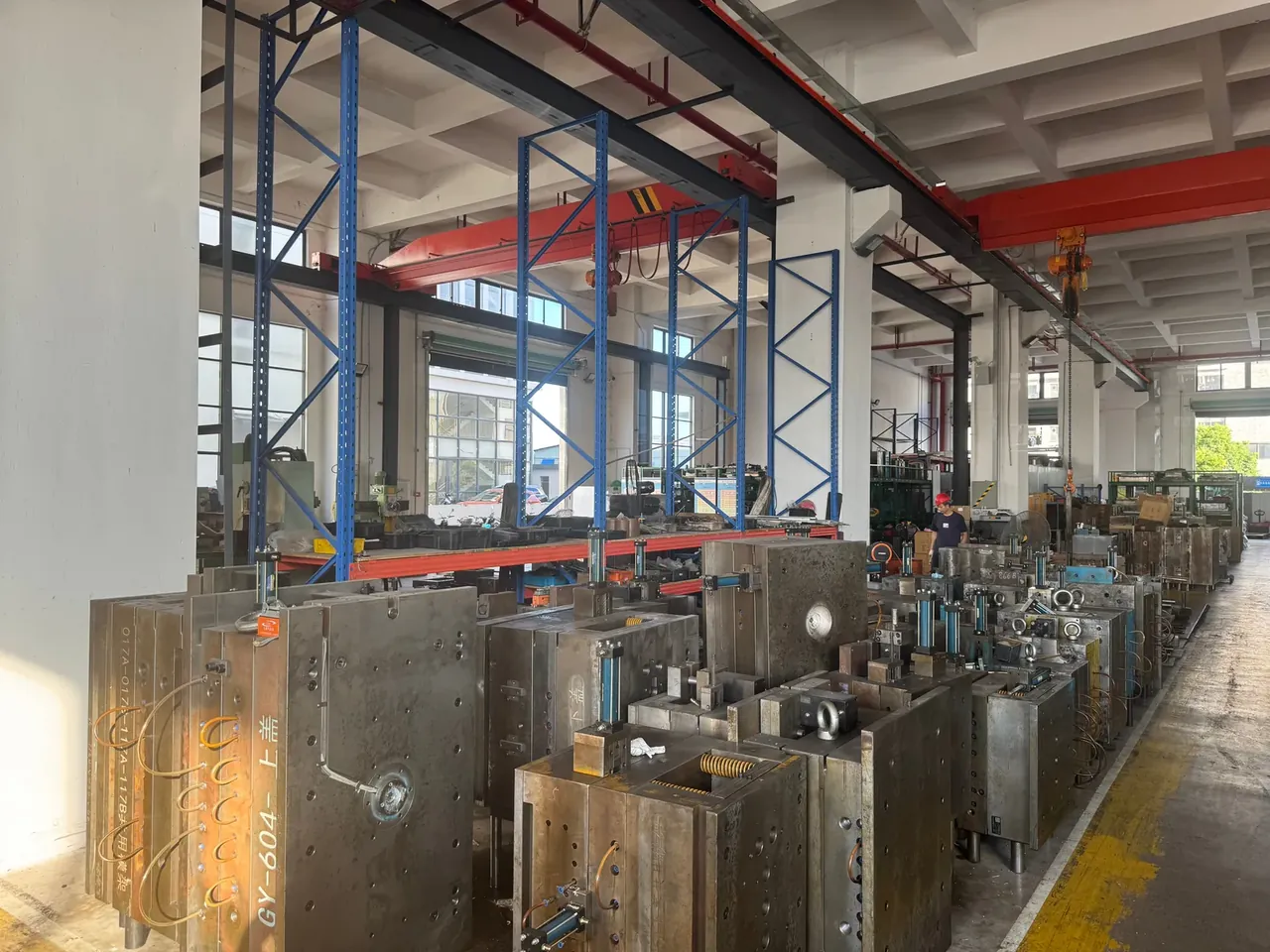
3. 300,000-shot life and service duty
Write life in shots, not years. Five years means little on a tool running 6,000 cases a month, while 300,000 shots is checkable: one cavity gives 300,000 cases and two cavities give 600,000, so the counting basis must travel with the cavity count.
Split service duty by shot count. A planned service every 30,000 shots cleans circuits, polishes the cavity and re-greases ejector pins, ten times across the life at 1,200 CNY each, or 12,000 CNY, carried inside the unit price rather than invoiced separately.
The counter is the lever. The supplier submits a shot log and service record by the 5th of each month, the record travels with the tool, and it changes hands at the move. At 240,000 shots, or 80% of life, a refurbishment review starts and must land on continue, repair or scrap.
Share repair cost on the same split. Normal wear is 50/50; damage from over-temperature, short shots, foreign bodies or parameters outside the agreed window is 100% supplier cost. The cause is visible in the record, since burnt cavity steel and a snapped ejector pin leave different traces.
Scrap gets two hard lines: three or more key dimensions out of tolerance, or a repair quote above 40% of the tooling fee, which is 15,200 CNY. Past either line the tool is retired and cannot run the contract product again.
4. Handover after 18 months idle
The disposal clause carries a date, an action and a cost. After 18 consecutive months without an order, the buyer may serve written notice and take the tool within 30 days, and the supplier may not hold it for unamortised tooling, though confirmed goods debt is a separate claim.
Storage duty stays with the supplier until the move. Frames sit off the floor with the number facing the aisle, relative humidity stays under 60%, and a stock check with photographs runs every 6 months, clear enough to read the stamp and the cavity condition. This appears fussy until a dispute needs proof that the tool was intact.
Insurance gets its own sentence: cover at no less than 1.5 times the tooling fee, or 57,000 CNY, taken by the supplier but naming the buyer as beneficiary, with fire, flooding, relocation and lifting damage inside the scope, and a policy copy every year.
The move itself follows seven items, and nothing is signed while one is missing.
| No. | Item | Acceptance |
|---|---|---|
| 1 | Tool body and frame | Stamp matches the annex, cavity free of rust |
| 2 | Hot runner and controls | Heaters and thermocouples complete, heats normally |
| 3 | Spares | Pins, springs and fittings counted against the annex |
| 4 | Drawings and 3D data | 2D, 3D and every change record present |
| 5 | Process and trial report | Last moulding parameters and first-off dimensions |
| 6 | Service and repair log | Matches the shot log line by line |
| 7 | Number cross-reference | Agrees with the buyer's asset card |
Acceptance takes 3 working days. Once both sides sign, a carrier named by the buyer moves the tool with freight insurance attached, and the contract names who pays.
Conclusion
Case mould ownership fails on wording, not intent, so write four clauses that survive a change of supplier. Title names the buyer from the day the fee is paid and binds a steel-stamped number plus a recovery path. Amortisation caps 38,000 CNY at 20,000 units and 1.9 CNY a case, with a termination formula. Life reads 300,000 shots, service every 30,000 shots and a review at 240,000. Disposal fixes 18 months, 30 days, cover of 57,000 CNY, seven handover items and 3 working days of acceptance. Each clause gets its own annex page, checked line by line before signature, which is far cheaper than a claim afterwards.
This article discusses container-side specifications and design implications only, and does not cover any handling, loading or use of the contents.
Related Reading
- Intellectual property clauses in case contracts
- Case mould life and service intervals
- Tooling and sample fee refund rules
- Case mould procurement and incoming acceptance
Related Products
- 8 Series — Gun Cases; Military Equipment Cases; Camera Equipment Cases; Drone Cases; Watch Cases; Knife Cases; First Aid Cases; Electronics Equipment Cases
- WL8-2812 PP Gun Case — model WL8-2812
- All protective cases and toolboxes: 7 series, 158 models