

Quick answer: The gap between two case mould quotes comes from how cost is split, not from the headline price; ask for six separate lines, put ownership and a 45-day schedule in the contract, then tie three payments to verifiable outputs.
Table of contents
- Six Cost Lines in a Case Mould Quote
- MOQ and Mould Ownership in the Contract
- A 45-Day Schedule From Steel to Production
- Payment Terms, Sampling Fees and Mould Payments
- Five Quote Traps and What to Check
- FAQ
1. Six Cost Lines in a Case Mould Quote
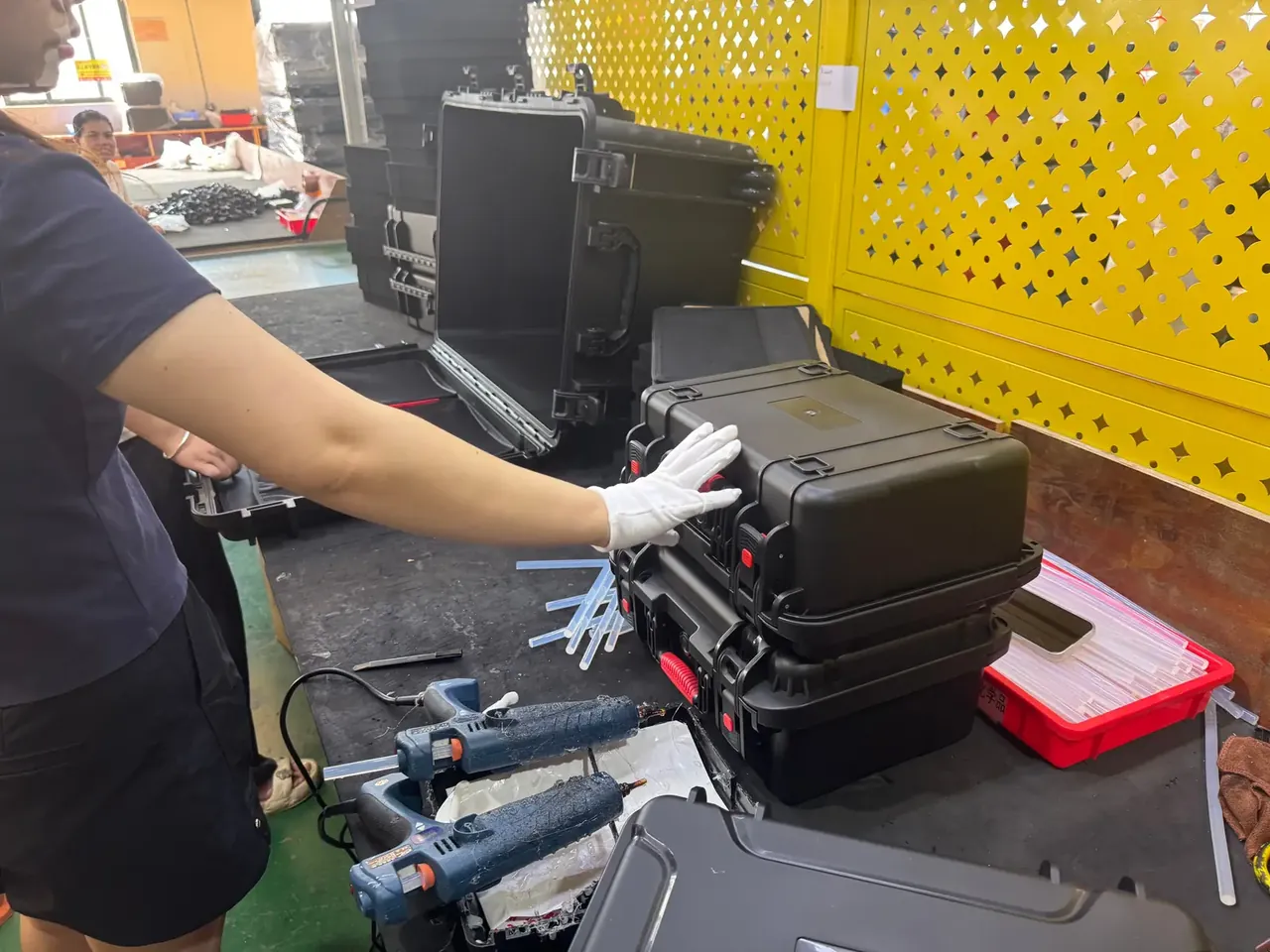
A single-cavity case mould for a 520×380×210 mm interior and a 3.0 mm wall usually quotes 80,000–140,000 RMB. When two quotes differ by 30,000 RMB on one drawing, the gap is rarely steel; one has hidden machining hours, trial shots or freight in the lump sum.
Split the figure and a case mould quote resolves into six blocks, each mapping to something countable.
| Cost line | How it is usually written | What to ask |
|---|---|---|
| Cavity and core machining | One mould | Hours or piece rate, and the CNC versus EDM split |
| Mould steel | Good quality steel | Grade, pre-hardened hardness, nitriding included or not |
| Mould base and standard parts | Included in mould | Base size, ejector pins and springs itemised |
| Heat treatment and finishing | Extra | Nitrided depth, polishing grit |
| Trial shots and rework | Two samples | Sample quantity per run, free rework limit |
| Packing and freight | Collect | Wooden crate or steel frame, who loads and insures |
The steel row is where vagueness pays. P20 pre-hardened stock at 30–34 HRC with a 0.05 mm nitrided layer belongs in the technical annex; good quality steel belongs nowhere.
A supplier who puts 3.8 t mould weight, φ12 mm cooling channels and a 60 mm ejection stroke in the proposal usually opens the measurement log at trial too.
2. MOQ and Mould Ownership in the Contract
MOQ negotiates how tooling cost is amortised, not the unit price. On a case mould rated for 300,000 shots, a 300-unit first order pushes amortisation above 300 RMB per unit; raising it to 500 units with 2,000 more within 12 months flattens that curve.
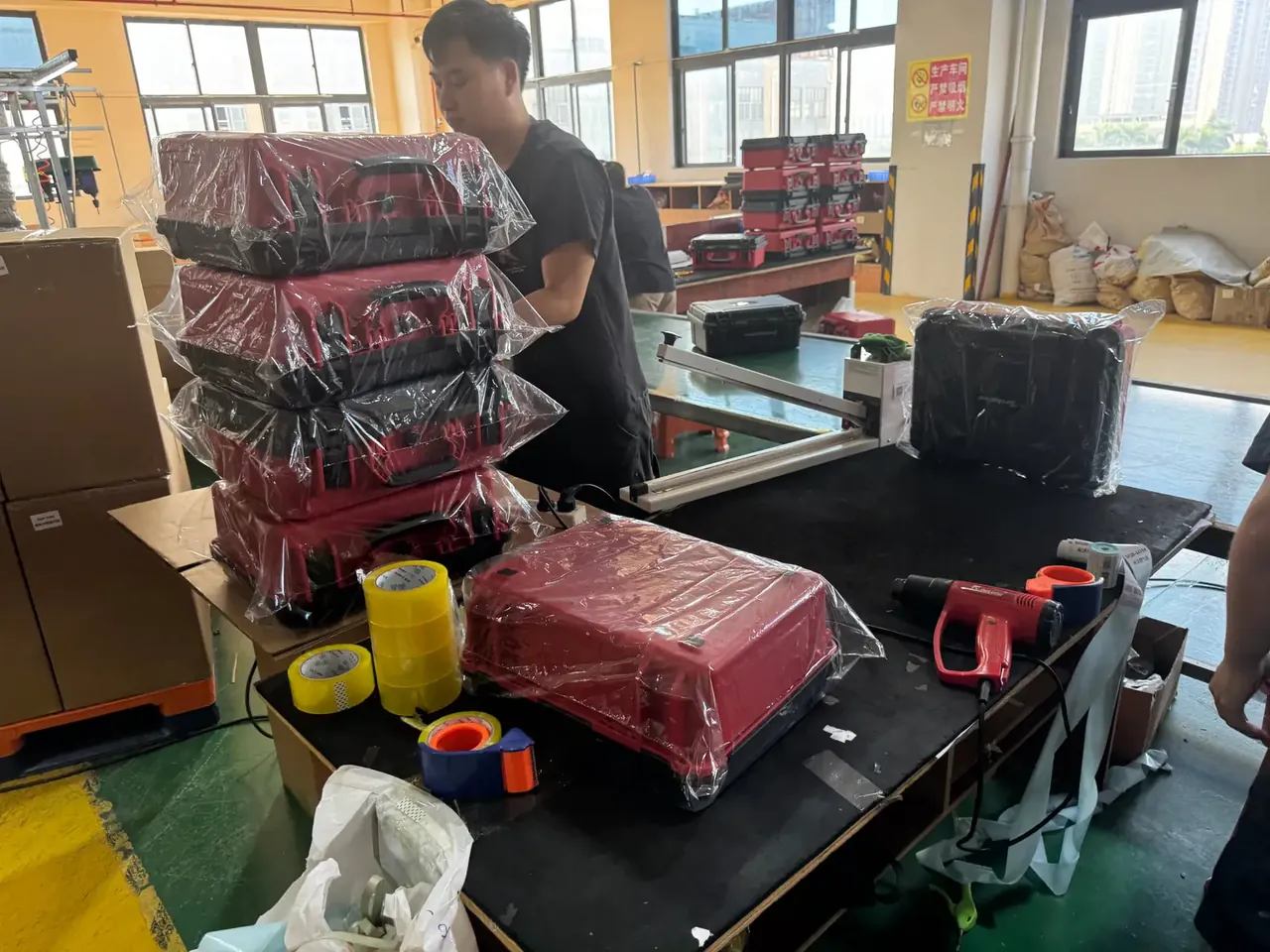
Ownership needs three clauses, or the tooling stays on the supplier floor after the last payment clears. The title clause passes ownership to the buyer once paid in full, with the mould number and cavity photos attached. The storage clause sets custody responsibility plus a maintenance record every 50,000 shots. The transfer clause allows removal on 30 days notice, moving costs at actuals. Without them, a supplier who changes presses or runs your case mould for another customer leaves the buyer nothing to point at.
3. A 45-Day Schedule From Steel to Production
The 45 days are not a promise; they are six stages worked back from the ship date.
- Day 0–3: drawings frozen, DFM report returned, 1.5° draft and parting line confirmed
- Day 4–13: mould base and steel arrive, base roughed, drilled and tapped
- Day 14–22: cavity finishing and polishing, mating surfaces hand-fitted to 0.02 mm
- Day 23–25: T1 trial shot, 30 sample parts produced
- Day 26–37: rework, then a 200-unit pilot run for assembly and drop checks
- Day 38–45: production release, first parts run continuously for 72 hours
Attach a verifiable deliverable to each stage rather than a bare date. Five of the 30 T1 samples should be sealed and signed by both sides, so later dimensional disputes settle against those parts.
4. Payment Terms, Sampling Fees and Mould Payments
Payment structure moves cash flow more than a 3% difference in the headline figure.
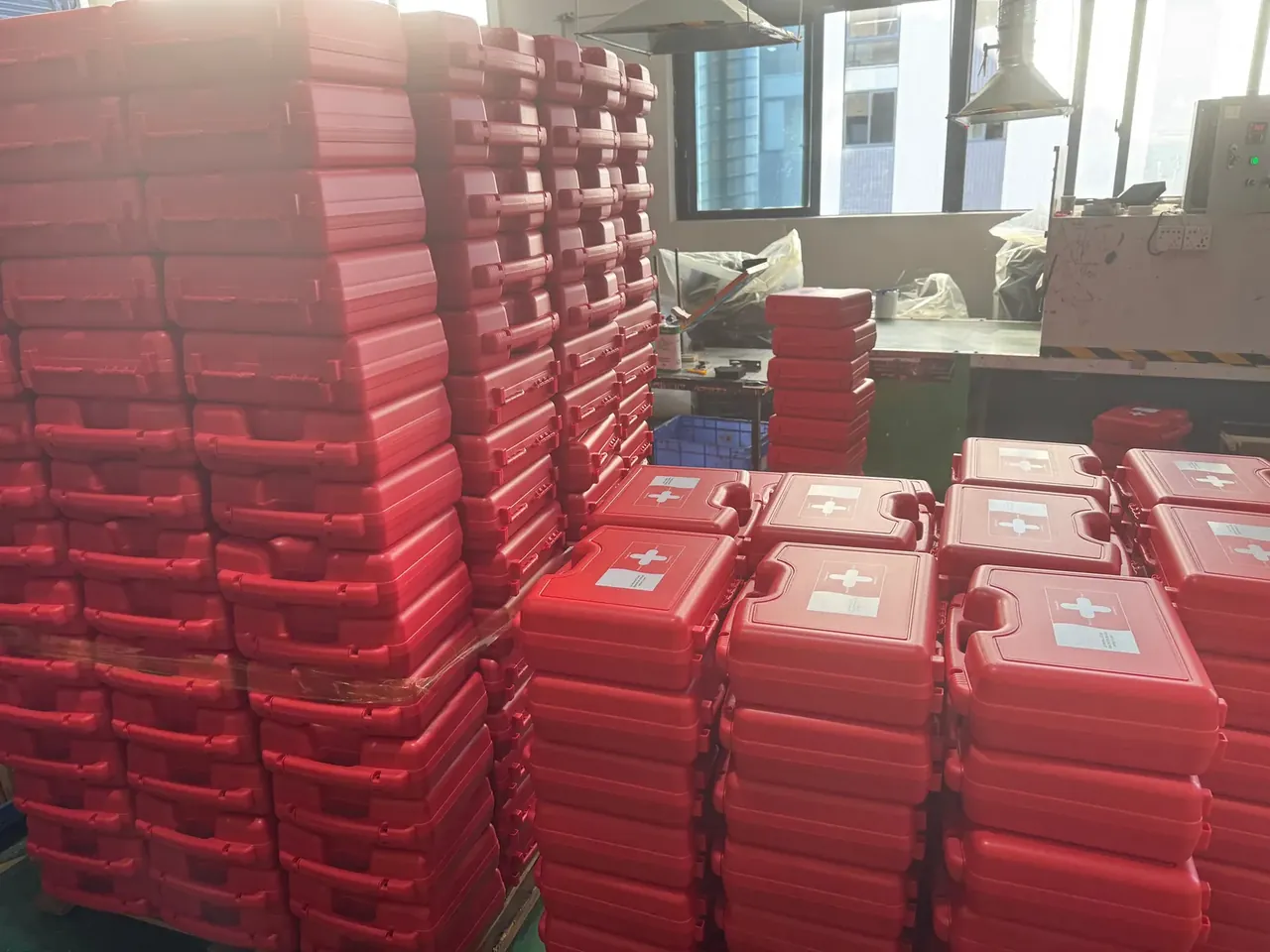
A common split is 40% down, 30% on a passed trial and 30% within 30 days of acceptance. Push the down payment below 30% and steel purchasing slips down the queue, dragging the schedule with it. An 18,000 RMB sampling fee, credited in full once production passes 500 units, is easier to agree than free samples. Keep the tooling invoice apart from the goods invoice, so an unpaid case mould balance cannot block a shipment. Add the steel index clause here: repricing at ±6% movement, with a stated base date. Close with the acceptance criterion — 5,000 consecutive shots with no flash and no sink marks.
5. Five Quote Traps and What to Check
Quote traps are rarely clever; five checks neutralise most.
| Trap | What it sounds like | What to check |
|---|---|---|
| Low entry price | Twenty percent below the market | Demand line-by-line pricing, compare hours and steel grade |
| Blurred ownership | We look after it better | Contract states title transfer and removal conditions |
| Uncapped trials | We rework until you are happy | Free rework count plus a rate for extra rounds |
| Schedule excludes rework | 45 days, fixed | Rework days counted separately, with a stated extension cap |
| Downgraded steel | Equivalent performance | Match incoming slip, mill certificate and spectrometer report |
A quote twenty percent under the field usually moves trials and freight to per-event charges; three rework rounds recover the discount.
Walk the steel rack and the subcontracted heat treatment paperwork on a plant visit; if they match, the steel line is real.
Conclusion
Quoting compares definitions, not totals. Six itemised cost lines, ownership and schedule as verifiable clauses, and payments tied to sealed samples make two offers genuinely comparable. Run it once and the spread on a case mould narrows from thirty percent to under ten.
This article discusses only the container (case body) side of specifications and design intent, and does not cover any handling, loading or use of the contents.
Related Reading
- Storage and care rules for case moulds
- What a trial moulding report must show
- How to weight a supplier scorecard
- The on-site order of a production audit
Related Products
- 8 Series — Gun Cases; Military Equipment Cases; Camera Equipment Cases; Drone Cases; Watch Cases; Knife Cases; First Aid Cases; Electronics Equipment Cases
- WL8-2812 PP Gun Case — model WL8-2812
- All protective cases and toolboxes: 7 series, 158 models