

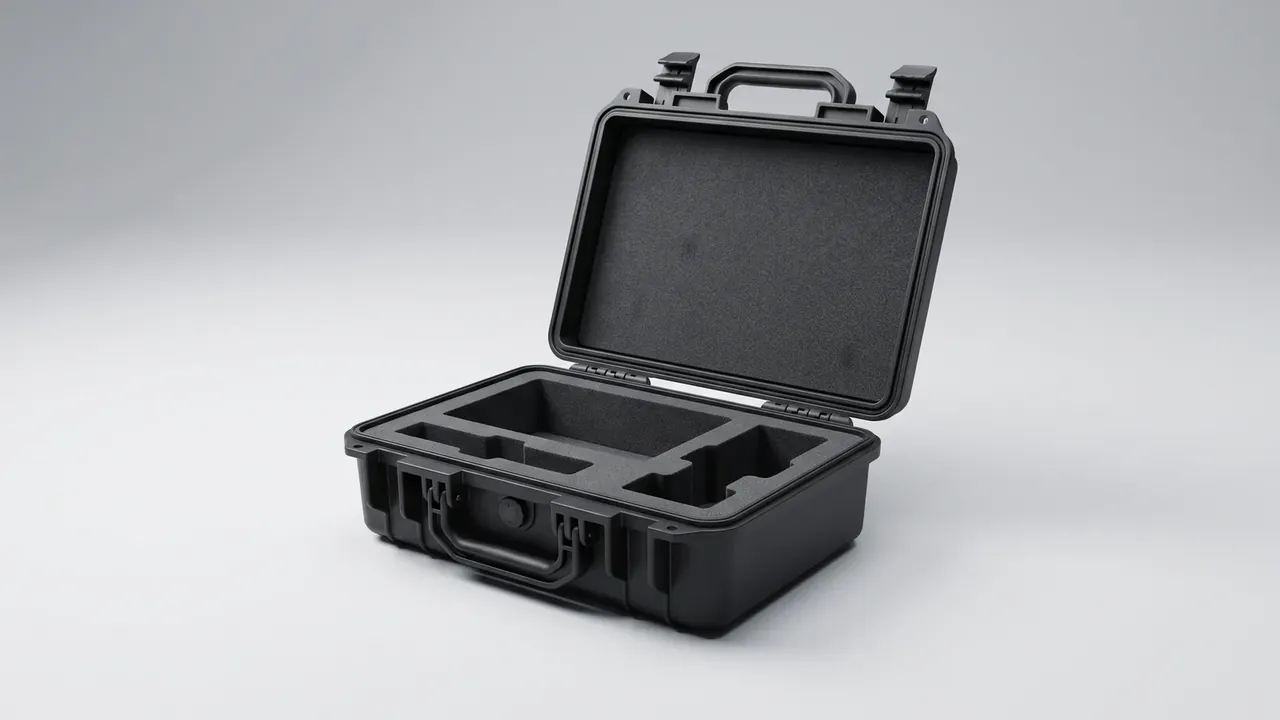
Quick answer: An outdoor equipment mobile trolley case is specified against four uses: tailgate to camp, moves inside camp, field work transport, and water or snow. Three inputs decide the class — one-way distance, loaded weight, surface. Under 500 m and 35 kg, two wheels are enough; beyond that, go four-wheel.
Table of contents
- How the Outdoor Equipment Mobile Trolley Case Uses Divide
- Camp Runs and Tailgate Loading
- Field Work: Matching Wheels to Ground
- Water, Ice and Cold-Weather Setup
- Multi-Case Hauls and Vehicle Loading
- FAQ
1. How the Outdoor Equipment Mobile Trolley Case Uses Divide
Three inputs set the class: one-way distance, loaded weight, surface. Pick the wrong class for an outdoor equipment mobile trolley case and every later choice becomes a correction.
The 500 m mark is the hard line. Inside it a 100 mm wheel handles concrete and compacted soil; past it, rolling resistance climbs about 30 percent, so the wheel grows to 125 mm or the case goes four-wheel.
| Use class | One-way | Setup |
|---|---|---|
| Tailgate to camp | 100 to 500 m | 100 mm wheels, 25 to 35 kg |
| Inside camp | Under 50 m | Height under 560 mm |
| Field work | 1 to 3 km | 125 mm wheels, 1.2 mm tube |
| Water and snow | 200 to 800 m | Sealed body, valve |
2. Camp Runs and Tailgate Loading
Tailgate loading is the most underestimated part. Boot openings sit at 700 to 760 mm, so a case taller than 620 mm must be stood up and tipped in sideways, and once the centre of gravity leaves the base footprint the lift moves into the lower back. At 600 mm with two 8 mm ribs underneath, it slides in.
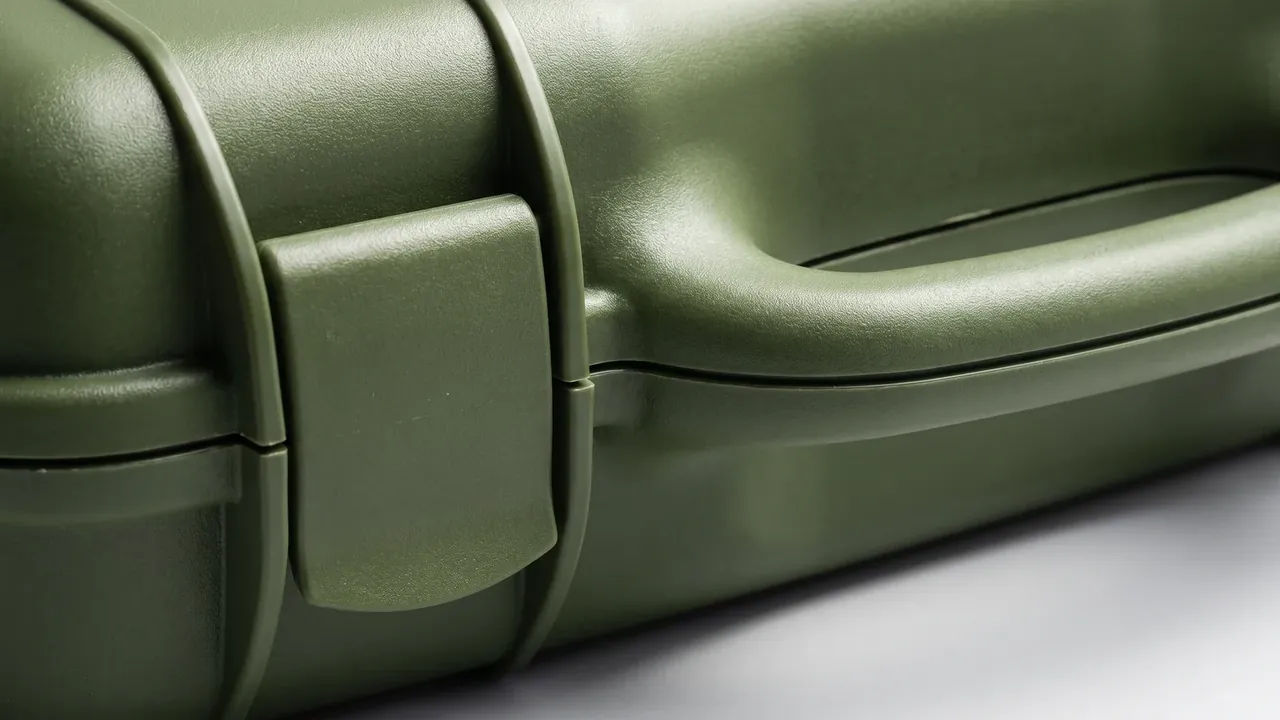
Handle play belongs here too: three sections out to 1050 mm should hold clearance under 1.5 mm, or the case swings under tow and the wrist feels it after 300 m. Inside camp, a 32 mm tread keeps the wheel out of boardwalk gaps.
3. Field Work: Matching Wheels to Ground
Field legs run 1 to 3 km, and what fails first is usually the housing, not the wheel: its pad is often 40 mm square on four self-tapping screws, which every stone works at.
| Surface | Wheel | What matters |
|---|---|---|
| Concrete | 75 to 100 mm | Easy steering |
| Soil and grass | 100 mm, 32 mm tread | Contact near 0.4 MPa |
| Scree and roots | 125 mm, deep tread | Clears about 30 mm |
| Snow and shallows | 125 to 150 mm | Pressure down 20 percent |
Clearance follows wheel size: 125 mm rolls over a 30 mm root, 100 mm stops at 20 mm, and the base still needs 35 mm under it. On fatigue, 1200 extensions a year suit a 1.2 mm 6063 tube and defeat a 0.9 mm one.
4. Water, Ice and Cold-Weather Setup
Water turns towing into sealing. A crossing puts 200 to 400 mm against the base, so the body holds IP67 at 1 m for 30 minutes, and the axle leaks once bore clearance passes 0.3 mm.
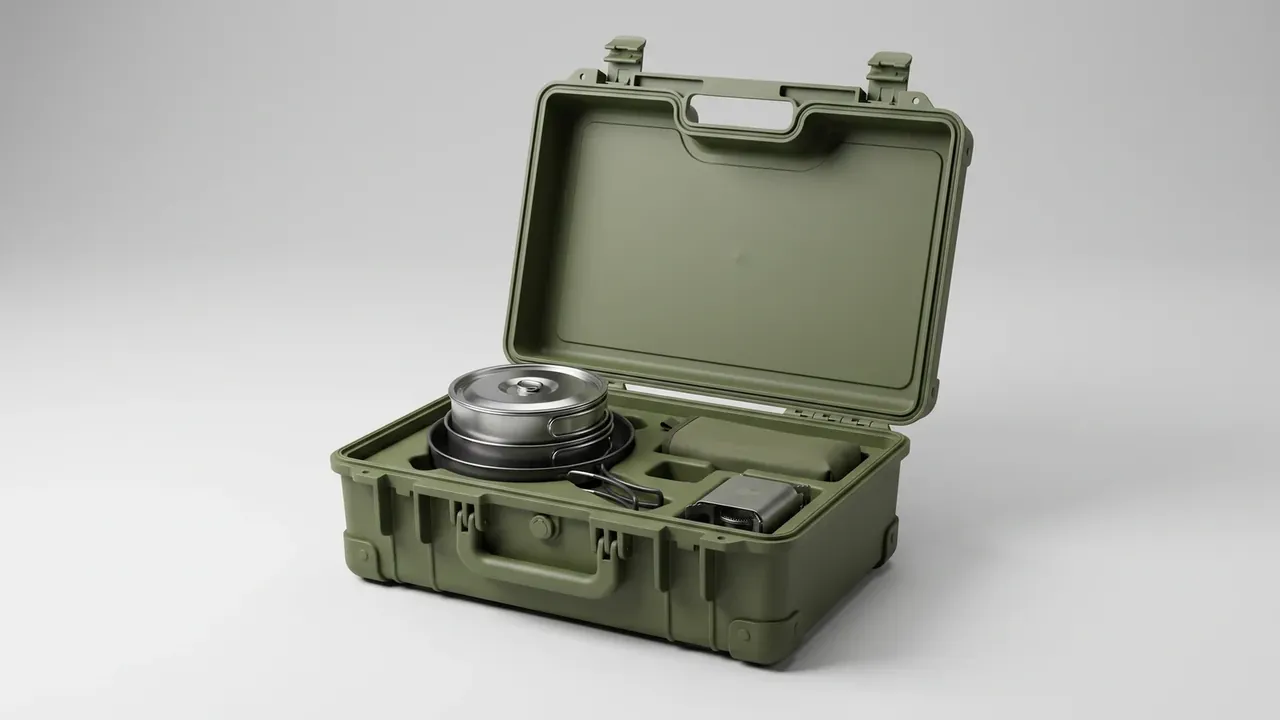
A pressure valve is not optional. Climbing to 1500 m creates about 8 kPa across the wall, and without it the lid needs over 200 N and cold plastic pops a latch; crack it at 3 to 5 kPa. At −25 °C polypropylene also keeps a third of its impact strength, so an 8 percent modifier turns a split into a dent.
5. Multi-Case Hauls and Vehicle Loading
Two 30 kg cases linked by a 700 mm strap can be towed at an angle by one person. Three or more need a platform trolley, since an outdoor equipment mobile trolley case carries its centre of gravity behind the axle and a chain of them swings.
Stack two layers in a van and the bottom row carries about 120 kg, so lid ribs must run the same way, with the upper base staggered 150 mm. Four cases over 300 m take 25 minutes a run on two wheels and 12 on a trolley, so the trolley wins past three cases.
Conclusion
The use classes for an outdoor equipment mobile trolley case reduce to distance, weight and surface, with wheel size, handle sections and sealing matched afterwards. Get the class right and two wheels cover the 500 m camp run; get it wrong and better hardware only patches the gap. Measured this way, an outdoor equipment mobile trolley case tows easily and loads clean.
This article discusses only the container (case body) side of specifications and design intent, and does not cover any handling, loading or use of the contents.
Related Reading
- How a camping storage box is built
- Outdoor case scenarios in practice
- Where rolling tool cases are used
- Equipment cases in transit
Related Products
- 8 Series — Gun Cases; Military Equipment Cases; Camera Equipment Cases; Drone Cases; Watch Cases; Knife Cases; First Aid Cases; Electronics Equipment Cases
- WL8-2812 PP Gun Case — model WL8-2812
- All protective cases and toolboxes: 7 series, 158 models