

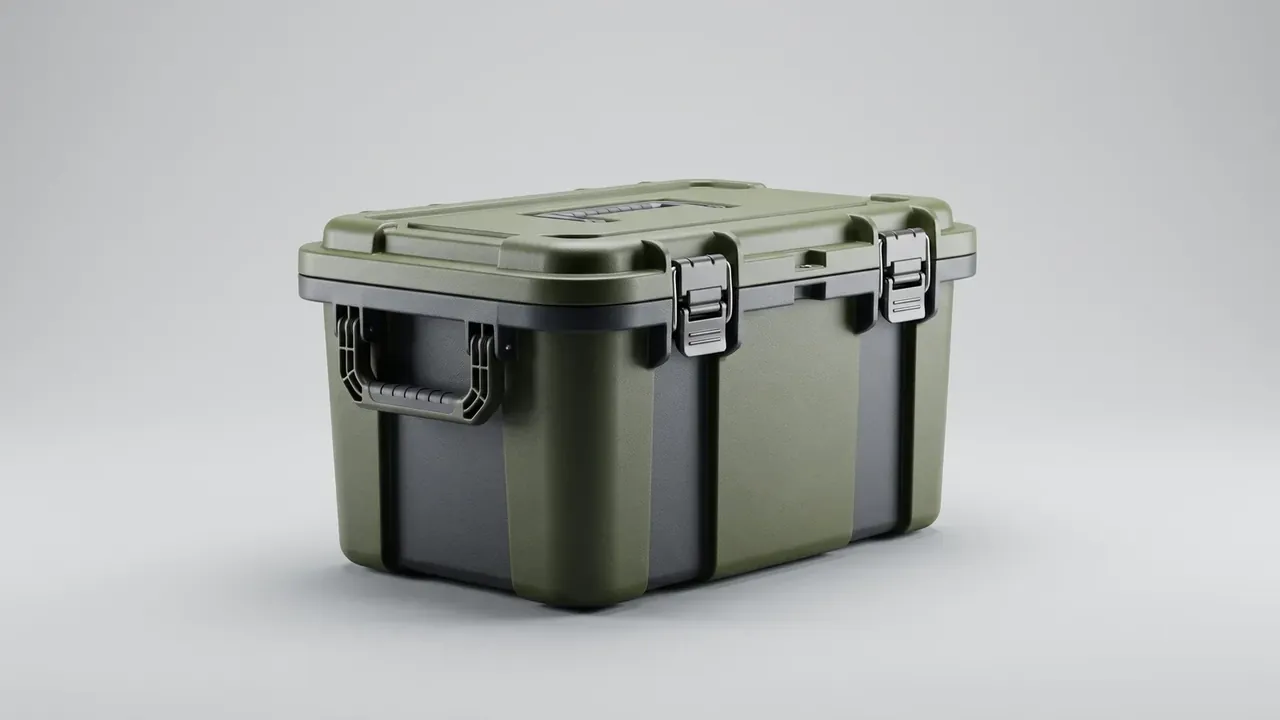
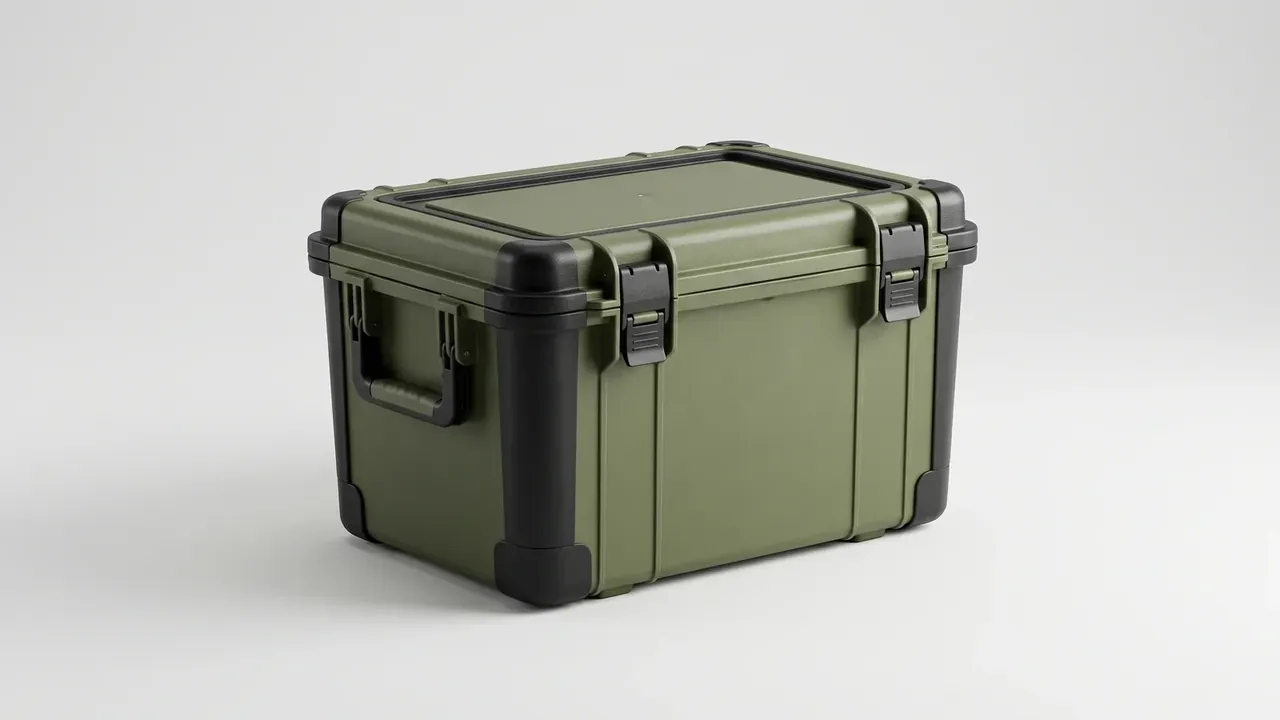
Quick answer: A Camping Storage Box is a rigid box built to stand outdoors overnight. Three things decide whether it works: the lid gasket keeps moisture out, the lid carries the box above, and one handle lets one person move it. Capacity matters only after that.
Table of contents
- Three jobs a Camping Storage Box does
- Sealing: compressing the lid gasket
- Stacking: three high and lid load
- Carrying: handles, wheels and two people
- Liner and volume: litres into usable space
- FAQ
1. Three jobs a Camping Storage Box does
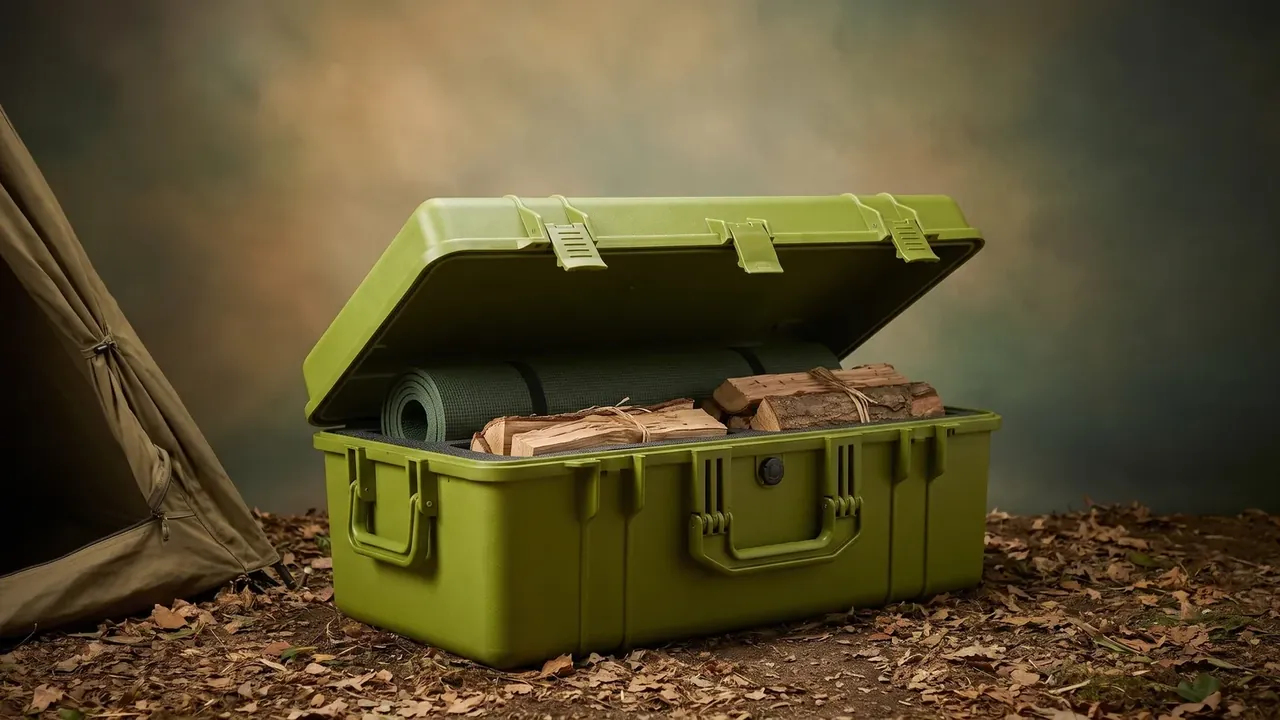
A Camping Storage Box differs from a household tote not in litres but in sleeping outside. After dark the air inside cools and an unsealed lid draws dew in; by day it survives stacking and vibration; unloading usually falls to one person.
Loads fall into three groups. Sleeping bags, clothing and batteries fear moisture; stoves, water bags and cans fear a sagging floor; an axe, rope and lamps fear a puncture. On one box these become three questions: sealing, stacking, carrying.
| Load | Main risk | Structural answer |
|---|---|---|
| Bags, clothing, batteries | Night condensation | Perimeter gasket plus valve |
| Stoves, water, cans | Floor sag | 3.5 mm wall, denser ribs |
| Axe, rope, lamps | Puncture | Thicker wall, optional liner |
2. Sealing: compressing the lid gasket
Sealing is compression, not gasket thickness. EPDM or silicone cord of 6 to 10 mm is flattened 30 to 50 percent when the lid closes and springs back into the gap. Under 30 percent a rough road opens it; over 50 percent the cord fatigues.
Latch count beats latch size. Two latches more than 300 mm apart let the lid arch, and the gap opens furthest from them. A box above 50 litres usually carries four, or two plus straps.
Temperature is the part people skip. Pack at 30 °C, drop to 10 °C overnight and the box runs at negative pressure; forcing the lid pulls the gasket from its groove. A valve bleeds the difference.
Paper test: pull a sheet out at each side of the closed lid; if it slides, that spot is loose. Water poured on the lid for ten minutes should leave no mark on the liner.
| Check | Method | Pass |
|---|---|---|
| Compression | Look along the lid seam | Even line, no daylight |
| Latch spacing | Measure two latches | 300 mm or less |
3. Stacking: three high and lid load
Three high is the usual limit, set by the lid rather than the walls. At the third layer the bottom unit carries the two above plus itself: 25 kg of load becomes 75 kg of design.
Count the flat area, not the footprint. Only the central rectangle of the lid meets the feet above; a foot on the radius doubles local pressure, and polypropylene whitens before it cracks.
Height belongs with the vehicle. At 350 mm, three high is 1050 mm against a 750 mm SUV bay, so three layers need the rear seats folded.
4. Carrying: handles, wheels and two people
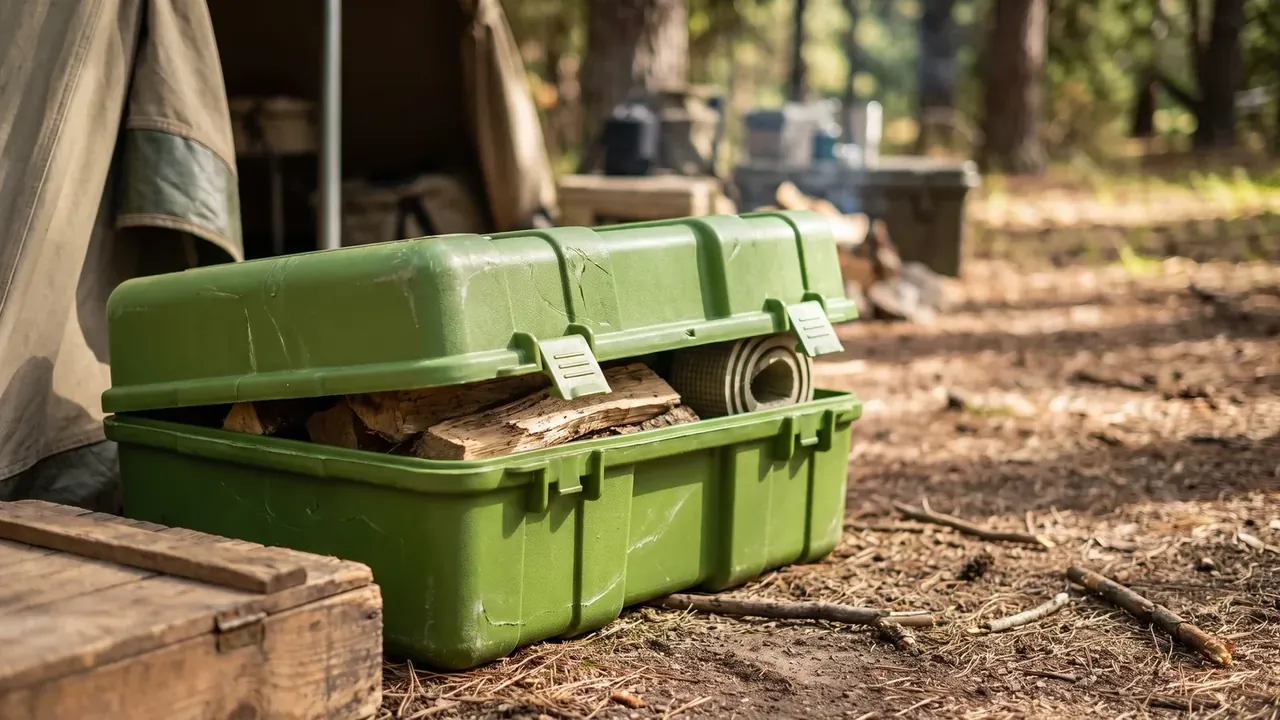
Comfortable one-hand carry is 20 to 25 kg; two people on two handles manage about 50 kg. Past that a thicker handle only moves the load to your wrist.
A folding handle sits in a wall recess and costs no space, but its hinge loosens over time. A moulded handle is stronger and snags on conveyors.
Wheels turn carrying into towing. Under 75 mm catches on grass and gravel; 100 mm rolls. Judge the axle bush, not the wheel: plastic wears fast in sand.
5. Liner and volume: litres into usable space
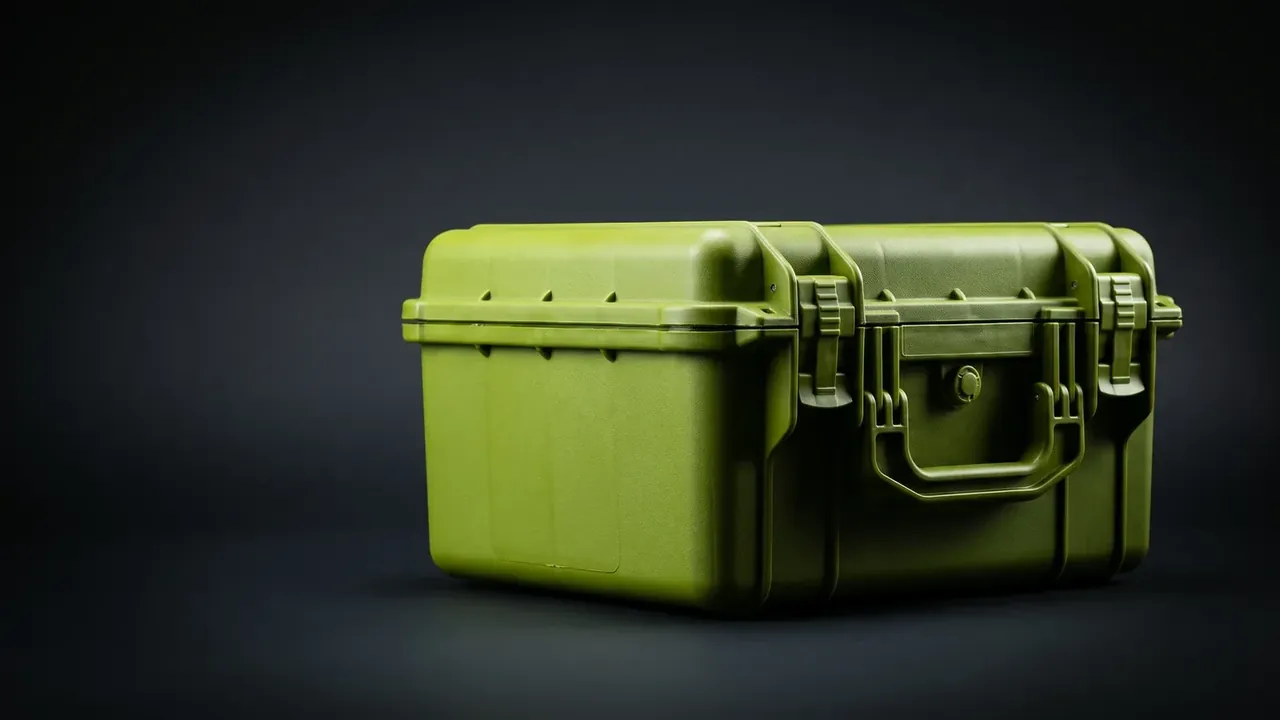
Fifty litres is outside volume. Usable space loses wall, ribs and lid depth; a 3.5 mm wall with ribs all round gives 85 to 90 percent.
The liner sets how much shifts. EVA foam 1.5 to 2 mm absorbs vibration; EPP is lighter and springs back, better for heavy loads; three dividers cost about four litres.
Conclusion
Read a Camping Storage Box backwards: load first, then sealing and lid load, then litres. The gasket keeps contents dry, the lid decides vehicle packing, the handle decides whether one person can move it.
This article covers container-side specifications and design implications only, not the handling, loading or use of the contents.
Related Reading
- Storage layout of a camping cooking case
- Choosing and replacing a case gasket
- Stacking cases and pallet planning
- Outdoor case versus storage box
Related Products
- 8 Series — Gun Cases; Military Equipment Cases; Camera Equipment Cases; Drone Cases; Watch Cases; Knife Cases; First Aid Cases; Electronics Equipment Cases
- WL8-2812 PP Gun Case — model WL8-2812
- All protective cases and toolboxes: 7 series, 158 models