

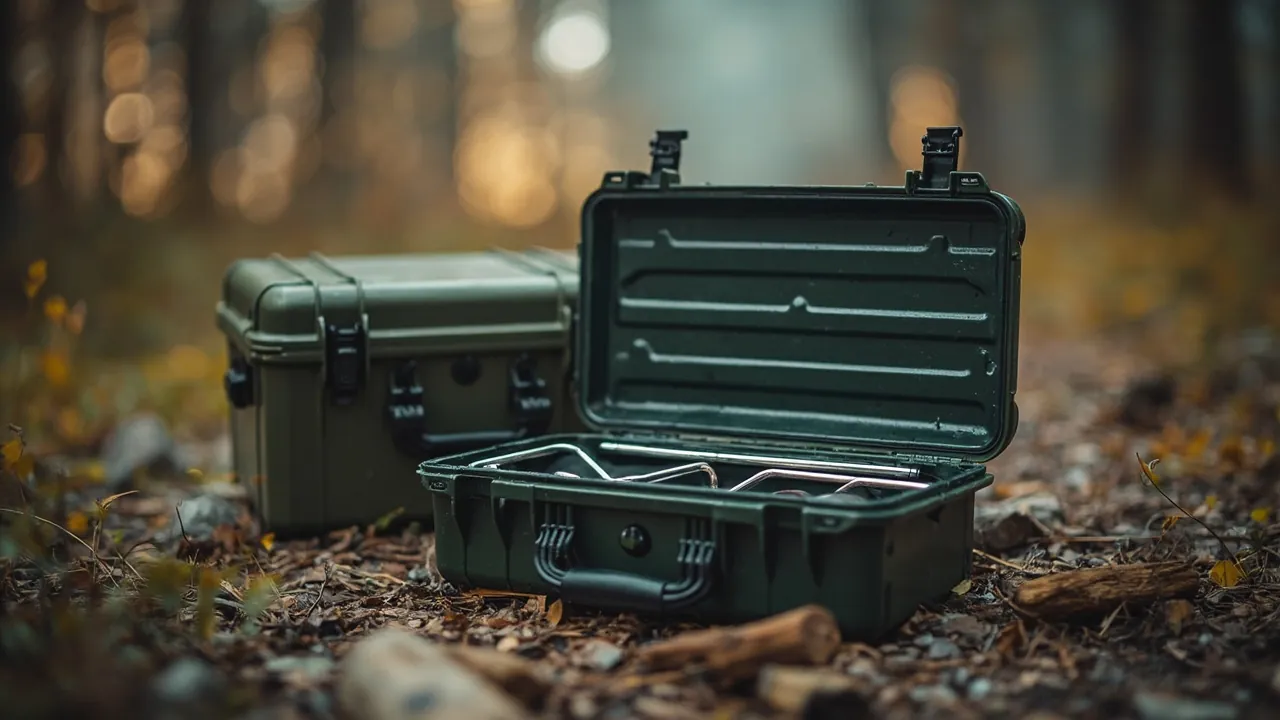
Camping and outdoor living are increasingly popular, but cookware, stoves, lighting and power are often neglected in transit. The conclusion up front: a qualified camping cookware case and portable stove box must simultaneously meet four items "drop-resistant, splash-proof, gas/battery safe zoning, easy access", and apply differentiated lining and fixation for lighting, mobile power and car refrigerator. This article covers camping cookware cases, portable stove boxes, outdoor lighting equipment cases, mobile power outdoor cases and car refrigerator protection cases, providing parameters, standards and selection methods for procurement and implementation.
Outdoor cooking gear is irregular: pots, tableware, gas canisters, stove heads, seasonings, lights, power banks and car refrigerators, with both hard objects colliding and gas/lithium safety hazards. A poorly designed case can deform pots, leak stove gas or short batteries in one bump. Therefore the outdoor case is not simple storage but a gateway of safety and experience. Whether a family portable stove box or a long-distance car refrigerator protection case, it should be planned from structure, safe zoning, sealing and fixation.
Table of Contents
- Protection Needs of Camping Cookware and Portable Stove Cases
- Zoning Design of Camping Cookware Cases
- Portable Stove Boxes and Gas Safety
- Protection of Outdoor Lighting Equipment Cases
- Mobile Power Outdoor Cases and Battery Safety
- Selection of Car Refrigerator Protection Cases
- Sealing and Splash Resistance
- Moisture Control, Ventilation and Odor
- Transport and In-Vehicle Fixation
- Cleaning and Gas Canister Handling
- Camping Cookware Boxes and Portable Boxes
- JUNZHJIA Custom Capability and OEM/ODM
- Procurement Acceptance and Documents
- Common Selection Mistakes
- FAQ
Protection Needs of Camping Cookware and Portable Stove Cases
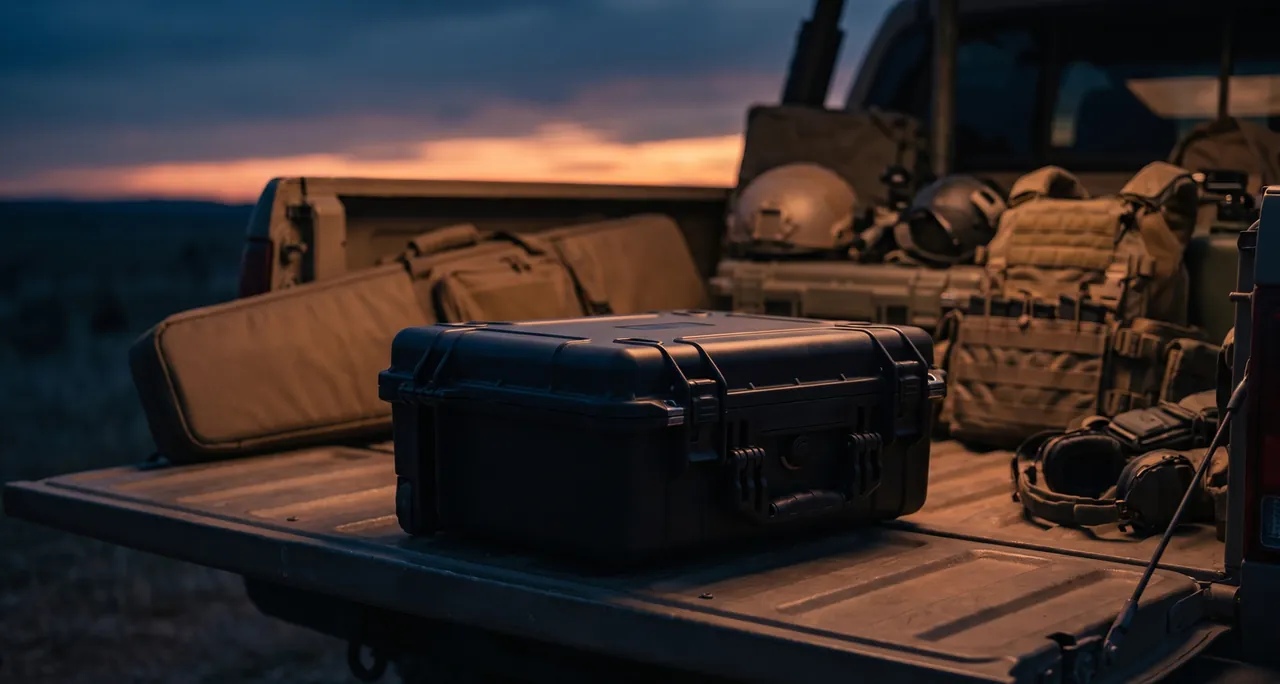
The pain points of outdoor cooking gear concentrate on: irregular pot and tableware shapes easy to bump; stove head and canister are hazard sources needing isolation; lighting and power fear moisture and shock; liquid seasoning easy to leak and contaminate. The solution is to upgrade "storage" into "safe zoning + drop-resistant shell + quick-access lining".
In protection grades, outdoor cases commonly use IP54-IP65 (GB/T 4208 / IEC 60529) against splash and dust; shell flammability references UL94 (with lithium or stove). For self-drive and hiking, cases must also be light, quick-open and fixable, complementing the large protection of car refrigerator cases. Related outdoor three-protection can also learn from the general practice of outdoor gear cases.
| Gear | Risk | Focus |
|---|---|---|
| --- | --- | --- |
| Pots/Tableware | Dent collision | Hard divider, foam slot |
| Canister/Stove | Gas leak | Isolate, vent, no fire |
| Light/Power | Wet short | Moisture, fixation |
| Liquid season | Leak contamination | Sealed cell |
In field deployments, the sealing and cushioning of Camping Cookware Cases & Portable Stove Boxes come first: referencing IEC 60529 and GB/T 4208 for the IP rating, IP65 suits dust and splash protection while IP67 is preferred for wet or submerged environments to keep the contents free from moisture and grit.
Camping Cookware Cases & Portable Stove Boxes is often paired with Oil-Well Pressure Instruments & Pipeline Inspection Equipment Cases, for example a main unit with separate battery and accessory layers that protect the gear and speed field setup.
Zoning Design of Camping Cookware Cases
The core of a camping cookware case is "pot nest + tableware fixation + seasoning seal". Pots nest and stack, with soft divider or silicone pad between to avoid scratch; tableware (fork/spoon/knife) fixed by elastic strap or mesh bag to avoid collision noise and dulling in transit; seasoning bottles must be independent sealed cells with leak-proof gasket to avoid tipping contaminating the whole case.
The lining should use washable EVA or PE, easy to clean oil. Paste a cookware list on the lid for pre-departure counting and post-camp reset. Coordinated with the portable stove box, form a "cooking set" taken as a group to improve camp efficiency. For family multi-person camping, increase cells by headcount to avoid sharing.
For impact resistance, Camping Cookware Cases & Portable Stove Boxes should be designed to an IK rating per IEC 62262, with thickened rounded corners and metal latches; transit drops are evaluated against MIL-STD-810H Method 516.8, and experience shows the shell can survive multiple 1.2 m drops without cracking.
For shipping, add desiccant and a humidity card outside Camping Cookware Cases & Portable Stove Boxes, especially for sea freight or humid regions; long-term storage follows the ISTA guidance on temperature-humidity cycling to avoid gasket aging and metal corrosion.
Portable Stove Boxes and Gas Safety
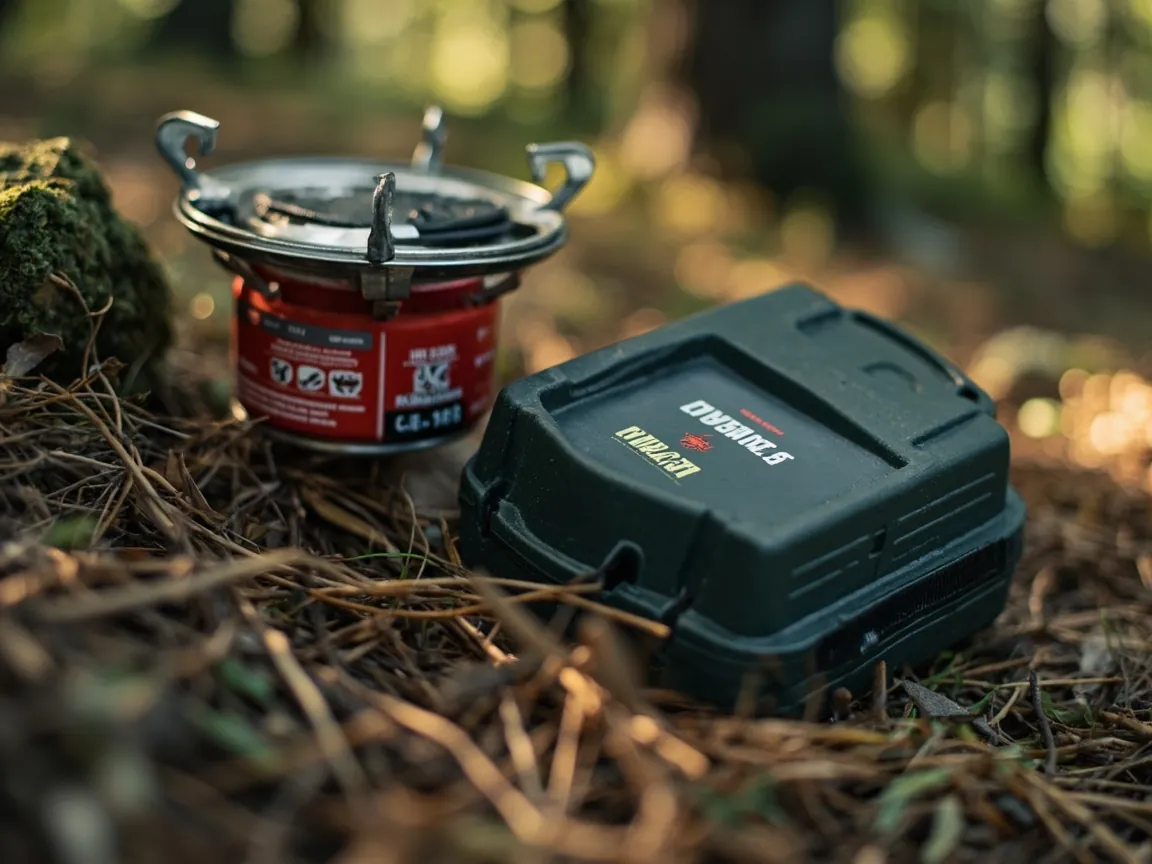
The most sensitive of a portable stove box is gas safety. Canisters (butane/propane) are pressure vessels, must be upright, fixed, away from heat, no open flame in transport; stove head should clear residual gas, valve closed, isolated from canister in separate slot, and the case should have vent holes to prevent accidental gas accumulation. Never put canister with fire source or battery in the same slot.
Case material and lining should resist oil and temperature; the canister slot uses limit buckle to prevent rolling. The portable stove box emphasizes quick open and light, suitable for hiking and short camping. Whether case or box, mark "no fire, avoid heat, store upright" warning visibly and give basic safety tips. Related on-board tools can refer to the storage logic of motorcycle on-board toolboxes.
Vibration and transit reliability can be verified with the ISTA 3A/3E series of simulated shipping tests; for sensitive loads such as Camping Cookware Cases & Portable Stove Boxes, custom-cut EVA foam that holds every item in place markedly reduces in-transit damage.
When standard grids cannot fit odd-shaped gear, custom-cut Camping Cookware Cases & Portable Stove Boxes pays off; JUNZHJIA's OEM/ODM flow is sample, drawing, prototype and batch, with test files supplied and tooling on hand to shorten lead time.
Protection of Outdoor Lighting Equipment Cases
Camp lighting includes camp lights, headlamps, flashlights, ambient strips and charging stands; the core of an outdoor lighting equipment case is "fixture fixation + battery zoning + anti-mis-open". Fixtures are mostly plastic shell and lens, fear pressure and scratch, fixed by foam grooves; battery compartments of battery fixtures should be independent or removed to avoid mis-open power drain or short in transit.
The lighting case should equip transparent small cells for spare batteries and cables, known complete at a glance. For rechargeable camp lights, reserve cable channels inside. In outdoor humid environment, the lighting case seal should splash-proof and with drying, consistent with the moisture requirement of mobile power outdoor cases.
Material choice for Camping Cookware Cases & Portable Stove Boxes typically spans modified PP, ABS and PC: PP is light and shock-tolerant for frequent carrying, ABS offers good rigidity at moderate cost, and PC gives the highest impact strength at the expense of weight; flame rating can be specified to UL 94 V-1 or better for in-vehicle and cabin safety.
If Camping Cookware Cases & Portable Stove Boxes carries lithium cells or energetic parts, give it a separate fire-resistant bay with labeling and ship per UN 38.3 and IATA rules for lithium batteries; like Detection Instrument Protective Cases: Gas, Water-Quality, Noise & Wind-Speed Meters, isolation and marking are key.
Mobile Power Outdoor Cases and Battery Safety
Outdoor power demand is large; the mobile power outdoor case carries power banks, outdoor power stations and solar controllers, with core "battery safety + fire resistance + fixation". Lithium fears compression, short and high temperature; the case should have independent battery compartment, insulation divider and limit buckle to prevent batteries colliding or compressing; with large-capacity outdoor power, the case flammability should meet UL94 related requirements and reserve heat dissipation and ventilation.
In transport batteries should be off, interface protection cap in place; multiple batteries not stacked. Consistent with the battery handling of drone battery cases: upright, insulated, fixed, away from heat. Attach battery list and capacity label inside for power management. For self-drive, the mobile power outdoor case should coordinate power with the car refrigerator protection case.
Liners commonly use high-density EVA or PE foam, CNC-cut to the actual part or drawing so each item sits in its own pocket. JUNZHJIA supports custom liners and OEM/ODM with brand-color printing, matched seals and test documentation for batch acceptance.
For field usability, Camping Cookware Cases & Portable Stove Boxes should open one-handed even with gloves, with latches that resist accidental release; in designs such as Industrial Equipment Cases: Oil Exploration, Nuclear Inspection, Surveying & Rail Maintenance, quick access and loss prevention rank above looks.
Selection of Car Refrigerator Protection Cases
The car refrigerator (compressor cooling box) is high value, low center, fears tipping and vibration; the car refrigerator protection case (or fixation frame) core is "limit + damping + anti-slip". In the vehicle use straps or custom limit frame to lock the refrigerator, avoiding slide on hard brake; road vibration absorbed by foam pad in transit, protecting compressor and pipes.
The protection case should reserve heat dissipation duct, not fully wrap the compressor compartment; the case resists temperature and UV for in-vehicle environment. Coordinated with the mobile power outdoor case, can supply the refrigerator continuously. For long crossing, recommend refrigerator and power fixed in zones in same vehicle with damping pads, reducing bump impact on compressor.
Case Material (PP/ABS)
Outdoor cases commonly use PP (polypropylene) and ABS. PP is tough, chemical resistant, cheap, good low-temp, suitable for cookware and general transfer; ABS has high rigidity and good appearance, suitable for display lighting and power cases; there is also PP+glass fiber to enhance rigidity. The shell is best injection-molded in one piece, with corner thickening and stiffeners for life.
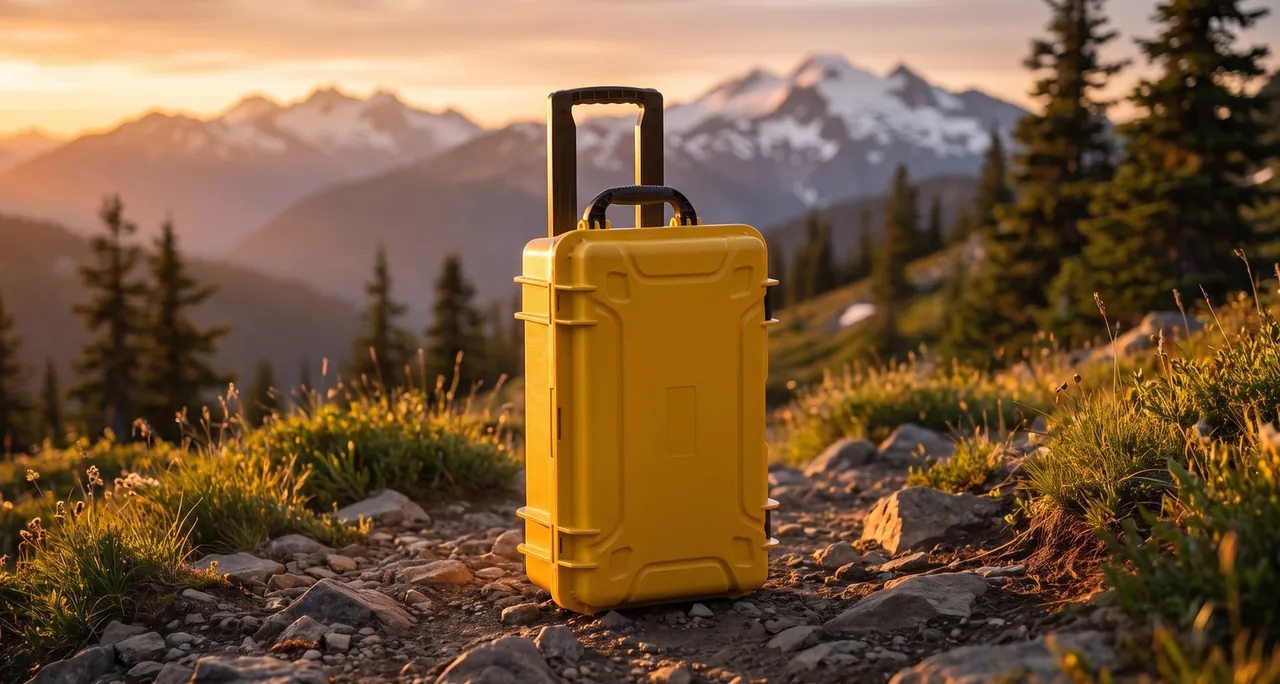
For large items like car refrigerator protection cases, the bottom should have anti-slip and limit structure, with wheels for handling. Portable forms like camping cookware boxes reduce weight under guaranteed strength, emphasizing carry and hanging.
| Material | Advantage | Limitation | Typical Use |
|---|---|---|---|
| --- | --- | --- | --- |
| PP | Tough, chem, low-temp | Avg rigidity | Cookware, general |
| ABS | High rigidity, look | Avg temp | Light, power case |
| PP+GF | Rigid-tough | Mid cost | General outdoor |
| PC | Strong, temp | Costly | Demanding power |
Temperature and humidity control is an often-overlooked aspect of Camping Cookware Cases & Portable Stove Boxes transport: passive insulation can use phase-change cold packs or an insulated bladder, and extreme temperature bands follow MIL-STD-810H Methods 501/502, with experience indicating structural stability from -20 C to +60 C.
Sealing and Splash Resistance
Outdoor cases often meet rain and splash; seals are mostly rubber rings embedded in flange under compression. IP65 resists low-pressure spray, IP67 short immersion. Canister stove cases need ventilation, so sealing should be "partial vent + main splash-proof", not fully closed accumulating gas. Seaside and wetland camping cases should care about salt spray aging of seal, replace periodically.
Waterproof does not mean immersion. Portable stove boxes and canisters should not be immersed long, otherwise valve and label damaged. If interior fears moisture, combine desiccant and humidity card for "seal + moisture absorption" double insurance. Related sealing can refer to the general practice of sealed protective boxes.
For Camping Cookware Cases & Portable Stove Boxes with electronic circuits, consider conductive gaskets and a metallized case for EMI shielding, assessed against the GB/T 17626 series for immunity so strong electromagnetic fields in the field do not disturb readings or comms.
Moisture Control, Ventilation and Odor
Cookware and seasoning easily leave odor and get damp; management relies on "ventilation + drying + separation". The case can be half-open ventilated when not in transport; seasoning cells sealed independently to avoid mixing smell; metal tableware uses anti-rust paper or desiccant. Lighting and power cases emphasize moisture, humidity card shows intuitively.
For long storage of camping cookware cases, recommend emptying seasoning, wiping interior dry, putting desiccant then closing; canisters must be taken out and stored separately in cool ventilated place, never left in case under pressure and heat. Odor can be absorbed by baking soda or activated carbon, replaced periodically.
At incoming inspection, Camping Cookware Cases & Portable Stove Boxes should ship with third-party IP, IK and drop reports; check gasket continuity, even latch compression and liner fit item by item. Like Portable Diagnostic Equipment Cases: Handheld Ultrasound, Patient Monitor, Ventilator & Defibrillator, complete documentation eases warehousing and insurance claims.
Transport and In-Vehicle Fixation
In self-drive transport, cases should be weight-limited, positioned and anti-slide. Single-case weight within one-hand lift or one-person push; large cases with wheels and strap holes; in vehicle use straps to lock camping cookware cases, portable stove boxes and car refrigerator protection cases, avoiding slide on hard brake. Cases with canisters and lithium should be placed ventilated, away from heat, easy to take, far from cabin fire.
Hiking and cycling can use camping cookware boxes to reduce weight; multi-case unified outer module for backpack external and roof rack. Cross-city self-drive can do simple drop self-check referencing ISTA thinking, confirming lining not deformed in transit.
For site management, tag Camping Cookware Cases & Portable Stove Boxes with an ID and a contents card, keep a master list with the supervisor, and reconcile against the card on departure and return; this mirrors the numbering system used by Fire-Fighting Equipment Cases & Rescue Forcible-Entry Kits and cuts loss rates.
Cleaning and Gas Canister Handling
After camp, clean timely: pots and tableware washed and dried before case; interior oil wiped with neutral cleaner; foam lining removable wash and dry. Gas canister handling is a safety red line - unfinished canisters cannot be discarded randomly, should be returned or given to recycling per rules; empty canisters also need confirmed no residual pressure. Stove head cooled, cleared residual gas, valve closed before boxing.
Cleaner not strong solvent to avoid corroding lining and ring. Replace desiccant when humidity card changes color. With cleaning, a camping cookware case can serve a typical value of multiple seasons without protection drop.
For Camping Cookware Cases & Portable Stove Boxes that is airdropped or flown at altitude, balance weight and ballast, add redundant latches and, where needed, a pressure-equalization valve to counter altitude-induced suction; related thinking appears in Earthquake Emergency Kits & Flood-Control Emergency Cases.
Camping Cookware Boxes and Portable Boxes
Solo hiking and lightweight camping more often use miniaturized forms like camping cookware boxes and portable stove boxes: small, backpack-able, emphasizing quick open and light. The advantage of portable boxes is flexibility; the disadvantage is limited capacity, requiring selection of "one meal set", leaving spares to large cases.
Whether case or box, interior insists on item fixation and hazard isolation. The portable version of outdoor lighting equipment cases must also avoid sharing slots with hard objects. Bad weather can combine the waterproof form of outdoor gear cases against rain and snow. Related lightweight power can also refer to the battery safety logic of mobile power outdoor cases.
To extend seal life, keep the silicone gasket of Camping Cookware Cases & Portable Stove Boxes away from oil and prolonged UV, wipe it regularly and apply silicone grease; lubricate latch hinges and store the case slightly open to avoid crushing the gasket.
JUNZHJIA Custom Capability and OEM/ODM
For outdoor and self-drive users, JUNZHJIA provides integrated capability from case selection, lining customization to seal kit matching. We can customize CNC-cut foam lining according to your pot, stove, lighting and power shapes, achieving one slot per object; support OEM/ODM color, silk-screen and structural modification by model; for export projects provide IP, flammability and transport related detection documents. Existing cases can also order lining and seal kits separately to upgrade protection.
On size and stacking, choose Camping Cookware Cases & Portable Stove Boxes with interlocking ribs and lateral stackability so vehicle or rack transport saves space and resists sliding; aligning the outline with Security Inspection Cases & Explosion-Proof Inspection Toolkits simplifies modular handling.
Procurement Acceptance and Documents
Documents recommended for outdoor cooking protection cases: material grade (PP/ABS), IP grade declaration, flammability grade when powered, lining layout drawing, canister isolation and ventilation description, warranty and spares. The contract clarifies seal replacement cycle. For high-value categories like car refrigerator protection cases, trial in small batches before mass, observing in-vehicle fixation and damping effect.
Export Camping Cookware Cases & Portable Stove Boxes must address RoHS, REACH and packaging directives, with flame and environmental declarations supplied in the case; JUNZHJIA can prepare market-specific compliance files to lower the buyer's customs and audit risk.
Common Selection Mistakes
Mistake one: only look at capacity not fixation, pots collide and deform in transit. Mistake two: canister and stove in same slot even near fire source, burying hazard. Mistake three: battery and metal tableware mixed, short risk. Mistake four: fully closed canister case, accidental gas accumulation. Mistake five: not replace seals, seaside aged still used as IP65. The methods in this article avoid these systematically.
The key to improve camp experience is "listing + grouping". Each case corresponds to an equipment list and fire steps, take and count on-site by diagram, missing found immediately. Recommend "cookware case + stove box + light case + power case" as a cooking unit moved together, one-click fire at camp. For self-drive, car refrigerator protection case and mobile power outdoor case pre-locked and powered, arriving with cold drink and light. With these, camping changes from "rummaging" to "ready to use".
Beyond the immediate protection function, the camping cookware case should be evaluated on total lifecycle cost. A cheaper case that cracks a latch on the first rough trail, or whose lining holds cooking smells for a season, ends up more expensive than a robust case maintained for years. When comparing quotes, ask for the expected seal replacement interval, the availability of spare lining kits, and whether the shell can be repaired after a crack. For frequent campers, these factors often outweigh a small upfront saving and belong in the purchase scorecard.
Many campers run shared kits that rotate between friends or rental fleets. For these, the case must support quick visual audit: a labeled lining where every slot has a part number lets the returning user confirm completeness in minutes. Adding a small damage-log sleeve on the lid, where users note any dent or fault, builds a history that protects both the gear and the next user. JUNZHJIA can pre-print such logs and part-number labels as part of the OEM/ODM service, so the kit arrives audit-ready.
Safety documentation matters more for outdoor cooking than for most gear, because of gas and lithium. A case supplied with a canister isolation note, a lining layout drawing and a battery-safety summary strengthens both insurance and peace of mind. Keep a digital copy with the kit. For cross-border road trips, the same documents answer border questions about the contained equipment and help prove compliant transport of pressure vessels and batteries.
Climate adaptation is often overlooked. Cold nights make plastics more brittle and seals stiffer; hot trunks soften adhesives and can warp thin-wall boxes. If your trips span seasons, choose a material grade rated for the full temperature band and verify the seal remains compliant at both ends. Desiccant capacity should also be sized for the humid leg of the journey, not just the storage condition, because a case that is dry at home may still sweat during a coastal transfer.
A solo hiker benefits from one well-packed portable box they never have to think about; a family or a basecamp benefits from a system of matched cases that stack and share liners. Decide which model fits before buying, because retrofitting a group system from mismatched boxes is costly and error-prone. The modular approach pays off when a second camp or a guest cook requires the same kit to split and rejoin without confusion.
Foam lining wears and eventually sheds; choosing a lining material that can be re-cut from stock, rather than a molded part unique to one case, keeps spares cheap and reduces waste. JUNZHJIA's CNC-cut lining supports this, since a new liner can be produced from the original drawing at any time. Pair it with a recyclable shell program where available, and the kit's environmental footprint stays manageable over a long service life.
Protection is only as good as the person closing the lid. A short onboarding that shows how to seat the seal, how to tension straps and how to read the humidity card prevents most field failures. Include this in the kit's quick-start card. Groups that train new members on the case itself report far fewer transit incidents than groups that treat the case as obvious.
A practical pre-trip checklist: confirm each item is in its slot, confirm the seal is clean and compressed, confirm the canister is upright and isolated, confirm batteries are in their compartment and off, confirm the humidity card is green, and confirm the lid label matches the contents. Thirty seconds on this routine saves a spoiled trip. The same checklist works whether the kit is a single portable box or a full car-load of cases.
For buyers comparing suppliers, request a reference build: a sample case packed with your actual cookware, photographed open and closed, with the lining drawing attached. This single exercise reveals more about real protection than any specification sheet, because it shows whether the vendor understood the fragile surfaces, the weight distribution and the access order you actually use at camp. Treat the reference build as the contract baseline, and volume orders will match it.
Fuel and battery discipline deserves a standing rule. Never store a canister inside a case that also holds a spark source, and never transport a power bank next to loose metal utensils that could bridge its terminals. The case design supports this rule through separate compartments, but the rule itself must be taught. Teams that post the rule inside the lid see far fewer near-misses than teams that assume everyone knows it.
Against soft bags, the hard shell of Camping Cookware Cases & Portable Stove Boxes wins on crush resistance, water protection and security, suiting higher-value or long-stored Camping Cookware Cases & Portable Stove Boxes; specify by equipment value and terrain rather than chasing the highest nominal rating.
Frequently Asked Questions
Q: What is the difference between camping cookware cases and ordinary storage boxes? A: The core difference is whether "safe zoning + drop-resistant + quick access" is achieved. Ordinary storage boxes just pile things, pots collide and deform, seasoning leaks in transit; the camping cookware case uses nested stacking, elastic straps and independent sealed seasoning cells to separate hard objects, liquids and hazards. In addition outdoor cases must meet splash-proof (GB/T 4208/IEC 60529) and flammability (UL94 when lithium), which ordinary boxes do not. The portable stove box also does canister isolation and ventilation. Therefore selection should start from gear risk, not just capacity appearance.
Q: How does a portable stove box ensure gas safety? A: Canisters are pressure vessels, must be upright, fixed, away from heat, no open flame in transport; stove head clears residual gas, valve closed, isolated from canister in separate slot, case has vent holes to prevent gas accumulation, never put canister with fire source or battery in same slot. Lining uses oil-temp resistant material, canister slot with limit buckle anti-roll. Mark "no fire, avoid heat, upright" visibly. After camp take canister out to cool ventilated place, unfinished per recycling. These are bottom-line measures to minimize portable stove box safety risk.
Q: Why separate battery compartment in mobile power outdoor case? A: Lithium fears compression, short and high temperature; separate battery compartment with insulation divider and limit buckle prevents batteries colliding or compressing; with large-capacity outdoor power the case flammability should meet UL94 related requirements and reserve heat dissipation. In transport batteries off, interface cap in place, not stacked. Consistent with drone battery case logic: upright, insulated, fixed, away from heat. Attach battery list and capacity label for power management. Without compartment mixing, once short may ignite the whole case, extremely costly.
Q: How to fix a car refrigerator protection case? A: The car refrigerator has low center and fears tipping, should use straps or custom limit frame locked in vehicle, avoiding slide on hard brake; road vibration absorbed by foam pad in transit, protecting compressor and pipes. The protection case must reserve heat duct, not fully wrap compressor compartment; case resists temp and UV for in-vehicle. Coordinated with mobile power outdoor case for continuous supply. Long crossing recommends refrigerator and power fixed in zones with damping pads, reducing bump impact on compressor. Proper fixation is both safe and extends refrigerator life.
Q: How does outdoor lighting equipment case prevent moisture and mis-open? A: Camp lights and headlamps are mostly plastic shell lens, fear pressure and scratch, fixed by foam grooves; battery compartments of battery fixtures should be independent or removed to avoid mis-open drain or short in transit. Case equips transparent small cells for spare batteries and cables, known complete at a glance. Rechargeable lights reserve cable channels. Humid environment seal splash-proof and with drying, consistent with mobile power outdoor case moisture. Mark battery safety and no-disassemble visibly. Thus lighting is ready and power controllable at camp.
Q: How to prevent seasoning leak? A: Seasoning is the main contamination of camping cases, must be independent sealed cells with leak-proof gasket, not leaking even upside down; separated from pots and tableware hard objects to avoid squeeze burst. Lining uses washable EVA/PE, easy to clean. After camp empty seasoning, wipe interior dry, put desiccant then close. Long storage never leave liquid seasoning in case. Odor absorbed by baking soda or activated carbon replaced periodically. With independent seal + washable lining, the whole case years no smell mix no contamination.
Q: Is custom lining worth it? A: Very worth for outdoor cooking gear. Custom-cut lining (CNC groove by shape) triple value: shock (pots embed limiting displacement), fixing (each item one slot, missing known), isolation (hazards separate slots). For irregular gear like camping cookware cases and portable stove boxes, lining directly decides protection and safety. JUNZHJIA can open mold and cut by list or physical object, one slot per object, supporting silk-screen color; existing cases can also order lining separately. Compared with gear damage and safety incidents, custom lining cost is minimal.
Q: How to combine cases and boxes for hiking and self-drive? A: Principle is "large case self-drive, small box hike". Self-drive uses camping cookware cases, portable stove boxes, car refrigerator protection cases for large-capacity transit, straps locked in vehicle; hiking uses miniaturized camping cookware boxes and portable stove boxes carried, one meal set. Both share lining logic: item fixation, hazard isolation. Bad weather combines waterproof form of outdoor gear cases. This avoids over weight while ensuring key cookware and light always available, improving outdoor experience.
Q: How often to replace the seal? A: Rubber ring is consumable, check elasticity and cracks every six months, shorten to quarterly in seaside salt spray high-frequency outdoor. Once hardens, cracks or compression unrecoverable, replace even if appearance intact, otherwise IP65 fails. Replace same-spec ring, clean flange before install. Desiccant humidity card replaced synchronously. Canister stove cases need partial check for ventilation. With maintenance, a camping cookware case serves a typical value of multiple seasons without protection drop.
Conclusion and Related Reading
Camping cookware case and portable stove box selection should center on "drop-resistant, splash-proof, gas/battery safe zoning, easy access", combined with custom lining, sealing and in-vehicle fixation, to systematically protect cookware, stove, lighting, power and car refrigerator. Doing safety and protection before departure is far more cost-effective than breakdown and accident on the way.
Related Reading