

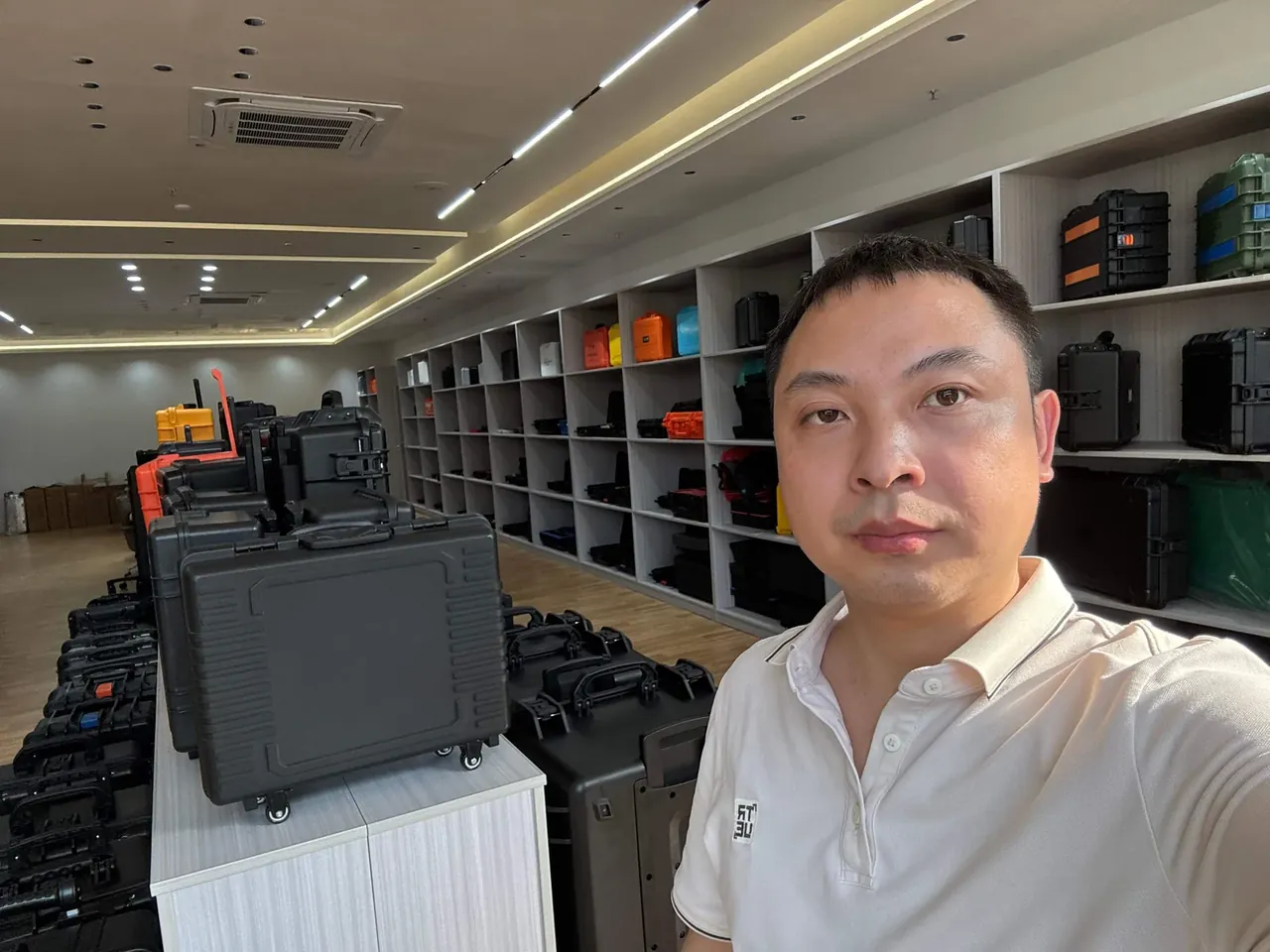
Quick answer: Outdoor Military Gear Case uses a 14 mm lid rib and 2.6 N·m bolts to keep mouth drop ≤0.25 kPa / 10 min after a 1.5 m drop and rain re-test.
Table of contents
- Outdoor Military Gear Case Lid Rib Section Height
- Handle-Base Bolt Tightening Torque
- Mouth Pressure Drop After Low-Temperature Drop
- Seal Retention in the Rain Re-Test
- Rib-Height Rejection Line for Outdoor Batches
- FAQ
1. Outdoor Military Gear Case Lid Rib Section Height
The Outdoor Military Gear Case measures 640×460×285 mm outside, 570×395×215 mm inside, with a 4.8 mm wall and a 14 mm lid rib. At 7.4 kg empty and 16 kg loaded, the lid loses flatness first on impact: a shallow rib lets the long edge bow and breaks the gasket compression line, while a tall one drives shock into the handle-base bolts. The 14 mm section keeps the lid springy at −30 ℃ instead of rigid.
| Rib height grade | Measured section | Mouth drop after cold drop |
|---|---|---|
| Low | 10 mm | 0.42 kPa / 10 min |
| Medium | 12 mm | 0.31 kPa / 10 min |
| Baseline | 14 mm | ≤0.25 kPa / 10 min |
| Over-high | 16 mm | 0.28 kPa / 10 min |
A 1.5 m six-face drop that changes rib height alone narrows the reading from 10 mm to 14 mm, then lifts it at 16 mm. The Outdoor Military Gear Case fixes 14 mm as the baseline and accepts a batch only when the measured section sits near it.
2. Handle-Base Bolt Tightening Torque
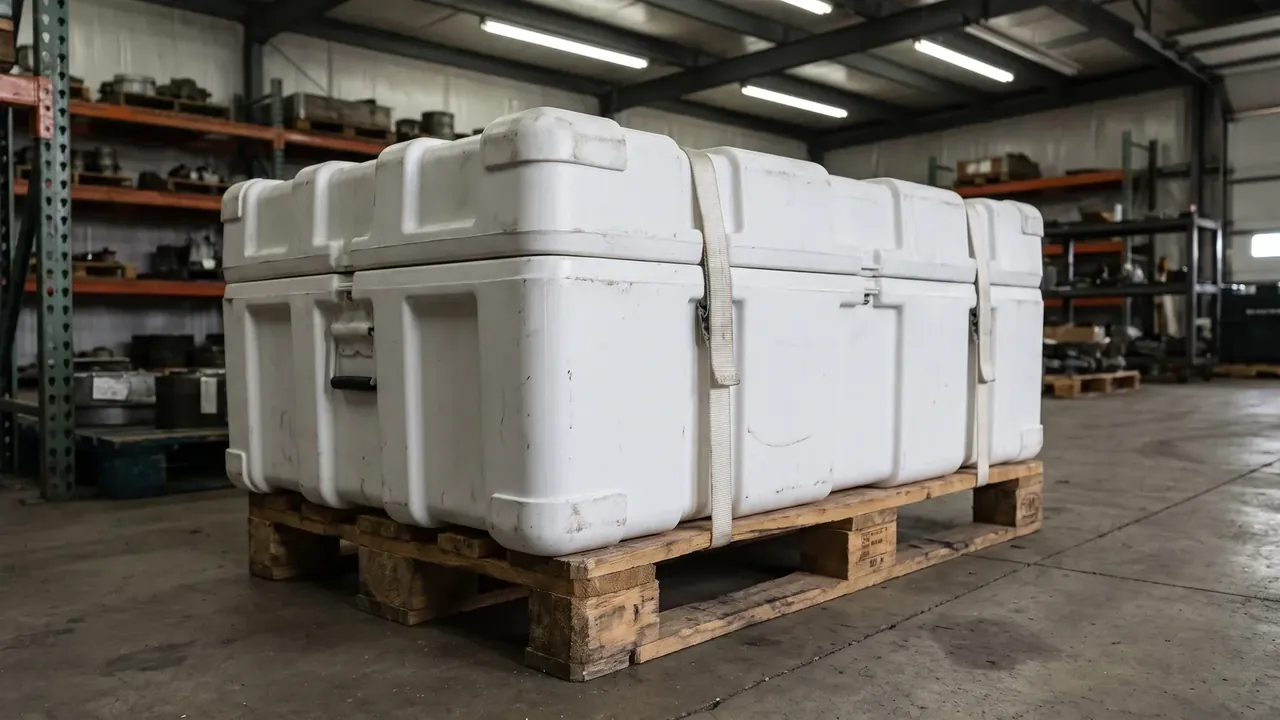
The Outdoor Military Gear Case handle base uses four M6 bolts at 2.6 N·m. That torque holds the handle under 16 kg yet avoids whitening the 4.8 mm shell or stripping threads. Lower torque leaves play so the lid bounces twice; higher torque whitens the bores, which crack along the edge in the cold.
| Torque grade | Assembly torque | Torque retention after 5000 cycles |
|---|---|---|
| Low | 1.8 N·m | 78% |
| Medium | 2.2 N·m | 86% |
| Baseline | 2.6 N·m | ≥90% |
| Over-tight | 3.0 N·m | 91% (bore whitening) |
Four catches at 445 N and one gasket at 23% compression spread force around the mouth. After 5000 cycles the baseline holds ≥90%, the low grade 78%, and the over-tight grade shows bore whitening. JUNZHIJIA logs each bolt with a preset wrench; any shell drifting off 2.6 N·m never reaches the rain re-test.
3. Mouth Pressure Drop After Low-Temperature Drop
The Outdoor Military Gear Case soaks at −30 ℃, takes a 1.5 m six-face drop, then is read by pressure decay over 10 min against ≤0.25 kPa / 10 min. Cold slows gasket recovery and the drop flexes the lid, opening a micro-leak at the long-edge midpoint. Reading 14 mm with 2.6 N·m together shows why a thicker gasket fails: compression is already 23%, and more only jams the catches.
| Pressure reading | Rib height | Torque | 10 min drop |
|---|---|---|---|
| Out of spec | 10 mm | 1.8 N·m | 0.46 kPa |
| Borderline | 12 mm | 2.2 N·m | 0.30 kPa |
| Pass | 14 mm | 2.6 N·m | ≤0.25 kPa |
| Rebound offset | 16 mm | 3.0 N·m | 0.29 kPa |
One shell, one soak time, one drop attitude, changing only rib height or torque: only 14 mm with 2.6 N·m clears both lines. This comparison does not replace whole-shell ingress verification benchmarked to IP67; it isolates the mouth variables.
4. Seal Retention in the Rain Re-Test
The Outdoor Military Gear Case rain stage runs at 100 L/(m²·h) for 30 min, closed with all catches engaged. Neither gasket nor torque is changed: the decay line reconnects after spray for another 10 min read. Water tracks the lid-to-shell seam where 445 N and 23% compression hold the line; unrecovered drop flex magnifies the midpoint leak.
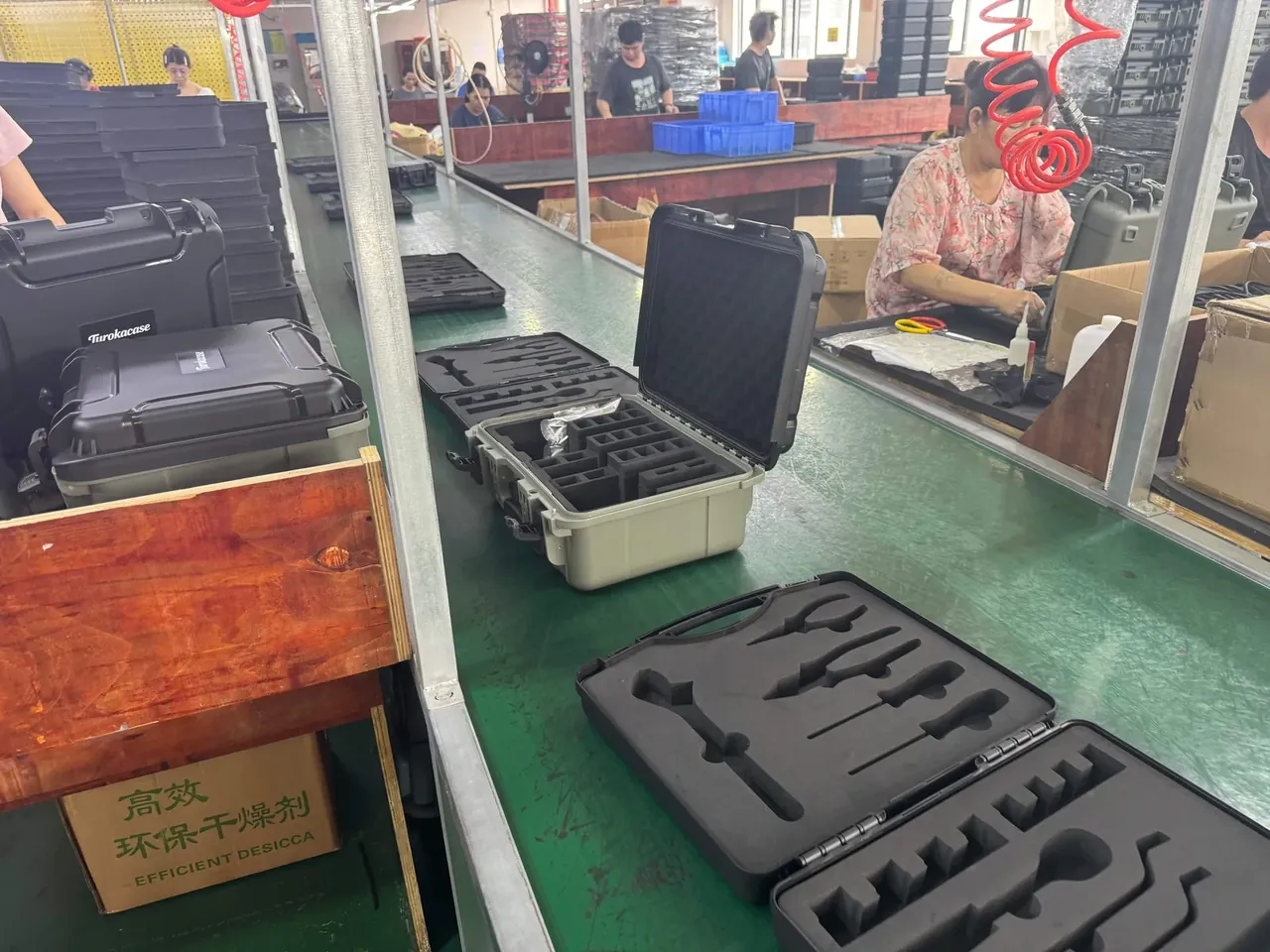
Baseline shells still read ≤0.25 kPa / 10 min after rain, matching the post-drop figure, so the 14 mm rib and 2.6 N·m torque held the rebound. Low and over-high grades pass 0.33 kPa / 10 min once wet. JUNZHIJIA runs rain after the 5000 cycles so torque loss appears first and the spray tests a boundary closer to real batches.
5. Rib-Height Rejection Line for Outdoor Batches
The scrap line is 13.2 mm: below it bench drop exceeds 0.30 kPa / 10 min and the shell is rejected. It comes from plotting section against pressure drop after every 640×460×285 mm shell sees a 1.5 m drop, a −30 ℃ soak and a rain re-test, not from a drawing.
Below 13.2 mm the lid cannot hold the midpoint leak during a cold drop. JUNZHIJIA sets 14 mm as baseline and 13.2 mm as scrap, leaving a 0.8 mm band.
Inspection chains three readings: rib section, ≥90% torque retention after 5000 cycles, then ≤0.25 kPa over 10 min after rain. Any miss fails the shell, with no sealant rescue. This splits the sealing of the Outdoor Military Gear Case into three measurable, traceable numbers instead of a sampling impression. A 0.8 mm rib variation is allowed, but torque and pressure limits never move outward, because the mouth compression band fails first when cold and rain combine. Each serial keeps its three readings, so the 13.2 mm line stays auditable rather than a rule of thumb. Records are filed by batch code, so a later review can pull one shell without rerunning the drop.
Conclusion
The Outdoor Military Gear Case treats lid rib height, bolt torque and mouth pressure drop as one chain, not three loose figures. The 14 mm, 2.6 N·m and ≤0.25 kPa / 10 min set still stands after a −30 ℃ drop, 100 L/(m²·h) rain and 5000 open-close cycles. JUNZHIJIA benchmarks each batch this way and rates whole-shell sealing against IP67. When choosing an Outdoor Military Gear Case, check the rib and torque records first, then the pressure re-test curve, not the lid finish.
Related Reading
- What Outdoor Uses Are ABS Protective Cases Best Suited For?
- What a Camping Storage Box Is: Sealing, Stacking and Carrying
- EDC outdoor tool shockproof protective box
- Choosing a Camping Storage Box: Capacity, Sealing and Fit
Related Products
- 8 Series — Gun Cases; Military Equipment Cases; Camera Equipment Cases; Drone Cases; Watch Cases; Knife Cases; First Aid Cases; Electronics Equipment Cases
- WL8-2812 PP Gun Case — model WL8-2812
- All protective cases and toolboxes: 7 series, 158 models