

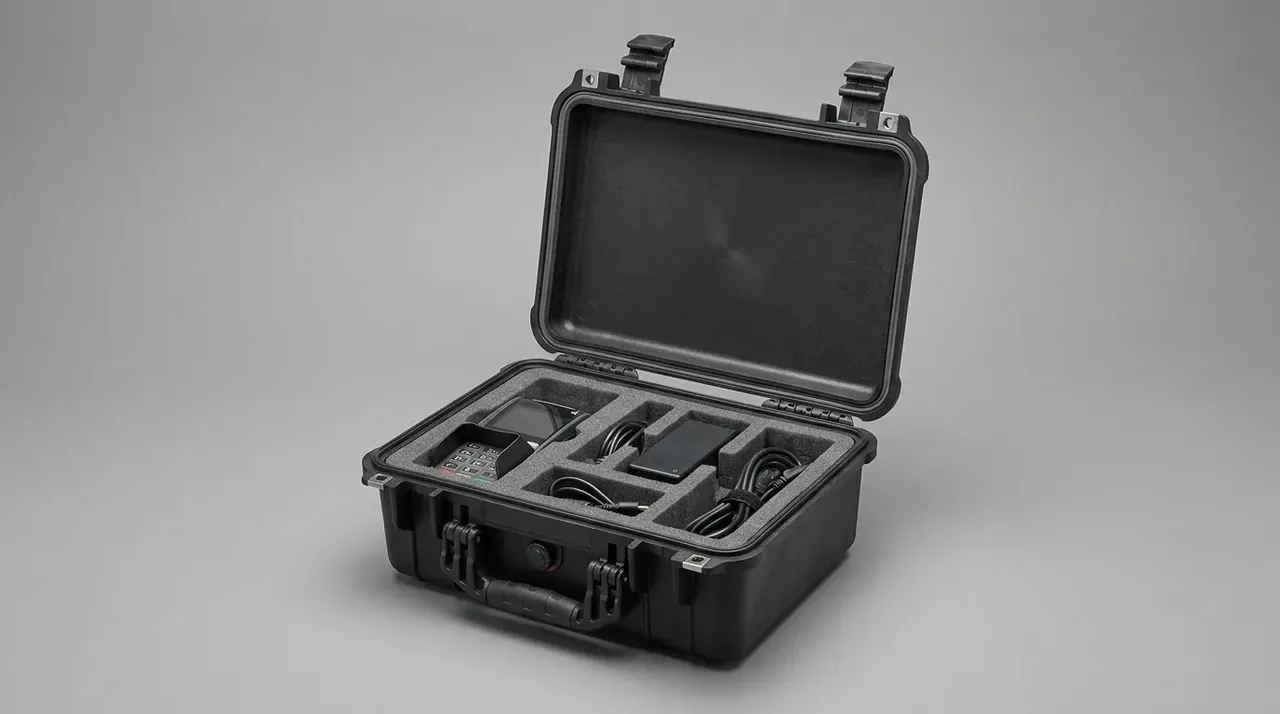
Quick answer: Case pallet packing starts at the film: 23 μm prestretched wrap, not 17 μm, cut breakage on one 20-case pallet from 2.6% to 1.2%.
Table of contents
- The four parts of a pallet
- Sizing the pallet
- Stacking height and bottom-case load
- Film, corners and strapping
- FAQ
1. The four parts of a pallet
A pallet of 20 cases at 600×400×320 mm takes four loads on the way to the dock: film rebound, strap compression, corner pressure and deck reaction. Dropping one part eats the margin of the rest.
The corner board costs under 0.6 yuan and sets the ceiling for the rest. Cut it from 5 mm to 3 mm and the contact patch falls from 800 mm² to 480 mm², so the same 800 N lifts corner pressure from 1.0 MPa to 1.7 MPa.
| Part | Key figure | Load it handles | Failure signature |
|---|---|---|---|
| Stretch film | 23 μm, 250% prestretch, 6 turns | Whole-pallet restraint | Wrap loosens, cases shift |
| Strapping | 16 mm PP, 800 N break, 2 straps | Vertical compression | Strap slips, corner crushes |
| Corner board | 50×50×5 mm, 4 pieces | Local pressure spread | Corner splits, film cut |
| Pallet | 1200×1000 timber, 20 mm boards | Reaction and fork entry | Board breaks, deck sags |
A 1200×1000 nine-leg timber pallet weighs 24 kg and carries 600 kg dynamic, so a 300 kg load sits at half that rating until fork entry doubles it.
Film is where buying goes wrong. A 17 μm roll costs 22% less than 23 μm, yet its puncture strength is 62% of the thicker film, and one case edge opens it.
2. Sizing the pallet
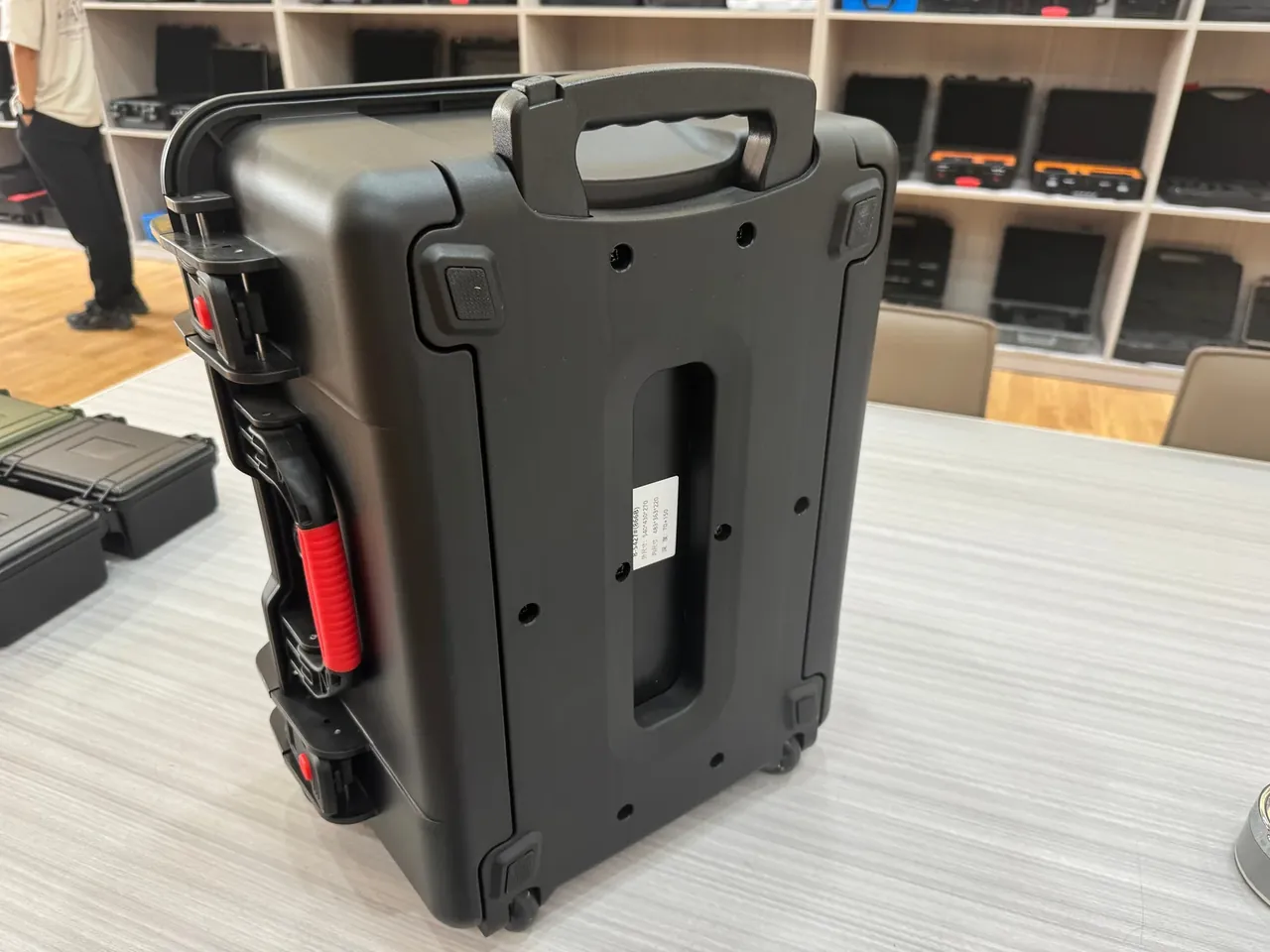
A 600×400 mm footprint leaves two options. Two cases along the 1200 mm side fill it exactly, and two along the 1000 mm side use 800 mm, leaving 200 mm for boards and film overlap.
| Item | 1200×1000 | 1200×800 |
|---|---|---|
| Deck area | 1.2 m² | 0.96 m² |
| Cases per layer | 4 | 4 |
| Layers allowed | 5 | 4 |
| Load at 15 kg a case | 300 kg | 240 kg |
| Height with pallet | 1.75 m | 1.43 m |
| Edge slack | 0 lengthwise, 200 mm across | Flush on four sides |
The 1200×800 deck is flush on all four sides, so case corner and pallet edge share a plane. The strap bears on the edge and cannot slide, but fork contact lands on the corner first, which is why the board wraps 50 mm past it.
Overturning does not follow deck area. At 1.6 m the base-to-height ratio is 1.2 to 1.75 on the wider pallet and 0.96 to 1.75 on the narrower one, a 25% gap in tipping moment for a 0.24 m² difference.
Mixed decks put a 320 mm step between rows and the wrap cannot bridge it. Rolling cases need a 3 mm board underneath, or four castors settle 2 mm into the deck gaps.
3. Stacking height and bottom-case load
Five layers at 320 mm give 1.6 m, and a 150 mm pallet brings the stack to 1.75 m. The fifth layer starts at 1.28 m, above shoulder height, so a case placed by hand lands 20 mm off centre.
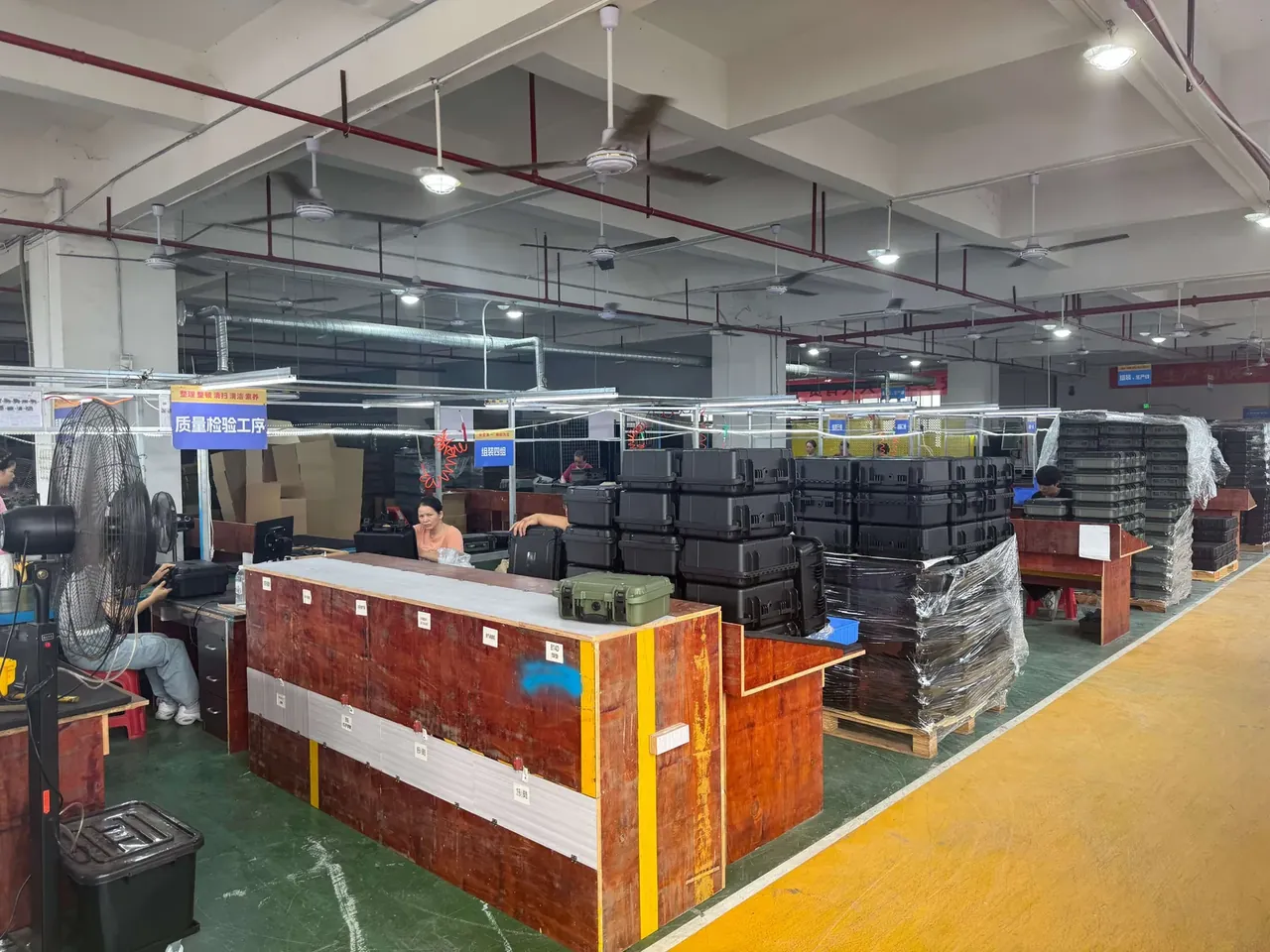
The bottom case carries the four layers above it, 4 × 15 kg = 60 kg, over a 600×400 mm face at 0.25 kPa. Against a 400 kg static rating that is 15% of capacity, so crushing was never the risk.
Eccentric loading is. A 20 mm offset shifts the centre of gravity about 5 mm, but film tension decays from 12 N to 7 N in 48 hours, and one hard brake then slides the top layer 15 mm.
So 1.6 m is a stability number, not a strength number. Raising the build table to 1.2 m holds the offset under 5 mm and drops collapse from 1.4% to 0.3%.
4. Film, corners and strapping
A 23 μm PE film at 250% prestretch turns 1 m of roll into 3.5 m of wrap, uses 34% less material than 17 μm applied cold on the same 1.6 m stack, and still halves breakage from 2.6% to 1.2%.
Six turns run three upward and three downward. One-directional wrapping puts all the rebound on one side and pulls the stack out of plumb.
Tension 16 mm PP strap rated 800 N to 550 N. Without a board, 800 N lands on a 16 mm × 3 mm patch at 16.7 MPa, past the yield of a PP corner, which crushes 2 mm in 2 hours.
With a 50×50×5 mm board the bearing area becomes 16 mm × 50 mm and pressure falls to 1.0 MPa. Below 4 mm the strap cuts the board through; above 8 mm a 3 mm gap opens and the tension never reaches the plastic.
Both straps sit 200 mm in from the ends, over the case pillars, never on the joint between two cases.
| Material | Specification | Use per pallet | Field check |
|---|---|---|---|
| Stretch film | 23 μm PE, 250% prestretch | 6 turns, about 0.32 kg | 7 N or more after 48 h |
| Strapping | 16 mm PP, 800 N break | 2 vertical straps, 3.4 m each | 550 N residual |
| Corner board | 50×50×5 mm paper | 4 pieces, 50 mm past the edge | 1.0 MPa or less |
| Pallet | 1200×1000 timber, 20 mm boards | 1 unit, 24 kg tare | 1200 kg static |
| Lid sheet | 3 mm honeycomb board | 1 sheet, 40 mm edges | Flat within 2 mm |
Conclusion
Case pallet packing is settled on the material sheet, not on the pallet price. Three checks decide it: measure the footprint, since 600×400 mm sends you to the 1200×1000 or the 1200×800 route; confirm the load, because 300 kg pairs with two 16 mm straps at 550 N residual; then look at edge slack, since a flush pallet needs 50×50×5 mm boards wrapped 50 mm past the corner. If one check fails, change the packing rather than the case, because a case change drags the tool and the load rating with it, while film, strap and boards cost under 12 yuan a pallet. Print the sheet and tick five rows per pallet: 6 turns at 23 μm, 550 N residual, 4 boards, a 1200 kg deck, a flat lid sheet.
This article discusses container-side specifications and design implications only, and does not cover any handling, loading or use of the contents.
Related Reading
- Stretch wrapping and case restraint
- Layered fixing in export case packing
- Structural conditions for stackable cases
Related Products
- 8 Series — Gun Cases; Military Equipment Cases; Camera Equipment Cases; Drone Cases; Watch Cases; Knife Cases; First Aid Cases; Electronics Equipment Cases
- WL8-2812 PP Gun Case — model WL8-2812
- All protective cases and toolboxes: 7 series, 158 models