

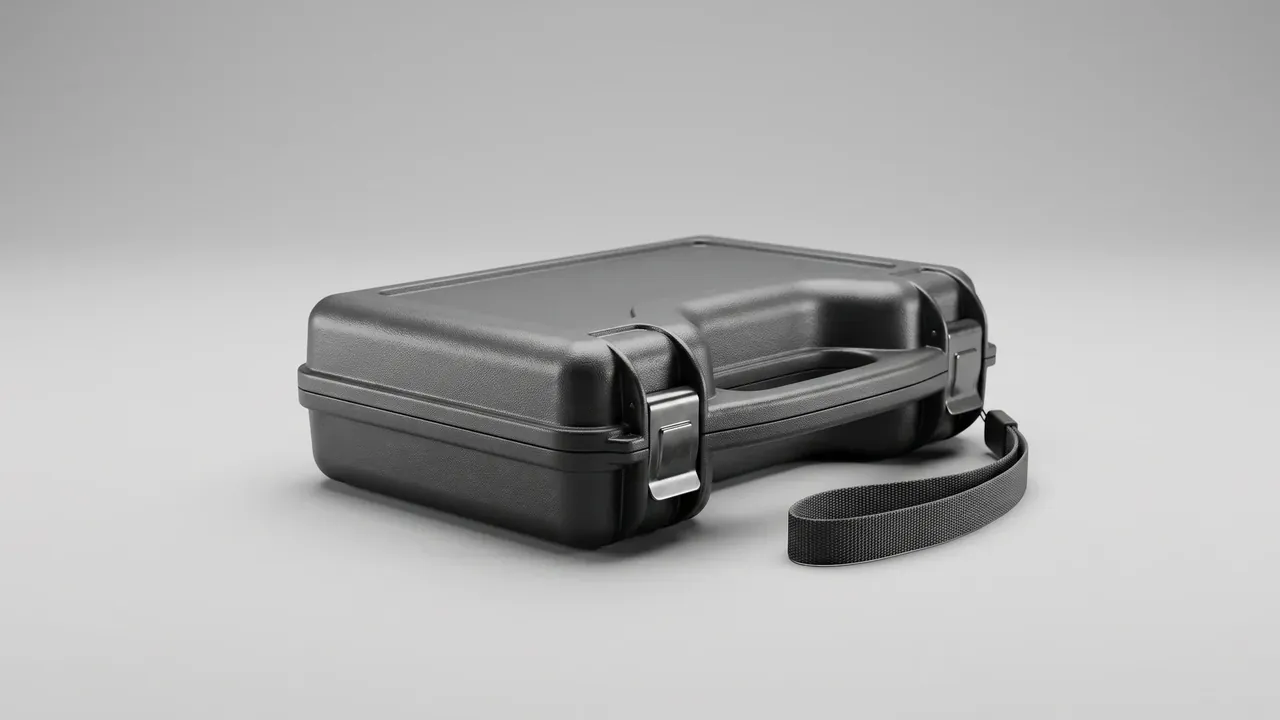
Quick answer: Choosing a pistol storage case comes down to two variables: lock level (who can open it) and size matching (does it fit without shifting). Pick locks from four tiers — plain latches, latches with padlock loops, built-in combination locks, TSA combination locks. Derive the cavity from "item dimensions + cushioning allowance per side," then check whether the compressed closed height accommodates accessories. Once those two are set, colour, handle and markings are secondary.
Table of contents
- Selection order: locks first, size second
- Choosing among the four lock tiers
- Three checks for size matching
- How locks and size interact
- Quick selection table
- FAQ
1. Selection order: locks first, size second
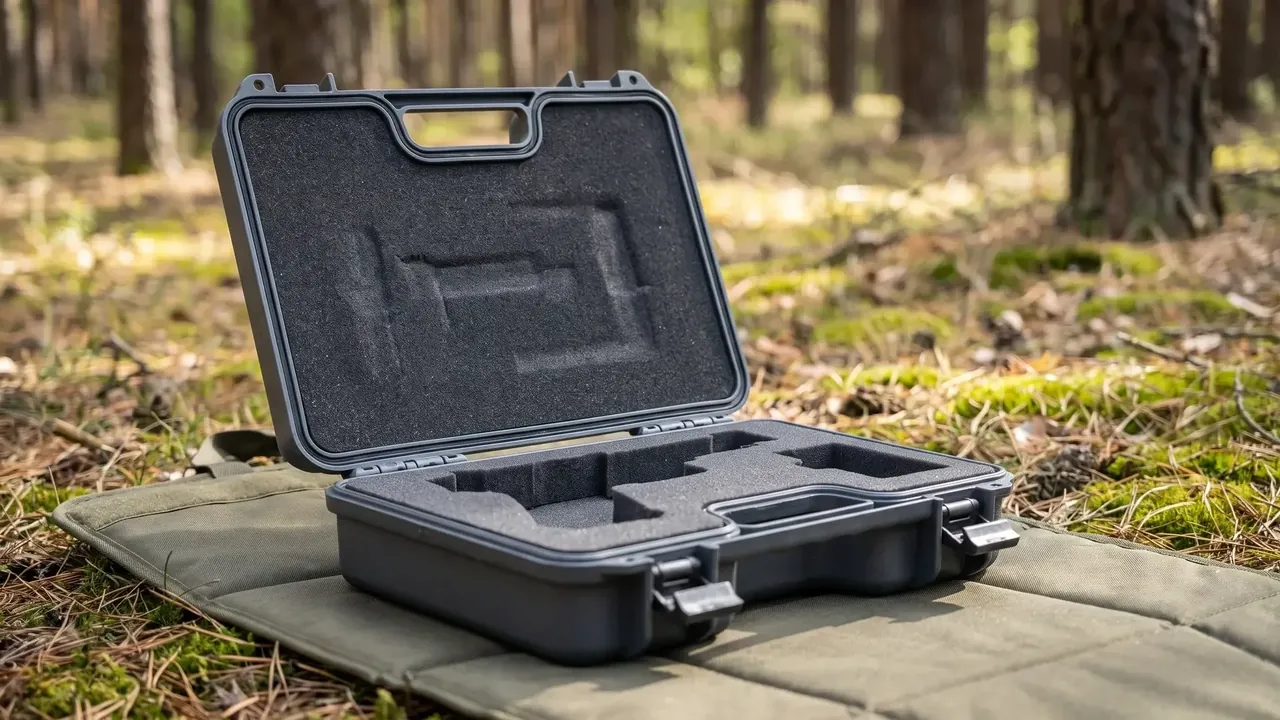
Most buyers look at size first and locks second; the correct order is the reverse: the lock level sets the product tier and cost structure, while size only picks the model. Decide locks first, watch the model range narrow, then choose the size that fits best.
The basis for choosing a lock tier is the management requirement, not item value: logged issue → padlock loops at minimum; preventing unauthorized opening without carrying keys → built-in combination lock; air transport → TSA lock. Translating a management need into a lock tier is step one.
2. Choosing among the four lock tiers
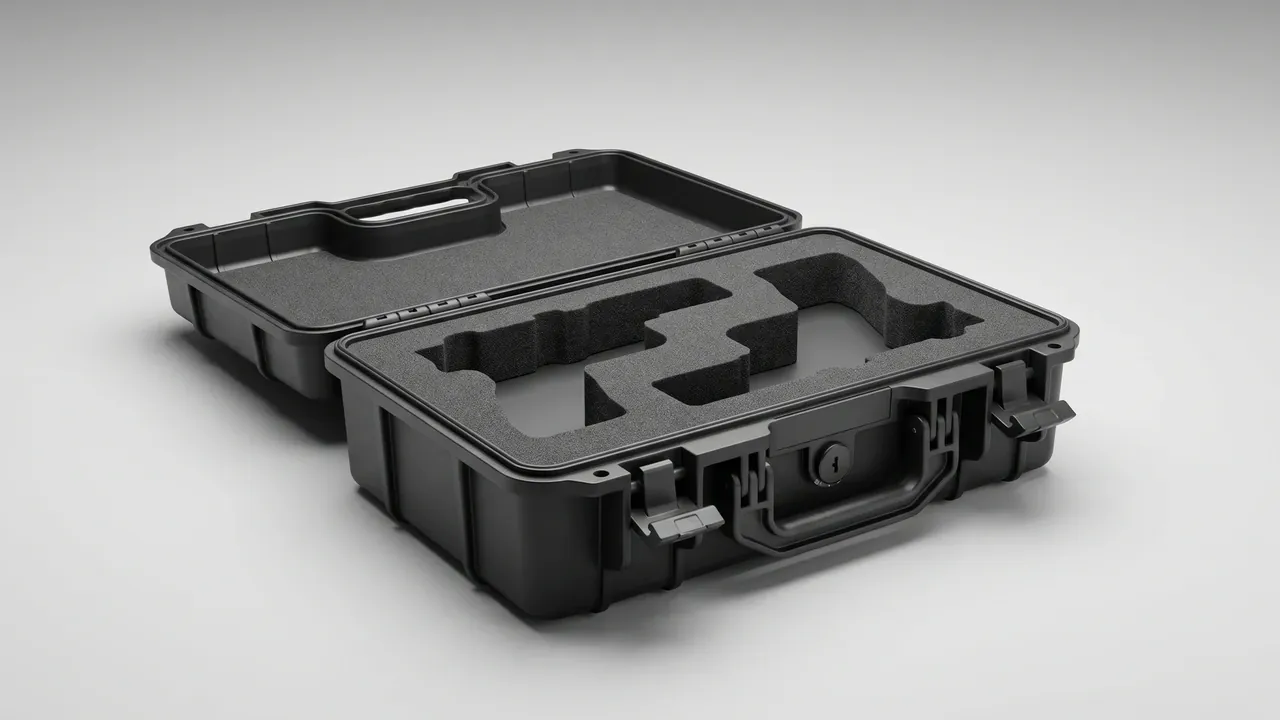
| Tier | Structure | Security | Best for |
|---|---|---|---|
| 1 | Plain latches | Closure only | Controlled environments with external controls |
| 2 | Latches + padlock loops | Medium (buyer supplies lock) | Unit issue, home storage |
| 3 | Built-in combination lock | Medium-high (opening traced) | Controlled opening without external locks |
| 4 | TSA combination lock | Medium-high + inspection-friendly | Air transport |
Three points when choosing:
- Lock count matters more than lock type: two points on a long edge resist prying far better than one, regardless of type;
- Check padlock loop and shackle diameters: an undersized loop rejects common padlocks — confirm dimensions before buying;
- Ask how the combination resets: the reset procedure after a forgotten code decides long-term usability.
3. Three checks for size matching
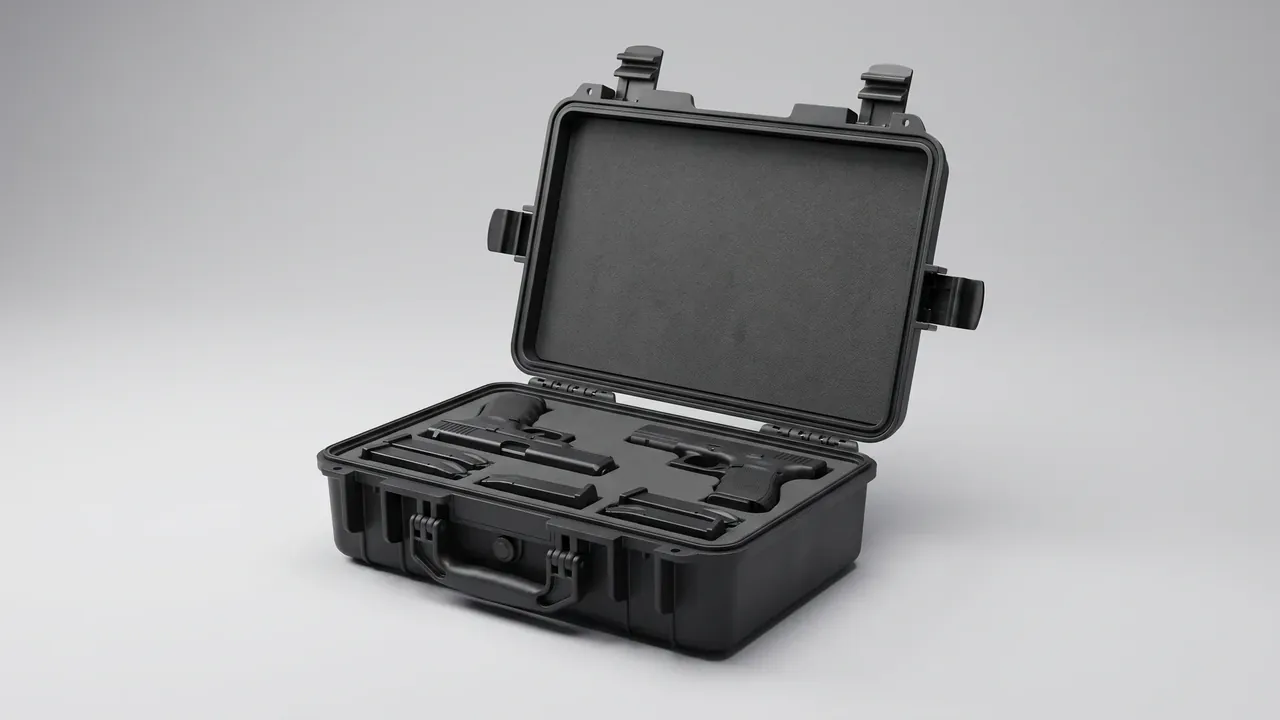
"Does it fit" is not enough; three checks are required:
Step 1 — Measure the contents. Measure the maximum envelope (highest and widest points including accessories), not nominal specs.
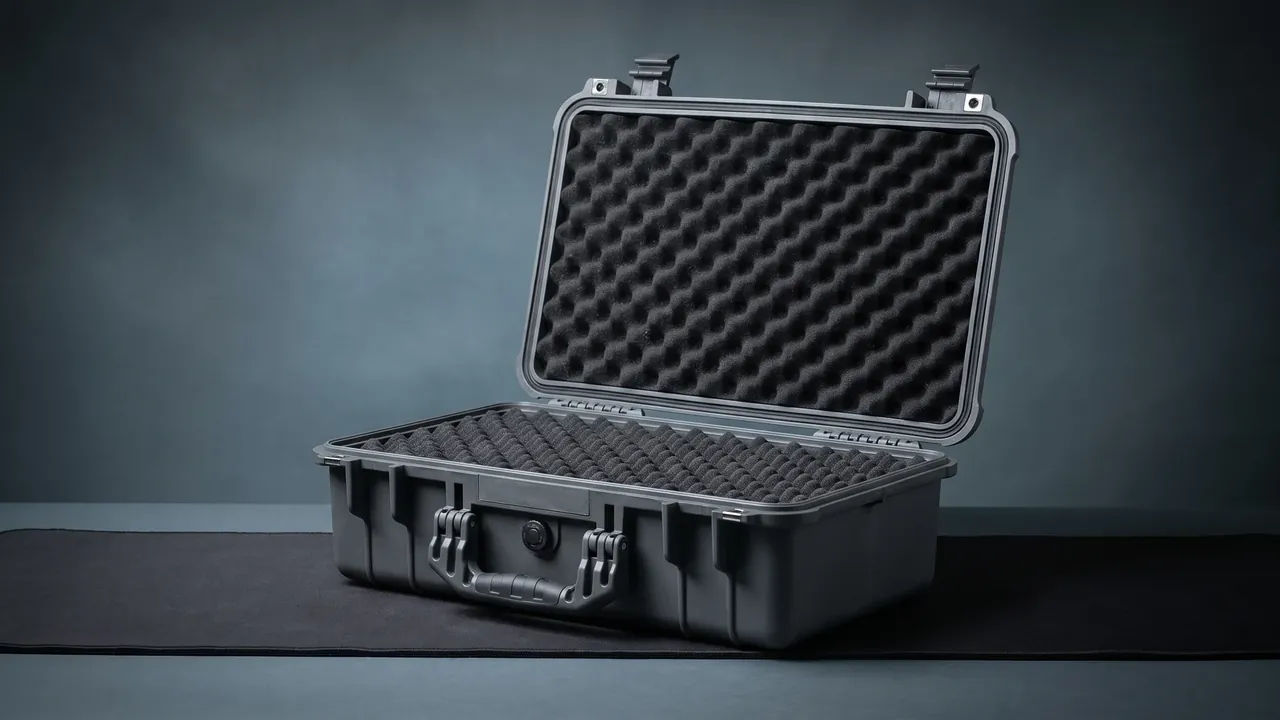
Step 2 — Set the cushioning allowance. Cavity allowance per side depends on the medium: flat egg-crate from about 10 mm; CNC cut slots need 20 mm or more (slot walls must have strength). Too little → shift and impact; too much → wasted volume and awkward carrying.
Step 3 — Verify the compressed closed height. The most skipped step: closing compresses the foam, so usable closed height is less than open-cavity height. If the contents have protrusions in the closing direction (accessories, optical devices), calculate against the compressed height — otherwise you get "it fits but the lid will not close."
4. How locks and size interact
The two variables are not independent:
- Large cases need two-point locking: the longer the edge, the greater the single-lock prying risk — as size grows, lock count should grow with it;
- Combination locks consume lid-lip space: the lock body occupies internal space, so cavity shrinks at the same external size — specify by actual cavity;
- Air transport needs size + lock + relief valve together: alongside a TSA lock, a pressure-relief valve and sealing are also required; missing one breaks the whole air-transport solution.
5. Quick selection table
| Scenario | Lock | Cavity | Extras |
|---|---|---|---|
| Controlled-environment storage | Tier 1 latches | CNC cut slots | Itemized insert list |
| Unit issue with logging | Tier 2 padlock loops | Compartments + numbers | Two-point locking |
| Single-user controlled access | Tier 3 combination | Full-form cut | Opening record |
| Air transport | Tier 4 TSA lock | Reinforced base cushioning | Relief valve + gasket |
Conclusion
Selecting a pistol storage case means translating management requirements into a lock tier and item dimensions into a cavity size. Two steps and the model range converges to a few. The real error surface is in the details, not the headlines: does lock count match case length, is the padlock loop diameter adequate, does the compressed height clear the contents. Verify those three and the selection rarely needs rework.
This article covers container selection only. It does not cover anything about the handling of items placed inside.
Related Reading
- Pistol Storage Case vs Safe: Portable vs Fixed Storage
- What Is a Pistol Case: Structure and Protection Principles
- Pistol Case Applications: Agency vs Civilian Configuration
Related Products
- 8 Series — Gun Cases; Military Equipment Cases; Camera Equipment Cases; Drone Cases; Watch Cases; Knife Cases; First Aid Cases; Electronics Equipment Cases
- WL8-2812 PP Gun Case — model WL8-2812
- All protective cases and toolboxes: 7 series, 158 models