


Quick answer: Start with the compartment module, then set outer size and stack layers, then check lid clarity, latch cycle life and the path your hand takes. The first two decide whether items fit; the last three decide whether the box stays in use.
Table of contents
- Five Criteria for a Plastic Box Organizer
- Outer Size and Compartment Module
- Clear Lids and Access Path
- Opening Frequency and Latch Life
- Stack Load and Drawer Pull
- FAQ
1. Five Criteria for a Plastic Box Organizer
A plastic box organizer is chosen by its compartments, not its litre rating. Two boxes of identical outer size, one divided on a 25 mm grid and one divided around the actual parts, hold very different quantities. Stacking comes second: a loaded box passes the weight of three boxes down to its base.
| Check | Number to obtain | Frequent mistake |
|---|---|---|
| Compartment module | Grid pitch, cell count | Reading total volume |
| Outer size | Length, width, height, tare | Stacking empty boxes |
| Latch life | Closure type, rated cycles | Judging by one pull |
| Access path | Lid stop angle, travel | Ignoring cabinet headroom |
The access path is the criterion most often skipped. A cabinet with 400 mm of headroom and boxes 150 mm tall leaves 100 mm of lift space at two layers, so a lid stopping at 60 degrees hits the shelf above.
2. Outer Size and Compartment Module
A 25 mm grid covers most needs: 50 by 50 mm for screws, 75 by 100 mm for small tools, 100 by 150 mm for chargers and cable. Cells wider than 150 mm let small parts slide; cells under 40 mm stop fingers entering and a single screw has to be tipped out.
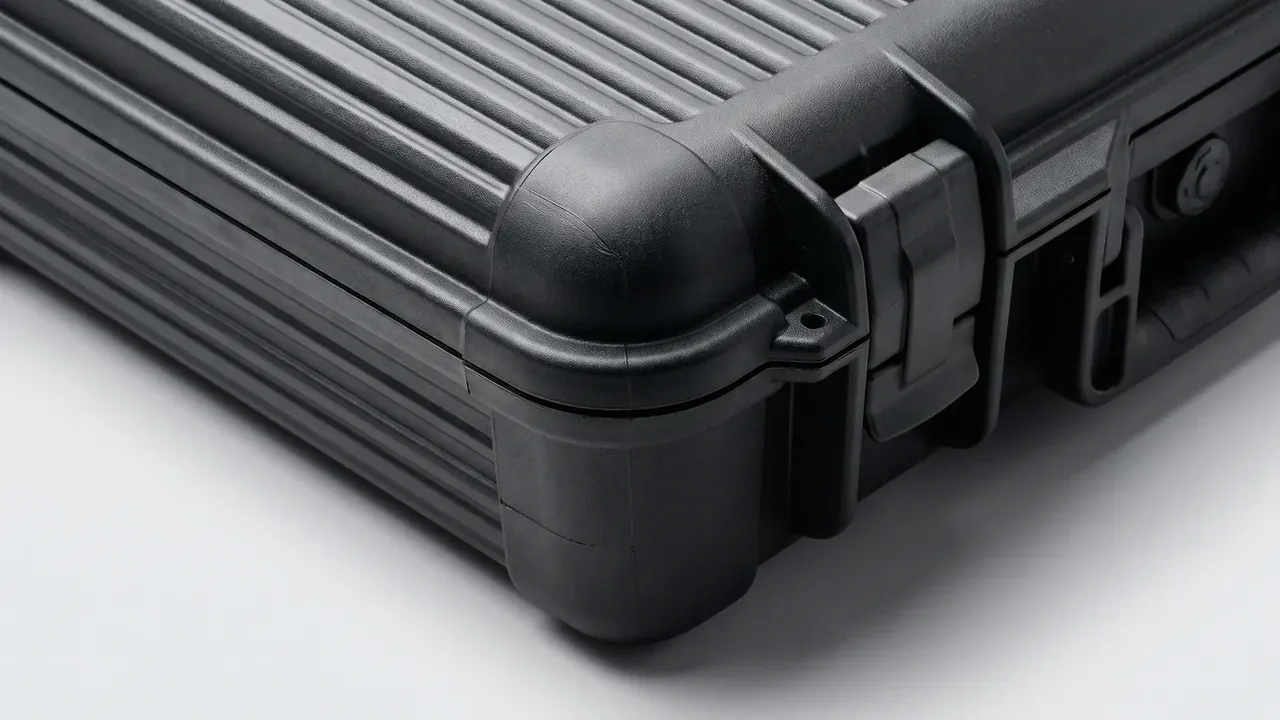
Wall thickness and rib pitch decide whether a loaded box bulges: 1.6 to 2.0 mm walls, 1.2 mm ribs at 25 mm pitch, which raises stiffness without weight. A 300 by 200 by 90 mm plastic box organizer weighs about 320 g empty and 4 kg full of screws.
3. Clear Lids and Access Path
A clear lid on a plastic box organizer passes about 88 per cent of light, a frosted one around 60. The difference is not whether you can see in, but whether you have to open the box at all. Clear suits fast-moving parts; frosted suits cable and tape that should stay out of sight.
Clear side walls also allow vertical filing: A4 sheets standing in a 300 mm box show their labels and slide out without unpacking. A lid holding at 100 degrees lets one hand hold and the other reach; a 70 degree stop scrapes the knuckles.
4. Opening Frequency and Latch Life
Once a day is 365 cycles a year and 1,800 over five years. A hinged draw latch is rated near 5,000 cycles, a plastic snap about 2,000, so a plastic box organizer opened daily outlives the snap and starts closing loosely in year three.

| Closure | Rated cycles | Failure sign | Suits |
|---|---|---|---|
| Hinged draw latch | 5,000 | Loose pin | Daily workshop use |
| Plastic snap | 2,000 | Claw rounding | Weekly access |
| Slide catch | 4,000 | Dust in track | Dusty areas |
Both types fail gradually, so check the closure gap twice a year and replace past 1 mm. Four latches press evenly but double the opening time; two leave a gap that lets dust in.
5. Stack Load and Drawer Pull
On a desk, 5 kg per box is the safe line for a plastic box organizer, and four layers put 15 kg on the base box. A thin base sags within two months and the box above slides sideways.
| Placement | Load per box | Layers | Structure needed |
|---|---|---|---|
| Desktop | 5 kg | 4 | Flat base, level corners |
| Cabinet | 8 kg | 3 | Widened rim flange |
Pull clearance needs two allowances: height 20 mm under the drawer headroom so fingers fit, width 2 mm under the internal width so it does not scrape. An organizer that held oily parts should be washed at 40 C with neutral detergent.
Conclusion
The five criteria come down to fitting things in and getting them out again. Divide on a 25 mm grid, size the outside against the cabinet, split clear and frosted work by how often you reach in, choose the latch by annual cycles, and check stack load at the base. Clutter is then planned away before you buy. A plastic box organizer is really a set of assigned positions.
This article discusses only the container (case body) side of specifications and design intent, and does not cover any handling, loading or use of the contents.
Related Reading
- How Internal Dividers Are Chosen
- Small Plastic Case Selection
- Choosing a Tool Carrier
- Inside a Tool Box Organizer
Related Products
- 8 Series — Gun Cases; Military Equipment Cases; Camera Equipment Cases; Drone Cases; Watch Cases; Knife Cases; First Aid Cases; Electronics Equipment Cases
- WL8-2812 PP Gun Case — model WL8-2812
- All protective cases and toolboxes: 7 series, 158 models